Food & Drink
Open Bar vs Beer and Wine Wedding: Which Is Right for You?
The open bar versus beer-and-wine decision affects your wedding budget by thousands of dollars and your guests' experience in ways couples often underestimate. Here is the complete 2026 comparison — real cost data, hospitality considerations, the hybrid approach, and how to make a decision you will feel good about.
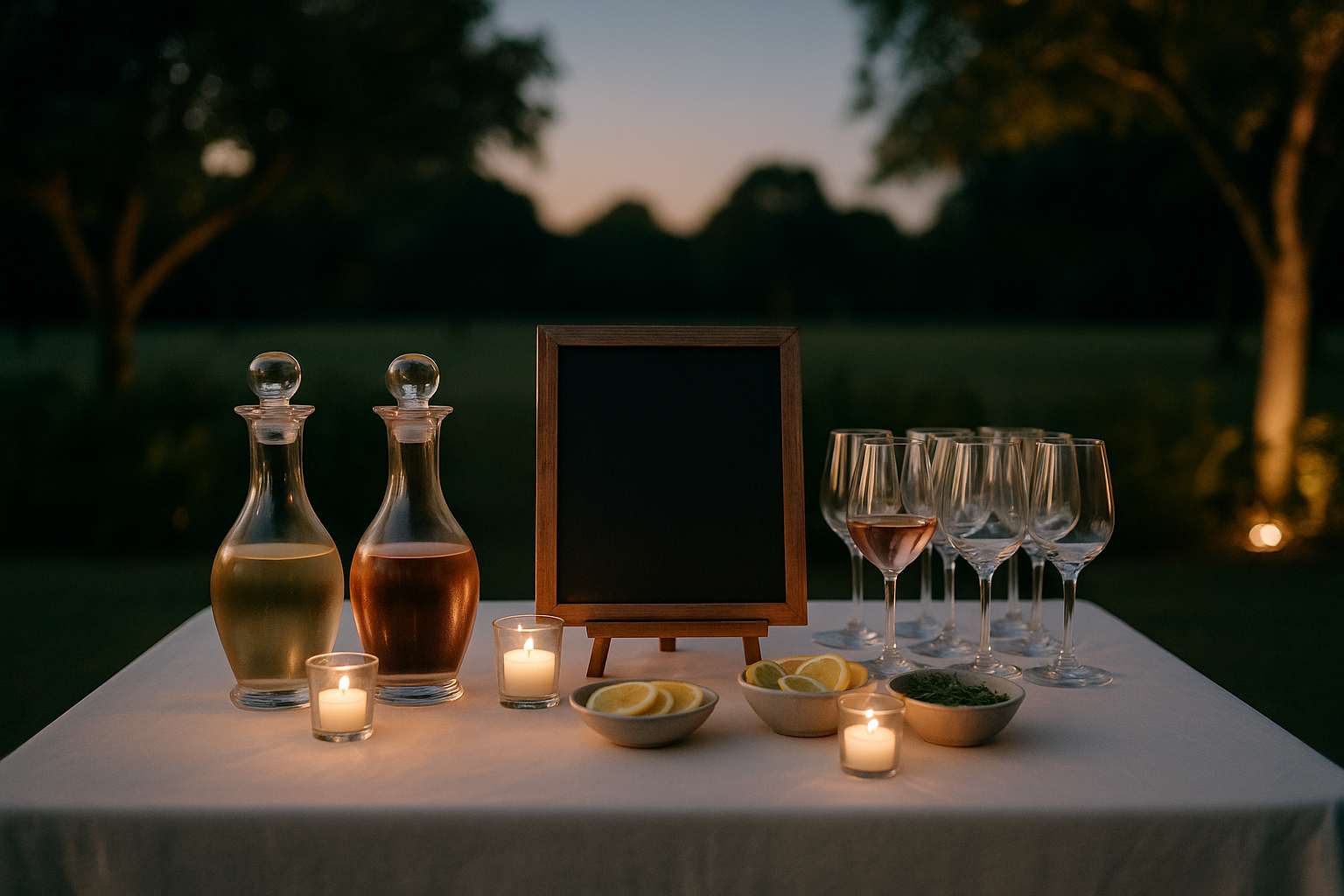
A full open bar costs $30–$50 per guest at standard tier; beer and wine only runs $15–$25 per guest — a savings of 40–50%. Both are completely gracious choices. The most popular hybrid is beer, wine, and one signature cocktail, which delivers a personal, festive bar program at a fraction of full-spirits pricing.
The bar is the heartbeat of your reception. Nationally, alcohol and bar service represent roughly 10–15% of total wedding spending, with the average couple spending approximately $2,800–$5,500 depending on guest count, location, and package type, according to The Knot's 2025 Real Weddings Study. Getting this decision right means balancing genuine hospitality with budget reality — and understanding that the range of gracious options is wider than most couples initially assume.
What is the real cost difference between an open bar and beer and wine only?
The per-guest cost differential is significant and compounds quickly at scale:
| Bar Type | Per-Guest Cost | 100 Guests (total) | 150 Guests (total) |
|---|---|---|---|
| Beer and wine only | $15–$25 | $1,500–$2,500 | $2,250–$3,750 |
| Basic open bar (well spirits) | $15–$30 | $1,500–$3,000 | $2,250–$4,500 |
| Standard open bar (mid-shelf) | $30–$50 | $3,000–$5,000 | $4,500–$7,500 |
| Premium open bar (top-shelf) | $50–$90 | $5,000–$9,000 | $7,500–$13,500 |
| Beer, wine + signature cocktail | $18–$32 | $1,800–$3,200 | $2,700–$4,800 |
Note: These figures represent per-guest beverage costs only. Full bar budgets must also include bartender labor ($25–$60/hour per bartender), bar equipment rental ($300–$800 if not included in venue package), glassware, mixers and garnishes ($3–$8 per guest), and service fees and gratuity. Budget 30–40% above per-guest drink costs for total bar expenditure.
Regional variation adds another layer of complexity. According to Lizton Lodge's analysis of national wedding bar pricing, the same standard open bar package that averages $4,375 for a 100-person wedding in Milwaukee can exceed $14,000 in New York City. If your wedding is in a major metro market, the cost difference between full open bar and beer-and-wine-only may represent more than $5,000 — budget that can be reallocated to photography, florals, or honeymoon travel.
What does the beer and wine option actually mean for your guests?
Less than most couples fear. Between 70 and 80 percent of guests at a typical American wedding gravitate toward beer and wine regardless of what else is available. The cocktail culture that drives full open bar expectations is concentrated among a segment of guests — not the majority. A well-curated beer-and-wine selection that includes a rosé, a crisp white, a full-bodied red, a light beer, and a craft option provides genuine variety for most guests without the cost and complexity of a full spirits program.
Beer-and-wine bars are particularly natural fits for: daytime weddings and brunch receptions, where spirits feel out of place; garden, vineyard, and outdoor weddings, where wine and light beer are contextually appropriate; and any wedding where the aesthetic is casual, relaxed, or rustic, where the expectation of a full cocktail program is lower.
They require more intentional communication at: formal evening receptions in ballroom settings, where guests may arrive with the expectation of a full bar; weddings where the guest list skews heavily toward a cocktail-drinking demographic; and any event where the absence of spirits represents a departure from the established culture of your social group. In these contexts, clear advance communication on your wedding website removes the element of surprise and allows guests to plan accordingly.
What is the signature cocktail hybrid, and why does it work so well?
The hybrid approach — beer, wine, and one or two signature cocktails with no full spirits bar — has become the most recommended bar option among wedding planners and catering professionals in 2025–2026. It works for three reasons simultaneously.
First, it delivers the personal storytelling element of a custom cocktail program — your named, story-driven signature drink appears on bar menus, branded napkins, and in photographs — without requiring a full spirits inventory, multiple skilled cocktail bartenders, or the logistical complexity of a full bar program. Second, signature cocktails batch beautifully: a well-designed recipe prepared in large quantities and served from a glass dispenser or decanter costs $3–$8 per serving in ingredients and is served by any competent bar staff without specialty training. Third, it creates a visual and experiential highlight at the bar station that a standard beer-and-wine setup cannot replicate — guests remember the named cocktail as a detail unique to your wedding.
The most enduring signature cocktails are rooted in your story as a couple: named for the location of your first date, your engagement destination, a shared hobby, or a family tradition. Paired with a matching mocktail version of equal sophistication, the signature cocktail ensures that every guest — regardless of drinking preferences — has something equally thoughtful in their glass.
How do you make the financial comparison fairly?
The per-guest cost is only the beginning. A complete bar budget comparison requires accounting for:
- Corkage fees — if you purchase your own beer and wine at retail, your venue's corkage fee (typically $10–$25 per bottle, or $5–$15 per guest) must be calculated against the retail savings. At venues charging $20+ per bottle corkage, the venue's package pricing is often more economical than retail self-purchase. At venues charging $5–$8, retail purchasing at Costco or Total Wine typically saves 30–50%.
- Bartender ratios — the standard is one bartender per 50–75 guests regardless of bar type. Under-staffing the bar creates lines that guests remember long after they have forgotten the brand of whiskey.
- Non-alcoholic options — approximately 15–20% of guests do not drink alcohol. A beer-and-wine-only bar requires the same investment in elevated non-alcoholic options (sparkling water stations, flavored mocktails, quality lemonade or tea programs) as a full bar. These guests deserve equally thoughtful hospitality.
- Gratuity — budget 15–20% of the total bar tab or $50–$150 per bartender in cash gratuity. This is a firm professional expectation, not optional, and should be in the budget from the beginning.
The hospitality question: what does your bar choice signal to guests?
The core hospitality principle is simple: the couple covers drinks for their guests at no charge. A generous, well-curated beer-and-wine bar fully satisfies this principle. A cash bar — where guests pay for their own drinks — does not, except in limited circumstances (a casual backyard gathering with a clearly communicated tone, or a dry wedding with an equally clear and advance-communicated beverage program).
If budget is the primary driver and a full open bar is genuinely not feasible, the gracious and well-regarded response is to offer beer and wine at no charge rather than a full bar with a payment mechanism attached. Guests who arrive expecting a hosted bar and encounter a cash bar experience the difference as a statement about their value to the couple — regardless of the budget reality behind the decision. Always communicate your bar arrangement on your wedding website in advance; never include it on the formal invitation itself.
Rosé deserves a final mention: it is no longer a seasonal trend. A well-chosen rosé on your bar menu year-round consistently outperforms predictions and satisfies a broad range of palates that neither red nor white wine alone would reach. Include at least one rosé selection in any beer-and-wine program.
Frequently asked
How much does a wedding open bar cost per person in 2026?
According to data from The Knot and Zola for 2025–2026, a full open bar at a wedding typically costs $30–$50 per guest at a standard tier — covering mid-shelf spirits, a broad beer selection, and house wine. A basic tier with well spirits and limited beer and wine runs $15–$30 per guest. Premium and luxury open bar packages with top-shelf liquor, craft cocktails, and curated wine lists range from $50 to $90 per guest or more. At 100 guests, a standard-tier open bar totals roughly $3,000–$5,000 in per-guest costs before factoring in bartender labor, glassware rental, mixers, ice, and service fees — which typically add $1,000–$2,500 to the final bar budget. Regional variation is significant: the same package that costs $4,375 in Milwaukee averages $14,000 or more in New York City.
How much money does beer and wine only save versus a full open bar?
A beer-and-wine-only bar typically costs $15–$25 per guest, compared to $30–$50 per guest for a full standard open bar — a savings of roughly $10–$25 per person. For a 150-person wedding, that differential represents $1,500–$3,750 in per-guest cost alone, before accounting for the reduced bartending complexity and mixers that a spirits-free bar eliminates. At the total event level, industry sources consistently cite beer-and-wine bars as saving 40–50% compared to equivalent full open bars. The savings are most pronounced when you purchase beer and wine at warehouse retail pricing (Costco, Total Wine) where your venue permits it, versus purchasing through a catering package. Always calculate the venue's corkage fee into the self-purchase math: at $10–$25 per bottle, a high corkage fee can erode or eliminate the retail savings entirely.
Is it rude to have beer and wine only at a wedding?
No — beer and wine only is a completely gracious and widely accepted wedding bar choice, particularly when communicated clearly on your wedding website in advance. The hospitality principle that matters is this: covering beverages at no charge to your guests is the standard expectation, and beer and wine generously fulfills that expectation. Most etiquette authorities, including Emily Post and Martha Stewart Weddings, consider a hosted beer-and-wine bar entirely correct form. The option that violates hospitality norms is a cash bar, where guests pay for their own drinks — not a beer-and-wine-only bar. Between 70 and 80 percent of guests at a typical wedding gravitate toward beer and wine anyway, making this a choice that serves the majority of your guest list without compromise.
What is the best of both worlds approach between open bar and beer and wine?
The most widely recommended and broadly satisfying hybrid approach is: beer, wine, and one or two signature cocktails, with no full spirits bar. This format captures the festive, personal element of a cocktail program — your named, story-driven signature drink appears in photographs, at the bar menu, and on branded napkins — while limiting bar complexity, labor cost, and ingredient spend to a manageable scope. The signature cocktail can be batched in large quantities before service, dramatically reducing per-drink cost and bartender workload. At roughly $3–$8 per serving in ingredient cost for a well-designed batched cocktail, this addition to a beer-and-wine bar costs significantly less per drink than a full spirits program while delivering the experiential and visual impact of a custom bar program. Pair every signature cocktail with a non-alcoholic twin — a mocktail version of equal sophistication — to ensure every guest feels equally celebrated.
How many bartenders do I need for a beer and wine wedding?
The industry standard for bartender staffing is one bartender per 50–75 guests, regardless of whether you are serving a full open bar or beer and wine only. For a beer-and-wine-only bar, service is technically faster per drink — no multi-step cocktail assembly — but the line dynamic at a well-attended cocktail hour does not change significantly. For 100 guests, two bartenders is the comfortable minimum; one bartender risks long lines at peak service moments, which no amount of savings on the bar package is worth experiencing on your wedding day. At 150 guests, two bartenders is the minimum and three is strongly recommended for the cocktail hour window when demand is highest. Budget $25–$60 per hour per bartender in labor costs, plus a cash gratuity of $50–$150 per bartender at the end of the reception.
How do I communicate my bar choice to guests without it seeming like an apology?
Frame your bar choice as a deliberate, curated decision — because it is. On your wedding website, a single clear sentence is sufficient: 'We will be serving a selection of craft beers, curated wines, and our signature cocktail throughout the evening.' No explanation or apology is needed. If guests ask, 'We put a lot of thought into choosing beverages we really love and that pair beautifully with the menu' is a complete and gracious answer. The only scenario that warrants proactive communication is a dry wedding or a significantly limited bar (beer only, wine only) where guests would benefit from knowing in advance for planning purposes — in that case, noting it on the wedding website under event details is both courteous and informative. For any bar type, include the option on the wedding website; never include it on the formal invitation itself.