Food & Drink
Plated vs Buffet Wedding: How to Choose Your Reception Service Style
Plated dinners average $80–$150 per person; buffets run $50–$90. But cost is only one variable. Formality, venue logistics, guest count, and the atmosphere you want to create all point toward different answers. Here is everything you need to make this decision with confidence.
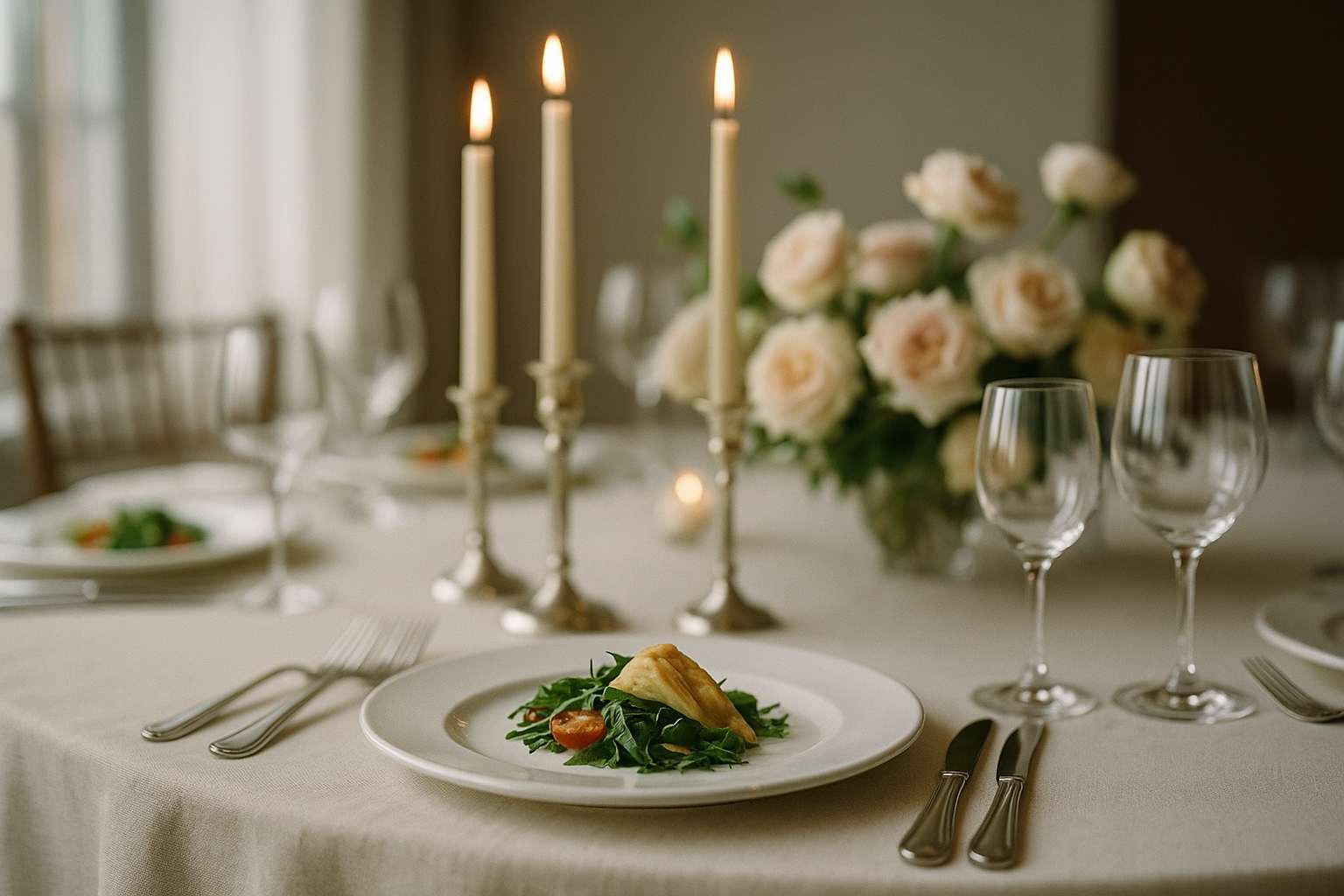
Plated wedding dinners average $80–$150 per person nationally; buffets average $50–$90. The cost gap is real but secondary to a more important question: which service style matches your venue, your guest list, and the atmosphere you want to create? The right answer is not the same for every couple.
Of all the decisions in wedding planning, the choice between a plated dinner and a buffet shapes the reception experience more quietly and more profoundly than most couples expect. It determines how guests move through the room, how long they stay at their seats, how long the evening actually takes, and whether your reception feels like an intimate dinner party or a lively, social celebration. And it accounts for a meaningful share of your catering budget — typically the second-largest line item in the entire wedding, after the venue.
The national average for wedding catering was $6,927 in 2025, according to The Knot's 2026 Real Weddings Study — a figure that spans every service style from cocktail-only receptions to five-course plated dinners. Add bar service and you approach $10,000–$15,000 for a 100–150 guest wedding in a mid-range market. Understanding exactly what drives that number, and which service style puts your budget to work most effectively, is the purpose of this guide.
What does each service style actually cost in 2026?
Price ranges vary by market, caterer, and menu complexity, but national benchmarks from The Knot, WeddingWire, and Zola paint a consistent picture for 2025–2026:
| Service Style | Per-Person Cost (Food Only) | Staff Ratio | Best Guest Count Range |
|---|---|---|---|
| Plated (seated dinner) | $80–$150 | 1 server per 10–12 guests | 20–150 guests |
| Buffet | $50–$90 | 1 server per 18–20 guests | 100–350+ guests |
| Family-Style | $70–$120 | 1 server per 15 guests | 50–150 guests |
| Food Stations | $45–$150+ | 1 chef/server per station | 75–250 guests |
| Heavy Hors d'Oeuvres | $30–$70 | 1 server per 25 guests | 20–150 guests |
Per-person figures are food only. Add $25–$60 per person for bar service. Add a service charge of 18–24% on the combined total, plus sales tax and, separately, gratuity for floor staff. Coastal metro markets (New York, San Francisco, Washington D.C.) run 20–40% above these ranges; Midwest and rural markets run 20–30% below.
The staffing ratio difference between plated and buffet is the most important cost driver. For a 150-guest wedding, plated service requires 12–15 servers; a buffet requires 7–8. At $25–$35 per labor hour per server, that gap translates to $500–$2,000 in additional labor — before the higher food preparation labor required for individually plated courses. This is where the real cost of a plated dinner lives, not in the food itself.
How does the plated dinner experience differ from a buffet — for guests?
The experience gap between plated and buffet service is genuine and worth examining honestly, because it shapes the entire emotional tone of your reception evening.
A plated dinner creates an atmosphere of deliberate elegance. Guests remain seated, courses arrive with choreographed timing, and the unhurried pace — a salad course, a main, perhaps dessert — mirrors the best of restaurant dining. A well-executed plated reception has a theatrical quality: the arrival of plates, the synchronized service, the way a beautifully composed dish elevates the table even before the first bite. Older guests and guests with mobility challenges particularly appreciate not having to navigate a buffet line. Toasts, first dances, and other reception events integrate seamlessly into the seated flow without competing with the logistics of a serving line. The tradeoff is real: even a well-staffed plated dinner takes 90–120 minutes to complete a two-or-three-course service for a full guest count, which compresses the timeline for dancing.
A buffet introduces energy and movement. Guests mingle as they make their way through the line, discover dishes they might not have chosen from a preset menu, and return for seconds of what they loved. For younger, more social guest lists, the movement and informality of a buffet is not a concession — it is genuinely the right call. Buffets accommodate diverse dietary needs naturally: a well-designed buffet can include vegetarian, gluten-free, and allergen-conscious options without the advance RSVP coordination that a plated dinner requires. The primary risk is the serving line itself: without proper management, a room of 150 guests arriving at a single-sided buffet table simultaneously creates a 35-to-45-minute wait that no amount of excellent food can redeem.
The remedy is straightforward: staggered table dismissal. Having your DJ or MC release two to three tables at a time — rather than opening the buffet to everyone at once — is the single most effective logistical adjustment you can make. Supplemented with double-sided buffet tables, which create two serving lanes and halve wait times, this approach manages the flow entirely. Agree on the protocol in writing with your catering captain and DJ well before the wedding day.
Which service style matches your venue — and why does that matter so much?
Every experienced wedding planner will tell you the same thing: the service style must match the venue, because mismatches create friction that no amount of beautiful flowers can smooth over.
Plated service requires adequate kitchen capacity for simultaneous plating of dozens or hundreds of dishes, roughly 12–15 square feet of dining space per guest (versus 8–10 for a buffet) to allow server movement, and a kitchen-to-dining-room distance short enough for food to arrive hot. Many converted barn venues, outdoor tents, and historic properties have limited kitchen capacity or long kitchen runs that make hot plated service logistically difficult. Before committing to plated service at any non-traditional venue, ask your caterer directly: have you executed plated sweep service here before? What was your guest count, and how did timing hold up?
Buffets require different logistics: significant floor space for the buffet table setup itself, adequate circulation lanes between tables and the serving area, electrical access for chafing dishes and heat lamps, and clear sightlines so guests can locate the buffet without searching. The space a buffet table occupies — typically 8–16 linear feet for a mid-size wedding — comes directly out of dance floor or seating area. At intimate venues under 2,500 square feet, a full buffet setup can feel cramped. Consider a condensed double-sided setup or food stations distributed around the perimeter.
The formality alignment matters as much as the logistics. A plated dinner at a rustic outdoor setting can feel incongruously stiff; a generous, beautifully executed buffet at a formal ballroom is achievable but requires deliberate attention to presentation — elevated serving vessels, chafing dishes upgraded to carved wood or brushed copper, staffed carving stations — to read as appropriately refined.
What is the family-style service option, and is it right for your wedding?
Family-style service occupies a genuinely compelling middle ground that has been rising in popularity through 2025–2026. Large shared platters, bowls, and serving dishes are placed at each table — abundance visible and accessible — and guests pass them around and serve themselves, exactly as at a family dinner. The act of passing a platter across a table is itself a social gesture, and for many couples it carries meaning that neither plated nor buffet service can replicate: two families truly becoming one, sharing food in the oldest and most intimate human ritual.
Family-style costs approximately $70–$120 per person nationally, requires one server per 15 guests, and works best at intimate weddings of 50–150 guests. It resonates particularly with couples from Italian American, Greek, Lebanese, Mexican, Korean, and many South Asian traditions where communal eating is an expression of hospitality and belonging. For very large weddings above 200 guests, the logistics of resetting platters across 20 or more tables throughout the meal become unwieldy; buffet or plated service is more practical at scale.
One practical note: family-style service requires larger table surfaces than plated dining, since platters occupy the center of the table throughout the meal. This means smaller floral centerpieces or a shift to elevated arrangements that sit above the platters. Discuss table sizing and centerpiece design with both your caterer and your florist together before finalizing either.
What do service charges and hidden fees actually add to your catering total?
Service charges are among the most consistent sources of budget surprise in wedding catering, and they apply regardless of which service style you choose. Most caterers add a service charge of 18–24% to the entire food and beverage bill — not as a gratuity for your servers, but as a fee covering administrative costs, logistics, and a portion of labor overhead. Sales tax (typically 6–10%) is added on top of that. Gratuity for floor staff — servers and kitchen staff who worked your event — is usually expected separately, often $20–$50 per team member.
Run this math on a $70/person base food quote: add a 20% service charge ($14), 8% sales tax ($6.72), and your food line becomes $90.72 per person before bar service. Add a modest bar package at $30 per person plus its service charge and tax, and your actual per-person cost is approximately $130–$135 — nearly double the base food quote. Always ask your caterer for an all-in per-person estimate that includes food, beverage, staffing, service charge, and tax. The couples most blindsided by their final catering invoice are those who anchored to base food quotes alone. Per WeddingWire's catering cost guide, transparency in itemized proposals is a hallmark of reputable caterers — if a caterer is reluctant to provide a fully itemized all-in quote, treat that as a significant warning signal.
What are the most common mistakes couples make when choosing a service style?
Seven patterns appear consistently in the planning experience of couples who struggled with their catering decision, and every one of them is avoidable.
Choosing on aesthetics alone. A rustic barn venue might inspire a family-style vision, but if the caterer has never executed platter service for 120 guests in that specific kitchen, the experience will not match the aspiration. Always ask for references from couples who held a similarly sized event in the same format at the same venue.
Underestimating buffet staffing. A buffet does not mean minimal service. Servers must clear tables continuously, refill water, assist elderly guests at the line, and replenish food throughout service. The 1:18–20 ratio is a floor, not a target; closer to 1:15 produces a noticeably better guest experience.
Not staggering table releases. Opening a 200-person buffet all at once creates a line that stretches across the room and takes 35–45 minutes to clear. This single logistical choice — handled by a conversation with your DJ and catering captain — makes or breaks the buffet experience.
Ignoring the service charge in budget comparisons. A $60/person plated quote and a $55/person buffet quote look like a $5 difference. After service charges and tax, the real difference is closer to $7–$9 — still real, but far from the decision-making gap most couples assume.
Not collecting dietary restrictions. For plated service, ask for dietary preferences on the RSVP card and ensure your caterer can prepare dedicated covered plates for severe-allergy guests, delivered directly to their seats even if all other guests are at a buffet. This is a standard accommodation any reputable caterer will provide — but only if you ask.
Skipping the formal tasting. Temperature, portion size, and presentation quality can only be assessed in person. Every reputable caterer offers a tasting; request one for your finalized menu, not just a general showcase event.
Not communicating the format to guests. If you are serving heavy hors d'oeuvres rather than a seated dinner, or if the buffet opens late in the evening, include a note on your wedding website. Guests who know what to expect arrive appropriately prepared; guests who expect a 6 p.m. plated dinner and find a cocktail-only setup are not easily won over.
Frequently asked
Is a plated dinner or a buffet more expensive for a wedding?
Nationally, plated dinner service averages $80–$150 per person for food alone, while buffet service typically runs $50–$90 per person — a meaningful difference driven primarily by labor. Plated dinners require one server per 10–12 guests versus one per 18–20 for a buffet, and that staffing gap adds $500–$2,000 in labor costs for a typical 150-guest wedding. However, the buffet cost advantage erodes at smaller guest counts: caterers over-prepare food by 15–20% to prevent running out, which offsets much of the labor savings for groups under 75. For large weddings of 150 or more guests, buffets are generally more cost-effective. For intimate weddings under 75 guests, plated service is often comparably priced and sometimes cheaper due to precise portioning and reduced food waste. Always request an all-in per-person estimate — including service charges of 18–24%, sales tax, and gratuity — before comparing caterers on base price alone.
How do I avoid long lines at a wedding buffet?
Staggered table dismissal is the single most effective tool: have your DJ or MC release two to three tables at a time rather than opening the buffet to all guests simultaneously. This adjustment can reduce peak wait times from 35–45 minutes to under 12. Supplement with double-sided buffet tables — two serving lanes rather than one — which effectively halves the line. For weddings above 150 guests, consider duplicate buffet stations in separate areas of the venue. Place the salad station or bread display separately from the main hot line to reduce congestion. Agree on the table-release order and script with your catering captain and DJ in advance; the head table goes first by tradition. Confirm the protocol in writing with your catering manager six to eight weeks before the wedding.
What is the staffing difference between plated and buffet wedding service?
Plated dinner service requires approximately one server per 10–12 guests to execute sweep service — delivering all plates to a table simultaneously, which is the gold standard for plated receptions. For a 150-guest wedding, that means 12–15 servers on the floor. A buffet requires one server per 18–20 guests for table clearing, water service, and buffet replenishment — roughly 7–8 servers for the same guest count. The plated staffing premium translates to roughly $500–$2,000 in additional labor depending on your market and the caterer's hourly labor rate. Plated service also requires tighter kitchen coordination: all plates for a single table must leave the kitchen simultaneously, which demands more prep staff and a larger or better-organized kitchen. If your venue has limited kitchen capacity — a converted barn, a tent, a historic property — confirm that plated sweep service is logistically achievable before you commit to it.
Does a plated dinner feel more formal than a buffet?
Yes, and consistently so. A plated dinner carries the hallmarks of formal dining: servers delivering courses, guests remaining seated throughout, and timing that builds elegant anticipation. This formality pairs naturally with black-tie dress codes, ballroom venues, and traditional ceremonies. Buffets introduce movement and self-service, which inherently reads as more casual — and for barn venues, outdoor receptions, and younger social guest lists, that energy is genuinely the right fit. Wedding planners consistently advise matching your service style to your venue's formality level. A plated dinner at a rustic outdoor setting can feel stiff; a buffet at a formal ballroom is achievable but requires deliberate presentation — upgraded serving vessels, carving stations, refined signage — to feel appropriately elevated.
What is family-style wedding service, and how does it compare to plated and buffet?
Family-style service places large shared platters and bowls at each table and guests pass them around — exactly as at a family dinner. It is a genuine middle ground: more communal warmth than plated, more intimacy than a buffet. Cost averages $70–$120 per person nationally; staffing requires one server per 15 guests, slightly more than a buffet because servers must replenish and clear platters at each table throughout the meal. It works beautifully for weddings of 50–150 guests, barn and farm venues, and couples from Italian, Greek, Lebanese, Mexican, or South Asian traditions where sharing food carries cultural meaning. For weddings above 200 guests, managing platters across many tables becomes logistically unwieldy — buffet or plated service is more practical at that scale.
What service charge and gratuity fees should I expect from a wedding caterer?
Service charges of 18–24% are virtually universal in wedding catering contracts, applied to the entire food and beverage bill before gratuity. This fee covers administrative costs and back-of-house logistics, but it is not the same as a tip for your servers — many couples assume it is, and it frequently is not. Ask your caterer directly what portion of the service charge reaches floor staff; if none, budget $20–$50 per server and kitchen team member separately. On a realistic all-in basis: a $70/person base food quote with a 20% service charge and 8% sales tax becomes roughly $90–$95 per person before bar service. Always request an all-in per-person estimate covering food, labor, service charge, and tax before comparing caterers on base price alone.
When should I choose a plated dinner over a buffet for my wedding?
Choose plated when your guest count is under 150, your venue has a professional commercial kitchen, you are hosting a formal or black-tie event, and your budget supports the higher staffing cost. Plated service is also the right call for older guest lists — guests with mobility challenges strongly prefer not standing in a buffet line. Choose a buffet when your guest count exceeds 150, your venue has limited kitchen capacity, your budget is tighter, or your guest list has diverse dietary needs better served by multiple options. For most mid-size weddings without a strong formality requirement, the hybrid approach — plated first course at the table, open buffet for entrées — delivers elegance and variety while managing labor costs, and most reputable caterers accommodate it readily.