Food & Drink
Wedding RSVP Dietary Restrictions: How to Ask — and What to Do With the Answers
Asking guests about dietary needs is one of the most meaningful acts of hospitality you can offer. Here is exactly how to word the question, organize the answers, and brief your caterer so every guest feels genuinely cared for.
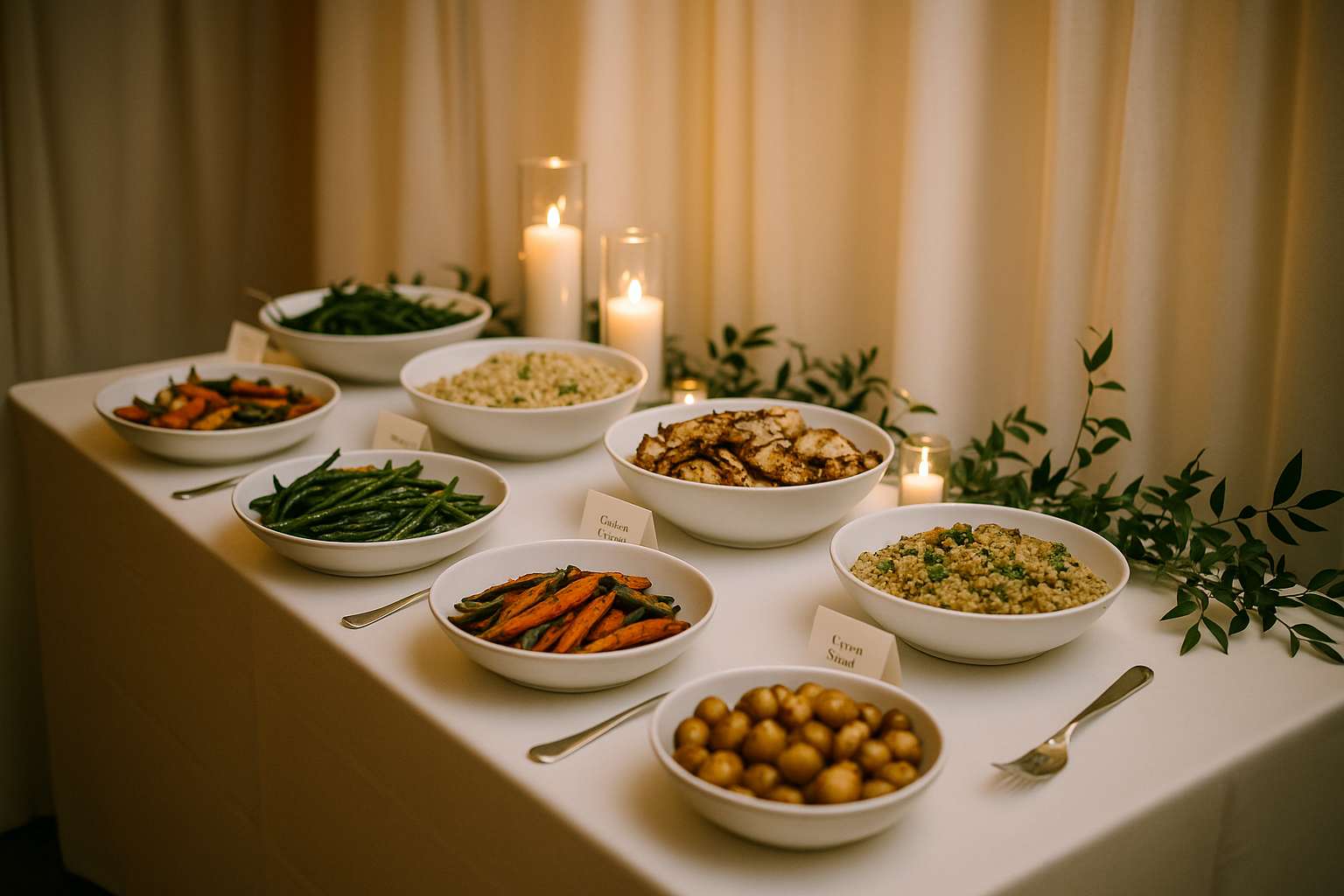
Include a clear, warm dietary restriction question on every wedding RSVP, collect answers at least 5–6 weeks before your wedding, organize the responses into a clean master spreadsheet, and deliver a detailed, prioritized dietary brief to your caterer at least 3 weeks out — following up by phone for any life-threatening allergy cases.
Why Dietary Accommodations Are an Act of Hospitality, Not a Logistics Problem
When a guest with a severe peanut allergy sees a dietary restriction question on your RSVP card, something important happens: they feel safe. They understand that they will not spend your wedding day anxious at the buffet table, reading every label, or quietly declining course after course. That single line on a card is a declaration that you considered them before the celebration began.
According to the CDC's 2024 National Health Interview Survey, approximately 6.7% of U.S. adults have a diagnosed food allergy — representing roughly 32 million Americans. At a 150-person wedding, that is statistically 10 guests with true allergies, plus additional guests with religious requirements (kosher, halal, Hindu vegetarian) and lifestyle choices (vegan, gluten-free, pescatarian). In aggregate, industry planners consistently estimate that 15–30% of guests at a typical American wedding have some form of meaningful dietary need. Ignoring this is not just an oversight — for guests with anaphylaxis-level allergies, it can be genuinely dangerous.
The encouraging news: couples who plan proactively find that accommodating dietary needs is far less complicated than they feared, and often adds richness to the reception experience rather than complicating it.
How Do You Ask About Dietary Restrictions on a Wedding RSVP?
The wording matters because it shapes whether guests respond honestly and completely. Keep the question warm, human, and clearly purposeful:
- "Please let us know if you have any food allergies or dietary restrictions so we can make sure our kitchen is prepared for you."
- "We would love to make sure you're comfortable — please share any dietary needs or food allergies:"
- "Any dietary restrictions or food allergies we should know about? Please include the guest's name."
That last element — asking for the name of the guest with the restriction — is critical for plated service. You need to know which seat requires accommodation, not just how many of a table have a need.
For digital RSVPs through wedding website platforms like Zola, The Knot, or WithJoy, an open-text field captures the most useful detail. Checkboxes (Vegetarian / Vegan / Gluten-Free / Nut Allergy / Other) provide structure for guests who prefer them. Paper RSVP cards should leave two to three blank lines for a complete written answer.
What Are the Key Categories of Dietary Restrictions You Will Encounter?
| Category | Examples | Planning Priority | Action Required |
|---|---|---|---|
| Life-threatening allergy | Peanut, tree nut, shellfish, sesame anaphylaxis | Highest — safety critical | Direct phone call with guest + caterer head chef; written ingredient lists; separate plate protocol |
| Medical dietary requirement | Celiac disease, severe lactose intolerance | High — cross-contamination matters | Dedicated plate prepared separately; inform caterer in writing with severity noted |
| Religious requirement | Kosher, halal, Hindu vegetarian, Jain | High — source certified vendor | Begin sourcing 12–16 weeks out; confirm certification with guest; provide sealed meal |
| Lifestyle / preference | Vegan, vegetarian, gluten-free (non-celiac) | Moderate — design menu inclusively | Build naturally inclusive core menu; offer a genuine vegan entrée option |
| Preference / dislike | Seafood avoidance, general pickiness | Low | No specific accommodation required; note for caterer awareness |
The Dietary Restriction Timeline: From RSVP to Reception
12–16 weeks before the wedding: Discuss your anticipated dietary restriction profile with your caterer when reviewing initial menus. Ask specifically: "How does your kitchen handle severe allergies? What is your cross-contamination protocol?" If any guests will require kosher or halal meals, begin sourcing a specialist caterer or certified supplier immediately — availability in most markets is limited.
8–10 weeks before: Send invitations with a clear dietary field on the RSVP. Set your RSVP deadline at 5–6 weeks before the wedding — one week earlier than you communicate publicly, as 30–40% of guests respond late regardless.
4–6 weeks before: RSVP deadline arrives. Begin compiling your dietary master spreadsheet — name, table number, restriction type, severity, whether a separate plate is needed. Flag anyone with a potentially life-threatening allergy for a direct follow-up call.
3 weeks before: Deliver your clean, organized spreadsheet to your caterer and schedule a phone call to walk through the complex cases together. Email is not sufficient for allergy-critical information — verbal confirmation ensures nothing is missed.
1 week before: Final headcount update sent to caterer. Brief the event-day catering captain on every special plate, their identification method, and their table location.
Day of: Confirm that special plates are flagged with a clear identifier — colored napkins, small printed seat cards, or a notch on the place card work well for plated service. At buffets and stations, labeling must be visible, permanent, and accurate.
Designing a Menu That Accommodates Most Guests From the Start
The most experienced catering professionals consistently offer one counterintuitive insight: the goal is not to build 12 separate menus, but to build one main menu that is naturally inclusive, requiring only targeted additions for the most specific needs. This approach is more elegant, less expensive, and produces a reception where guests with dietary needs do not feel singled out.
A naturally inclusive menu is built around: proteins served with sauces on the side; grain dishes using rice, quinoa, or potatoes rather than wheat pasta; vegetable-forward sides that are inherently vegan and gluten-free; salads with dressings served separately; and a dessert table that clearly labels every item and includes at least one genuinely satisfying vegan and one gluten-free option. When this foundation is in place, the additional cost to accommodate most guests is minimal — vegetarian and gluten-sensitive modifications typically add $0–$20 per plate, while a well-designed vegan entrée adds $5–$20.
Reserve specifically prepared separate plates for celiac disease (cross-contamination requires isolated preparation), certified kosher or halal requirements, and guests with multiple complex restrictions. According to Two Chicks and a Pot, a Washington, D.C. catering company specializing in inclusive menus, building inclusivity into the core design rather than accommodating it as an exception produces better results for both guest experience and catering efficiency.
Frequently asked
What is the best wording for asking about dietary restrictions on a wedding RSVP?
The most effective RSVP wording is warm, clear, and purposeful. A strong open-ended approach: 'Please let us know if you have any food allergies or dietary restrictions so we can make sure our kitchen is prepared for you.' This phrasing is guest-facing rather than logistics-facing — it signals care, not paperwork. For paper RSVP cards, leave two to three blank lines after the prompt to allow for complete answers. For digital RSVPs through wedding websites like Zola, The Knot, or WithJoy, an open-text field captures the most useful detail. You may also offer a brief checkbox list (Vegetarian, Vegan, Gluten-Free, Nut Allergy, Other: ___) for guests who prefer a structured option. Always ask for the name of the guest with the restriction if multiple people are responding on one RSVP — you need to know which seat requires accommodation, not just how many.
How early should I ask about dietary restrictions on the RSVP?
Include the dietary question on your RSVP card from the moment invitations are sent — typically 8–10 weeks before the wedding for most celebrations, 12–16 weeks for destination or holiday weekend weddings. Set your RSVP deadline at least 5–6 weeks before the wedding date. This gives you time to compile the information, follow up with any guests who did not respond, and deliver a clean, organized dietary summary to your caterer at least 3 weeks before the wedding. Caterers need lead time to source specialty ingredients, plan separate preparation protocols for guests with severe allergies, and coordinate with any external vendors for kosher or halal certified meals. Asking two weeks before the wedding leaves almost no margin for meaningful action — by then, your caterer's orders are placed and the menu is largely fixed.
How do we handle kosher or halal requirements for wedding guests?
Kosher and halal requirements are religious commitments that deserve genuine planning. For guests who keep strictly kosher, a sealed certified kosher meal from an approved source is a widely accepted, dignified solution that does not require converting your entire kitchen. Source from a recognized certification agency and confirm the meal arrives sealed and is served without being opened by non-kosher staff. For halal requirements, a certified halal caterer or halal-certified protein can usually be incorporated into your existing menu. Begin sourcing 12–16 weeks before the wedding — certified providers have limited availability. A targeted number of kosher meals is far more cost-manageable than a full kitchen conversion, which carries a 20–40% premium. Always confirm each guest's specific level of observance directly — never assume.
What do we do if a guest discloses a severe food allergy — like a peanut or shellfish anaphylaxis?
A disclosed anaphylaxis-level allergy warrants a direct personal conversation — not just a spreadsheet notation. Call the guest and ask them to describe the allergy precisely: trigger, reaction severity, cross-contamination threshold. Then connect your caterer's head chef directly with you to walk through the specific menu and kitchen protocol. Request ingredient lists in writing for any dish the guest might eat, and confirm that their plate will be prepared on clean surfaces with clean utensils. For plated service, establish a clear identification system — a colored card at the seat or a notch on the place card — so servers deliver the correct plate without confusion. A brief personal note before the wedding, 'We have spoken with our caterer and made arrangements for you,' is one of the most gracious acts of hospitality a host can offer.
Should we design the whole menu to be vegetarian or vegan-inclusive, or offer a separate plate?
The most elegant approach is to design the core menu to be naturally inclusive, rather than creating parallel special plates. Build the base menu around naturally allergen-friendly dishes: proteins with sauces on the side, rice or quinoa rather than wheat pasta, vegetable-forward sides that are inherently vegan and gluten-free, dressings served separately. When designed this way from the start, most vegetarian, dairy-free, and gluten-sensitive guests are accommodated without a separate plate — and without feeling singled out. Reserve specifically prepared separate plates for those with celiac disease (cross-contamination is a medical concern), strict vegan entrée requirements, or complex multi-restriction needs. A beautifully prepared vegan entrée equal in quality to the main course is far better than a pile of side vegetables on a special-request plate.
How do we organize dietary information and share it with our caterer?
Create a master spreadsheet as RSVPs arrive with columns for: guest full name, table assignment, restriction type (allergy, intolerance, religious, preference), specific detail, severity (life-threatening, medical, preference), and whether a separate plate is needed. Sort by table number for easy day-of reference. Categorize clearly — a guest with an EpiPen for tree nuts is fundamentally different from someone who prefers to avoid gluten; your caterer must know which is which. Deliver the spreadsheet to your caterer at least 3 weeks before the wedding, follow up by phone to walk through complex cases, and send a final update one week out. On the wedding day, brief the catering captain personally on every high-priority guest and their table location.