Food & Drink
Seasonal Wedding Menu Ideas for 2026: Spring, Summer, Fall & Winter
The freshest, most delicious, most cost-effective wedding menus are built around what is actually growing. Here are the best seasonal menu approaches for every time of year — with real dish ideas, caterer-approved tips, and honest trade-offs.
seasonal wedding menu 2026spring wedding foodsummer wedding cateringfall wedding menuwinter wedding dinnerfarm-to-table wedding
The quick verdict
The freshest, most cost-effective reception menus are built around what is actually growing. Here are the best approaches for every season — with real dish ideas and caterer-approved strategies.
- Best overall
- Autumn Wedding Menu — Peak-season produce is the most diverse and luxurious of any season — squash, root vegetables, pears, pomegranate, and braised proteins make for the most celebrated reception menus of the year.
- Best value
- Winter Wedding Menu — January through March wedding dates command caterer discounts of 10 to 20 percent, and winter root vegetables and braised meats are among the most affordable premium ingredients on any seasonal calendar.
- Best for Outdoor or garden reception
- Spring Wedding Menu — Light, herbaceous, and vibrantly colored — spring dishes photograph beautifully at natural-light outdoor events and pair perfectly with the season's floral aesthetic.
How we evaluated
We evaluated seasonal wedding menus against five criteria: ingredient availability and cost efficiency, flavor profile suitability for the reception format, guest satisfaction across dietary preferences, catering execution complexity at scale (100 to 200 guests), and 2025–2026 editorial and industry trend data from leading caterers and bridal publications. Each season represents a genuine approach supported by specific, named ingredients and real caterer guidance — not generic descriptions. Pricing references reflect U.S. market estimates as of 2026. Caterer and per-person cost data sourced from Made by Meg Catering, A Spice of Life Catering, Zola, and The Knot editorial.
- Ingredient quality and availability. Is the produce at genuine peak quality during this wedding season, or is it being sourced from a distance or out of season?
- Cost efficiency. Does seasonal sourcing produce meaningful per-head cost savings relative to off-season or imported equivalents?
- Guest satisfaction at scale. Does the menu hold quality and temperature for 100 to 200 guests in a standard catering service format?
- Dietary inclusivity. Does the season offer robust vegetarian, vegan, and allergen-conscious options without feeling like an afterthought?
- Trend alignment. Does this approach reflect 2025–2026 editorial preferences — farm-to-table, interactive stations, elevated comfort food?
Rating scale: Ratings are on a 1–5 scale, in half-point increments, reflecting overall menu quality and execution potential at a wedding scale.
Last verified .
At a glance
| # | Name | Rating | Best for | Pricing |
|---|---|---|---|---|
| 1 | Spring Wedding Menu (March–May) | 5.0 | Garden, outdoor, or estate receptions from late March through May where a fresh, light aesthetic aligns with both the menu and the visual design | $65–$150 per person — spring produce is moderately priced; lamb and seafood are the primary premium variables |
| 2 | Autumn Wedding Menu (September–November) | 5.0 | September through November weddings in any format — especially barn, vineyard, or estate receptions where the harvest aesthetic is part of the overall vision | $70–$175 per person — premium proteins (short rib, duck) add cost but deliver the season's signature richness |
| 3 | Summer Wedding Menu (June–August) | 4.5 | Outdoor, tented, or garden receptions in June through August; coastal weddings where seafood is a centerpiece; couples who want a relaxed, abundant, celebratory food experience | $60–$140 per person — summer produce efficiency reduces costs; premium seafood adds back |
| 4 | Winter Wedding Menu (December–February) | 4.5 | Ballroom, hotel, or indoor receptions in December through February; couples seeking the best catering value; intimate evening weddings where warming, rich dishes suit the atmosphere | $55–$130 per person — off-peak discounts and affordable root vegetable sourcing reduce overall costs significantly |
| 5 | Farm-to-Table Sourcing Strategy (All Seasons) | 4.5 | Couples who prioritize food quality as a top-three wedding experience metric, and who are comfortable with a slightly more flexible menu finalization process | Standard seasonal pricing + 10–20% premium for verified local sourcing |
| 6 | Interactive Seasonal Stations (All Seasons) | 4.0 | Cocktail hour programming at receptions where food is a priority experience, and where the venue floor plan can accommodate dedicated station zones without crowding guest circulation | $400–$1,200 per station additional, beyond base catering |
Spring Wedding Menu (March–May)
Light, herbaceous, and vibrantly colored — spring produces the most photogenic and flavor-forward reception menus of the year
Editor's pick
A spring wedding menu is the most naturally gifted of the four seasons — the produce is vibrant, the flavors are bright, and the color palette that spring vegetables bring to a plate echoes the florals and décor that define spring receptions. This is the season for asparagus in every form: roasted, charred, shaved raw into salads, or draped alongside smoked salmon as a passed hors d'oeuvre. Lamb is the signature spring protein — rack of lamb with fresh mint gremolata and spring pea purée is a classic executed beautifully by experienced catering teams at any scale. Peas, artichokes, fava beans, watercress, and radishes fill out the vegetable program with genuine seasonal specificity, and early strawberries provide dessert options that pair beautifully with a classic wedding cake. For cocktail hour, spring offers perhaps its strongest advantage: cold appetizers and raw preparations — oysters on half shell, chilled asparagus spears with lemon aioli, strawberry and goat cheese crostini — are at their best when the underlying ingredients are this fresh. Guests mingling outdoors in mild temperatures do not want heavy passed bites; spring provides the architecture for a cocktail hour that feels genuinely elegant and light. Practical note: spring produce windows are narrower than summer or autumn. Confirm your caterer's sourcing plan specifically — asparagus at peak in late April is different from asparagus in early March. Build menu finalization into 2 to 3 months before the wedding date to capture exact peak availability. And plan for spring weather variability: a menu that includes some warm, served-hot elements provides insurance for a chillier April evening.
Strengths
- Vibrant, photogenic produce colors that echo spring florals and décor
- Light, fresh flavor profiles ideal for outdoor or garden receptions
- Broad vegetarian options — artichokes, peas, asparagus — without menu compromise
Weaknesses
- Narrow produce windows require more precise caterer sourcing coordination than summer or autumn seasons
- Best for
- Garden, outdoor, or estate receptions from late March through May where a fresh, light aesthetic aligns with both the menu and the visual design
- Pricing
- $65–$150 per person — spring produce is moderately priced; lamb and seafood are the primary premium variables
Source: Made by Meg Catering — Seasonal Wedding Catering Ideas · Visit Spring Wedding Menu (March–May)
Autumn Wedding Menu (September–November)
The richest and most celebrated season for wedding catering — abundant, deeply flavorful, and perfectly paired with the most popular wedding dates on the calendar
Autumn produces the most diverse and celebrated wedding menus of the year. September through November is the peak of the peak: farmers' markets at their fullest, the widest variety of squash and root vegetables, the first stone fruits transitioning into pears and apples, the arrival of pomegranate, and the season's two signature proteins — beef and pork — at their most richly flavored. A well-designed autumn reception menu has a depth and warmth that no other season can replicate. Signature autumn approaches include: a roasted butternut squash soup shooter as a passed cocktail-hour bite; a first course of arugula with sliced pear, candied walnut, and aged Manchego; a main course of braised short rib with celeric purée and roasted Brussels sprouts; and a dessert course featuring seasonal apple and pear tarts alongside the wedding cake. This progression tells the story of the season from beginning to end and is executed reliably at scale by experienced catering teams. For cocktail hour, autumn's luxury is the charcuterie and cheese spread elevated with seasonal additions: fig jam, honeycomb, pickled grapes, and a pomegranate glaze over brie make the standard grazing table feel genuinely seasonal. Interactive stations do their best work in autumn — a chef-attended short rib carving station or a roasted root vegetable bar with compound butters becomes a destination guests return to throughout cocktail hour. One important planning note: September through October is peak wedding season, meaning caterers and produce suppliers are at their highest demand. Book your caterer 9 to 12 months out and finalize menu direction by 3 months before the date to guarantee access to your preferred seasonal ingredients.
Strengths
- The most diverse seasonal produce of any wedding season — widest menu options
- Rich, warming flavor profiles universally well-received by guests
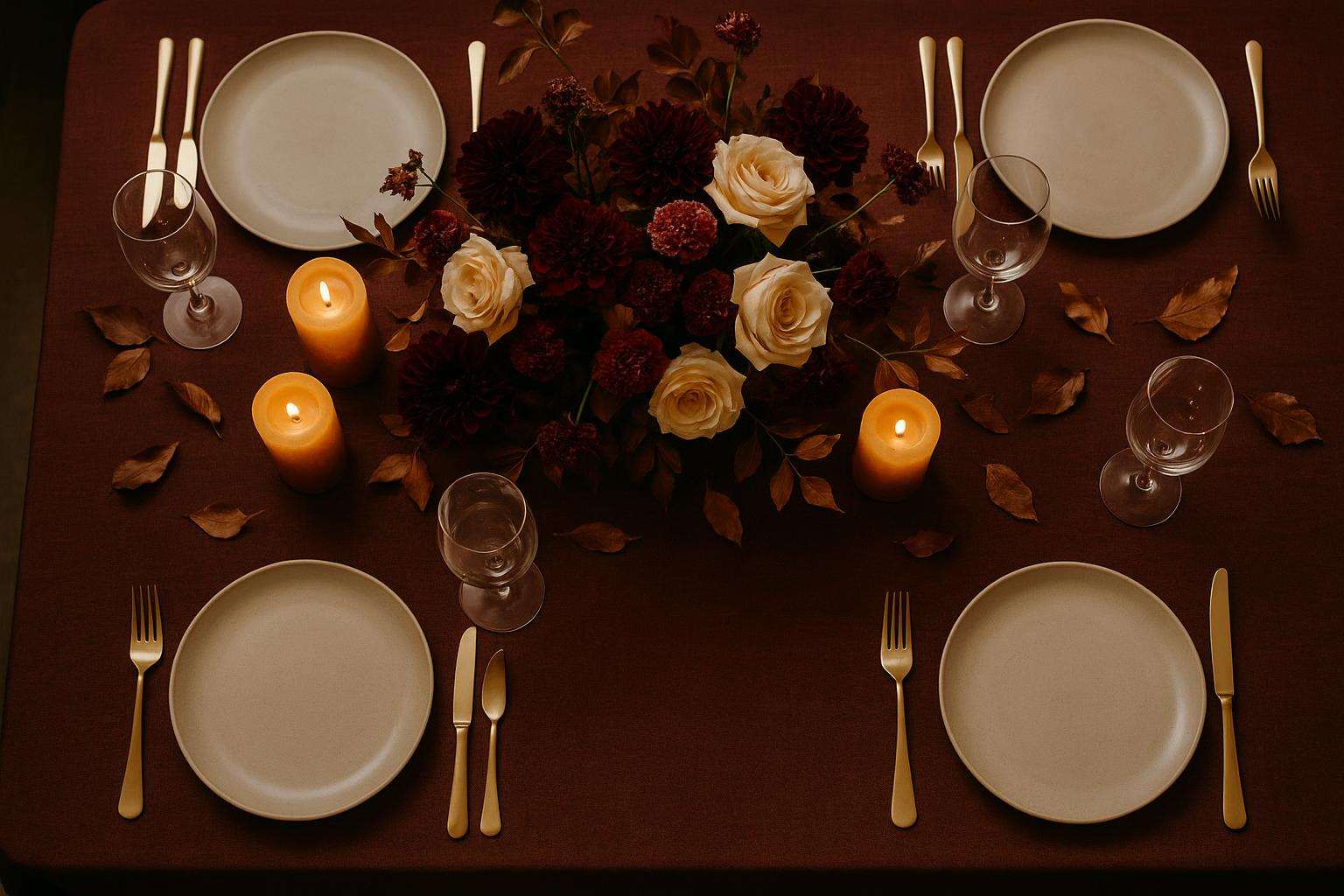
- Natural alignment with autumn wedding aesthetics — terracotta, burgundy, harvest gold
Weaknesses
- Peak wedding season means caterer competition — book 9 to 12 months out or face limited availability
- Best for
- September through November weddings in any format — especially barn, vineyard, or estate receptions where the harvest aesthetic is part of the overall vision
- Pricing
- $70–$175 per person — premium proteins (short rib, duck) add cost but deliver the season's signature richness
Source: Mansion on Main Street — Wedding Menu Ideas by Season · Visit Autumn Wedding Menu (September–November)
Summer Wedding Menu (June–August)
The grilling season and the stone fruit season combined — vibrant, abundant, and ideally suited to outdoor and casual-elegant receptions
Summer wedding menus operate at the intersection of abundance and ease: this is the season where the ingredients are so good that restraint is often more impressive than elaboration. Ripe heirloom tomatoes, sweet corn, peaches, nectarines, berries, and zucchini blossoms are at peak. Seafood — particularly shellfish — is at its most available and often most affordable. The grill, used well, becomes the most compelling centerpiece of a summer reception kitchen. Passionate summer catering approaches include: a gazpacho shooter at cocktail hour; a grilled peach and burrata salad with aged balsamic as a first course; cedar-plank grilled salmon or herb-brined chicken breast as main proteins; and a dessert station featuring mini strawberry shortcakes, fresh berry pavlova, or a classic berry galette alongside the wedding cake. Grilled vegetable stations — with eggplant, zucchini, peppers, corn, and mushrooms alongside a vivid herb-and-tahini sauce — are one of the most successful summer vegetarian elements in the category, holding up beautifully as a standalone station option. The primary practical consideration for summer menus is temperature management. In a July or August reception, hot or delicate dishes must be either served quickly or held in proper temperature-controlled equipment. Cold appetizers and chilled first courses are not just preferable in summer heat — they are the safer catering choice. Brief your caterer specifically on temperature protocols at the tasting. Late-night snack offerings — mini ice cream sandwiches, boozy popsicles — are a crowd favorite and logistically simple to execute.
Strengths
- Peak abundance of produce creates the most cost-efficient market for seasonal ingredients
- Outdoor and casual-elegant reception formats are served naturally by summer's light, vibrant flavors
- Grill-forward menus are crowd-pleasing, visually exciting as live stations, and execution-efficient
Weaknesses
- Temperature management for hot dishes at outdoor or tent receptions in peak summer heat requires more careful catering logistics
- Best for
- Outdoor, tented, or garden receptions in June through August; coastal weddings where seafood is a centerpiece; couples who want a relaxed, abundant, celebratory food experience
- Pricing
- $60–$140 per person — summer produce efficiency reduces costs; premium seafood adds back
Source: Two Chicks and a Pot — Weather-Proof Wedding Catering · Visit Summer Wedding Menu (June–August)
Winter Wedding Menu (December–February)
Rich, warming, intimate — and the season when caterers offer their best discounts to couples who embrace January and February dates
Winter wedding menus are the most underestimated in the category. The cultural association of winter with limitation — fewer fruits, fewer vegetables, less color — is not an accurate reflection of what a skilled caterer can do with the season's actual bounty. Root vegetables (parsnip, turnip, celeriac, beet, carrot) are at peak sweetness after the first frosts. Citrus is abundant and vibrantly acidic — blood orange, Meyer lemon, grapefruit, clementine. Pomegranate, quince, and persimmon provide distinctive flavors unavailable in any other season. Braised meats — short rib, lamb shank, duck confit — are both the most practical and the most celebrated winter proteins. A compelling winter wedding menu might begin with a chilled beet and goat cheese tartlet at cocktail hour, move to a roasted parsnip and apple bisque as a first course, offer a braised short rib with parsnip purée and crispy leeks as the main, and close with a blood orange tart or chocolate peppermint dessert bar alongside the wedding cake. The aesthetic quality of these dishes — deep burgundy, rich ivory, vivid citrus orange — aligns beautifully with winter wedding color palettes. The financial case for winter is the clearest of any season: caterers in January and March offer meaningful discounts to fill their calendars. Industry estimates place the typical savings at 10 to 20 percent versus peak season pricing for equivalent quality. Produce costs are similarly reduced — root vegetables and braised proteins are among the most affordable premium ingredients available. For couples open to a late winter or early spring date, this is where the best catering value per dollar lives.
Strengths
- Caterer discounts of 10 to 20 percent for January through March dates — best per-head value of any season
- Root vegetables and braised meats: rich, warming, deeply satisfying dishes that define winter luxury
- Citrus, pomegranate, and quince provide vivid flavor and color that photographs beautifully
Weaknesses
- Fewer fresh vegetable options than spring or summer require more creative vegetarian menu construction
- Best for
- Ballroom, hotel, or indoor receptions in December through February; couples seeking the best catering value; intimate evening weddings where warming, rich dishes suit the atmosphere
- Pricing
- $55–$130 per person — off-peak discounts and affordable root vegetable sourcing reduce overall costs significantly
Source: A Spice of Life Catering — Wedding Menu Trends · Visit Winter Wedding Menu (December–February)
Farm-to-Table Sourcing Strategy (All Seasons)
The organizing principle that elevates any seasonal menu — hyper-local sourcing, named producers, and menus that change with availability
Farm-to-table is not a season — it is a sourcing philosophy that makes every seasonal menu better. The couples who invest in a caterer with genuine local sourcing relationships consistently receive two things: better-tasting food and more memorable dining experiences for their guests. When a caterer can say 'the asparagus is from Riverbrook Farm fifteen miles from here' or 'the honey in this dessert is from our own apiaries,' guests respond with genuine engagement and delight. Sourcing transparency has become one of the defining differentiators among premium catering companies in the 2025–2026 market. Practically, working with a farm-to-table caterer means your menu is finalized closer to the event date than a traditional catering contract. Most farm-to-table caterers set menu direction 3 to 4 months out and finalize specific varieties and dishes 4 to 6 weeks before the wedding, when exact harvest availability is confirmed. This is a reasonable trade-off — the flexibility produces better food — but it requires couples to be comfortable with a degree of menu uncertainty that some find stressful. Confirm with your caterer exactly when specific dishes and ingredients are locked, and build one tasting session close to the finalization date rather than relying entirely on the tasting done at contract signing. Cost: farm-to-table sourcing typically commands a 10 to 20 percent premium over standard catering at equivalent service levels. That premium represents both the caterer's sourcing relationships and the genuine quality difference in the ingredients. For couples who prioritize food quality as a guest experience metric, it is generally a worthwhile investment.
Strengths
- Produces the highest-quality seasonal ingredients available — peak flavor, not just peak availability
- Guest-facing story ('local farm asparagus') adds a layer of meaning and memorability to the dining experience
- Aligns with 2025–2026 sustainability priorities — reduced transport, local economic support
Weaknesses
- Menu finalized closer to the event date than traditional catering, which some couples find uncomfortable; and typically carries a 10 to 20 percent cost premium
- Best for
- Couples who prioritize food quality as a top-three wedding experience metric, and who are comfortable with a slightly more flexible menu finalization process
- Pricing
- Standard seasonal pricing + 10–20% premium for verified local sourcing
Source: The Aisle Wedding Directory — 2025 Wedding Food Trends · Visit Farm-to-Table Sourcing Strategy (All Seasons)
Interactive Seasonal Stations (All Seasons)
The strongest 2025–2026 catering trend — live-chef stations using peak seasonal ingredients that guests return to throughout the evening
Interactive food stations are not a new concept, but the 2025–2026 iteration — elevated, seasonally specific, chef-attended, and designed as destination experiences rather than self-service lines — represents a genuine evolution. The best modern wedding stations are built around a single seasonal star ingredient: a summer stone fruit station with a peach galette finished tableside; an autumn pasta station where a chef shaves black truffle over freshly made pappardelle; a winter citrus bar with fresh-squeezed blood orange, cara cara, and grapefruit served over artisanal sorbets. These stations serve as both culinary moments and social anchors — guests gather around them, watch the cooking, and linger in conversation. The logistics of interactive stations require careful planning. Live-chef stations need adequate square footage (one station typically occupies 150 to 250 square feet including the chef's workspace and guest gathering area), dedicated equipment (induction burners, chafing units, or open-flame cooking depending on venue permissions), and one experienced chef per station during the active service window. Budget $400 to $1,200 per station beyond standard catering costs, depending on staffing and equipment complexity. Confirm venue fire safety permissions for any open-flame cooking and have your caterer verify the kitchen infrastructure before proposing a station that requires it. For a reception with both a seated dinner and cocktail-hour stations, the stations function best as cocktail-hour features — they give guests an activity and a social moment during the 60 to 75 minutes before the seated meal, without competing with the dinner service experience.
Strengths
- Creates memorable social moments — guests gather, watch, and interact around well-executed live stations
- Maximizes seasonal ingredient impact — the theatrics of preparation enhance the food's perceived quality
- Flexible for any dietary profile — a plant-based pasta station or seasonal vegetable bar serves all guests equally
Weaknesses
- Requires additional floor space, equipment, and staffing — adds $400 to $1,200 per station to catering costs, and venue fire/safety permissions must be verified
- Best for
- Cocktail hour programming at receptions where food is a priority experience, and where the venue floor plan can accommodate dedicated station zones without crowding guest circulation
- Pricing
- $400–$1,200 per station additional, beyond base catering
Source: Zola — 75 Best Wedding Food Ideas · Visit Interactive Seasonal Stations (All Seasons)
Which should you choose?
Couple marrying in peak autumn season · September–October wedding, 120–180 guests
Goal:Rich, crowd-pleasing dinner that matches the harvest aesthetic
Autumn Wedding Menu — The widest seasonal produce variety, the most celebrated flavor profiles, and natural alignment with peak wedding date aesthetics.
Couple with a tight catering budget · January–March wedding, any size
Goal:Premium quality food at the best per-head cost
Winter Wedding Menu — Caterer discounts of 10–20% for off-peak winter dates, combined with affordable root vegetable and braised protein sourcing.
Couple prioritizing guest food experience · Any season, food-forward reception
Goal:The most memorable and talked-about dining experience
Farm-to-Table Sourcing Strategy — Named local sourcing and peak ingredients produce the only dining experience guests describe to their friends after the wedding.
Outdoor or garden wedding couple · Spring or early summer wedding
Goal:Menu that feels as fresh and natural as the outdoor setting
Spring Wedding Menu — Vibrant spring produce, light herbaceous flavors, and cold preparations are perfectly suited to outdoor natural-light receptions.
Frequently asked
Why is a seasonal wedding menu less expensive than an off-season menu?
Ingredients at peak seasonal availability are less expensive for two reasons: supply is high and transport distance is low. A caterer sourcing asparagus in April in the mid-Atlantic is drawing from farms within 50 to 200 miles; a caterer sourcing asparagus in December is likely drawing from Peru or Chile, with corresponding air freight costs. Industry data consistently places the savings from seasonal sourcing at 8 to 15 percent on food costs — which on a 150-person wedding with a $100-per-person food budget represents $1,200 to $2,250 in real savings before touching labor or service. The additional benefit is flavor: ingredients at peak are genuinely different — sweeter, more aromatic, more textured — than the same ingredients sourced out of season. Ask your caterer specifically which items on your proposed menu are in season for your wedding date, and which are not.
How far in advance should I finalize my wedding menu?
For traditional catering contracts, most caterers require menu direction confirmed 3 to 4 months before the wedding, with final headcounts and any last-minute modifications due 10 to 14 days before the event. For farm-to-table or hyper-seasonal menus, the general direction is confirmed at the same timeline, but specific variety selections — which apple, which squash, which citrus — may be finalized 4 to 6 weeks out when harvest availability is confirmed. Schedule your primary catering tasting 4 to 6 months before the wedding, confirm the menu direction at that tasting, and plan a brief second tasting or confirmation call 6 to 8 weeks before the event if you are working with a seasonal or farm-to-table caterer. Do not make significant menu changes in the final 2 weeks — caterers need adequate sourcing time for quality ingredients.
What seasonal menu options work best for guests with dietary restrictions?
Every season offers strong options for vegetarian, vegan, and allergen-conscious guests — the key is building them into the menu design rather than treating them as afterthoughts. Spring provides artichokes, asparagus, fava beans, and peas as vegetarian centerpieces rather than side dishes. Summer's corn, heirloom tomatoes, and zucchini blossoms support a full vegetarian entrée station with genuine seasonal character. Autumn's roasted butternut squash and mushroom risotto is one of the most popular vegetarian main courses in any season's repertoire. Winter's roasted root vegetable and lentil programs, or a celery root and apple bisque, deliver warming, satisfying vegetarian mains. In all cases, request that the caterer design the vegetarian option as a complete, beautifully plated dish — not a plate of sides — and confirm it at the tasting. A robust, seasonally appropriate vegetarian main is the single most frequently praised element of any reception menu by non-vegetarian guests who simply prefer the option.
What is the best late-night snack for each season?
Late-night snacks are now close to standard at full-evening receptions, and pairing them with the season adds a layer of thoughtfulness guests genuinely notice. Spring: mini lemon curd tarts or strawberry shortcake bites. Summer: mini ice cream sandwiches, boozy popsicles, or a fresh fruit sorbet station. Autumn: mini apple cider doughnuts, pumpkin bourbon mini pies, or a s'mores station with seasonal flavored chocolates. Winter: hot chocolate with house-made toppings, warm cinnamon-glazed doughnut holes, or mini mac and cheese cups as a savory late-night option. The universal crowd-pleaser regardless of season remains the elevated comfort food format — mini cheeseburgers, truffle fries, or a ramen cup — because it signals the transition to a looser, more celebratory late-evening atmosphere regardless of what the earlier courses communicated.
Should I have a cocktail-hour menu that matches the dinner menu?
Cohesion between the cocktail-hour menu and the dinner menu is one of the most underappreciated elements of a well-designed reception. Guests who experience an asparagus bruschetta at cocktail hour and then asparagus alongside their entrée feel the menu was assembled hastily. A cohesive approach uses the season's ingredients strategically: cocktail hour introduces the season's flavor profile through small, bold, individually handled bites; dinner develops that profile through a full composed meal; and dessert closes the story. For spring, cocktail hour might feature pickled ramps and ricotta crostini or asparagus with smoked salmon — flavors that prime the palate for a lamb entrée. For autumn, cocktail hour might feature roasted pumpkin soup shooters or fig-and-brie flatbreads that foreshadow the braised protein and harvest flavors of dinner. Work with your caterer to establish this narrative across the full evening.