Food & Drink
Signature Wedding Cocktail Ideas for 2026: 8 Recipes, Styles & Concepts
A signature cocktail is the most personal detail at your bar — a drink that tells your story, photographs beautifully, and gives your guests something to talk about. These eight ideas span every aesthetic and every season, each with a real recipe framework and a non-alcoholic twin.
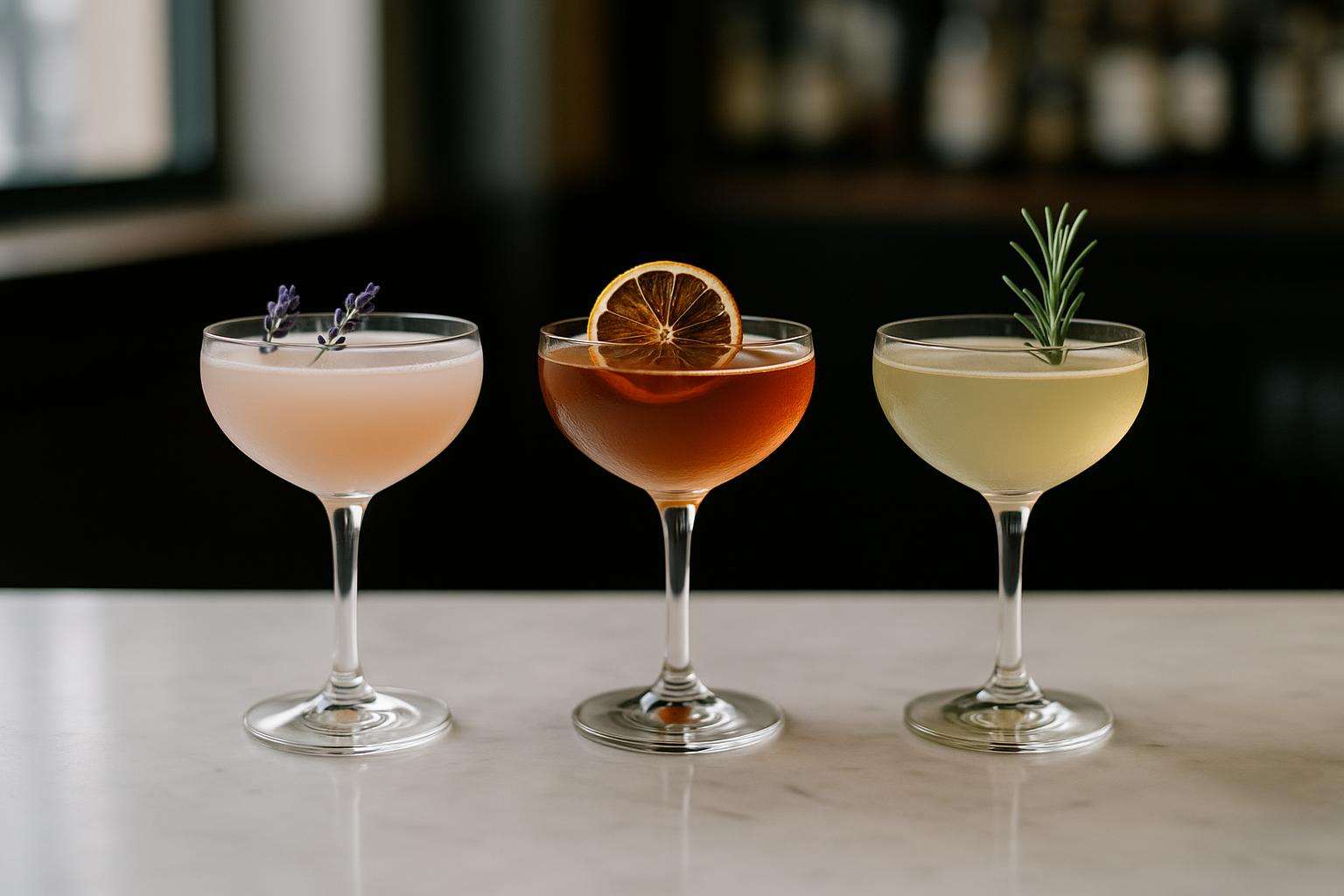
signature wedding cocktailsbatchable recipesbotanical drinksespresso martini stationmocktail parity
The quick verdict
These eight signature cocktail concepts — each with a non-alcoholic twin — are the most requested and most photographed drinks at 2025–2026 receptions. Work with your bartender to develop the one that tells your story.
- Best overall
- The Botanical Elderflower Spritz — The most universally crowd-pleasing signature cocktail in 2026 — easy to batch, stunningly photogenic in blush or gold, equally beautiful as a mocktail, and approachable to every palate.
- Best value
- The Warm Spiced Cider Cocktail — Low ingredient cost, easy large-batch preparation, and perfect for fall and winter weddings where a warm drink station becomes a guest gathering point through the evening.
- Best for Late-night reception energy
- The Espresso Martini Station — Nothing revives a reception after dinner like a freshly served espresso martini. A dedicated station during dessert is one of the most talked-about wedding bar details of the 2025–2026 season.
How we evaluated
These eight concepts are drawn from current 2025–2026 wedding reception trends, bar industry reporting, and the criteria that make a signature cocktail genuinely successful at a wedding: visual impact, batchability at scale, broad appeal, a meaningful non-alcoholic version, and the ability to tell a story in a cocktail card. Each concept has been framed as a recipe architecture rather than a rigid formula — work with your specific bartender to refine quantities, source local spirits, and adjust for your crowd size.
- Batchability. How easily can this cocktail be made in large quantities ahead of service and held without flavor degradation over a 3-to-5-hour reception window.
- Visual impact. Color, glassware, and garnish opportunities — a signature cocktail should be photographically distinctive on a tray.
- Broad appeal. Whether the flavor profile works for guests with varying alcohol preferences and palates, without being so neutral it loses character.
- Mocktail parity. The quality and thoughtfulness of the non-alcoholic version — not an afterthought, but a genuinely beautiful drink in its own right.
- Story potential. How naturally the drink's name and origin connect to a couple's relationship story for the cocktail card narrative.
Rating scale: Ratings on a 1-5 scale across five criteria.
Last verified .
At a glance
| # | Name | Rating | Best for | Pricing |
|---|---|---|---|---|
| 1 | The Botanical Elderflower Spritz | 4.9 | Spring and summer cocktail hours; couples who want a universally crowd-pleasing, photogenic signature with an excellent mocktail twin | $4–$7 per serving in ingredient cost; St-Germain $30–$35/bottle at major retailers |
| 2 | The Espresso Martini Station | 4.8 | Late-reception energy after dinner; couples who want a theatrical, guest-facing bar moment | $6–$10 per serving; Mr. Black Coffee Liqueur $25–$30/bottle; cold brew concentrate $8–$12/bottle |
| 3 | The Aperol Spritz Station | 4.7 | Cocktail hour at spring and summer weddings; couples who want an instantly recognizable, photogenic aperitivo | $4–$7 per serving; Aperol $22–$25/bottle; prosecco at your preferred tier |
| 4 | The Garden Gin Sour | 4.6 | Garden and spring weddings; cocktail hour features where a fresh, herbaceous drink suits the setting | $7–$10 per serving; Hendrick's gin $35–$38/bottle; aquafaba available in bulk from any canned-chickpea supply |
| 5 | The Warm Spiced Cider Cocktail | 4.5 | Fall and winter receptions; budget-conscious couples who want a warm, aromatic gathering point | $3–$5 per serving; fresh-pressed cider $6–$10/gallon; bourbon $28–$35/bottle |
| 6 | The Blood Orange Paloma | 4.4 | Summer and early fall weddings; couples honoring Mexican heritage or a travel connection with a vibrant, batchable drink | $5–$8 per serving; Espolòn blanco tequila $25/bottle; blood orange juice varies by season and source |
| 7 | The Tableside Smoked Old Fashioned | 4.3 | Fall and winter cocktail hours; spirit-forward couples who want drama and a cinematic reveal moment | $9–$14 per serving including labor and smoking kit amortization; Maker's Mark $28–$32/bottle; smoking kit $45–$65 |
| 8 | The Heritage Sake Yuzu Sour | 4.2 | Couples honoring Japanese heritage or a Japan travel connection; receptions wanting a refined, distinctive signature | $6–$10 per serving; junmai sake $12–$20/bottle; yuzu juice $10–$15 per 100ml bottle |
The Botanical Elderflower Spritz
The most crowd-pleasing and photogenic signature drink of the 2025–2026 season
The elderflower spritz has emerged as the defining signature cocktail of spring and summer 2026 — and for excellent reason. It is delicate without being timid, floral without being perfumed, and the pale champagne-gold color with a blush tint from a splash of hibiscus or cranberry juice photographs beautifully on any table. The base is St-Germain elderflower liqueur (produced by St-Germain in France and widely available in the U.S. at $30 to $35 per bottle), combined with dry prosecco or Sauvignon Blanc, a squeeze of fresh lemon, and a top of sparkling water to extend the effervescence over a service window. A sprig of fresh thyme or a dried lavender bloom placed across the rim of a champagne flute or coupe glass completes the presentation. The cocktail batches impeccably: combine St-Germain, wine, and citrus in a large chilled vessel; add individual sparkling water toppers at service for freshness. At scale, the per-drink ingredient cost runs $4 to $7 depending on prosecco tier. The mocktail version is one of the strongest in this guide: substitute St-Germain with Seedlip Spice 94 or a house-made elderflower cordial (elderflower syrup, lemon juice, and sparkling water), and the result is a genuinely sophisticated drink that needs no apology. Story potential is high: name it after your garden, your engagement destination, or an inside reference that appears on your cocktail card.
Strengths
- Highly batchable with no quality degradation over 4-plus hours when sparkling water is added at service
- Universally appealing flavor profile that works for guests who prefer wine, cocktails, or lighter drinks
- Mocktail version using elderflower cordial and sparkling water is one of the most beautiful non-alcoholic wedding drinks available
Weaknesses
- Flavor can read as overly feminine for some guests; couples wanting a bolder, spirit-forward signature should look elsewhere
- Best for
- Spring and summer cocktail hours; couples who want a universally crowd-pleasing, photogenic signature with an excellent mocktail twin
- Pricing
- $4–$7 per serving in ingredient cost; St-Germain $30–$35/bottle at major retailers
The Espresso Martini Station
The most-requested wedding bar addition of 2025–2026 — a late-reception energy revival with theatrical flair
The espresso martini has been the most-searched cocktail in the United States for three consecutive years, and its presence at wedding receptions has exploded accordingly. A dedicated espresso martini station during dessert or the latter half of the reception has become one of the most talked-about bar details of the season — and with good reason. The drink is visually stunning (a chocolatey-dark liquid topped with a perfect foam head and three espresso beans), deeply satisfying, and provides exactly the kind of mid-reception energy revival that keeps guests on the dance floor. The key to quality at scale is cold brew concentrate rather than freshly pulled espresso shots, which create a bottleneck. Batch the cocktail the night before using high-quality cold brew concentrate (available from Chameleon, La Colombe, or Stumptown at retail), vodka, and Kahlúa or Mr. Black Coffee Liqueur. Shake each serving individually with ice immediately before serving — the shaking technique is what creates the foam head, and it cannot be pre-batched. A station with two or three bartenders shaking to order during the dessert hour is theatrical, delicious, and creates natural energy around the bar at exactly the moment in the evening when it tends to flag. The mocktail version — cold brew concentrate, simple syrup, oat milk foam, and sparkling water — is similarly beautiful and satisfying. Budget for Mr. Black Coffee Liqueur ($25 to $30 per 750ml, available at Total Wine and most specialty retailers), quality cold brew concentrate ($8 to $12 per bottle), and vodka at your preferred tier.
Strengths
- Creates a theatrical, guest-facing performance moment at the dessert station that guests actively gather around
- The foam head from individual shaking makes every served drink visually dramatic and photograph-ready
- Cross-appeals to coffee lovers, cocktail drinkers, and guests who want something specific and memorable rather than generic bar fare
Weaknesses
- Cannot be fully pre-batched — individual shaking for foam creation means slower service per drink than a poured signature; requires 2–3 dedicated bartenders at the station for groups above 80
- Best for
- Late-reception energy after dinner; couples who want a theatrical, guest-facing bar moment
- Pricing
- $6–$10 per serving; Mr. Black Coffee Liqueur $25–$30/bottle; cold brew concentrate $8–$12/bottle
Source: Brides Signature Cocktail Ideas
The Aperol Spritz Station
The iconic Italian aperitivo that doubles as one of the most beautiful cocktail hour drinks imaginable
The Aperol Spritz — Aperol, prosecco, a splash of soda, garnished with a half orange wheel — has achieved the rare status of a genuinely timeless cocktail that simultaneously feels current, and its deep orange color against a wine glass or balloon glass makes it one of the most visually arresting drinks you can serve. As a cocktail hour signature, it works on multiple levels: the bitterness of the Aperol is approachable and food-friendly (ideal alongside passed appetizers), the effervescence keeps guests refreshed, and the build is simple enough that a single bartender can produce dozens per hour. Aperol itself is moderately priced (around $22 to $25 for 750ml at most retailers, including Total Wine and BevMo), and the prosecco you choose shapes the drink's quality ceiling. The traditional Italian ratio is three parts prosecco, two parts Aperol, one splash of soda water. For a wedding crowd, slightly reducing the Aperol ratio (2 parts Aperol to 3 parts prosecco) creates a lighter, more crushable drink without losing the character. Orange wheels are the standard garnish; a sprig of fresh rosemary or a thin slice of blood orange elevates the presentation. The mocktail version is excellent: substitute Aperol with a house-made bitter orange cordial (orange juice, white wine vinegar, a touch of grapefruit bitters, and sugar) finished with tonic water. The visual result is nearly identical. A variation: swap Aperol for Lillet Blanc, adding peach juice and elderflower for a lighter, more floral interpretation that photographs in beautiful pale gold.
Strengths
- Immediately recognizable and appealing to guests who have encountered the drink — zero explanation required
- Deep sunset-orange color is among the most photogenic of any cocktail in standard wedding photography
- Batches well; the build can be pre-staged by the bottle and assembled at service in under 30 seconds per drink
Weaknesses
- The slightly bitter profile of Aperol is polarizing; guests who dislike bitterness will not return for a second, so this works best as one of two signature options rather than the sole signature
- Best for
- Cocktail hour at spring and summer weddings; couples who want an instantly recognizable, photogenic aperitivo
- Pricing
- $4–$7 per serving; Aperol $22–$25/bottle; prosecco at your preferred tier
The Garden Gin Sour
A fresh, herbaceous cocktail that celebrates spring and summer weddings with elegant restraint
A gin sour built on fresh cucumber, fresh basil or mint, and a touch of elderflower liqueur captures the essence of a garden wedding in a single glass — fresh, aromatic, and unabashedly pretty. The base formula: a London dry or contemporary floral gin (Hendrick's, which retails at approximately $35 to $38 per 750ml at most major retailers, is the most crowd-accessible floral gin; Botanist or Empress are beautiful alternatives), fresh cucumber juice or a cucumber simple syrup, fresh lemon juice, a small pour of St-Germain, and egg white or aquafaba for foam. Shaken hard with ice and strained into a coupe, the foam surface becomes a canvas for an edible flower or a few drops of butterfly pea flower tea for a color gradient effect. The visual payoff is extraordinary — and the aquafaba substitute for egg white ensures guests with dietary restrictions can enjoy it without a second thought. This cocktail benefits from individual preparation (the foam requires shaking) but can be semi-batched: pre-mix the gin, cucumber syrup, lemon juice, and St-Germain in a large vessel and add aquafaba and ice for each individual shake. The mocktail version — cucumber-lemon agua fresca with elderflower cordial and aquafaba foam — is genuinely elegant. The naming possibilities for this drink are among the most evocative in the guide: 'The Rosedene Garden' (after the couple's venue), 'The June Morning' (for a June wedding), or simply 'The Green Hour' as a nod to the gin world's absinthe heritage.
Strengths
- Aquafaba foam technique creates a striking visual surface that holds up for 5 to 7 minutes — enough for photography
- The cucumber-lemon-elderflower flavor profile is broadly appealing and works as a standalone even for guests who are skeptical of gin
- Adaptable: the base formula works equally well with vodka for guests who find gin assertive
Weaknesses
- Requires individual preparation for the foam element, making this moderately labor-intensive at scale; works best as a cocktail hour feature rather than a full-reception signature
- Best for
- Garden and spring weddings; cocktail hour features where a fresh, herbaceous drink suits the setting
- Pricing
- $7–$10 per serving; Hendrick's gin $35–$38/bottle; aquafaba available in bulk from any canned-chickpea supply
The Warm Spiced Cider Cocktail
The ideal signature drink for fall and winter weddings — comforting, aromatic, and guaranteed to become a guest gathering point
For autumn and winter receptions, a warm drink station is one of the highest-impact bar additions in the entire event. The sight and smell of warm spiced cider gently simmering in a large copper or ceramic vessel — the cinnamon, clove, and apple aromas threading through the reception space — creates an immediate sensory experience that cold cocktails simply cannot replicate. The base formula is accessible and economical: fresh-pressed apple cider (ideally from a regional orchard if your wedding is in apple country — check your area's farmers markets for local press options), cinnamon sticks, whole cloves, star anise, orange peel, and a small amount of maple syrup or brown sugar for depth. For the alcoholic version, add bourbon (Bulleit or Woodford Reserve at the $28 to $35 range are well-suited, with flavor profiles that complement apple naturally) or dark rum at service. Guests ladle or are poured their chosen version from a station, adding the spirit themselves if desired — a participatory element that guests enjoy. The mocktail version is the same base drink without the spirit; it requires no modification and is arguably the best non-alcoholic option at any fall or winter reception. Serve in clear glass mugs or copper Moscow Mule cups for visual warmth. A cinnamon stick in the glass, a thin orange wheel, and a star anise floating on top complete the presentation. This drink is among the least expensive to produce at scale — a gallon of fresh cider serves approximately 16 guests, and spice additions are minimal in cost.
Strengths
- The lowest per-serving ingredient cost of any concept in this guide — economical at scale without appearing budget-conscious
- Creates a sensory (aromatic) presence in the reception space that photographs and creates atmosphere beyond the drink itself
- Works for guests of all alcohol preferences since the spirit is optional and added at service
Weaknesses
- Highly seasonal — appropriate only for October through February weddings; would feel incongruous at a summer garden reception
- Best for
- Fall and winter receptions; budget-conscious couples who want a warm, aromatic gathering point
- Pricing
- $3–$5 per serving; fresh-pressed cider $6–$10/gallon; bourbon $28–$35/bottle
Source: Brides Signature Cocktail Ideas
The Blood Orange Paloma
A vibrant, fruit-forward tequila cocktail that celebrates color and honors Latin heritage with contemporary elegance
The Paloma — tequila, grapefruit juice, lime, and a salt rim — is Mexico's most popular cocktail and has been steadily growing in visibility at American weddings as couples bring cultural heritage to their bar programs. A Blood Orange Paloma elevates the formula: blanco tequila (Espolòn, which retails around $25 for 750ml, is excellent quality at an accessible price point), fresh blood orange and grapefruit juice combined, fresh lime, a tajin-spice salt rim, and a top of grapefruit sparkling water. Served over ice in a highball glass with a fresh blood orange wheel and a lime round, the deep ruby-to-orange color gradient is stunning and immediately identifiable on a tray. The flavor is bright, tart, and refreshing — well-suited for afternoon and early evening receptions, and particularly appropriate for summer and early fall weddings. For couples with Mexican family heritage or who are honoring a Mexican travel connection, the cocktail card can name this drink after a specific place, memory, or family tradition. The mocktail version — blood orange and grapefruit juice, fresh lime, sparkling water, and tajin salt rim — is among the best non-alcoholic options in this guide: genuinely refreshing, complex in flavor, and indistinguishable from its alcoholic counterpart in visual presentation. This cocktail batches beautifully; combine tequila, juices, and lime in advance and top individual glasses with sparkling water at service.
Strengths
- Deep ruby-to-orange color is among the most visually dramatic of any cocktail for photography and tray service
- Highly batchable base that holds for 4-plus hours when citrus is balanced and sparkling water is added at service
- The tajin rim adds a distinctive visual and flavor detail that guests immediately notice and remember
Weaknesses
- Blood orange season is limited to January through April in the U.S., making fresh blood orange juice a seasonal constraint; quality orange juice or pomegranate juice can substitute visually but alters the flavor profile
- Best for
- Summer and early fall weddings; couples honoring Mexican heritage or a travel connection with a vibrant, batchable drink
- Pricing
- $5–$8 per serving; Espolòn blanco tequila $25/bottle; blood orange juice varies by season and source
The Tableside Smoked Old Fashioned
A theatrical, spirit-forward experience that turns a classic cocktail into a guest performance moment
The smoked old fashioned is the signature cocktail for the couple who wants drama at their bar — and for fall and winter weddings, there is no more sophisticated statement. The base is a high-quality bourbon or rye (Maker's Mark at $28 to $32, or Bulleit Rye at $30 to $33, are ideal at the accessible premium tier), demerara syrup, aromatic bitters, expressed orange peel, and a large clear ice cube. The theatrical element: the bartender places a wood-chip smoking vessel over the top of the rocks glass, lights the chip to create a fragrant smoke cloud (cherrywood and applewood are the most crowd-pleasing flavors), and caps the glass for 20 to 30 seconds before unveiling it tableside. The smoke cloud that escapes when the glass is uncovered produces an audible guest reaction every single time — and it photographs with exceptional drama. The process takes approximately 45 to 60 seconds per drink from pour to delivery, meaning this works best as a cocktail hour feature for 50 to 80 guests rather than a full-reception open signature for 150-plus. Cocktail smoking kits are available from brands like Aged & Infused (starter kits run $45 to $65) and can be demonstrated to your bartending team well in advance of the event. The mocktail version — cold brew or black tea, demerara syrup, aromatic bitters, orange bitters, and the same smoking treatment — is genuinely impressive and requires no apology.
Strengths
- The smoke reveal moment creates the most reliably theatrical guest reaction of any cocktail on this list — it becomes a focal point of cocktail hour
- Visually extraordinary for videography — the smoke cloud and glass reveal are naturally cinematic
- The smoking technique can be applied to a custom mocktail version with equal dramatic effect, ensuring full parity
Weaknesses
- Significantly slower service speed than batched cocktails — the 45-to-60-second preparation time per drink limits throughput; appropriate for cocktail hour feature or intimate receptions, not as a high-volume open bar signature
- Best for
- Fall and winter cocktail hours; spirit-forward couples who want drama and a cinematic reveal moment
- Pricing
- $9–$14 per serving including labor and smoking kit amortization; Maker's Mark $28–$32/bottle; smoking kit $45–$65
The Heritage Sake Yuzu Sour
A refined, culturally meaningful signature for couples honoring Japanese heritage or a Japan travel connection
As signature cocktails have evolved from generic crowd-pleasers to genuine storytelling vehicles, the heritage spirit cocktail — built around a spirit or ingredient that reflects the couple's cultural roots, family heritage, or meaningful travel experience — has emerged as one of the most personal and memorable options available. The Sake Yuzu Sour is a beautiful example: junmai sake (a clean, food-friendly rice wine available from brands like Sho Chiku Bai or Gekkeikan at $12 to $20 for a 750ml), yuzu juice or yuzu kosho-infused syrup (yuzu is a Japanese citrus with a flavor profile between lemon and grapefruit; bottled yuzu juice is available at Whole Foods, H-Mart, and most Asian grocery chains at $10 to $15 for 100ml), a small amount of elderflower liqueur, a dash of citrus bitters, and a topping of sparkling water. Served in a coupe or champagne flute with a shiso leaf or edible flower float. The color — pale gold to ivory — is elegant and distinctive. The flavor is unlike anything typically encountered at a Western wedding bar: floral, citrus-forward, and delicate. For couples with Japanese family heritage, a honeymoon in Japan, or simply a deep personal connection to Japanese food culture, this drink becomes a beautiful act of cultural honoring that guests almost universally respond to with curiosity and delight. The mocktail version — yuzu-soda with elderflower cordial and a shiso leaf — is one of the most interesting non-alcoholic drinks in contemporary wedding bar programming.
Strengths
- Genuinely distinctive flavor and cultural identity that no other cocktail on this list can replicate — guests who encounter it for the first time remember it
- Lower per-serving alcohol content than spirit-based drinks makes it appropriate for guests who prefer lighter options without a visible deprivation
- The yuzu-forward mocktail version is so sophisticated that it serves equally well for non-drinking guests without any modification to the presentation
Weaknesses
- Yuzu juice can be difficult to source in sufficient quantities outside of major metro areas; confirm sourcing with your caterer or bartender well in advance, and identify a backup citrus if needed
- Best for
- Couples honoring Japanese heritage or a Japan travel connection; receptions wanting a refined, distinctive signature
- Pricing
- $6–$10 per serving; junmai sake $12–$20/bottle; yuzu juice $10–$15 per 100ml bottle
Source: Brides Signature Cocktail Ideas
Frequently asked
When should you develop your signature cocktail with a bartender or mixologist?
The right timeline for signature cocktail development is 3 to 4 months before your wedding. This gives you enough time to taste-test at least two or three concept variations, refine the recipe to your preference, confirm that the drink batches well at volume (a recipe that works in a home kitchen may behave differently when made in 10-gallon batches), and finalize the garnish and glassware presentation. If you are hiring an outside mixologist for consultation rather than using your caterer's in-house team, plan for a $200 to $500 development fee, which includes the tasting session and final recipe documentation. Do not wait until 4 to 6 weeks before the wedding — you will not have enough time to test properly, and last-minute ingredient sourcing challenges are common, especially for specialty items like yuzu juice, edible flowers, or specific liqueurs.
Should you serve one signature cocktail or two?
Most couples benefit from two signature cocktails when budget and bar staffing allow: one lighter, lower-alcohol option (a spritz or sour) that works well for cocktail hour, and one more spirit-forward or seasonally specific option that works well for the reception proper. Two options ensures broader coverage for guests with different alcohol preferences, gives your bar display more visual interest, and allows you to change the energy of the bar program across the arc of the evening. The practical constraint is bar staffing: a second complex signature cocktail adds preparation time and may require an additional bartender. If your event runs a single bar with two bartenders, two batchable signatures is entirely manageable. If you are working with a single bartender, one well-executed signature is preferable to two that are inconsistently made.
What should a signature cocktail card say?
A signature cocktail card (typically a small framed card or branded signage at the bar) should include three elements: the cocktail's name, a brief and warm two-to-three-sentence description of the drink and its story connection to the couple, and the key ingredients. The story is more important than the ingredient list — guests care less about the specific gin and more about why the drink is named what it is. An example: 'The Starling Bridge — a lavender gin spritz inspired by the evening we got engaged in the French countryside, where the fields were in full bloom. Gin, elderflower, lavender syrup, and prosecco. Ask us for the rest of the story.' Keep the language warm, specific, and brief. A cocktail card that requires a paragraph to read will not be read.
How do you make sure non-drinking guests feel equally celebrated at the bar?
The standard for non-alcoholic wedding bar programming has shifted significantly in 2025–2026. Offering water and soda as the only non-alcoholic options reads as an afterthought — and an increasing number of your guests will actively notice. Every signature cocktail on your program should have a genuine non-alcoholic twin served in identical glassware with the same garnish. Beyond the mocktail, consider a beverage station that stands on its own: a sparkling herbal lemonade with fresh mint and rose petals, a chilled cucumber-lime agua fresca, or a signature tea or shrub soda. Brands like Seedlip, Lyre's (a full range of non-alcoholic spirit alternatives), and Proxies (non-alcoholic wine alternatives) have made sophisticated zero-proof bar programming genuinely accessible. The goal is a non-drinking guest who finishes the evening feeling as celebrated and well-hosted as every other guest — not as a recipient of an afterthought.
How much alcohol do you need for a signature cocktail for 100 guests?
For a single batched signature cocktail served alongside a full open bar, plan for approximately 30 to 40 percent of guests to choose the signature drink during cocktail hour, with a smaller percentage returning during the reception. For 100 guests, this suggests roughly 35 to 45 servings during cocktail hour — the highest-consumption window. A standard 750ml bottle of most spirits yields approximately 17 cocktail servings at 1.5 oz per pour. At 35 servings, you need approximately 2 to 3 bottles of the primary spirit, plus proportional quantities of mixers. The practical approach: share your signature recipe and expected guest count with your caterer or bar team and ask them to calculate the volume. Purchase with a 15 percent overage at a retailer with a return policy (Total Wine and Costco both accept returns on unopened alcohol) — this eliminates the risk of running out without wasting money on surplus.