Food & Drink
Wedding Cake Cutting Tradition: History, Etiquette & Meaning
The wedding cake cutting is among the oldest continuous rituals in Western marriage — a shared act of partnership, provision, and joy. Here is everything couples need to know about its origins, its step-by-step etiquette, and how to make it personal.
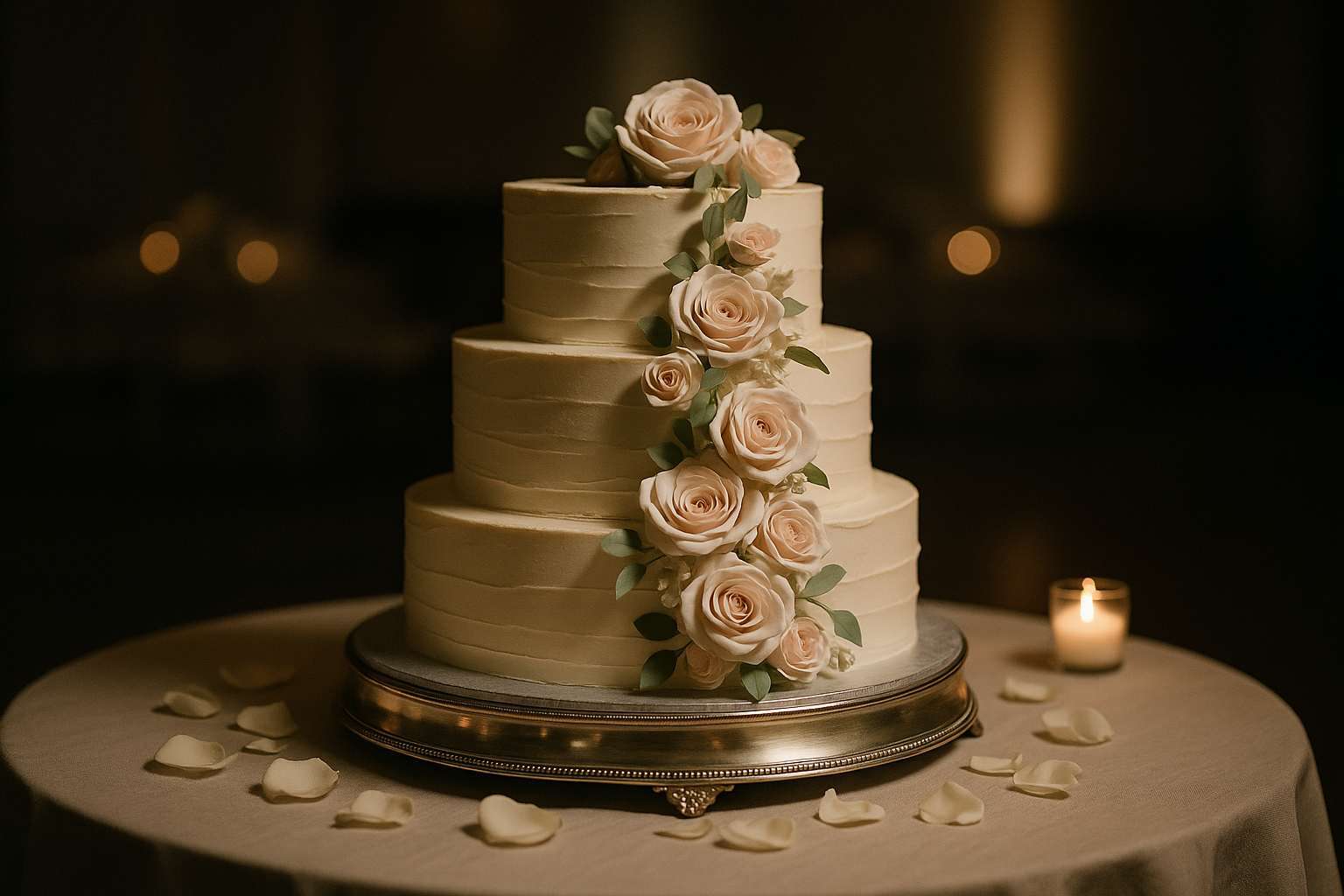
The wedding cake cutting is one of the oldest continuous rituals in Western marriage — rooted in ancient Roman grain offerings, shaped by Victorian ceremony, and still practiced by approximately three-quarters of couples today. At its heart, it is the couple's first shared act: a public declaration of partnership, provision, and joy.
Few moments in a wedding reception gather the entire room with a single, shared focus the way the cake cutting does. The DJ fades the music, the catering team positions themselves quietly, guests drift toward the cake table with their phones in hand, and for a few minutes the couple stands together in the center of their own celebration — performing an act that generations of couples have performed before them, and that carries the weight of that history even when neither partner has stopped to consider it.
Understanding where this tradition comes from and what it actually means gives the moment depth beyond the Instagram photograph. And understanding the etiquette — the how and when and what-to-decide-ahead-of-time — makes it possible to execute it with the grace and intentionality it deserves.
Where did the wedding cake cutting tradition come from?
The roots of the wedding cake ceremony reach back more than two thousand years. In ancient Rome, the wedding ritual included a cake of spelt wheat — a loaf of barley bread — that the groom broke over the bride's head as a symbol of fertility and the prosperity of the household she was entering. Guests scrambled for the crumbs, which were believed to carry good fortune. The ritual was communal in its deepest sense: the breaking of bread at the threshold of a new family.
In medieval England, the tradition evolved into stacked sweet buns or small cakes piled as high as possible, with the challenge that the newlyweds kiss over the tower without toppling it — a successful kiss prophesying a life of abundance together. By the seventeenth century, as refined sugar became more accessible, the tiered sugar cake began its ascent.
The decisive moment in the modern history of the wedding cake came in 1840, when Queen Victoria married Prince Albert and cut a white wedding cake that weighed approximately three hundred pounds and stood nine feet tall. The all-white cake became, almost overnight, a symbol of purity, wealth, and social aspiration. The symbolism of white — visible refinement sugar was then an indicator of significant wealth — contributed to the association between white wedding cakes and bridal tradition that persists two centuries later. The Knot's history of the wedding cake traces this Victorian influence as the defining moment in the tradition's modern form.
The placement of one partner's hand over the other's on the knife — one of the most photographed gestures of the entire wedding day — developed in the twentieth century as the tradition evolved from the bride cutting alone (and distributing slices to guests as a symbol of her fertility) to a joint act. The shared cut is not a Victorian formality; it is a genuinely modern gesture, a physical articulation of the partnership that the marriage represents.
What is the step-by-step etiquette for the wedding cake cutting?
| Step | What to Do | Key Etiquette Note |
|---|---|---|
| 1. Timing | Schedule thirty to forty-five minutes before the reception ends, or immediately after dinner | The cut signals guests that departure is approaching — do not cut too early |
| 2. Catering heads-up | Give catering staff five minutes of notice before the announcement | They need time to position knives, plates, and napkins without rushing |
| 3. DJ announcement | Have your DJ or emcee invite guests to gather around the cake table | Never cut without an audience — the ceremony requires witnesses |
| 4. The cut | Stand side by side; one partner places their hand over the other's on the knife; make one clean cut into the bottom tier | Cut into the bottom tier only — this is the ceremonial slice; catering handles the rest |
| 5. Feeding each other | Offer the first bite tenderly, by hand or with a fork — decide in advance whether to smash or feed gracefully | Be aligned; a surprise smash photographed on an unwilling partner is a permanent record |
| 6. Step aside | Move away from the cake table gracefully; circulate among guests | The catering team takes over; your role ends with the ceremonial cut and feeding |
| 7. Top tier | Brief your catering coordinator to box the top tier immediately after the cut | It will not be set aside automatically unless you ask explicitly |
The most important preparation for the cake cutting is a direct conversation with your partner about the smash question before the wedding day. The Emily Post Institute — the longest-standing authority on American wedding etiquette — consistently recommends the graceful, tender approach: feeding each other the first bite with care and eye contact rather than delivering an unexpected face full of frosting. The reasoning is not merely formal; it is practical and photographic. The photographs of couples who feed each other gently, looking into each other's eyes, are consistently among the most emotionally resonant of the entire wedding. The photographs of a partner with frosting on their nose tell a different, and less timeless, story.
How does the cake cutting fit into the reception timeline?
Strategic placement of the cake cutting within the reception timeline serves the evening's energy as much as it serves tradition. Most experienced wedding planners cluster the formal reception moments — first dance, parent dances, toasts, cake cutting — together in a consolidated block rather than scattering them across the evening. This clustering strategy allows open dancing to run uninterrupted once it begins, preventing the energy breaks that happen when a dance floor is cleared mid-momentum for a formality.
A workable timeline for a six-hour evening reception: guests seated at six-thirty; dinner service from seven to eight-thirty; toasts and first dance from eight-thirty to nine; cake cutting at nine; open dancing from nine to eleven. The cake cutting's placement just before the sustained open-dance set is deliberate — it provides a natural transitional moment that re-gathers the room's attention before the dance floor absorbs everyone for the night.
Coordinate with your photographer explicitly about the cake cutting. Brief them on the timing, the angle they will likely prefer (most prefer a position that captures both faces and the cake simultaneously), and whether you plan to feed each other or smash. A photographer who knows what is coming can anticipate the decisive moment rather than react to it — the difference between a photograph that captures your genuine expressions and one that catches you mid-blink.
What are the regional and cultural variations in the cake cutting tradition?
The wedding cake cutting is not a monolithic tradition; it expresses itself differently across cultures, regions, and faith backgrounds in ways that reveal the particular meanings each community attaches to this shared act.
In Southern American weddings, the groom's cake — a separate, richly flavored or elaborately decorated cake presented as a complement to the main wedding cake — remains a deeply felt regional tradition. Originally Victorian English in origin, the groom's cake arrived in the American South and took root as an expression of the groom's individual personality within the wedding celebration. Red velvet, chocolate ganache, and sports-themed designs are among the most popular current expressions.
In Mexican celebrations, the cake cutting is a festive, communal performance in which the face-smash is not only expected but celebrated — the laughter it generates is part of the ceremony's social function. Pan de boda (wedding bread) and churros accompany the cake as traditional accompaniments.
In Chinese and East Asian weddings, the first slices of cake are offered by the couple to their parents and grandparents before any guests are served — a gesture of filial respect that places the family foundation at the ceremonial center of the moment. In Japanese Shinto ceremonies, a decorative ceremonial sword is sometimes used for the initial cut, honoring the martial symbolism of a wedding as a formal alliance between families.
In Jewish ceremonies observing kashrut (dietary law), the wedding cake and all desserts must be certified kosher, and dairy and meat cannot be mixed within the same service — meaning the cake must reflect the menu's dairy or pareve designation. Coordination with both the rabbi and the bakery well in advance is essential.
Whatever cultural traditions frame your own wedding, the cake cutting ceremony's essential meaning transcends all of them: two people, cutting together for the first time, feeding each other, and sharing with everyone gathered around them. That act is old enough to precede every formal tradition layered on top of it, and simple enough to carry meaning without any of them.
Frequently asked
What does the wedding cake cutting ceremony symbolize?
The wedding cake cutting carries layered meaning that has evolved over centuries. At its most fundamental, the act of cutting together symbolizes the couple's first joint task in marriage — a public gesture of partnership and shared responsibility for one another's flourishing. The placement of one partner's hand over the other's on the knife is a physical declaration of that support. The feeding of the first bite to each other carries a separate and equally powerful meaning: the ancient promise to nourish, care for, and provide for the person you have just married. Beneath both of these is an older, more communal meaning: the cut marks a transition from two individual lives into one joined household, and the sharing of cake with guests connects the assembled community to the new marriage through a shared ritual meal. Understanding this layered symbolism helps couples decide how to approach the moment — as pure photography opportunity, as genuine ceremonial act, or, most meaningfully, as both.
When should the wedding cake cutting happen during the reception?
Most wedding planners and etiquette authorities recommend scheduling the cake cutting thirty to forty-five minutes before the reception's end, or shortly after dinner service concludes. The traditional reasoning is that the cake cutting signals to guests that the evening is winding toward its close — it serves as a gracious cue that it is acceptable to begin departing. Couples who cut the cake too early in the evening (before dinner, for example) remove this transitional function and can inadvertently signal that the celebration is ending before it has truly begun. A practical timeline for an evening reception: dinner concludes around eight-thirty or nine o'clock; cake cutting takes place around nine-fifteen after any final toasts; catering staff serve slices during the remaining dancing. Give your catering team a five-minute heads-up before the announcement so they are positioned and ready. Have your DJ or emcee invite guests to gather — the cutting should never happen without an audience.
Should we smash cake in each other's faces?
This is one of the most genuinely personal decisions in wedding etiquette, and both choices are defensible — but the Emily Post Institute and virtually every major etiquette authority lean consistently toward the graceful approach. Here is the most important insight: the smash only works as a joyful, shared moment when both partners are genuinely expecting it and genuinely delighted by it. When one partner surprises the other with an unexpected face full of frosting, the resulting photograph often captures genuine discomfort, irritation, or embarrassment rather than joy. That photograph becomes permanent. The safest strategy is a direct, honest conversation with your partner before the wedding: if you both agree that the playful smash reflects who you are together and you are both genuinely game for it, do it with enthusiasm. If either of you has any hesitation — about your hair, your makeup, your dress, or simply your own dignity — skip it entirely and feed each other with graceful tenderness. The latter photographs, incidentally, as beautifully and far more timelessly than the former.
How do we preserve the top tier of our wedding cake?
Saving the top tier of your wedding cake to share on your first anniversary is a beloved tradition that requires specific and deliberate logistics to actually work. Immediately after the ceremony cake cut — before the reception ends, while the catering team can assist — have the top tier boxed separately. Wrap it first in plastic wrap, pressing out as much air as possible, then in a double layer of aluminum foil, then place it inside a sealed freezer-grade zip bag. Label the bag clearly with the date and a description so it is not confused with other items in a busy freezer. Store it in the very back of your freezer where the temperature is most stable and where it will not be jostled or crushed. On your first anniversary, move it to the refrigerator the day before and allow it to return to room temperature before serving. A brief note on flavor: tiers with fresh fruit fillings (strawberry, raspberry, lemon curd) do not freeze particularly well. If you plan to preserve the top tier, choose a flavor that freezes gracefully — classic vanilla, chocolate, carrot, or red velvet all work beautifully.
What are some modern alternatives to the traditional wedding cake cutting?
Couples in 2026 have embraced a range of alternatives that honor the ceremonial spirit of the moment while reflecting their personal aesthetic. The most popular approach is the hybrid format: a small two-tier or single-tier display cake — sometimes called a "smash cake" or "cutting cake" — ordered specifically for the ceremony and the photographs, while sheet cakes or cupcakes from the same bakery are pre-sliced in the kitchen for guest service. This approach achieves the visual and ceremonial moment at a fraction of the cost of a full-sized tiered cake. Other couples choose to cut a first slice of pie at a pie-bar wedding, break apart a shared bread at a ceremony honoring heritage traditions, or stage the ceremonial cut at a beautifully designed dessert table anchored by a single-tier centerpiece cake. According to Zola's wedding planning coverage, approximately seventy-seven percent of couples still include some form of cake cutting ceremony, even when the primary dessert offering is a cupcake tower, donut wall, or dessert station — the ritual itself retains meaning even when the format around it has evolved.
Do different cultures have different wedding cake cutting traditions?
Absolutely, and these variations are among the richest expressions of cultural identity within the broader wedding ceremony. In Chinese and East Asian weddings, the first cake slices are traditionally offered to the couple's parents and elders as a gesture of filial respect — acknowledging the family foundation that made the marriage possible. In Mexican weddings, the cake cutting is often an energetic, celebratory affair in which smashing cake into each other's faces is an embraced and expected tradition, accompanied by music and cheering from the assembled guests. In traditional South Asian celebrations, the primary sweets are mithai — Indian confections such as ladoo, barfi, and gulab jamun — and a Western-style tiered cake, when present, is typically incorporated as a hybrid element in second-generation or cross-cultural celebrations. In the American South, the groom's cake — a separate, richly flavored or novelty-decorated cake that reflects the groom's personality — remains a strong regional tradition dating to Victorian England, with red velvet and chocolate being the most common flavors. Japanese Shinto wedding ceremonies sometimes incorporate a decorative ceremonial sword for the first cut, honoring martial tradition within the ritual.