Food & Drink
Wedding Cake Serving Size Chart: How Much Cake Do You Actually Need?
Under-ordering wedding cake is one of the most common — and most fixable — reception planning mistakes. Here is exactly how to size your cake for every guest count.
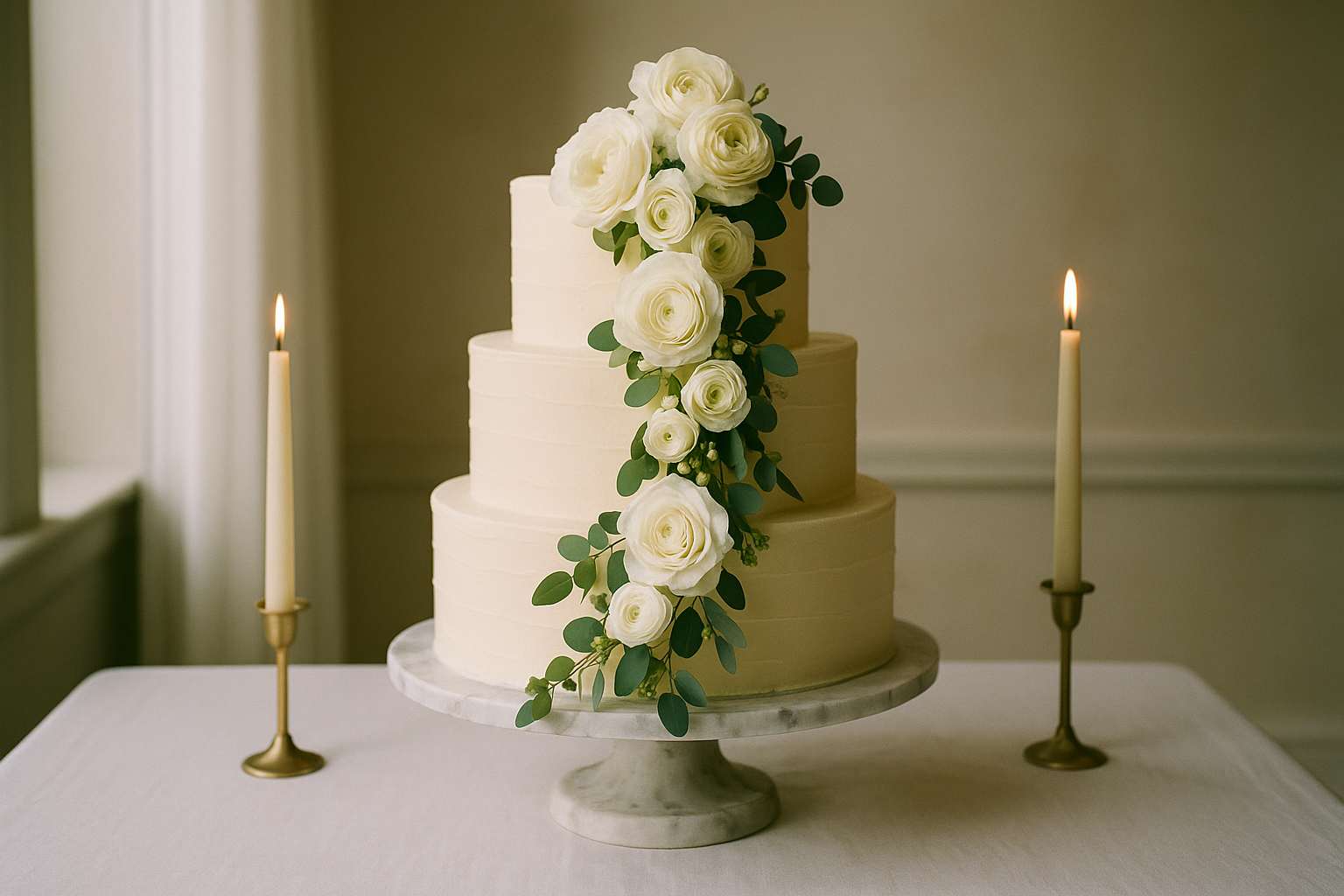
A standard wedding slice is 1 inch wide by 2 inches deep — significantly smaller than a party slice. The classic 3-tier 12-10-8 inch round configuration serves roughly 90 to 100 guests. For most receptions, plan for 80% of confirmed headcount to take cake, subtract the preserved top tier, and ask your baker about the sheet cake strategy to serve the full count without paying for a towering full-tier order.
Ordering the wrong amount of wedding cake is one of the most preventable reception planning mistakes — and one of the most common. The problem almost always starts at the reference point: couples use a chart built around party-slice measurements, not the narrower wedding-slice standard, and end up with a serving estimate that is far too optimistic. This guide gives you the correct numbers, the right configurations for every guest count, and the practical strategies that allow you to serve everyone beautifully without overspending.
What is the standard wedding cake slice, and why does it matter so much?
This distinction is the foundation of every serving calculation, and it is the single most reliably overlooked detail in wedding cake planning.
A standard wedding cake slice is one inch wide, two inches deep, and four to five inches tall. A standard party or birthday cake slice is two inches wide and two inches deep. That difference — one inch versus two inches of width — roughly doubles the number of servings you can cut from any given tier.
A chart built on party-slice measurements tells you that a 10-inch round tier serves 18 to 24 guests. The same tier cut to wedding-slice standard serves 30 to 45 guests. If you are working from the wrong reference, you will either dramatically over-order (an expensive mistake) or dramatically under-order (a potentially embarrassing one). According to ECBG Cake Studio in Chicago, one of the leading causes of wedding cake service problems is catering staff cutting slices larger than the wedding-slice standard — a problem addressed by providing a written cutting diagram to your caterer as part of the final briefing.
Whenever you receive a serving estimate, confirm explicitly: is this based on the 1x2 inch wedding-slice standard? Your baker should provide exact serving counts for their specific tier dimensions at your tasting consultation.
How many servings does each tier yield, and what configuration do you need?
| Tier diameter | Servings, round tier | Servings, square tier | Best for |
|---|---|---|---|
| 6 inch | 10–14 | 12–18 | Top display tier; intimate weddings under 20 guests |
| 8 inch | 20–28 | 24–32 | Intimate receptions of 20–30 guests; second tier in small stacks |
| 10 inch | 30–45 | 38–50 | Receptions of 30–50 guests; second tier in classic three-tier stacks |
| 12 inch | 40–56 | 50–72 | Foundation tier in standard three-tier configurations of 75–100 guests |
| 14 inch | 80–86 | 90–100 | Large receptions of 80–120 guests as a single base tier |
| 16 inch | 100–110 | 115–130 | Very large weddings of 150+ guests as foundation tier |
Square tiers yield 15 to 25% more servings than round tiers of the same diameter, because the corners are fully cuttable rather than trimmed. If maximizing servings per dollar is a priority, square tiers are a practical consideration — though round tiers remain more common in traditional and formal settings and produce cleaner visual lines in photographs.
What are the recommended configurations by guest count?
Use these configurations as starting points, adjusted upward by 10 to 15% if your reception features active plated service (where caterers deliver each slice to the table, driving higher consumption).
| Guest count | Recommended configuration | Approximate total servings |
|---|---|---|
| ~20 guests | Single 8-inch round | 20–28 |
| ~50 guests | 2-tier: 12" + 10" | 70–100 |
| ~75 guests | 2-tier: 12" + 10" (or small 3-tier) | 70–100 |
| ~100 guests | Classic 3-tier: 12" + 10" + 8" | 90–130 |
| ~150 guests | 3-tier + supplemental sheet cakes | 120+ with sheet supplement |
| ~200+ guests | 4-tier or 3-tier + substantial sheet cakes | 180+ with sheet supplement |
According to Sunflour Baking Company, most couples begin their cake conversation around the classic three-tier 12-10-8 configuration, which produces approximately 90 to 100 servings and photographs beautifully at a standard reception height. The three-tier stack is the enduring default for good reason: it is visually classic, logistically straightforward, and sized appropriately for the most common wedding guest count.
How does the sheet cake strategy change your planning?
The sheet cake strategy is the most widely recommended cost-saving approach in wedding cake planning, and it is almost universally invisible to guests. The approach: order a small display cake — typically one or two tiers — for the ceremonial cutting and photography. Pre-sliced sheet cakes from the same bakery, in matching flavors, are served from the kitchen by the catering team. Guests receive a beautiful, delicious slice of cake and never see the kitchen operation behind it.
The savings are meaningful. A full four-tier display cake priced to serve 150 guests might cost $900 to $1,500 depending on design complexity and market. A small two-tier display cake paired with sheet cakes for the same guest count can be completed for $400 to $700 — a savings of $300 to $800 on a single line item. One full half-sheet cake produces approximately 48 wedding-size servings at $1 to $3 per serving from most bakeries.
Ask your baker about this approach at your consultation. Most experienced wedding bakers offer it as a standard service and can match flavors, frosting type, and decoration detail precisely between the display and kitchen portions. Your photographer should capture the display cake before service begins — the ceremonial cutting photograph uses the display tier, and the kitchen tiers are never seen.
What else affects how much cake you need?
Beyond the baseline headcount calculation, three specific factors can shift your order meaningfully.
The preserved top tier. Saving the top wedding cake tier and sharing it on your first anniversary is a tradition well worth preserving — but it requires subtracting those servings from your total order. If your top tier is a 6-inch round (10 to 14 servings), and you plan to preserve it, your actual serving order should be sized for your guest count plus those 10 to 14 servings as a separate, non-served unit. Brief your catering team before the reception so the tier is boxed and labeled immediately after the cutting, before the event ends.
Service method. Cakes at events with active plated service — where the caterer delivers a slice to each seat rather than setting up a dessert station — consistently show consumption rates of 90 to 100% of the seated guest count. Dessert station service typically drives 60 to 75% consumption, as guests graze multiple items. Know your service format before finalizing quantities.
The cutting fee. Most venues charge $1.50 to $3.00 per slice to cut, plate, and serve your wedding cake — a line item that adds $225 to $450 for a 150-guest wedding. Confirm this fee in writing during your venue tour. Some couples choose alternative dessert formats specifically to avoid it; others factor it in and move on. Either approach is valid, as long as the total cost is part of your planning budget, not a surprise on the final invoice.
Frequently asked
What is a standard wedding cake serving size?
A standard wedding cake slice is one inch wide, two inches deep, and four inches tall — smaller than a typical birthday or party cake slice, which is two inches wide and two inches deep. The narrower wedding slice is a deliberate industry convention that produces more total servings from each tier and is designed for service at a formal event where guests have already eaten a full dinner. When you receive a serving estimate from a baker or any chart, confirm it is based on the 1x2 inch wedding-slice standard and not a party-slice standard — using the wrong reference can result in dramatically under-ordering. As a practical rule, always have your baker calculate servings explicitly for your guest count rather than relying on a general chart alone. If in doubt, ask your baker to demonstrate their cutting method at the tasting appointment.
How many servings does each cake tier yield?
Round tiers at the 1x2 inch wedding-slice standard yield approximately the following servings: a 6-inch tier serves 10 to 14 guests; an 8-inch tier serves 20 to 28; a 10-inch tier serves 30 to 45; a 12-inch tier serves 40 to 56; a 14-inch tier serves 80 to 86. Square tiers yield approximately 15 to 25% more servings than the equivalent round size because the corners are fully usable. These numbers assume a standard tier height of four to five inches. Your baker should provide exact serving counts for their specific tier dimensions at your tasting consultation. The classic three-tier combination of 12, 10, and 8-inch round tiers serves approximately 90 to 100 guests at the wedding-slice standard — this is the most common configuration for receptions of that size.
How many slices should I plan per guest?
Plan one slice per guest if wedding cake is the only or primary dessert and the caterer actively plates and serves each slice. If you are offering cake alongside a dessert table with multiple options, plan for 60 to 75% uptake — guests will graze from several stations rather than taking a full cake slice in addition. The 80% rule is the baker's heuristic most commonly used for standard plated-dinner receptions: plan for 80% of your confirmed guest headcount to take cake. This usually ensures every guest who wants a slice receives one without excessive waste. If you are saving the top tier for your first anniversary, subtract those servings from your total order before calculating how much additional cake you need.
What is the sheet cake strategy, and is it obvious to guests?
The sheet cake strategy involves ordering a small display cake for the ceremonial cutting and photographs, while serving pre-sliced sheet cakes from the same bakery in the kitchen. Guests almost never notice — they receive a slice of delicious cake that matches the display cake in flavor. The savings are substantial: a full four-tier display cake can cost $800 to $1,500, while a small two-tier display cake paired with sheet cakes for the full guest count often runs $400 to $700. One half-sheet cake provides approximately 48 wedding-size servings at $1 to $3 per serving. Ask your baker about this option at your consultation — most experienced wedding bakers offer it as a standard service and can match flavors and frosting perfectly between the display and kitchen tiers.
What is a cake cutting fee, and how do I avoid surprises?
Most catering venues and caterers charge a per-slice fee to cover the labor of slicing, plating, and serving the wedding cake. In 2025 to 2026, this fee typically runs $1.50 to $3.00 per slice. On a 150-guest wedding, this adds $225 to $450 to your catering bill. It is a legitimate and standard charge, but it is routinely omitted from venue quotes and surprises couples at the final invoice stage. Ask every venue you tour about their cake cutting fee during the initial walkthrough, before you sign any contract. If you are using cupcakes or pre-cut individual desserts from the bakery, the cutting fee is typically not applicable. Confirm the fee — and any exceptions — in writing in your catering contract.
How do I preserve the wedding cake top tier for our first anniversary?
Brief your catering coordinator before the reception that the top tier is to be boxed immediately after the cake cutting, before the reception ends. Wrap the tier completely in plastic wrap, then wrap again in aluminum foil, then seal in a heavy-duty freezer bag. Label it clearly with your names and the wedding date. Store it in the back of your freezer, where the temperature is most stable. On your first anniversary, transfer the wrapped tier from the freezer to the refrigerator the evening before, then allow it to come to full room temperature for one to two hours before serving. Note: tiers with fresh fruit fillings do not freeze as well as buttercream or fondant-finished tiers and may disappoint in texture after twelve months. Discuss preservation suitability with your baker when choosing flavors for your top tier specifically.