Food & Drink
Wedding Catering Cost Per Person: A 2026 Breakdown
The average couple spends $80 per person on wedding catering in 2026 — but the true all-in cost, once service charges, gratuity, and bar service are added, lands closer to $110–$140. Here is every number you need to budget with confidence.
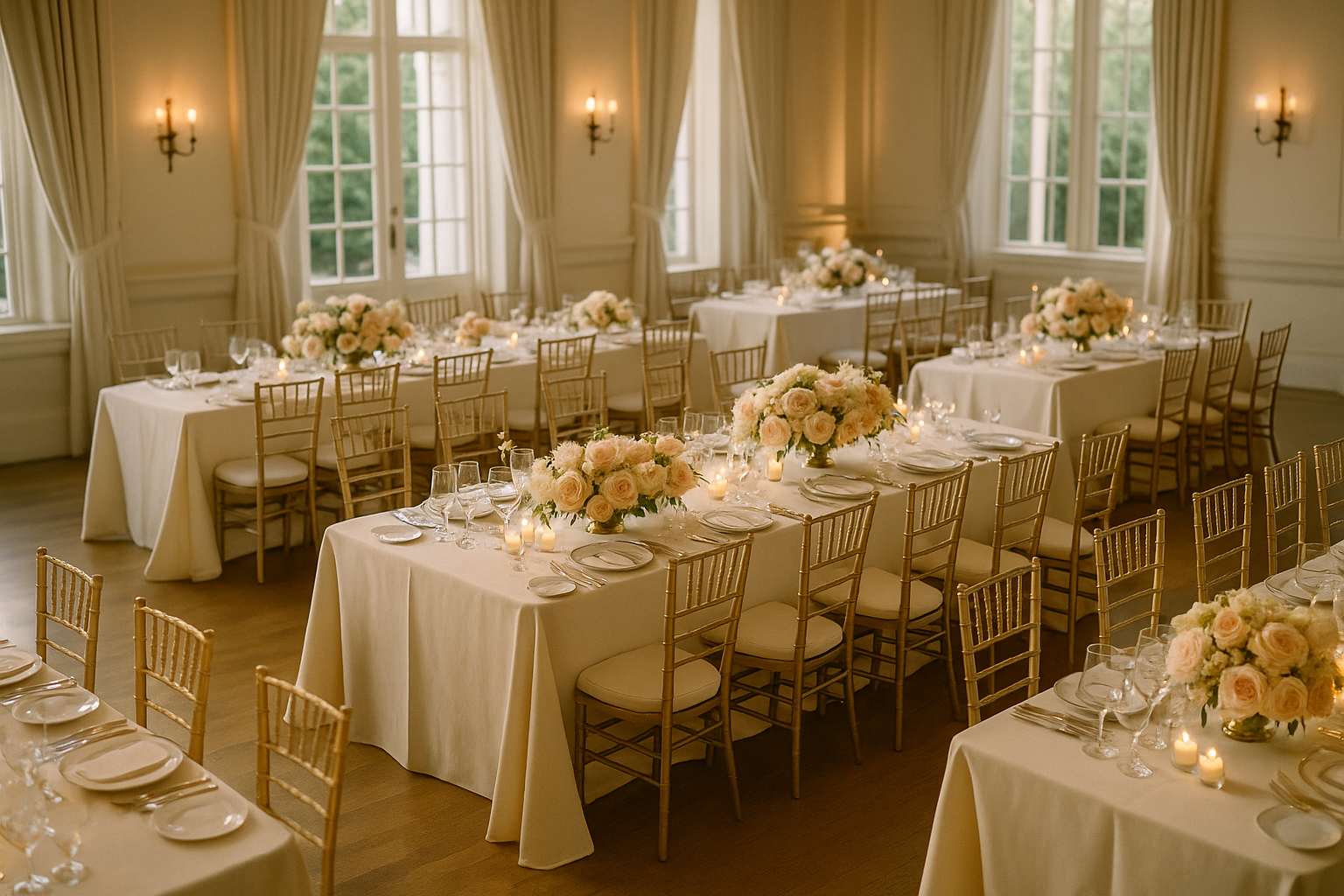
The average wedding catering cost is $80 per person for food and labor in 2026, according to The Knot's Real Weddings Study — but once service charges, gratuity, and bar are added, the true all-in cost reaches $110–$140 per guest for most couples. Knowing the full number before you request proposals is the single most important step in your catering budget.
Of all the decisions that shape a wedding reception, catering is the one where the gap between the quoted price and the final bill is most likely to surprise you. Proposals that open at $70 per person can close at $115 after service charges, gratuity, bar, and a handful of fees that few couples think to ask about until the invoice arrives. This guide closes that gap — with real 2026 numbers, a clear breakdown of every cost component, and the specific questions to ask before you sign anything.
All data used here draws from The Knot's 2026 Real Weddings Study, which surveyed 10,474 U.S. couples married in 2025, as well as WeddingWire's catering cost database, Zola's wedding spend research, and regional caterer pricing across major U.S. markets.
What does wedding catering actually cost per person in 2026?
The national average wedding catering cost is $80 per person for food and labor, according to The Knot's 2026 Real Weddings Study. That figure reflects a wide range: the Midwest averages $62 per person at the lower end, while the Mid-Atlantic region averages $123 per person at the upper end — a nearly 100% premium driven by higher labor costs, local overhead, and supplier pricing in metro markets.
Zola's companion data puts the average total catering spend at $6,927 per wedding, consistent with a guest count in the 100–120 range at national average per-person rates. WeddingWire reports a slightly wider range, with most couples spending between $4,000 and $7,000 on food and labor alone before bar service and fees.
What these averages do not capture is what that $80 actually becomes by the time the final invoice is totaled. Service charges alone — an automatic 18–24% applied to the food and labor subtotal — add $14–$19 per person before a single glass of champagne is poured. Add gratuity, bar service, and the smaller line items discussed below, and the true per-person cost for the average U.S. wedding reception is closer to $110–$140.
| Service Style / Region | Food + Labor (per person) | All-In Estimate (incl. bar, fees) |
|---|---|---|
| Buffet — National Average | $50–$90 | $80–$130 |
| Family-Style — National Average | $55–$120 | $85–$160 |
| Food Stations — National Average | $55–$150+ | $90–$200+ |
| Plated Dinner — National Average | $80–$150 | $115–$210 |
| Heavy Hors d'Oeuvres — National Average | $35–$70 | $55–$100 |
| Midwest Market (all styles) | $55–$85 | $80–$120 |
| Southeast / Southwest | $65–$90 | $90–$130 |
| Mid-Atlantic (NY, NJ, DC) | $100–$175 | $145–$250 |
| California (LA, San Francisco) | $90–$200 | $130–$280 |
What does each service style cost — and which one is right for you?
Your catering service style is the single biggest lever on per-person cost, because it determines staffing ratios, kitchen logistics, and food preparation volume. Here is what each format delivers at each price point.
Plated (Seated Dinner): $80–$150 per person (food and labor)
A plated dinner is the most formal and most expensive option because it requires the highest server-to-guest ratio — typically one server per 8–12 guests, versus one per 25–35 for a buffet. For a 150-person wedding, that staffing difference alone adds $3,000–$7,000 to the labor line. The tradeoff is an elevated, theatrical experience: individually plated courses arrive with timing and presentation that create the most traditionally elegant reception atmosphere. If your guest list skews older, if your venue is formal, or if the reception atmosphere is your top priority, the premium is often worth it.
Buffet: $50–$90 per person
Buffets are the most popular format for weddings above 150 guests, and for good reason: they offer variety, reduce staffing costs, and naturally accommodate diverse dietary preferences without the complexity of pre-selecting entrées. The trade-off is that caterers must over-prepare food by 15–20% to prevent running out, which partially offsets the labor savings. The most important management step at any wedding buffet — and one that can eliminate lines almost entirely — is staggered table dismissal: having the DJ or MC release 2–3 tables at a time rather than opening the buffet to all 200 guests simultaneously.
Food Stations: $55–$150+ per person
Interactive food stations have overtaken traditional buffets as the default non-plated format in 2025–2026. Themed stations — a live pasta bar, a carving station with prime rib, a raw bar, a taco station — combine reasonable food cost with a genuinely memorable guest experience. Chef-attended stations where food is cooked to order command a premium ($80–$150+ per person in most markets) but function as both dinner and entertainment. For budget-conscious couples, unattended stations with creative self-serve setups can capture most of the atmosphere at the lower end of the range.
Family-Style: $55–$120 per person
Large platters and bowls placed at each table and passed among guests create an immediate sense of warmth and community. Family-style is particularly beloved for barn venues, rustic aesthetics, and multicultural celebrations where shared platters are a meaningful cultural expression. It falls between buffet and plated on the cost spectrum; because caterers must prepare 20–25% more food to ensure abundance at each table, the savings over plated service are more modest than many couples expect. It also requires a minimum table width of 36 inches to manage platters comfortably — confirm with your venue.
Heavy Hors d'Oeuvres: $35–$70 per person
A cocktail-style reception with passed bites and grazing stations replacing a seated meal is the most budget-friendly format overall. It works beautifully for afternoon and early-evening events, second-marriage celebrations, and intimate gatherings where mingling is the priority. The essential caveat: communicate this format explicitly on your wedding website or invitation so guests arrive with accurate expectations. Plan for 12–16 pieces per person over a 3–4 hour event. A genuine tip from caterers: quality over quantity. Eight exceptional bites — a creamy burrata crostini, a perfectly seared beef medallion on polenta, a fresh-shucked oyster with mignonette — read as intentional and generous. Twelve mediocre bites do not.
What hidden fees make the final catering bill so much higher than the quoted price?
The most important thing to understand about wedding catering pricing is what the per-person proposal does not include. Industry research from Taylor'd Events and Mindy's Catering DC consistently finds that the final catering bill runs 25–40% above the quoted per-person food price once all additions are counted. Here is where that gap lives:
Service charge (18–24%): This automatic fee is applied to your food and labor subtotal. The critical distinction that many couples miss: a service charge is often retained by the catering company as overhead revenue — it is not automatically distributed to your servers. Ask explicitly, in writing, whether the service charge is passed to staff or retained by the company.
Gratuity (18–22% additional): Separate from the service charge, gratuity is the actual tip for front-of-house staff. Industry etiquette: $20–$50 per server, $50–$100 for the event captain. For a 100-guest wedding with 10 staff members, plan $300–$600 in cash gratuities on top of any service charge. Prepare these in labeled envelopes before the wedding day and delegate distribution to your planner or a trusted family member.
Bar service ($25–$65 per person): An open bar adds $35–$60 per person; beer and wine only runs $18–$28 per person. The average open bar cost for a U.S. wedding in 2025 was $5,541, according to The Knot. If you can provide your own wine and spirits (where permitted by your venue and caterer), you can save $15–$30 per person versus the caterer's bar package.
Cake-cutting fee ($2–$5 per person): If you're ordering a wedding cake from an outside bakery — which most couples do — your caterer will charge a fee per guest to cut and plate it. On a 150-person wedding, that's $300–$750. Negotiate this in your contract, and some caterers will waive or reduce it.
Corkage fee ($15–$35 per bottle): Bringing your own wine to reduce bar costs? Many caterers charge a corkage fee per bottle for the service of opening and pouring it. Do the math before assuming BYOB saves money.
Vendor meals ($25–$50 per vendor): Your photographer, videographer, DJ, band members, and wedding coordinator all need to eat. Most catering contracts include a vendor meal clause; confirm it covers everyone present through the dinner hour and at what rate.
Overtime charges ($500–$1,500 per hour): If your reception runs beyond the contracted end time, most caterers charge a significant hourly rate for every additional staff member. Build a 30-minute buffer into your contracted timeline, or be prepared for this line item.
Sales tax (6–10%): Applied to the food subtotal, sometimes also to the service charge, depending on your state. This alone can add $1,000–$2,000 to a typical catering bill.
How much does wedding catering cost by region?
Regional pricing variation for wedding catering is among the most dramatic of any wedding vendor category. A plated dinner that costs $90 per person in Indianapolis can easily cost $165 per person in Washington D.C. — not because the food is fundamentally different, but because labor rates, real estate overhead, and supplier logistics in major coastal metros are structurally higher.
The most useful regional benchmarks from The Knot's 2025 Real Weddings Study:
- Mid-Atlantic (New York, New Jersey, Washington D.C.): $123 per person average (food and labor)
- California (Los Angeles, San Francisco): $85–$200 per person depending on market and service level; Los Angeles catering averages $12,110 total for a typical guest count
- National average: $80 per person
- Southeast (Georgia, Tennessee, the Carolinas): $65–$80 per person
- Southwest (Texas, Arizona, Colorado): $70–$90 per person
- Midwest: $62 per person average — the most affordable major region in the country
Two strategies that reduce regional premiums: a Friday or Sunday date (most caterers offer 10–20% discounts versus Saturday), and a January–March wedding (shoulder season pricing can shave another 10–15% in most markets).
How to read a catering proposal — and what to ask before you sign
The per-person food price on a catering proposal is a starting point, not a commitment. Before signing, request a fully itemized all-in estimate that separately lists food cost, labor, rentals (linens, china, glassware, charger plates), service charge, gratuity structure, overtime rates, cake-cutting fee, corkage fee, vendor meals, and sales tax. If a caterer is unwilling to produce this breakdown, that is meaningful information about how they operate.
The staffing ratio is the other number worth scrutinizing. For plated service, the minimum is one server per 10–12 guests; below that threshold, hot food arrives lukewarm and guests at the last tables served wait too long. For a buffet, one server per 25–35 guests is standard; below 1:40, the service experience deteriorates noticeably. Ask for a written staffing plan — roles and counts — before signing.
For timeline coordination, the catering captain (the on-site supervisor managing service flow) is a non-negotiable for any event above 75 guests. Confirm this role is included in your contract, and ask for the captain's name 6–8 weeks before the event. Staff assignments can change; a named captain is someone you can confirm still has your event on their schedule.
Finally, schedule the tasting. All reputable caterers offer a formal tasting for booked events. Bring your partner and evaluate not just flavor but temperature (a staffing signal), portion size (compare it to what's described in the contract), and plating elegance. Dishes that read beautifully on paper can arrive lukewarm and overcooked at volume. A tasting is the only way to know which applies.
Frequently asked
What is the average wedding catering cost per person in the United States in 2026?
According to The Knot's 2026 Real Weddings Study — which surveyed 10,474 U.S. couples married in 2025 — the average wedding catering cost per person is approximately $80, with a range of $62 per person in the Midwest to $123 per person in the Mid-Atlantic region. Zola's comparable data puts the average total catering spend at $6,927 per wedding, which works out to roughly $75–$85 per person for a typical guest count of 100–120. It's important to note that these per-person figures typically cover food and labor only; bar service, rentals, service charges, gratuity, and tax are usually quoted separately and can add $30–$60 per person to your final bill. The true all-in cost for most couples lands between $110 and $140 per guest.
How much more does a plated dinner cost versus a buffet at a wedding?
In 2026, a plated sit-down dinner typically costs $80–$150 per person for food and labor, while a buffet or family-style service runs $50–$90 per person for a comparable menu — a gap of roughly $25–$50 per head. The difference comes primarily from staffing: plated service requires one server per 8–12 guests, while a buffet needs one server per 25–35 guests. For a 150-person wedding, that staffing gap can translate to $3,000–$7,000 in additional labor costs. However, buffets require caterers to over-prepare food by 15–20% to prevent running out, which partially offsets the labor savings. In premium metro markets like San Francisco or Manhattan, plated dinners range from $160–$280 per person all-in, making the buffet option significantly more appealing from a budget standpoint.
What hidden fees make wedding catering more expensive than the quoted price?
The sticker price on a catering proposal is almost never the final number. The most significant additions are the service charge — an automatic fee of 18–24% of the food and labor subtotal often retained by the catering company as overhead, not distributed to servers — and gratuity, a separate tip for front-of-house staff running an additional 18–22% expected on top of the service charge. Together these two fees add 35–45% to your base food cost. Beyond those, watch for a cake-cutting fee ($2–$5 per person for outside cakes), a corkage fee ($15–$35 per bottle for your own wine), vendor meals ($25–$50 per photographer, DJ, or coordinator), overtime charges ($500–$1,500 per extra hour), and kitchen usage fees ($200–$1,000). Always request a fully itemized all-in estimate.
How does wedding catering cost vary by region across the United States?
Regional variation in wedding catering pricing is substantial — and follows broader cost-of-living patterns. The Mid-Atlantic region (New York, New Jersey, Washington D.C.) averages approximately $123 per person, nearly double the Midwest average of $62 per person, according to The Knot's 2025 Real Weddings Study. California's major metros are similarly expensive: Los Angeles catering spend averages $12,110 total, and San Francisco can push $160–$200 per person for full-service plated dinners. The Southeast averages $65–$80 per person, and the Southwest runs $70–$90. Rural markets in most regions typically come in 10–20% below their state's metro average. For context, the same menu and service level that costs $80 per person in Indianapolis might cost $130 in Manhattan — entirely due to labor rates, local overhead, and supplier costs. If budget is a significant factor, a Friday or Sunday date even in a high-cost market can yield 10–20% discounts from most caterers.
What percentage of the total wedding budget should I allocate to catering?
Wedding industry professionals and budget planners consistently recommend allocating 35–50% of your total reception budget to food, beverage, and service combined. The Knot's 2026 Real Weddings Study found that venue and catering together account for roughly 45–55% of total wedding spend for the average U.S. couple. On a $34,200 average wedding budget (The Knot 2026 figure), that suggests a combined catering and venue allocation of roughly $15,000–$18,000. If your venue is included in a package price, use the traditional standalone guideline: 20–30% of total budget for food and labor alone, and an additional 10–15% for bar service. The single most powerful lever for controlling catering costs is guest count — cutting just 20 guests from a 150-person wedding saves approximately $5,800–$6,000 when catering, bar, favors, and seating are factored together.
How do service charges and gratuity work for wedding catering, and are they the same thing?
Service charges and gratuity are legally and operationally distinct — and confusing them is one of the most common catering budget mistakes couples make. A service charge is a mandatory automatic fee of 18–24% applied to your catering subtotal. Critically, this fee often goes to the catering company as overhead or administrative revenue — not necessarily to the servers who worked your wedding. Gratuity is a separate tip intended directly for front-of-house staff: servers, bartenders, and the event captain. Industry etiquette suggests $20–$50 per server and $50–$100 for the event captain; for a 100-guest wedding with 10 staff, that's an additional $300–$600 in cash. Before signing any catering contract, ask the following question in writing: 'Does the service charge go to your staff, and is gratuity expected in addition to it?' The answer will tell you the true total cost of your catering.
What is the most cost-effective catering service style for a wedding?
For most weddings of 100 guests or more, a well-executed buffet or food-station format offers the strongest balance of cost, guest experience, and flexibility. Buffets run $50–$90 per person versus $80–$150 for plated service, with the savings primarily coming from reduced staffing requirements. Family-style service falls in the middle ($55–$120 per person) and is particularly beloved for its warmth and communal feel at smaller gatherings of 50–150. The heavy hors d'oeuvres format — a cocktail-style reception with passed bites and grazing stations replacing a seated meal — is the most affordable at $35–$70 per person, but works best for afternoon or early-evening events when guests are not expecting a full dinner. Interactive food stations ($55–$120 per person without live chefs; $80–$150+ with chef-attended stations) have overtaken traditional buffets as the most popular non-plated choice in 2025–2026, because they combine reasonable cost with a genuinely memorable guest experience.