Food & Drink
Wedding Champagne Toast Alternatives: 9 Ideas for Every Couple
The champagne toast is a tradition, not a rule. Whether you are hosting a dry wedding, honoring guests who do not drink, cutting beverage costs, or simply wanting something more personal, these alternatives are elegant, inclusive, and genuinely better suited to many celebrations.
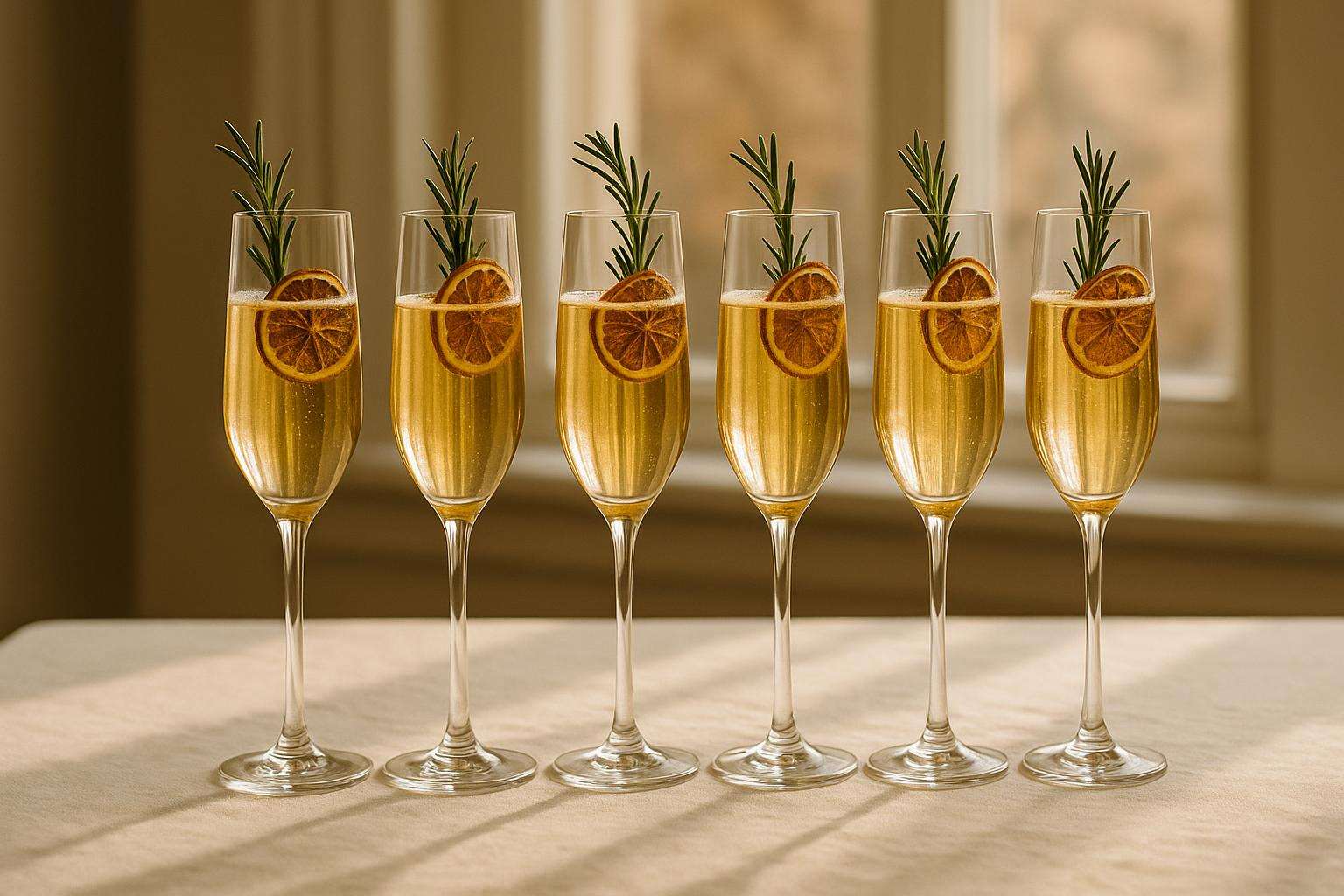
Dry wedding optionsInclusive toast ideasNon-alcoholic sparklingSignature mocktailBudget-friendly2026 trends
The quick verdict
Whether your celebration is dry, your guest list includes many non-drinkers, or you simply want the toast to be something more personal than generic Prosecco — these nine options serve every scenario beautifully.
- Best overall
- TOST Sparkling White Cranberry and Ginger — The closest approximation to the champagne toast experience without alcohol — champagne-like bottle, cork pop, golden bubbles, and a genuinely sophisticated flavor profile that most guests cannot immediately identify as non-alcoholic.
- Best value
- Toast with Current Drink in Hand — Eliminates the cost and logistics of a separate toast pour entirely, is maximally inclusive (every guest toasts with something they have already chosen), and is fully acceptable at any formality level when framed intentionally.
- Best for Couples who want the toast to tell their story
- Signature Batched Mocktail — A signature mocktail named for a meaningful place, memory, or shared experience transforms the toast into a personal narrative moment that no off-the-shelf product can match.
How we evaluated
These nine alternatives were identified by cross-referencing The Knot's champagne toast alternative guidance, Cake and Lace's creative toast roundup, The Hillcrest Estate's wedding hosting guidance, and The Zero Proof's non-alcoholic sparkling wine collections. Each option was evaluated for appearance in the glass, taste profile, cost-effectiveness, logistical simplicity, and guest inclusivity. All cost estimates reflect 2025–2026 U.S. retail and event pricing.
- Appearance in the glass. Does the beverage look celebratory when served in a champagne flute? Bubbles and color both contribute to the visual experience of a toast.
- Taste and guest acceptability. Will guests sip this willingly and enjoy it, or will they set it down after one obligatory taste? Taste tests with a representative sample before the wedding are always recommended.
- Cost and logistics. What is the per-serving cost, and does the service model (batching, chilling, pouring) add meaningful logistical complexity for your catering team?
- Inclusivity. Does this option work for all guests — including non-drinkers, guests in recovery, and those observing religious dietary restrictions — without creating a visible two-tier system?
Rating scale: Items are rated on a 1–5 scale for Appearance, Taste, Inclusivity, Logistical Simplicity, and Cost-Effectiveness.
Last verified .
At a glance
| # | Name | Rating | Best for | Pricing |
|---|---|---|---|---|
| 1 | TOST Sparkling White Cranberry and Ginger | 4.8 | Dry weddings and celebrations where the couple wants the closest possible approximation of the champagne toast experience without alcohol | $10–$14/bottle; $2.50–$3.50/serving |
| 2 | Dealcoholized Sparkling Wine | 4.7 | Sober-curious receptions and weddings where a meaningful percentage of guests prefer non-alcoholic options but the couple wants to serve a single uniform toasting drink to all guests | $12–$25/bottle; $3–$6/serving |
| 3 | Signature Batched Mocktail | 4.7 | Couples who want the toast to be a personal storytelling moment and are willing to invest the development time to make it specific and excellent | $3–$8/serving batched; development cost: $200–$500 |
| 4 | Premium Sparkling Apple Cider | 4.4 | Dry wedding receptions, family-friendly celebrations, and autumn or winter weddings where seasonal warm cider would be genuinely on-theme | $6–$12/bottle; $1.50–$3/serving |
| 5 | Toast with Whatever Is in Your Glass | 4.3 | Couples prioritizing simplicity, inclusivity, and a relaxed hospitality atmosphere over ceremonial visual uniformity at the toast moment | $0 additional |
| 6 | Sparkling White Grape Juice | 4.2 | Family-centered celebrations with guests across all ages, daytime receptions, and couples for whom visual cohesion in the toast photographs is the primary priority | $5–$8/bottle; $1.25–$2/serving |
| 7 | Prosecco or Spanish Cava (Instead of Champagne) | 4.5 | Couples who want real sparkling wine at the toast while responsibly managing bar line-item costs — and who have a separate non-alcoholic option for non-drinking guests | $10–$20/bottle; $2.50–$5/serving |
| 8 | Espresso Martini Toast During Dessert | 4.4 | Couples with cocktail-culture or foodie aesthetics planning a late-evening reception with dessert service and a guest list that will be genuinely delighted by an espresso martini moment | $12–$18/serving; station rental: $500–$1,500 |
| 9 | Ginger Ale or Ginger Beer in Flutes | 4.0 | Budget-conscious dry receptions and couples who discover they need a toasting solution at the last minute, or who want a warm-weather seasonal option with a distinct flavor personality | $3–$6/bottle (premium); under $1/serving at retail |
TOST Sparkling White Cranberry and Ginger
The most convincing champagne alternative on the market — bottle, bubbles, and all
TOST — sparkling white cranberry and ginger — is the gold standard in non-alcoholic champagne alternatives, and it has earned that reputation through consistent performance at weddings and celebratory events. The most important characteristic is the one that matters most in a toast: it looks exactly right. TOST comes in a champagne-shaped bottle closed with a real cork — it opens with the pop that makes guests smile and cheer, it pours with fine golden bubbles, and in a flute it is visually indistinguishable from a glass of Brut. The original version is a pale golden sparkling beverage with white cranberry and ginger notes; the rosé version pours a soft blush pink. The flavor is sophisticated enough to be sipped with genuine pleasure rather than duty — slightly tart, lightly sweet, with a ginger finish that prevents it from reading as juice. At $10 to $14 per bottle yielding four to five flute servings, it is cost-competitive with entry-level Prosecco and significantly less expensive than quality Champagne. TOST is widely available through The Zero Proof and specialty beverage retailers, and can be ordered in case quantities for wedding use. One important operational note: serve it well-chilled (34–38°F), just as you would champagne — warmth dulls the bubbles and the flavor profile noticeably.
Strengths
- The cork-and-pop bottle format delivers the celebratory auditory and visual experience of a champagne toast — the details that cue the emotional register of the moment
- Sophisticated enough to serve as the only toasting option without any guest feeling they have been given a downgrade — the flavor holds up under scrutiny
- Available in both golden and rosé versions, making it palette-versatile for different wedding aesthetics
Weaknesses
- The cranberry-ginger flavor profile, while genuinely pleasant, is distinctive — guests will notice it is not champagne; couples who want something completely neutral should consider dealcoholized sparkling wine instead
- Best for
- Dry weddings and celebrations where the couple wants the closest possible approximation of the champagne toast experience without alcohol
- Pricing
- $10–$14/bottle; $2.50–$3.50/serving
Dealcoholized Sparkling Wine
Real sparkling wine with the alcohol removed — premium, indistinguishable, and sober-friendly
Dealcoholized sparkling wine — also called alcohol-removed sparkling wine — is made through the same production process as traditional sparkling wine, with the alcohol extracted after fermentation through vacuum distillation or reverse osmosis. The result is a sparkling wine that retains the flavor compounds, acidity, and bubble structure of the original, but with less than 0.5% alcohol by volume (legally considered non-alcoholic in the United States). For guests who want the experience of drinking actual champagne without the alcohol — rather than a juice-forward substitute — this is the most convincing option on the market. Premium dealcoholized sparkling wines from producers including Leitz Eins Zwei Zero, Oddbird, and Thomson and Scott Noughty (all available through The Zero Proof and Drizly) offer legitimately elegant flavor profiles that hold up on their own. The visual experience is identical to champagne — the same bubble pattern, the same pale gold or rosé color, the same nose — and most guests cannot identify it as non-alcoholic without being told. Serving dealcoholized sparkling wine alongside conventional champagne (offering both to every guest) is an increasingly common model that eliminates the two-tier dynamic entirely.
Strengths
- Visually and texturally identical to champagne — fine bubbles, proper acidity, and legitimate wine character rather than juice sweetness
- Genuinely premium options now available from European wine producers known for quality sparkling wine, not just non-alcoholic beverage companies
- Fully inclusive without signaling to non-drinking guests that they have received a different product — important for guests in recovery or observing religious restrictions who may prefer not to be visible
Weaknesses
- Premium dealcoholized sparkling wines cost $15–$25 per bottle — slightly more than entry-level Prosecco — and availability in bulk case quantities may require online ordering rather than local retail sourcing
- Best for
- Sober-curious receptions and weddings where a meaningful percentage of guests prefer non-alcoholic options but the couple wants to serve a single uniform toasting drink to all guests
- Pricing
- $12–$25/bottle; $3–$6/serving
Source: Try These Fabulous Alternatives to the Champagne Toast
Signature Batched Mocktail
The only toast option that tells your specific story — design it, name it, and serve it
A signature batched mocktail designed specifically for the toast moment is the most personal and story-rich option available — and in 2026, when couples are consistently prioritizing personalization over convention, it is increasingly popular. The concept is straightforward: work with your caterer or a mixologist three to four months before the wedding to develop a zero-proof drink inspired by something meaningful to your relationship — the location of your first date, the region of your honeymoon, a flavor that both of you love, or an ingredient that appears in your family heritage. Name it, describe it with a short story on the bar menu, and serve it in proper glassware with an intentional garnish. Examples that have been executed beautifully at real weddings: "The Golden Hour" — a sparkling elderflower, cucumber, and fresh basil drink for a couple who met at a rooftop bar at sunset; "The Cape May" — sparkling white peach with fresh thyme for a couple whose first weekend trip was to the Jersey Shore; "The Chai Waltz" — a lightly spiced honey-ginger sparkler for a South Asian-inspired celebration. Batched mocktails are served pre-mixed and chilled, poured into flutes at the toast moment. They are operationally simple, photographically beautiful (garnishes elevate the visual), and genuinely delicious when the recipe is developed with care.
Strengths
- The only toast option that is irreplaceable and uniquely yours — no other couple at no other wedding will serve your named, storied mocktail
- Pre-batching makes service operationally simple — pour into chilled flutes at toast time; no bartender required at the moment of service
- Photographically beautiful with a well-chosen garnish — dehydrated citrus, edible flowers, fresh herb sprigs, or branded cocktail picks all elevate the glass
Weaknesses
- Requires development work three to four months ahead — recipe testing, refinement, and a staff tasting to confirm the flavor reads as intended at scale; a rushed or untested signature drink risks underwhelming guests at the moment that matters most
- Best for
- Couples who want the toast to be a personal storytelling moment and are willing to invest the development time to make it specific and excellent
- Pricing
- $3–$8/serving batched; development cost: $200–$500
Source: 8 Fun Alternatives to the Traditional Champagne Toast
Premium Sparkling Apple Cider
The most familiar and accessible non-alcoholic toast option — elevated by bottle and presentation
Sparkling apple cider is the most widely recognized non-alcoholic toast alternative and the one most guests will be comfortable with regardless of background, dietary restriction, or preference. The critical word is premium — not the grocery store two-liter of sparkling cider, but a quality bottled cider served at proper temperature in a proper flute with a proper pop. Martinelli's Gold Medal Sparkling Cider, available at most retailers, is a reliable and elegant choice; Trader Joe's Sparkling Apple Cider and similar premium shelf products are budget-accessible alternatives. For autumn and winter weddings, warm apple cider — served in mugs with a cinnamon stick and a slice of dried apple — is a genuinely beautiful seasonal variation that turns a familiar drink into a deliberate design choice. The advantage of sparkling cider is universal acceptance: every guest of every background, age, dietary restriction, or preference can drink it comfortably. The slight limitation is that it is the most immediately recognizable non-alcoholic alternative — guests will know it is apple cider. For couples hosting a mixed dry-and-alcoholic reception, consider offering both options in the same flute style and serving them simultaneously.
Strengths
- Universal acceptance across all dietary restrictions, religious requirements, and personal preferences — no guest will decline or feel uncomfortable with sparkling cider
- Widely available at retail without advance ordering, simplifying procurement logistics
- Seasonal variation (warm cider in autumn and winter) creates a beautiful design opportunity that champagne cannot offer
Weaknesses
- The most immediately identifiable non-alcoholic alternative — guests will recognize it, which is neither good nor bad but means the "is this champagne?" question has a clear answer
- Best for
- Dry wedding receptions, family-friendly celebrations, and autumn or winter weddings where seasonal warm cider would be genuinely on-theme
- Pricing
- $6–$12/bottle; $1.50–$3/serving
Source: Breaking Tradition: Cool Alternatives to a Champagne Toast
Toast with Whatever Is in Your Glass
The most inclusive and logistically effortless option — and entirely socially acceptable
Skipping the dedicated toasting pour entirely and simply asking guests to raise whatever is in their glass is not a budget compromise — it is a thoughtful hospitality decision that many guests genuinely prefer. The argument for it is simple and compelling: it ensures that the toast involves every guest with a drink they have already chosen and enjoy, rather than asking them to sip something they may not want. For guests in recovery, guests who do not care for champagne or Prosecco, guests who are on their third glass of wine and would rather stay with that, and guests who have a baby on one hip and cannot easily swap drinks — this approach is maximally considerate. The operational benefit is equally real: no separate pour, no flute count, no coordinating the timing of 150 toasting glasses arriving at tables simultaneously. The moment happens when the speeches happen, which means no logistical bottleneck or delay while the bar team rushes to distribute champagne flutes. The communication is simple: the MC says "raise whatever is in your glass — water, wine, or anything you like" and the toast proceeds. Etiquette guides including The Knot consistently note that this approach is entirely socially acceptable and increasingly common at weddings where the couple has established a warm, hospitality-first reception atmosphere.
Strengths
- Maximally inclusive — every guest toasts with something they have already chosen, with no visible two-tier dynamic between drinking and non-drinking guests
- Zero additional cost and zero logistical complexity — no separate pour, no flute coordination, no timing challenge
- Genuinely appreciated by guests who find champagne too dry, too sweet, or simply unwanted at that point in the evening
Weaknesses
- Loses the visual and auditory ceremony of the champagne pour — the pop of the cork, the synchronized flute distribution, and the visual unity of identical glasses are genuine experiential elements that this approach forgoes entirely
- Best for
- Couples prioritizing simplicity, inclusivity, and a relaxed hospitality atmosphere over ceremonial visual uniformity at the toast moment
- Pricing
- $0 additional
Source: Try These Fabulous Alternatives to the Champagne Toast
Sparkling White Grape Juice
Visually the closest to champagne of any juice-based alternative — pale gold and genuinely pretty
Sparkling white grape juice occupies a specific niche in the toast alternative landscape: it is the option whose visual appearance most closely approximates champagne in a flute. The pale gold color, the fine carbonation pattern, and the familiar grape aroma create a glass that photographs almost identically to Brut Champagne. For couples whose primary concern is a visually cohesive toast — where every glass in the room looks the same in photographs — sparkling white grape juice is the most reliable solution. It is widely available (Welch's Sparkling White Grape Juice is the most recognized brand), universally familiar, and free of anything that could concern guests with dietary restrictions or allergies. The flavor is straightforwardly sweet and grape-forward, which suits many guests and is well-loved by children — making it a natural choice for family-centered celebrations where younger guests are present at the toast. For a more sophisticated flavor profile in a similar visual register, consider white verjuice (unfermented grape juice from wine grapes) with light carbonation added — available through specialty food importers and increasingly through wine country direct-to-consumer sales.
Strengths
- The most visually convincing juice-based alternative — pale gold, fine carbonation, and clean color that reads as champagne in photographs from across the room
- Universally available at retail, requiring no advance ordering or specialty sourcing
- Child- and family-friendly in a way that no other toast option serves as naturally
Weaknesses
- Distinctively sweet flavor profile that some guests find cloying — particularly guests who prefer dry sparkling wine — making it a better fit for daytime, family-oriented, or sweet-tooth-forward receptions than for sophisticated evening affairs
- Best for
- Family-centered celebrations with guests across all ages, daytime receptions, and couples for whom visual cohesion in the toast photographs is the primary priority
- Pricing
- $5–$8/bottle; $1.25–$2/serving
Source: 8 Fun Alternatives to the Traditional Champagne Toast
Prosecco or Spanish Cava (Instead of Champagne)
The simplest upgrade for couples who want a real sparkling wine at a fraction of Champagne's cost
Not every champagne alternative needs to be non-alcoholic — for couples who want real sparkling wine at the toast but are working within a realistic bar budget, Prosecco and Spanish Cava are the most sensible substitutions for French Champagne. Prosecco is an Italian DOC and DOCG sparkling wine made from Glera grapes in the Veneto and Friuli regions, and at quality mid-tier ($12–$20/bottle), most guests cannot meaningfully distinguish it from a comparable Brut Champagne in a toast setting. Mionetto, La Marca, and Ruffino are among the most widely distributed quality Prosecco labels in the U.S. market. Spanish Cava, made by the same traditional method as Champagne but from indigenous Spanish grapes (Macabeo, Xarel-lo, Parellada), offers an even closer profile to Champagne at similar price points — look for Freixenet Cordon Negro and Segura Viudas Brut Reserva. The practical advice from The Knot and other wedding hospitality resources: at a champagne toast, the glass is raised for 45 seconds and sipped once. In that context, the difference between a $15 Prosecco and a $45 Champagne is genuinely imperceptible to most guests, and the budget savings on 25 bottles for a 100-person toast can be redirected to a category where your guests will spend more time noticing the difference.
Strengths
- Real sparkling wine — the bubbles, the acidity, the minerality — at 30–60% of the cost of equivalent Champagne
- Widely available at every retail price point from $8 to $40+, allowing couples to find a specific bottle they have tasted and enjoyed
- Cava in particular offers the closest flavor approximation to traditional Champagne at any price point below $25
Weaknesses
- Still an alcoholic beverage — does not address the inclusivity question for non-drinking guests without a separate pour; works best when paired with a non-alcoholic option served simultaneously
- Best for
- Couples who want real sparkling wine at the toast while responsibly managing bar line-item costs — and who have a separate non-alcoholic option for non-drinking guests
- Pricing
- $10–$20/bottle; $2.50–$5/serving
Source: Try These Fabulous Alternatives to the Champagne Toast
Espresso Martini Toast During Dessert
The most talked-about 2026 reception trend, repurposed as a toast moment
The espresso martini has become the most-requested cocktail at American weddings, and the espresso martini station timed during the dessert and cake-cutting moment is one of the strongest 2026 reception trends. Rather than a separate champagne toast with speeches, many couples are moving the formal toast to coincide with the dessert arrival — framing the toasting moment around a cocktail (or mocktail version) that guests are already excited about and that photographs beautifully with a rich dark crema and the cream garnish. The cocktail-toast format is particularly powerful for couples whose celebration has an elevated, cocktail-culture aesthetic and whose guest list trends young and foodie. The espresso martini is made with espresso, vodka, and coffee liqueur (typically Kahlúa) — the mocktail version substitutes sparkling water and a coffee syrup for the alcohol, serving in the same glass with the same visual appeal. Bar setup for an espresso martini station requires an espresso machine or cold brew concentrate, which adds cost and logistical complexity ($500–$1,500 for espresso machine rental and a trained barista-bartender). For couples already planning a cocktail hour espresso bar or dessert station, integrating the toast into this moment eliminates redundancy and creates a memorable, theatrical instant that standard champagne cannot match.
Strengths
- The most photographically distinctive toast option — the dark liquid, the crema, and the cream garnish create images that stand out from every champagne toast photograph
- Taps into one of the strongest 2026 wedding reception trends, creating an experience guests will discuss and remember
- Mocktail version (sparkling cold brew with coffee syrup and cream) is visually identical to the alcoholic version, eliminating any visible distinction between drinking and non-drinking guests
Weaknesses
- Operationally complex — requires an espresso machine or cold brew setup, trained staff, and timing coordination; not appropriate for receptions where the catering team does not already have barista capability; coffee flavor is polarizing (not every guest drinks coffee)
- Best for
- Couples with cocktail-culture or foodie aesthetics planning a late-evening reception with dessert service and a guest list that will be genuinely delighted by an espresso martini moment
- Pricing
- $12–$18/serving; station rental: $500–$1,500
Source: Breaking Tradition: Cool Alternatives to a Champagne Toast
Ginger Ale or Ginger Beer in Flutes
The most accessible and budget-friendly option for a last-minute dry celebration
For couples planning a dry reception on a tight budget, or navigating a last-minute toasting solution, ginger ale served in champagne flutes is a genuinely effective option that most wedding guides underestimate. The golden color and carbonation of quality ginger ale — particularly premium brands like Fever-Tree Ginger Ale or Q Mixers Ginger Beer — reads respectably in a flute, and the flavor is familiar and broadly liked. Ginger beer, which has a more assertive ginger flavor and often a slightly more golden-amber color, adds sophistication to what is otherwise a simple solution. The visual experience is notably better when served from a bottle into a flute tableside rather than pre-poured: the pour itself is part of the toast presentation. One practical advantage: unlike apple cider or grape juice, ginger ale is never associated with childhood celebrations in quite the same way, making it read as a more adult choice at sophisticated receptions. It pairs particularly well with summer or warm-weather celebrations where the clean, slightly spicy character is refreshing. Premium ginger beer in a swing-top or corked bottle — Bundaberg, Fever-Tree, Q Mixers — presents significantly better than grocery-store two-liter ginger ale and costs only slightly more.
Strengths
- Universally available with no advance ordering; can be sourced day-of in an emergency
- Premium ginger beer (Fever-Tree, Q Mixers) offers a genuinely sophisticated flavor that elevates the option above its humble origins
- Widely accepted across all dietary restrictions, religious requirements, and preferences
Weaknesses
- The weakest visual option — ginger ale is amber-gold rather than pale champagne gold, and guests will identify it more readily than any other option on this list; it works best when framed as an intentional warm-weather or ginger-themed choice rather than a substitute
- Best for
- Budget-conscious dry receptions and couples who discover they need a toasting solution at the last minute, or who want a warm-weather seasonal option with a distinct flavor personality
- Pricing
- $3–$6/bottle (premium); under $1/serving at retail
Frequently asked
Is it rude to serve non-alcoholic drinks for the wedding toast?
No — it is thoughtful and considerate, particularly in an era when approximately 15 to 20% of wedding guests typically do not drink alcohol. The etiquette principle that has guided wedding hospitality for generations is simple: a good host ensures every guest feels welcomed and celebrated, not just the majority. A toast conducted with a beautiful non-alcoholic sparkling beverage — TOST, dealcoholized sparkling wine, or a bespoke signature mocktail — communicates exactly the same warmth and celebration as champagne. The key is intentionality: serving a well-chosen alternative in proper flutes with a warm framing from the MC signals that the choice was made with care, not with apology. What actually reads as inhospitable is a visible two-tier system where drinking guests receive champagne in elegant flutes and non-drinking guests receive a plastic cup of water — that arrangement, rather than the choice of beverage itself, is what creates an uncomfortable hierarchy.
How do you communicate a non-alcoholic toast to wedding guests?
One brief sentence on your wedding website is sufficient and appropriate: mention that the toast will be made with a specific non-alcoholic option, name it, and if you have a signature mocktail, share its name. This gives guests in recovery, guests observing religious dietary restrictions, and guests who prefer not to drink advance assurance that they will not be in an uncomfortable position during the toast. On the day itself, the MC's framing makes the largest single difference in how the choice is received. A warm, confident sentence — "Tonight we are raising glasses of [name], [one sentence about why the couple chose it]" — communicates that this was a deliberate, meaningful choice. An apologetic tone or a sense of explanation does the opposite. The beverage matters less than the framing; lead with confidence and guests will follow your lead.
How much champagne or sparkling wine do you need for 100 wedding guests?
The standard yield is four to five flute servings from a 750ml bottle, depending on pour size. For 100 guests and a single toast pour, budget 22 to 25 bottles — approximately two cases plus a few bottles. Build in a modest buffer (five extra bottles) for spillage, re-pours for guests who did not receive a flute on the first pass, and the wedding party and vendor team who may also wish to toast. If you are also offering champagne during cocktail hour rather than just for the toast, you will need considerably more — plan for an additional 10 to 15 bottles depending on how long cocktail hour runs and what percentage of your guests prefer it. For non-alcoholic alternatives, the yield and quantities are similar: most premium sparkling alternatives come in 750ml bottles yielding the same four to five servings, so the math is identical.
What is the difference between TOST and other sparkling ciders?
TOST is specifically positioned and brewed as a sophisticated adult alternative to sparkling wine, not as a children's sparkling juice. The primary distinction is flavor complexity: TOST's white cranberry and ginger combination creates a more complex, less sweet profile than standard apple-based sparkling ciders, with a ginger finish that adds an adult herbal quality that juices and ciders lack. The packaging is the second key difference: TOST comes in a Champagne-shaped bottle with a real cork, which opens with the pop that signals celebration in a way no twist-off or swing-top bottle can replicate. The third distinction is that TOST is bottled specifically for celebratory occasions and is available through specialty non-alcoholic beverage retailers including The Zero Proof — it is not a grocery store product. For couples seeking the most convincing non-alcoholic champagne-toast experience available, TOST consistently outperforms standard sparkling cider in taste tests conducted at pre-wedding planning sessions.
Can you do the wedding toast with different drinks for different guests?
Yes — offering both an alcoholic and a non-alcoholic option simultaneously, served in identical flutes, is an increasingly standard approach and one that most wedding reception coordinators and caterers now plan for as a default. The operational model: both beverages are pre-poured into matching flutes and distributed together before the toast, with the non-alcoholic option visually indistinguishable from the alcoholic one unless someone reads the menu card. This approach is maximally inclusive — every guest receives a pour, no guest has to identify themselves as a non-drinker, and the toast moment looks and feels unified for photographs. The logistical requirement is simply communicating to your catering team which guests (or what percentage of the total) are likely to prefer the non-alcoholic option. A general estimate of 15 to 20% requesting the non-alcoholic version is a reasonable planning assumption for most American receptions.