Food & Drink
15 Wedding Dessert Table Ideas That Will Make Your Guests Forget the Cake
The dessert table has evolved from a secondary gesture into one of the most talked-about moments of a modern reception. These fifteen ideas — from French macaron towers to grazing dessert boards — are ranked by guest delight, aesthetic impact, and value.
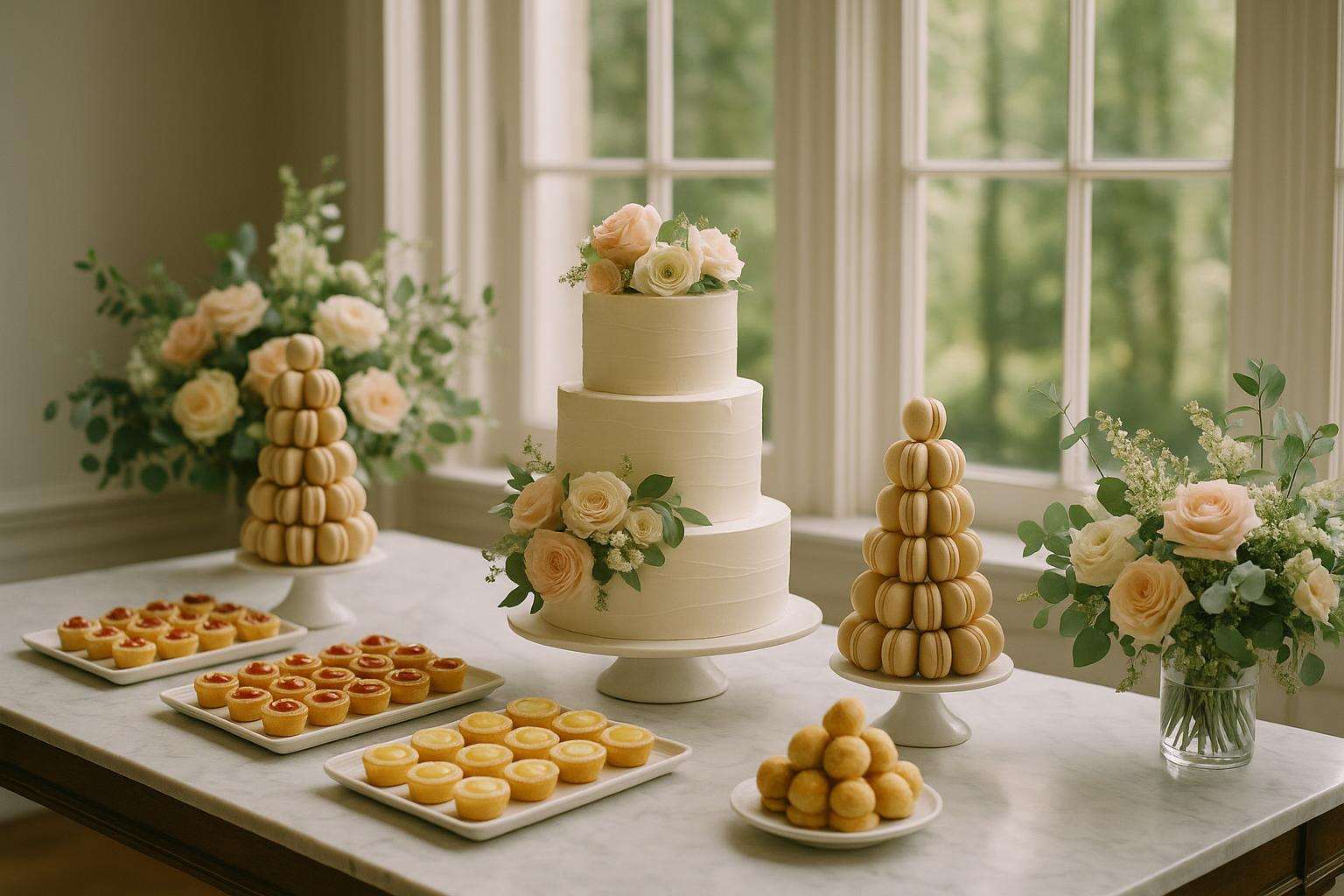
2026 TrendingDessert BarMacaron TowerGrazing TableTiramisuWedding Sweet Table
The quick verdict
From macaron towers to tiramisu bars to grazing dessert boards — ranked by guest delight, aesthetic impact, and value for 2026 receptions.
- Best overall
- Grazing Dessert Board — The most visually dramatic, photographically stunning, and guest-pleasing option — a wide, abundant spread of artisan items that works for every aesthetic and budget tier.
- Best value
- Cookie and Brownie Platter (elevated) — The highest-quality-per-dollar option: artisan cookies and brownies from a quality local bakery cost $3–$6 per person and consistently disappear fastest on any dessert table.
- Best for Couples who want a conversation-starting, social-media-worthy focal point
- Macaron Tower — A stacked tower of 150+ macarons in the wedding's color palette is the single most photographed dessert display in 2026 — beautiful, color-flexible, and gluten-free.
How we evaluated
We evaluated fifteen wedding dessert table ideas against four criteria: guest delight (how universally and enthusiastically the dessert lands across diverse palates), aesthetic impact (how significantly it contributes to the visual and photographic experience of the reception), dietary inclusivity (ease of accommodating gluten-free, vegan, and nut-free guests), and value (quality of guest experience per dollar). Per-person cost ranges reflect 2026 artisan bakery and caterer pricing in U.S. urban and suburban markets for a 100–150 guest reception.
- Guest delight. How universally loved and enthusiastically received the dessert is across a diverse wedding guest list.
- Aesthetic impact. How significantly the dessert contributes to the visual experience and photographic record of the reception.
- Dietary inclusivity. How easily the dessert accommodates gluten-free, vegan, nut-free, and dairy-free guests without compromising the core offering.
- Value. Quality of guest experience per dollar relative to alternatives at the same price point.
Rating scale: Ratings on a 1–5 scale where 5 = exceptional across all criteria.
Last verified .
At a glance
| # | Name | Rating | Best for | Pricing |
|---|---|---|---|---|
| 1 | Grazing Dessert Board | 5.0 | Couples who want maximum visual impact and variety in a single cohesive display; editorial-aesthetic weddings; couples for whom food presentation is a design priority | $10–$18 per person; $1,500–$2,700 for 150 guests |
| 2 | French Macaron Tower | 5.0 | Couples who want a signature dessert focal point with strong visual and social media impact; particularly strong for European, romantic, or garden-party aesthetics | $4–$7 per macaron; $600–$1,050 for a 150-piece tower |
| 3 | Tiramisu Bar (Individual Cups) | 4.5 | Couples with Italian heritage or a coffee and food culture connection; late-fall and winter weddings; receptions where the couple wants a single signature dessert rather than a full variety table | $4–$8 per cup; $600–$1,200 for 150 guests |
| 4 | Mini Tart Collection | 5.0 | Couples with a refined aesthetic sensibility who want a dessert display that is as beautiful as it is delicious; spring and summer weddings where seasonal fruit flavors are at their best | $4–$9 per tart; $600–$1,350 for 150 guests |
| 5 | Choux Pastry and Éclair Display | 4.5 | French-aesthetic, garden party, or European-inspired weddings; couples who want a single dramatic dessert centerpiece that serves as both focal point and food | $4–$8 per piece; croquembouche (100 guests) $500–$900 |
| 6 | Elevated Cookie and Brownie Platter | 4.5 | Any wedding style where warmth, informality, and genuine guest delight are priorities; particularly strong for rustic, bohemian, and garden-party aesthetics | $3–$6 per piece; $450–$900 for 150 guests (two pieces each) |
| 7 | Pistachio and Raspberry Themed Display | 5.0 | Couples who want their dessert table to tell a deliberate culinary story; spring and summer weddings where fresh raspberries are in season | $12–$20 per person for a full themed display; varies by elements selected |
| 8 | Affogato Station | 4.5 | Coffee-loving couples; Italian-aesthetic or destination-wedding-adjacent receptions; couples who want an interactive station that feels elevated | $6–$10 per serving; equipment rental adds $200–$500 |
| 9 | S'mores Station | 4.0 | Outdoor receptions; rustic, barn, or boho aesthetics; summer and fall evening weddings where the fire warmth adds to the atmosphere | $5–$9 per person; $750–$1,350 for 150 guests |
| 10 | Matcha Dessert Corner | 4.0 | Couples with Japanese heritage or a genuine matcha/tea culture affinity; sage or green wedding palettes; contemporary and editorial aesthetics | $8–$15 per person for a matcha corner; varies by elements |
| 11 | Mini Cheesecake Display | 4.0 | Couples who prioritize universal guest delight over trend-forward aesthetics; works well as a supplement to a more visually dramatic focal piece | $4–$8 per mini cheesecake; $600–$1,200 for 150 guests |
| 12 | Live Crepe Station | 4.5 | French-aesthetic weddings; receptions where interactive stations are a design priority; couples who want their dessert service to create genuine live-action energy | $8–$16 per person; $1,200–$2,400 for 150 guests |
| 13 | Individual Pavlova Display | 4.0 | Spring and fall weddings; garden party aesthetics; couples with guests who prioritize lighter, gluten-free dessert options | $5–$9 per individual pavlova; $750–$1,350 for 150 guests |
| 14 | Gourmet Hot Chocolate Station | 4.0 | Fall and winter weddings; indoor receptions; couples whose wedding aesthetic includes warmth, candlelight, and cozy abundance | $4–$8 per cup; $600–$1,200 for 150 guests; equipment rental $150–$400 |
| 15 | Naked Cake with Dessert Accompaniments | 4.0 | Garden party, rustic, bohemian, and natural-aesthetic weddings; couples who want a classic, unfussy focal piece for their dessert table | $4–$10 per slice; $600–$1,500 for a 150-guest tier |
Grazing Dessert Board
The most editorial and abundant dessert statement — a wide, styled spread of artisan sweets that photographs like a magazine cover.
Editor's pick
The grazing dessert board — a wide, flat display of an abundant and artfully arranged collection of pastries, fruits, chocolates, and confections — is the 2026 replacement for the towering multi-tiered dessert display, and it is a genuine evolution rather than a trend. Where vertical towers create visual hierarchy that can feel formal or imposed, a grazing board creates abundance — the feeling of generosity and plenty that defines great hospitality. The composition for a wedding grazing dessert board typically includes: a selection of small pastries (choux, tarts, mini eclairs), chocolate-dipped strawberries or other fruits, artisan chocolates and truffles, seasonal macarons, small brownie bites, honeycomb, and fresh herbs and edible flowers for visual composition. The styling is part of the service — the arrangement itself should be intentional, with color distribution and height variation that makes the whole display read as a composition. Per-person costs of $10–$18 reflect the labor of assembly and curation as much as the ingredient cost; hiring a dessert grazing company or a caterer with specific styling expertise produces noticeably better results than DIY assembly. Fresh florals integrated into the board add the finishing touch that separates good from spectacular.
Strengths
- The most visually impactful dessert display available — a well-executed grazing board is consistently the most photographed element of the reception
- Maximum variety in a single display accommodates nearly every dietary preference and flavor preference simultaneously
- Abundance aesthetic creates a feeling of generous hospitality that guests respond to emotionally, not just gastronomically
Weaknesses
- Requires a skilled stylist or caterer for best results — a poorly assembled grazing board looks chaotic rather than abundant; expertise in styling is not optional
- Best for
- Couples who want maximum visual impact and variety in a single cohesive display; editorial-aesthetic weddings; couples for whom food presentation is a design priority
- Pricing
- $10–$18 per person; $1,500–$2,700 for 150 guests
Source: The Knot — Wedding Dessert Trends 2026 · Visit Grazing Dessert Board
French Macaron Tower
The most photographed dessert display in 2026: a stacked tower of 150+ macarons in the wedding's color palette.
Editor's pick
A macaron tower — a cone-shaped structure of stacked French macarons, typically 18 to 24 inches tall, in colors coordinated to the wedding palette — has become one of the signature dessert statements of contemporary weddings and shows no sign of fading in 2026. The visual appeal is extraordinary: a properly executed macaron tower in rose, ivory, sage, and champagne tones against a styled dessert table background is among the most photogenic wedding displays imaginable. Beyond the aesthetics, macarons are also genuinely delicious when sourced from a skilled pastry chef — the gap in quality between a grocery store macaron and an artisan one is enormous, and only the latter belongs at a wedding. A macaron tower of 150 pieces (serving 150 guests one piece each, or 75 guests two pieces each) costs approximately $600–$1,050 (at $4–$7 per macaron) for the macarons themselves; towers or display structures can be rented or purchased separately. Flavor variety is part of the appeal: offer 4–6 flavor options so guests have the small pleasure of choosing. Current 2026 flavor favorites include pistachio, raspberry, salted caramel, lemon verbena, and matcha.
Strengths
- Unmatched visual impact and social media appeal — the color-coordinated tower is one of the most consistently photographed dessert elements
- Naturally gluten-free when made with almond flour (verify with your baker); also free of many common allergens
- Flavor variety (4–6 options) creates a small, delightful choice moment for each guest
Weaknesses
- Per-piece cost is higher than most other dessert options; quality drops significantly below a certain price point — do not compromise on sourcing
- Best for
- Couples who want a signature dessert focal point with strong visual and social media impact; particularly strong for European, romantic, or garden-party aesthetics
- Pricing
- $4–$7 per macaron; $600–$1,050 for a 150-piece tower
Source: WeddingWire — Wedding Dessert Bar Ideas · Visit French Macaron Tower
Tiramisu Bar (Individual Cups)
The 2026 breakout dessert trend: individual tiramisu cups served from a styled station are elegant, Italian, and deeply satisfying.
Editor's pick
Tiramisu has officially left the restaurant menu and arrived at the wedding dessert table in 2026, and the individual cup presentation — small glass or ceramic vessels of layered espresso-soaked ladyfingers and mascarpone, dusted with cocoa, sometimes crowned with a small chocolate piece or espresso bean — is both beautiful and indulgent. The visual of a tray or tiered display of tiramisu cups, each identical in composition, creates a sense of abundance and artisan quality that resonates with the aesthetic moment of 2026 weddings. The flavor itself is a genuine crowd-pleaser: the combination of coffee, cream, and gentle sweetness works for nearly every adult palate. Individual cup service also solves the common dessert table problem of uneven cutting and variable portion sizes — each guest receives exactly one perfect portion. Sourcing from an Italian restaurant, a specialty caterer, or a pastry chef with genuine tiramisu expertise produces a markedly different result than a generic bakery version; the quality difference is significant enough to be the primary decision criterion. At $4–$8 per cup, tiramisu cups are cost-competitive with most other artisan dessert options.
Strengths
- The 2026 breakout trend — guests who haven't seen tiramisu at a wedding before will talk about it
- Uniform individual portions solve the service and equity problem of shared desserts
- Coffee-cream-cocoa flavor combination has near-universal adult appeal
Weaknesses
- Contains eggs, dairy, and alcohol (marsala in traditional recipes) — requires attention to dietary restriction guests; also not gluten-free in the standard preparation
- Best for
- Couples with Italian heritage or a coffee and food culture connection; late-fall and winter weddings; receptions where the couple wants a single signature dessert rather than a full variety table
- Pricing
- $4–$8 per cup; $600–$1,200 for 150 guests
Source: The Knot — Wedding Dessert Trends 2026 · Visit Tiramisu Bar (Individual Cups)
Mini Tart Collection
Butter-pastry shells filled with seasonal flavors — the most versatile and visually flexible dessert option on this list.
A collection of mini tarts — individual pastry shells filled with a rotating selection of seasonal flavors, typically 4–6 varieties on a single display — is one of the most versatile and visually refined dessert options available for weddings. The butter pastry shell provides a consistent base that can carry nearly any flavor in both sweet and savory directions (though sweet is the standard at wedding receptions), and the range of visual presentation — a single exposed filling color in each shell, arranged by color family on the tray — creates one of the most editorial and beautiful dessert displays available. 2026 flavor favorites for wedding tart collections include: lemon curd with blueberry compote; pistachio cream with fresh raspberry; salted honey with candied walnut; dark chocolate ganache; peach and thyme; and strawberry with vanilla custard. Most skilled pastry chefs can produce gluten-free pastry shells using almond or rice flour, making mini tarts one of the more inclusive options on this list. Per-tart costs of $4–$9 place them in the mid-range of wedding dessert pricing.
Strengths
- Extraordinary visual flexibility — tart collections arranged by color create one of the most refined and editorial dessert display aesthetics available
- Seasonal flavor variety allows genuine personalization; tart flavors can reflect the wedding season and the couple's food preferences
- Gluten-free pastry shells available from skilled pastry chefs without significant quality compromise
Weaknesses
- Best results require a pastry chef with genuine tart expertise; pastry shells from a general bakery are often thick, soggy, or generic
- Best for
- Couples with a refined aesthetic sensibility who want a dessert display that is as beautiful as it is delicious; spring and summer weddings where seasonal fruit flavors are at their best
- Pricing
- $4–$9 per tart; $600–$1,350 for 150 guests
Source: WeddingWire — Wedding Dessert Bar Ideas · Visit Mini Tart Collection
Choux Pastry and Éclair Display
Cream puffs, éclairs, and profiteroles stacked with intention — the most architectural dessert option on this list.
A choux pastry display — cream puffs, éclairs, Paris-Brest, or a combination — is one of the most technically impressive and visually dramatic dessert options available for weddings, and in 2026 it is experiencing a meaningful moment as couples discover the artisan French pastry shops that have proliferated in most U.S. cities over the past five years. The key distinction for a wedding choux display is the croquembouche versus the flat display: a croquembouche (a cone-shaped tower of cream puffs bound with caramel and decorated with spun sugar and flowers) is the most dramatic single-item dessert option available at any price point, reaching 18–24 inches in height and serving as both a visual centerpiece and a functional dessert. The alternative — a flat display of éclairs and cream puffs in flavors coordinated to the wedding palette (coffee, vanilla, pistachio, salted caramel, chocolate) — is less theatrical but more accessible and easier to serve. Both options require a pastry chef with genuine choux expertise; the gap between excellent and mediocre choux is significant. A croquembouche serving 100 guests costs approximately $500–$900 from a skilled artisan pastry chef.
Strengths
- A croquembouche is arguably the most visually dramatic dessert focal point available — a cone tower of cream puffs is a genuine spectacle
- Éclairs and cream puffs are deeply beloved comfort-pastry options that appeal to nearly every adult palate
- French pastry aesthetic aligns beautifully with European, romantic, and garden-party wedding aesthetics
Weaknesses
- Choux quality depends entirely on skill — a poorly executed croquembouche or soggy éclair is disappointing in proportion to the visual promise; only source from a proven pastry chef
- Best for
- French-aesthetic, garden party, or European-inspired weddings; couples who want a single dramatic dessert centerpiece that serves as both focal point and food
- Pricing
- $4–$8 per piece; croquembouche (100 guests) $500–$900
Source: The Knot — Wedding Dessert Trends 2026 · Visit Choux Pastry and Éclair Display
Elevated Cookie and Brownie Platter
The highest-quality-per-dollar option: artisan cookies and brownies disappear faster than anything else on the table.
The elevated cookie and brownie platter — not grocery store baked goods but genuinely artisan cookies and brownies from a quality local bakery — consistently outperforms more elaborate options in one critical metric: it disappears fastest. Guests who approach a dessert table unsure of what to take almost always take a cookie first. That familiarity and comfort, combined with genuine quality ingredients (brown butter, fleur de sel, dark chocolate, tahini, pistachio), creates a dessert experience that is both accessible and impressive. The 2026 approach to a cookie platter for a wedding is curation: a selection of six to eight distinct varieties (brown butter chocolate chip, tahini black sesame, lemon shortbread, salted caramel blondie, raspberry thumbprint, matcha white chocolate) arranged with height variation on tiered cake stands. Brownie varieties (classic fudge, espresso, raspberry swirl, salted caramel) complement the cookies and add depth to the display. Many local bakeries and cookie companies offer custom stamped cookies — monogrammed with the couple's initials or a small wedding-related design — as a keepsake-quality touch at minimal additional cost. At $3–$6 per piece, this is the best value option on the list.
Strengths
- Highest value per dollar of any option on this list — $3–$6 per piece for artisan quality that guests love without reservation
- Familiar and universally appealing; guests with decision paralysis at a dessert table always start with cookies
- Custom stamped cookies create a keepsake element that doubles as a favor
Weaknesses
- Perceived as less formal or less elevated than pastry-based options; may not suit the aesthetic of a very formal or black-tie reception
- Best for
- Any wedding style where warmth, informality, and genuine guest delight are priorities; particularly strong for rustic, bohemian, and garden-party aesthetics
- Pricing
- $3–$6 per piece; $450–$900 for 150 guests (two pieces each)
Source: WeddingWire — Wedding Dessert Bar Ideas · Visit Elevated Cookie and Brownie Platter
Pistachio and Raspberry Themed Display
The flavor pairing of 2026: pistachio and raspberry across macarons, tarts, cakes, and choux — a cohesive, visually stunning statement.
Editor's pick
Building an entire dessert table around a single flavor pairing — pistachio and raspberry, the flavor story of 2026 according to The Knot and WeddingWire's annual trends reporting — creates a cohesive aesthetic and culinary statement that is more impactful than a generic variety collection. The approach: a mini tart with pistachio cream and fresh raspberry; a macaron tower in pale green and crimson; a small single-tier pistachio cake with raspberry compote; mini choux with pistachio cream filling and a fresh raspberry crown; and a small pistachio pavlova with raspberry coulis. The visual palette — sage green and jewel red or deep rose — is both beautiful and unexpected for a wedding dessert table. The flavor combination itself is genuinely exceptional: the richness of pistachio and the bright acidity of raspberry are a classic pastry pairing for a reason. This approach works best when the dessert table is designed as a unified experience from the start, not assembled from multiple vendors; either a single skilled pastry chef executing all elements or a curated selection of vendors briefed on the flavor theme produces the best result.
Strengths
- Cohesive flavor and aesthetic theme creates a more intentional and memorable dessert experience than a generic variety table
- Pistachio-raspberry is the 2026 "it" flavor pairing — couples who use it are ahead of the curve without being obscure
- Visual palette (sage green and deep rose/red) is genuinely beautiful and photographs exceptionally well
Weaknesses
- Requires coordination across multiple pastry elements — either a single pastry chef for all elements or careful briefing of multiple vendors on the unified theme
- Best for
- Couples who want their dessert table to tell a deliberate culinary story; spring and summer weddings where fresh raspberries are in season
- Pricing
- $12–$20 per person for a full themed display; varies by elements selected
Source: The Knot — Wedding Dessert Trends 2026 · Visit Pistachio and Raspberry Themed Display
Affogato Station
Espresso poured over vanilla gelato at a live station — elegant, interactive, and deeply Italian.
An affogato station — a live espresso machine alongside a vessel of vanilla (or pistachio, or salted caramel) gelato, where guests pour a shot of hot espresso over a scoop of cold gelato in a small cup — is one of the most elegant and genuinely pleasurable interactive dessert experiences available at a wedding. The experience is complete in 30 seconds and produces a dessert that is simultaneously simple and sophisticated. The interaction of hot espresso and cold gelato creates something that is more than its parts — the gelato begins to melt at the edges, the espresso takes on a creamy sweetness, and the result is a dessert that feels Italian, indulgent, and effortlessly chic. An affogato station is particularly strong when paired with a broader dessert table rather than standing alone, since its visual footprint is modest (an espresso machine, a gelato vessel, small cups) compared to the display impact of a macaron tower or grazing board. Equipment rental (commercial espresso machine) and staffing add to the setup cost but are essential; an unattended affogato station without someone managing espresso timing produces cold espresso and melted gelato.
Strengths
- The most sophisticated and Italian-feeling interactive dessert experience available — coffee and dessert combined in 30 seconds
- Interactive element creates engagement and a social gathering point at the station
- Genuinely simple to execute at a high standard with proper equipment
Weaknesses
- Modest visual footprint; works best as a component of a broader dessert table rather than as the sole dessert offering
- Best for
- Coffee-loving couples; Italian-aesthetic or destination-wedding-adjacent receptions; couples who want an interactive station that feels elevated
- Pricing
- $6–$10 per serving; equipment rental adds $200–$500
Source: WeddingWire — Wedding Dessert Bar Ideas · Visit Affogato Station
S'mores Station
Toasted marshmallows, dark chocolate, and graham crackers — the late-night dessert that makes adults feel like children again.
A s'mores station — tabletop fire vessels or Sterno-heated fondue pots alongside premium marshmallows, artisan chocolate bars (dark, milk, and flavored), and specialty graham crackers — is one of the most interactive and communal dessert experiences available for outdoor and rustic-aesthetic weddings. The experience creates a gathering point around fire or warmth, which naturally extends time at the station and encourages conversation; guests instinctively slow down around a fire-based activity in a way they do not around a static dessert display. The artisan upgrade matters here: replacing standard grocery store s'mores components with Ghirardelli or Theo chocolate bars, flavored artisan marshmallows (vanilla bean, strawberry, lavender), and honey graham crackers transforms a nostalgic childhood food into something genuinely impressive. Dietary notes: standard graham crackers contain wheat; gluten-free graham crackers are widely available and should be offered alongside. The s'mores station works best outdoors or in well-ventilated spaces; the smoke and flame requirement limits its use in enclosed indoor venues.
Strengths
- Social gathering effect — fire-based activities naturally draw and hold guests together in conversation
- Nostalgia factor creates universal delight; artisan components elevate the experience significantly
- Interactive format fits outdoor, rustic, boho, and barn-style wedding aesthetics perfectly
Weaknesses
- Open flame requirement limits use to outdoor or well-ventilated venues; enclosed ballrooms cannot typically accommodate this station
- Best for
- Outdoor receptions; rustic, barn, or boho aesthetics; summer and fall evening weddings where the fire warmth adds to the atmosphere
- Pricing
- $5–$9 per person; $750–$1,350 for 150 guests
Source: The Knot — Wedding Dessert Trends 2026 · Visit S'mores Station
Matcha Dessert Corner
For the Japanese-aesthetic or tea-culture couple: a matcha-centric dessert corner with mochi, green tea cake, and matcha soft serve.
A matcha-themed dessert corner — built around the earthy, slightly bitter, and deeply comforting flavor of ceremonial grade matcha — is one of the most distinctive and genuinely beautiful niche dessert concepts available for weddings in 2026. The visual appeal of matcha as a color is significant: pale sage green against a white or cream table creates an aesthetic that is both unusual and beautiful. A matcha dessert corner might include: a small matcha chiffon cake; matcha macarons with white chocolate ganache filling; mochi (rice cake) in matcha and red bean varieties; a matcha soft serve station; and matcha shortbread cookies. The flavor range across these items is surprisingly broad — from the intense, earthy bitterness of a matcha cake to the delicate sweetness of matcha shortbread — creating a more complex tasting experience than a single-flavor dessert concept normally achieves. This concept works best for couples with a genuine connection to Japanese food culture, a green or sage wedding palette, or a tea-culture aesthetic.
Strengths
- Visually distinctive: the sage green palette is beautiful and unexpected on a wedding dessert table
- Genuinely complex flavor range within a single theme — earthy, sweet, delicate, rich
- Matches the refined, slightly cerebral aesthetic that food-forward couples tend to favor
Weaknesses
- Matcha is a divisive flavor for guests unfamiliar with it; should be offered alongside at least one or two more conventional options for guests who will not know what to expect
- Best for
- Couples with Japanese heritage or a genuine matcha/tea culture affinity; sage or green wedding palettes; contemporary and editorial aesthetics
- Pricing
- $8–$15 per person for a matcha corner; varies by elements
Source: WeddingWire — Wedding Dessert Bar Ideas · Visit Matcha Dessert Corner
Mini Cheesecake Display
Individual cheesecakes in seasonal flavors — a crowd-pleaser that is simultaneously classic and capable of genuine artisan elevation.
Mini cheesecakes — individual portions in graham cracker or almond flour crusts, topped with seasonal fruit compotes or ganache — occupy a reliable, crowd-pleasing position in the wedding dessert landscape that other more fashionable items cannot always match. The cheesecake is a deeply familiar comfort dessert for most guests, and a well-executed mini version — dense, creamy, not too sweet, with a perfectly set texture — creates genuine satisfaction. Flavor varieties that work particularly well in the 2026 context: classic New York style with blueberry compote; brown butter with candied lemon; espresso with dark chocolate ganache; vanilla bean with strawberry coulis; and a savory-adjacent honey-goat-cheese version for adventurous guests. The almond flour crust option makes mini cheesecakes one of the more naturally gluten-free-adaptable dessert options available. Tiered display stands allow a mini cheesecake collection to achieve significant visual impact despite the modest height of individual items. Per-piece costs of $4–$8 place them in the mid-range of the dessert table.
Strengths
- One of the most universally appealing dessert options — deep familiarity combined with artisan quality creates reliable guest satisfaction
- Almond flour crust option provides a genuinely good gluten-free alternative
- Individual portions eliminate the serving variability problem of a full-size cheesecake
Weaknesses
- Perceived as less visually dramatic than macaron towers or grazing boards; benefits from elevated display styling to achieve full aesthetic impact
- Best for
- Couples who prioritize universal guest delight over trend-forward aesthetics; works well as a supplement to a more visually dramatic focal piece
- Pricing
- $4–$8 per mini cheesecake; $600–$1,200 for 150 guests
Source: The Knot — Wedding Dessert Trends 2026 · Visit Mini Cheesecake Display
Live Crepe Station
Made-to-order French crepes folded at a live station — the most theatrical and intimate dessert moment on this list.
A live crepe station — a dedicated vendor or caterer with a professional crepe griddle, making thin, lacy crepes to order at the station and folding them with sweet fillings to individual guests' preferences — creates the most genuinely intimate and theatrical interactive dessert experience on this list. The made-to-order format means each guest receives something warm and freshly prepared, with the small pleasure of customizing their own dessert. Filling options for a wedding crepe station typically include: Nutella and banana; lemon curd and whipped cream; strawberry and mascarpone; salted caramel and crushed praline; and a seasonal fruit option. The sight and smell of crepes being made at a live station creates a natural gathering point that extends the reception's energy. One skilled crepe maker can produce approximately one crepe per 90 seconds, meaning that a single vendor can serve 40–60 guests per hour — for a 150-person reception, two crepe makers or a 3–4 hour service window is recommended to avoid long lines. Per-person costs of $8–$16 reflect the labor-intensive made-to-order model.
Strengths
- Made-to-order warmth creates the most personally satisfying individual dessert experience on this list
- The sight and smell of fresh crepe preparation is a natural social gathering point
- Filling customization gives guests the small pleasure of personal choice
Weaknesses
- Production speed limitation requires either two crepe makers or a longer service window for larger guest counts; underestimating this creates long lines
- Best for
- French-aesthetic weddings; receptions where interactive stations are a design priority; couples who want their dessert service to create genuine live-action energy
- Pricing
- $8–$16 per person; $1,200–$2,400 for 150 guests
Source: WeddingWire — Wedding Dessert Bar Ideas · Visit Live Crepe Station
Individual Pavlova Display
Crisp meringue, cloud-like cream, and seasonal fruit — the most visually ethereal dessert on this list.
Individual pavlovas — small meringue bases with crisp exteriors and marshmallow-soft interiors, topped with whipped cream and seasonal fruit — are one of the most beautiful and unexpectedly impressive dessert options for a wedding table in 2026. The visual is genuinely ethereal: a cloud of white meringue topped with jewel-bright fruit (fresh strawberries, kiwi slices, passionfruit, blueberries, and edible flowers) creates a display that is simultaneously elegant, colorful, and completely natural-looking. Pavlova is naturally gluten-free (pure meringue is made from egg whites and sugar), which makes individual pavlovas one of the most inclusive dessert options available when clearly labeled. The flavor is light and not overly sweet — a useful complement to richer desserts on a larger table. The primary challenge with pavlovas is structural: meringue weeps (softens) over time in humidity, so pavlovas must be assembled close to service time. For a summer wedding in a humid climate, individual pavlovas need to be assembled no more than 90 minutes before guests arrive at the dessert table.
Strengths
- Among the most visually beautiful desserts available — the white meringue and fruit composition photographs like an editorial image
- Naturally gluten-free; one of the most inclusive dessert options on this list
- Light, not-too-sweet flavor profile complements richer desserts beautifully
Weaknesses
- Humidity sensitivity requires careful timing — meringue weeps in humid conditions and must be assembled close to service; not ideal for outdoor summer events in humid climates
- Best for
- Spring and fall weddings; garden party aesthetics; couples with guests who prioritize lighter, gluten-free dessert options
- Pricing
- $5–$9 per individual pavlova; $750–$1,350 for 150 guests
Source: The Knot — Wedding Dessert Trends 2026 · Visit Individual Pavlova Display
Gourmet Hot Chocolate Station
For fall and winter weddings: a gourmet hot chocolate station with toppings is the warmest, most comforting dessert moment available.
A gourmet hot chocolate station — premium Belgian or single-origin drinking chocolate, served in small mugs with a toppings bar of house-made marshmallows, flavored whipped creams, crushed peppermint, caramel drizzle, orange zest, and cayenne — is one of the most season-specific and emotionally resonant dessert options on this list. For fall and winter weddings in particular, the warmth and comfort of a well-made hot chocolate in a cold-weather setting creates a sensory experience that no cold dessert can match. The premium execution matters enormously: the difference between a cup of Valrhona single-origin drinking chocolate with fresh cream and a standard hot cocoa packet is the difference between a memorable experience and a forgettable one. Dairy-free versions using oat milk or coconut milk are standard in most artisan coffee and chocolate establishments and should be offered as a default alternative. The station works best as a warm-weather dessert complement rather than as the sole offering: pair with cookies, brownies, or truffles for a complete dessert moment.
Strengths
- Unmatched warmth and comfort factor for fall and winter weddings — the seasonal specificity is part of the appeal
- Interactive toppings bar creates customization and a gathering point
- Dairy-free adaptation (oat milk) is seamless and widely available
Weaknesses
- Strongly seasonal — a hot chocolate station at an outdoor summer wedding in warm weather reads as out of place
- Best for
- Fall and winter weddings; indoor receptions; couples whose wedding aesthetic includes warmth, candlelight, and cozy abundance
- Pricing
- $4–$8 per cup; $600–$1,200 for 150 guests; equipment rental $150–$400
Source: WeddingWire — Wedding Dessert Bar Ideas · Visit Gourmet Hot Chocolate Station
Naked Cake with Dessert Accompaniments
The unfrosted, rustic layer cake surrounded by seasonal fruit and complementary sweets — a modern classic that never goes out of style.
The naked cake — a layer cake with minimal or no external frosting, exposing the sponge layers and internal filling with only a thin crumb coat visible at the edges — has been a wedding fixture since approximately 2015 and shows genuine staying power in 2026, particularly when paired thoughtfully with complementary dessert accompaniments rather than standing alone. The appeal is simple: the naked cake looks beautiful in an honest, unfussy way, integrates naturally with fresh flowers and fruit, and the exposed layers create a visual that communicates both quality ingredients and unstudied elegance. Popular 2026 naked cake flavor combinations include: lavender Earl Grey with lemon curd; honey almond with chamomile buttercream; chocolate hazelnut; lemon poppyseed with raspberry preserves; and carrot cake with brown butter cream cheese. The cake's context on the dessert table matters: a naked cake surrounded by seasonal fruit, small honey jars, a few complementary pastries, and fresh herb sprigs creates a complete dessert display with a central focal piece. Per-slice costs of $4–$10 from skilled cake artists are comparable to other high-quality cake options.
Strengths
- Honest, beautiful aesthetic that integrates naturally with floral and fruit styling
- Flavor variety is genuinely broad — naked cakes work with nearly any flavor combination
- Contextual dessert accompaniments (fruit, honey, pastries) create a complete display without requiring a separate dessert table
Weaknesses
- The naked cake aesthetic is well-established enough that it no longer reads as cutting-edge; couples who want something that feels distinctive in 2026 may prefer a less familiar option
- Best for
- Garden party, rustic, bohemian, and natural-aesthetic weddings; couples who want a classic, unfussy focal piece for their dessert table
- Pricing
- $4–$10 per slice; $600–$1,500 for a 150-guest tier
Source: The Knot — Wedding Dessert Trends 2026 · Visit Naked Cake with Dessert Accompaniments
Which should you choose?
·
Goal:
—
·
Goal:
—
·
Goal:
—
·
Goal:
—
Frequently asked
How much does a wedding dessert table cost per person?
Wedding dessert table costs typically range from $7 to $20 per person depending on the complexity of the offerings, the vendor tier, and the scale of the display. A simple dessert bar with three or four items — mini cheesecake bites, macarons, brownie bites, and cookies — from a local bakery typically runs $7–$12 per person. An elaborate multi-station display with a tiered cake, macaron tower, tiramisu individual cups, and a seasonal tart selection from a specialty pastry chef runs $14–$22 per person. The general planning rule from WeddingWire and The Knot is to budget 2–3 bites of dessert per guest for a full dessert table service. A 150-person reception at $10 per person represents a total dessert spend of approximately $1,500 — a meaningful but not prohibitive line item for a moment that guests remember clearly and photograph extensively.
Should couples have both a wedding cake and a dessert table?
Whether to have both a wedding cake and a supplementary dessert table depends primarily on the guest count, budget, and aesthetic vision. For 150+ guest receptions, a tiered cake alone rarely provides adequate dessert for the full guest list; a supplementary dessert station ensures everyone is served without asking guests to wait for extended cake-cutting service. For smaller receptions of 50–80 guests, a single tiered cake plus one or two supplementary dessert options (a macaron display, a cookie platter) is typically sufficient and avoids the appearance of excess. Many couples choose to make the tiered cake a decorative and ceremonial centerpiece while relying on the surrounding dessert table for the actual guest servings — a financially sensible approach that keeps the cake cutting as a photographic and celebratory moment without requiring it to feed 200 people.
What are the top wedding dessert trends for 2026?
The top wedding dessert trends for 2026, according to The Knot's annual trends report, center on two themes: elevated comfort flavors and visually dramatic but intimate-scale displays. Pistachio and raspberry is the flavor pairing of the year — appearing in everything from macaron fillings to tart glazes to buttercream flavor options. Tiramisu has emerged from its restaurant context into individual-serving cups and station service. Matcha continues its rise, particularly in choux pastry and mousse. Visually, the trend is away from towering, elaborate displays toward more restrained, editorial styling — fewer items displayed beautifully rather than maximal variety. Grazing dessert boards (flat, wide, abundant) are trending over towering vertical displays. And in terms of format, interactive stations — make-your-own hot chocolate with toppings, build-your-own s'more, assemble-your-own affogato — are growing as couples seek moments that engage guests rather than simply serve them.
How do you style a wedding dessert table beautifully?
The most important principle in dessert table styling is height variation: a flat table of uniformly sized items, however delicious, photographs poorly and creates a visually static display. The solution is a combination of cake stands and risers at varying heights, with taller elements at the back or center and smaller items in the foreground. Fresh florals — even a single arrangement at the center back — transform a food display into a styled editorial image. The color palette should integrate with the wedding's overall design: a warm ivory and blush wedding calls for desserts in complementary tones (strawberry, apricot, pale lavender, cream) rather than bold contrasting colors. Labels are both practical and decorative: small calligraphed cards identifying each item add an elegant detail and help guests with dietary restrictions navigate the table. The dessert table photographs best when styled with intention as a visual display rather than arranged for pure service efficiency.
How far in advance should wedding desserts be ordered?
Wedding cake and dessert orders from reputable pastry chefs and bakeries should be placed four to six months before the wedding date, and in popular markets (New York, Los Angeles, Chicago, San Francisco) up to eight months in advance for sought-after vendors. Tasting appointments — where the couple samples flavor combinations and discusses design — typically take place two to four months before the wedding. For dessert table supplements like macaron towers, custom cookies, and tart collections, three to four months is standard. The risk of leaving dessert orders too late is significant: the best pastry chefs have finite weekend capacity and are often fully booked a season in advance. If you are planning a spring or fall wedding — the two peak booking windows — place your dessert order as soon as your venue and date are confirmed.
Can a wedding dessert table replace the traditional wedding cake entirely?
Yes — and an increasing number of couples choose exactly this approach. The traditional tiered wedding cake is a cultural convention, not a legal or ceremonial requirement, and couples who prefer a dessert table of items they genuinely love over a formal tiered cake are making a completely legitimate choice. The practical consideration is providing the visual and ceremonial element that the cake cutting usually serves: a dessert table entirely of flat or varied items can feel like it lacks a focal point. The solution many couples use is to anchor the dessert table with a single smaller "cutting cake" — a 6-inch tier designed for the ceremonial cutting moment and the couple's keepsake slice — surrounded by the full dessert selection that will actually feed the guests. This preserves the ritual while freeing the couple from ordering 150 slices of a single flavor they may not love.