Food & Drink
Wedding Food Allergy Safety: The Complete 2026 Guide
Approximately 32 million Americans have a diagnosed food allergy — meaning any 100-person wedding likely includes 6 to 10 guests at real risk. Here is every step to protect them, from RSVP to reception.
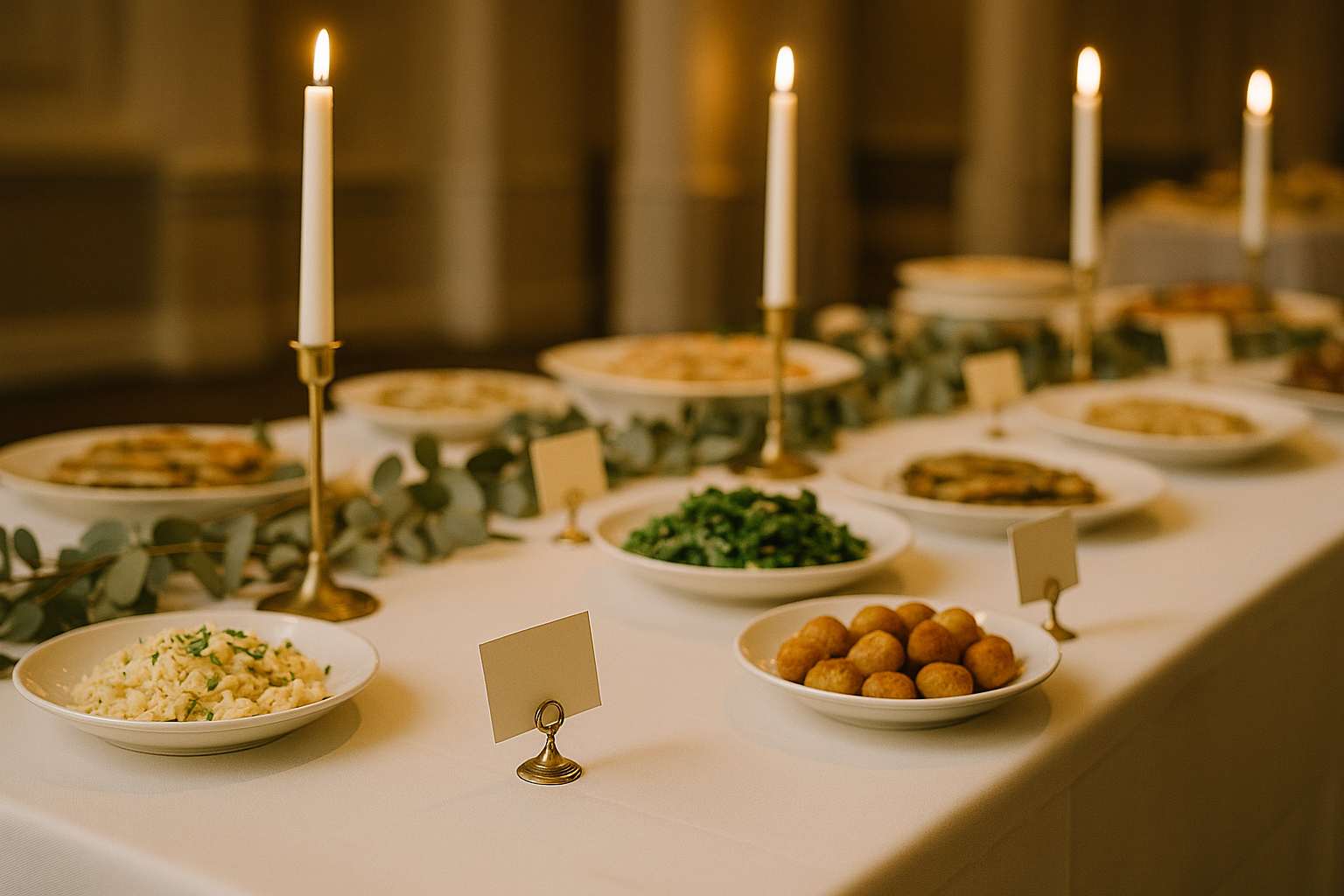
Approximately 15 to 30 percent of wedding guests have meaningful dietary needs — from life-threatening allergies to religious requirements. A clear RSVP field, one briefing call with your caterer three weeks out, and consistent labeling at the reception protect every guest and cost almost nothing extra when planned in advance.
Why Dietary Accommodations Are a Hospitality Priority, Not an Afterthought
The CDC's 2024 National Health Interview Survey found that approximately 6.7 percent of U.S. adults have a diagnosed food allergy — representing roughly 32 million Americans. At a 150-person wedding, this statistic alone means your guest list likely includes 10 people with medically significant allergies. Add guests with celiac disease, lactose intolerance, gluten sensitivity, religious dietary requirements including kosher and halal, vegetarians, vegans, and lifestyle preferences, and the realistic count of guests with meaningful dietary needs approaches 20 to 35 people at a typical 100-person wedding.
For the guest with a severe peanut allergy, a shellfish anaphylaxis history, or strict kosher requirements, attending a wedding reception is an act of trust. They are trusting you to have thought about them. Couples who plan proactively — asking the right questions at the RSVP stage, communicating clearly with their caterer, and designing an inclusive menu from the start — find that the process is far less complicated than they feared, and the result is a reception where every guest eats well and feels genuinely welcomed.
Understanding the Full Landscape of Dietary Restrictions
Not all restrictions carry the same stakes, and treating them with the same response is both impractical and insufficient. The framework below helps couples triage effectively.
| Category | Examples | Safety Stakes | Planning Approach |
|---|---|---|---|
| Life-threatening allergy | Peanuts, tree nuts, shellfish, sesame, fish, milk, eggs, wheat (anaphylaxis) | Highest — can be fatal | Dedicated plate; direct kitchen conversation; personal outreach to guest |
| Autoimmune condition | Celiac disease (gluten triggers intestinal damage) | High — cross-contamination is a real risk even without visible symptoms | Dedicated plate prepared on separate surfaces; no shared utensils or cookware |
| Religious dietary law | Kosher, halal, Hindu vegetarian, Jain | Non-negotiable — violating religious law is a serious harm to observant guests | Specialist sourcing required; confirm observance level with guest directly |
| Intolerance / sensitivity | Lactose intolerance, non-celiac gluten sensitivity | Moderate — uncomfortable but not dangerous | Ingredient modifications; note-flagging on menu |
| Lifestyle preference | Vegan, vegetarian, pescatarian | Low — no safety risk | Menu design from the center; ensure a substantive main course option |
The Nine Major Allergens: A Current Reference
The FDA currently recognizes nine major food allergens that must be disclosed on packaged food labels under the Food Allergen Labeling and Consumer Protection Act. The ninth allergen, sesame, was added in 2023 and is now required on labels alongside the original eight: peanuts, tree nuts, milk, eggs, wheat, soy, fish, and crustacean shellfish.
Hidden sources are the primary risk at catered events. Tree nuts appear in pesto, sauces, and salad dressings. Soy is concealed in marinades and processed proteins. Sesame is embedded in tahini, hummus, and Asian-style dishes. Always request written ingredient lists from your caterer for any dish being served to guests with life-threatening allergies.
Menu Design Strategy: Build Inclusive from the Center
The most experienced catering professionals share one consistent insight: the goal is not 12 separate menus — it is one main menu that is naturally inclusive, with targeted additions only for guests whose needs genuinely cannot be met any other way.
Design your base menu around dishes that are naturally free of the most common allergens: grilled or roasted proteins with sauces served separately; grain dishes featuring rice, quinoa, or potatoes rather than wheat-based pasta; vegetable-forward sides that are inherently vegan and gluten-free; fresh salads with dressings on the side. When sauces, garnishes, and dressings are served separately rather than applied in the kitchen, a single dish can safely serve far more guests.
Ask your caterer for their "house naturally-GF" and "house naturally-vegan" dishes — items already in their repertoire that happen to meet these requirements, carrying no upcharge and requiring no specialty sourcing.
The RSVP-to-Table Logistics Timeline
Dietary accommodations require lead time. The sequence below prevents the most common failures.
| Timeframe | Action |
|---|---|
| 12–16 weeks before | Discuss anticipated dietary needs with caterer during initial menu review; ask about severe allergy protocols and cross-contamination procedures |
| 8–10 weeks before | Send invitations with a clear, warm dietary restriction field on the RSVP; include the same field on your wedding website RSVP |
| 4–6 weeks before | RSVP deadline; compile your dietary master list sorted by name, table number, restriction type, and severity |
| 3 weeks before | Deliver organized dietary summary to caterer in writing and by phone; flag high-priority guests (anaphylaxis, celiac, kosher, halal) explicitly |
| 1 week before | Final dietary count confirmation; brief the catering captain on special plates and how they will be identified and delivered |
| Day of | Special plates delivered to correct seats before general service; at least one catering staff member designated to answer dietary questions |
Religious Dietary Requirements: Kosher and Halal
Religious dietary requirements are non-negotiable for observant guests and deserve the same careful planning as any other safety consideration.
Kosher: Meat and dairy cannot be prepared, served, or consumed together. Pork and shellfish are prohibited entirely. Meat must be sourced from an approved slaughterhouse using specific methods, and a certified mashgiach (kosher supervisor) must be present on-site during meat service — supervision fees typically run $15 to $30 per hour. Wine served must be kosher-certified. Full kosher catering carries a 20 to 40 percent premium over standard catering in most markets. The dignified alternative for couples with a small number of kosher-observant guests: source sealed, certified kosher meals from a certified provider and serve them directly at the guest's seat.
Halal: Pork and pork-derived products are prohibited. Alcohol is prohibited in sauces, marinades, and desserts. Meat must be slaughtered according to zabiha method. Gelatin from non-halal sources — typically pork-derived — must be avoided in desserts. Halal-certified caterers can usually work within standard kitchen environments. Always verify certification in writing.
Labeling Best Practices at the Reception
For buffet and station service, every dish should include a small card noting: the presence of any of the nine major allergens, plus common dietary markers — Vegetarian (V), Vegan (VG), Gluten-Free (GF), Nut-Free (NF), Dairy-Free (DF). Use printed rather than handwritten cards, which can blow away or be repositioned. Dessert tables deserve particular attention: pastries and sweets are high-risk for hidden allergens, and a clearly labeled dessert table is one of the most appreciated hospitality details a couple can provide.
Pre-Wedding Dietary Safety Checklist
- RSVP form includes a warm, open-ended dietary restriction field
- RSVP deadline set at least five to six weeks before the wedding
- Dietary master list compiled: name, table, restriction type, severity level
- All guests with severe allergies personally contacted before the wedding
- Caterer briefed in writing and by phone at least three weeks out
- Kosher or halal sourcing confirmed and contracted if applicable
- Cocktail hour items reviewed for the nine major allergens
- Labeling plan confirmed with caterer for buffet and station service
- Dessert accommodations confirmed: at minimum one GF option and one vegan option
- Catering captain briefed on special plates and delivery logistics day-of
Frequently asked
How many wedding guests typically have dietary restrictions?
More than most couples expect. According to the CDC's 2024 National Health Interview Survey, approximately 6.7 percent of U.S. adults have a diagnosed food allergy — roughly 32 million Americans. At a 150-person wedding, that statistic alone suggests 10 guests with medically significant allergies. Add guests with intolerances such as gluten sensitivity or lactose intolerance, guests keeping kosher or halal, vegetarians, vegans, and guests with lifestyle preferences, and the realistic count of guests with meaningful dietary needs at a 100-person wedding is 15 to 30 people. This is not a niche concern — it is a central hospitality consideration that affects the comfort, safety, and memory of a significant share of every guest list.
When should we collect guests' dietary information?
Dietary information should be collected at the RSVP stage, which typically falls six to ten weeks before the wedding. This window provides adequate time for your caterer to source specialty ingredients, make menu adjustments, and coordinate dedicated plates for guests with severe allergies or kosher and halal requirements. Collecting this information two weeks before the wedding — a common mistake — leaves no time for sourcing, planning, or meaningful kitchen preparation. The RSVP form should include a warm, open-ended field: 'Please share any food allergies or dietary requirements so we can ensure the kitchen is fully prepared for you.' This framing signals genuine care rather than bureaucratic box-ticking, and guests who have spent years being overlooked at events will notice and appreciate it.
What is the difference between a food allergy and a food intolerance?
The distinction is medically significant and affects how your caterer should respond. A food allergy involves an immune system response and can be life-threatening — anaphylaxis from peanuts, tree nuts, shellfish, or sesame can cause death within minutes without treatment. Cross-contamination with even trace amounts of an allergen can trigger a reaction. A food intolerance, by contrast, involves the digestive system and causes discomfort — bloating, stomach pain, headaches — but is not life-threatening and rarely triggered by trace amounts. Celiac disease is the important exception: it is an autoimmune condition triggered by gluten, and even cross-contamination with wheat can cause serious intestinal damage in celiac guests even when no immediate reaction is visible. Treat any guest who discloses celiac disease, anaphylaxis-risk allergies, or religious dietary laws with the same high-priority response: a directly prepared, dedicated plate that has not shared surfaces, tools, or cooking vessels with the triggering ingredient.
Do we need a kosher caterer for our entire wedding if we have kosher-observant guests?
No. You are not required to make the entire reception kosher — and doing so is a significant logistical and financial undertaking that most caterers outside major metro areas cannot properly execute. The most widely accepted and dignified solution for kosher-observant guests is a sealed, certified kosher meal sourced from a certified kosher provider and served directly at their seat. Confirm with the individual guests before the wedding what their level of observance is — some guests keep full glatt kosher, others simply avoid pork and shellfish. Ask what they need and follow their lead. In New York, New Jersey, South Florida, and other areas with high kosher caterer density, budget for $75 to $175 per person for a fully kosher seated dinner. A certified mashgiach (kosher supervisor) is required on-site during meat service; supervision fees typically run $15 to $30 per hour.
How should we label food at a wedding buffet or stations?
Clear, permanent labeling at every dish is the final and critical layer of safety for guests with dietary restrictions. Each station or buffet item should include a small card noting the presence of the nine FDA-recognized major allergens — peanuts, tree nuts, milk, eggs, wheat, soy, fish, shellfish, and sesame — along with common dietary markers: Vegetarian (V), Vegan (VG), Gluten-Free (GF), Nut-Free (NF), Dairy-Free (DF). Use language from the guest's perspective — 'Contains tree nuts' communicates more useful information than 'prepared with almond oil.' Dessert tables deserve particular attention: pastries, wedding cakes, and sweets are high-risk for hidden allergens including nuts, eggs, dairy, and wheat. Print labels on cardstock rather than handwriting them on paper — handwritten cards blow away and can be repositioned incorrectly. For plated service, use a small indicator at the place setting — a colored napkin fold, a printed tent card, or a notch on the place card — so servers can deliver special plates without announcing dietary needs aloud.
What if a guest discloses a severe allergy at the reception that we were not aware of?
Ask the catering captain to speak directly with the guest about which items on the menu are safe, and involve the head chef or kitchen manager in the conversation. Do not attempt kitchen modifications without direct chef involvement. Most experienced catering teams keep simple, allergen-clear items available for exactly this scenario — grilled proteins without sauces, plain roasted vegetables, plain rice — and can prepare a safe plate when given advance notice even if just an hour before service. After the wedding, reflect on your RSVP process: a warm, clearly worded dietary field on your RSVP form and an RSVP deadline set six to eight weeks out — rather than two to three weeks — prevents this situation in almost all cases. Last-minute allergies disclosed at the reception are the predictable result of an RSVP process that did not ask the right question clearly enough.