Food & Drink
Wedding Menu Planning Timeline: From First Taste to Final Count
Your wedding menu is not a single decision — it is a sequence of decisions made at the right moments over twelve months. Here is the exact timeline, the questions to ask at each stage, and the milestones that protect you from last-minute surprises.
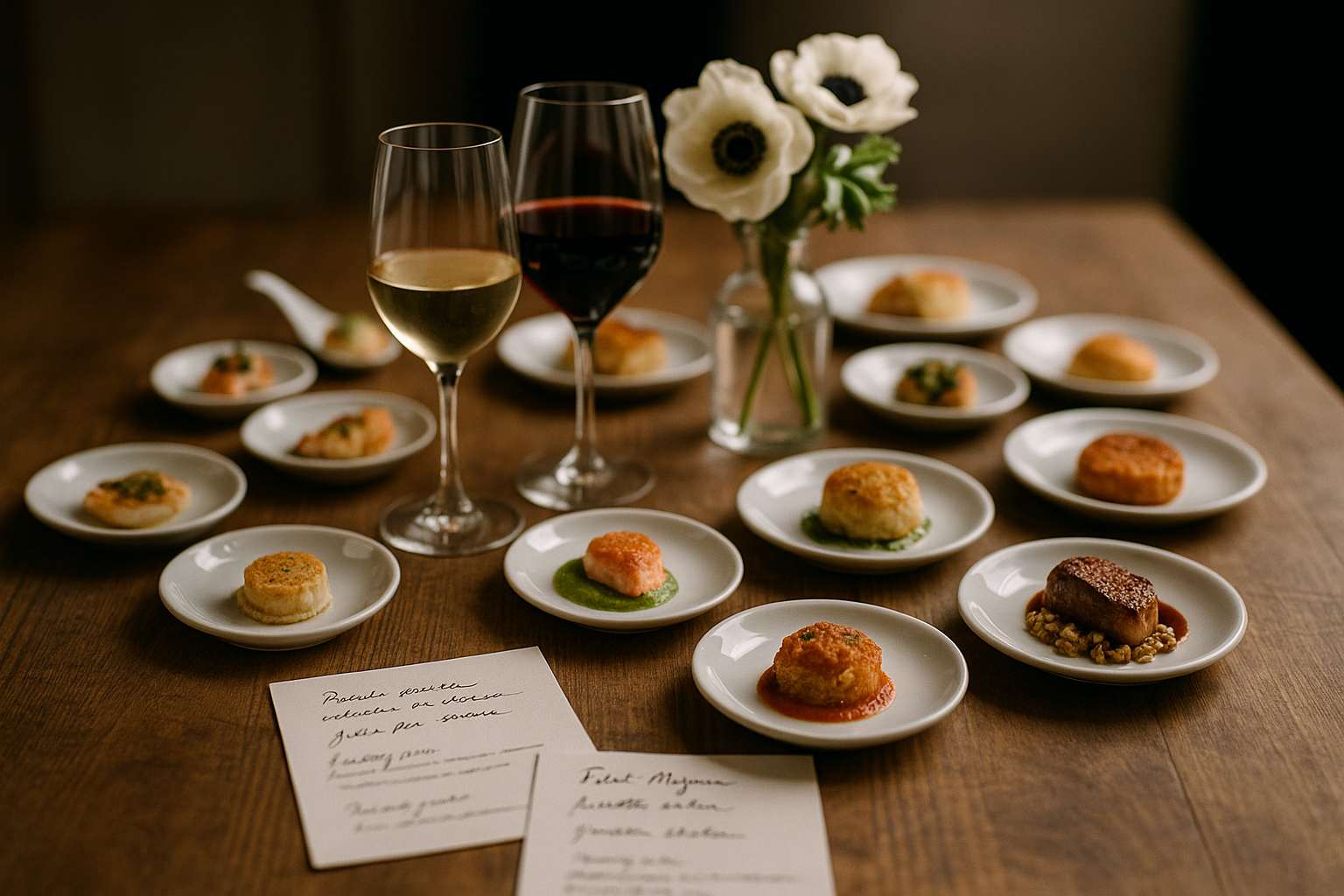
Book your caterer by nine to ten months out for peak-season dates, schedule your tasting shortly after, finalize the full menu at six to eight months, submit dietary restrictions three weeks before the wedding, and lock your final guest count seven to fourteen days prior. Every milestone has a consequence — missing the headcount deadline costs money; missing the menu lock date limits your options.
Wedding catering is not a single decision made at one meeting — it is a sequence of decisions made across twelve months, each one building on the last. Miss an early milestone and you find yourself choosing a caterer under time pressure from a shorter list. Miss a late one and you pay penalty fees or compromise on the menu you worked to build.
This timeline gives you every milestone, the reasoning behind each one, and the questions to ask at each stage so nothing catches you by surprise on the day.
What Is the Full Wedding Catering Timeline — and When Does It Start?
| Timeframe | Key Action | What Happens If You Miss It |
|---|---|---|
| 12–18 months out | Set catering budget; establish service style preference; research caterers | Popular caterers for your date are already booked |
| 9–12 months out | Schedule tastings; book caterer; sign contract with deposit | Limited availability; less negotiating leverage |
| 6–9 months out | Work through menu direction; discuss seasonal produce and dietary accommodations | Seasonal planning becomes reactive rather than intentional |
| 6–8 months out | Finalize the full menu; sign off on service style and course structure | Last-minute substitutions; availability gaps close to wedding |
| 3 months out | Update guest count; confirm staffing level; review rental inventory | Staffing plan not aligned with final guest count |
| 4–8 weeks out | Submit dietary restrictions; confirm vendor meal count; venue walk-through with caterer | Caterer unprepared for kitchen/logistics at your venue |
| 7–14 days out | Submit final guaranteed guest count; confirm day-of timeline | Penalty fees; billing discrepancies |
| 3–5 days out | Final call with event captain; confirm arrival time and emergency contact | Day-of coordination gaps |
| Wedding day | Caterer arrives per agreed setup window; greet event captain on arrival | Setup delays that compress service time |
How Do I Choose the Right Wedding Caterer — and What Should I Evaluate?
The caterer selection process has three distinct phases: initial research, tasting, and contract negotiation. Each one has specific things to evaluate.
During initial research (twelve to eighteen months out): shortlist three to five caterers based on reviews, portfolio, and style alignment. Confirm that your venue allows them — some venues require exclusive or preferred-list caterers. Verify they have experience at your venue or with your venue's kitchen constraints; a caterer unfamiliar with your venue's freight elevator, loading dock restrictions, or power capacity will lose time on the day.
At the tasting (nine to twelve months out): request that all samples be brought to room temperature before the appointment — wedding food is served at room temperature, not cold, and cold tasting is not a fair evaluation. Assess the temperature of hot dishes (a staffing signal; if food arrives warm at an intimate tasting, ask how they maintain temperature for 150 guests across a 45-minute cocktail hour). Photograph and take written notes for all dishes — flavor memory fades quickly. Ask directly: Is this prepared by the same kitchen team who will work my event? Tastings are sometimes executed by senior chefs while event-day service falls to a different crew.
According to A Spice of Life Catering's 2026-2027 catering guide, couples who finalize their menu by month six avoid most last-minute substitutions — seasonal availability is predictable that far out, and the caterer has adequate lead time to source specialty ingredients.
What Goes Into a Wedding Menu — and How Do You Build It?
A full wedding reception menu has five distinct components, each with its own planning considerations:
Cocktail Hour (1–1.5 hours)
Plan three to five passed hors d'oeuvres pieces per guest per hour, plus one or two stationary stations (charcuterie, cheese, raw bar, or a themed station). Cocktail hour is when guests are hungriest — under-staffing or under-ordering here produces impatient, over-drinking guests who arrive at dinner less than ideal. Never cut cocktail-hour food to save budget; it is among the highest-ROI investments in the catering package.
First Course (Seated Dinners)
Soup, salad, or a small plated appetizer. For plated dinners, confirm pacing between courses — fifteen to twenty minutes is the standard gap, and it should be specified in the contract.
Entrée(s)
One well-executed entrée with a strong vegetarian alternative is fully appropriate and often preferred logistically. Multiple entrée options require guests to pre-select at RSVP, which adds planning complexity but provides meaningful personalization. Confirm that the vegetarian option is an equally thoughtful dish — a wilted vegetable plate communicates neglect to a meaningful share of your guests.
Late-Night Snack (Optional but Beloved)
Mini sliders, ramen cups, loaded fries, or grilled cheese at nine or ten PM has become nearly standard at full-evening receptions. Budget $8–$18 per person. Guests on the dance floor consistently identify the late-night snack as one of the most memorable moments of the reception.
Seasonal Menu Planning
Seasonal ingredients are fresher, more affordable, and more impressive to food-savvy guests. Spring weddings (March through May) allow lamb, salmon, asparagus, and strawberries. Fall weddings (September through November) favor beef, butternut squash, pears, and apples. Building around seasonal produce typically saves eight to fifteen percent versus off-season sourcing — a meaningful difference multiplied by a guest count of 150.
Key Questions to Confirm at Contract Signing
- What is the final menu lock date, and what changes are permitted after it?
- How do you handle ingredient unavailability close to the date?
- Is the cocktail hour included in the quoted per-person price?
- What is the overage policy — how much extra food do you prepare above the guarantee?
- Are vendor meals (photographer, videographer, DJ, planner) included or an add-on?
- What is the cake-cutting fee for outside desserts? ($2–$8 per slice is standard)
Frequently asked
How far in advance should I book my wedding caterer?
For peak wedding season months — May, June, September, and October — begin your caterer search at twelve months and aim to book by nine to ten months. Popular caterers in major metropolitan areas fill these dates twelve or more months in advance. Off-peak months (January through March) offer more flexibility, with quality caterers often available six to eight months out. The single most important factor is your venue: if your venue has an exclusive or preferred caterer list, your caterer choice may be made the moment you book the venue, regardless of your personal timeline. If your venue allows outside caterers, confirm this in your venue contract before you invest time in caterer research.
When should I schedule the catering tasting?
Schedule your catering tasting nine to twelve months before the wedding — enough lead time for menu adjustments, and close enough that seasonal ingredient discussions are meaningful. Most caterers schedule tastings after a deposit has been paid and a preliminary agreement is in place; a few offer pre-commitment tastings at $50–$200 per person, credited to the total if you book. Bring your fiancé and at most one additional trusted companion. Request that samples be served at room temperature — wedding food is always served at room temperature, not cold, and the tasting should reflect the actual experience. Take written notes and photographs; flavor memory fades within hours and you will want to reference them later.
When do I need to finalize my wedding menu?
Finalize your full wedding menu six to eight months before the wedding. By this stage you have a clearer picture of your guest list composition — dietary restrictions, cultural food preferences, and formality level — and seasonal ingredient conversations with your caterer are genuinely productive. Finalizing early prevents the most common last-minute substitutions, which typically happen when a couple defers the menu decision and then faces availability gaps close to the wedding. Your contract should specify a 'menu lock date' — confirm what changes are permitted after that point and whether substitutions carry an additional cost.
When do I need to give the caterer a final guest count?
Most caterers require a guaranteed final guest count seven to fourteen days before the wedding — ten business days is the most common deadline. This is the number you will be billed for regardless of actual attendance. Additions after this deadline are typically accommodated at a higher per-person cost (often a fifteen to twenty-five percent premium), and reductions are not refunded. The minimum guarantee — the floor you will pay regardless of attendance — is usually set at eighty to ninety percent of your estimated count at contract signing. Understand this number clearly before you sign: if you estimate one hundred and fifty guests and the minimum guarantee is set at one hundred thirty, you pay for one hundred thirty even if only one hundred show up.
What dietary restrictions should I collect from guests, and when?
Include dietary restriction fields on your RSVP — at minimum: vegetarian, vegan, gluten-free, nut allergy, shellfish allergy, and a free-text field for other needs. Plan for roughly ten to fifteen percent of guests having some restriction. Submit the full compiled list to your caterer at least three weeks before the wedding, with specific severe allergies flagged separately and directly communicated to the head chef. For severe allergies — anaphylactic-level nut, shellfish, or gluten sensitivities — confirm with your caterer that dedicated utensils, separate preparation, and distinctively plated meals will be provided. Never rely on a verbal assurance; get the accommodation plan in writing.
What is the minimum guarantee in a catering contract?
The minimum guarantee is the guest count floor you commit to paying regardless of actual attendance. It is typically set at eighty to ninety percent of your estimated headcount at contract signing. This is a standard and legitimate catering contract term — caterers order, prep, and staff based on a committed number, and they cannot absorb the cost of attendance that falls significantly below what was agreed. Before you sign, understand the minimum guarantee explicitly and set your initial estimate conservatively. If your intended guest count is one hundred twenty and you set the contract estimate at one hundred fifty, your minimum guarantee may be one hundred thirty-five — which you will owe even if only one hundred guests attend.