Marriage & Honeymoon
Average Engagement Ring Cost: A 2026 Breakdown
What couples across the U.S. are actually spending on engagement rings in 2026 — by carat, metal, region, and diamond type — plus a practical framework for setting a budget that makes sense for you.
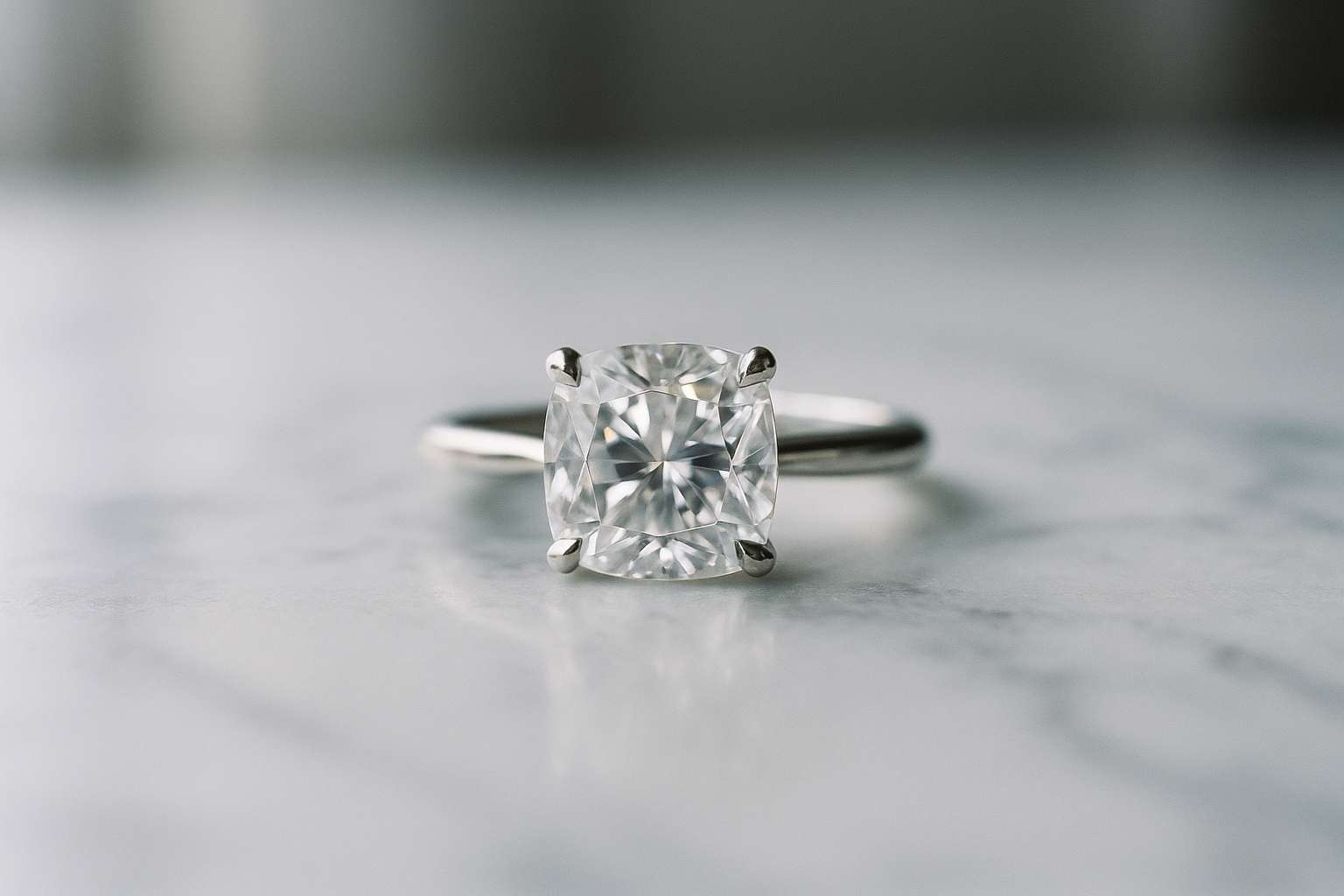
The average engagement ring in the United States costs between $5,200 and $6,500 in 2026, but two-thirds of couples spend under $6,000. The figure varies widely by region, diamond type, and carat weight — and the right budget for you has nothing to do with any salary rule.
Every couple sitting down to shop for an engagement ring faces the same daunting moment: the realization that they are about to make a significant financial decision with very little information and, often, very little time. The average engagement ring purchase in the United States is made after less than one week of research. Given that the ring will be worn every single day for decades, that timeline deserves a thoughtful expansion.
This guide is designed to change that. We have compiled the most current spending data, broken it down by carat, metal, region, and diamond type, and paired it with a practical framework for determining a budget that serves your financial future — not the jewelry industry's marketing history.
What Are Couples Actually Spending on Engagement Rings in 2026?
The national average engagement ring cost in 2026 sits between $5,200 and $6,500, depending on the data source. The Knot's 2024 Jewelry & Engagement Study places the average at $5,200, while independent jeweler and BriteCo research clusters closer to $6,500. These figures have trended slightly downward since the $6,000 average recorded in 2021 — a shift driven almost entirely by the explosive growth of lab-grown diamonds, which cost 60–80% less than their natural counterparts and now account for approximately 61% of all engagement ring center stone sales in 2026.
What the average obscures is equally important:
- Approximately two-thirds of couples spend under $6,000
- One in three spends under $3,000
- Only 8% invest more than $10,000
- Just 5% spend over $15,000
The national average is pulled upward by a small cohort of buyers at the luxury end of the market. For most couples, the reality is more modest — and beautifully so.
How Does Ring Cost Vary by Region, Carat, and Diamond Type?
Engagement ring spending is not uniform across the country. Regional income levels, local jeweler density, and cultural norms create wide variation.
| Region / State | Average Ring Cost | Avg. Natural Diamond Ring | Avg. Lab-Grown Ring |
|---|---|---|---|
| Washington State | $10,109 | ~$14,000+ | ~$4,500 |
| California | $9,482 | ~$13,500+ | ~$4,000 |
| Illinois | $9,197 | ~$12,800+ | ~$3,900 |
| Mid-Atlantic States | $6,900 | ~$10,760 | ~$3,500 |
| Midwest States | $4,900 | ~$7,500 | ~$2,200 |
| Utah (lowest average) | $3,518 | ~$5,500 | ~$1,800 |
| National Average | $5,200–$6,500 | $10,760 | $5,187 |
The natural vs. lab-grown distinction deserves particular emphasis. Natural diamond rings average $10,760 nationally, while lab-grown diamond rings average $5,187 — less than half the price for a stone that is chemically, physically, and optically identical. This price gap is one reason the 61% lab-grown market share figure is significant: it represents a genuine shift in how couples allocate their ring budget, not a compromise in quality.
How Should You Think About Setting a Ring Budget?
The most damaging piece of advice in the entire engagement ring category is the "two to three months' salary" rule. Let us be direct: this rule was invented by De Beers in a 1930s advertising campaign and reinforced through decades of jewelry industry marketing. It has no basis in financial planning, etiquette, or any credible personal finance framework. Ignore it entirely.
A practical ring budget framework begins with four questions:
- What is our household's true discretionary savings capacity right now — not what we could theoretically save in six months, but what we can actually set aside without stress?
- What large expenses are ahead? Down payment on a home, a move, a honeymoon, student loan payments — these all compete for the same savings pool.
- What does financial comfort look like entering our engagement period? The engagement is typically 14–16 months of active planning and vendor spending. Starting it financially strained sets a difficult tone.
- What does this ring mean to us — as an expression of sentiment, as a daily object of beauty, as a potential heirloom? The answer calibrates where value lies.
A beautifully crafted, brilliant engagement ring is available at every price point from $1,500 upward. The most important variable is cut quality, not carat size or total spend. For a deeper, personalized approach, a real budget framework for your ring walks through exactly how to size your number.
Smart Buying Strategies That Make Your Budget Work Harder
Experienced jewelers share a consistent set of strategies that deliver meaningfully more ring per dollar:
Buy below carat thresholds. Diamonds are priced in tiers at popular carat weights (1.00, 1.50, 2.00 ct). A 0.90 ct stone typically sells for 15–20% less than a 1.00 ct stone with no visible size difference to the naked eye. The same principle applies at 1.45 vs. 1.50 ct and 1.90 vs. 2.00 ct.
Prioritize cut quality above all other factors. A GIA Excellent-cut diamond in G color and VS2 clarity will outsparkle a Fair-cut stone in D color and Flawless clarity, at a significantly lower price. Cut is the only factor you should never compromise.
Consider fancy shapes. Oval, pear, and cushion cuts offer more visual coverage per carat dollar than round brilliants. An oval 1.00 ct stone appears approximately 10% larger than a round brilliant of the same weight. Fancy shapes typically cost 15–30% less than rounds at equivalent quality grades.
Shop direct-to-consumer platforms. Online jewelers such as James Allen, Brilliant Earth, and Blue Nile typically price 10–25% below traditional retail chains because of lower overhead. All three offer GIA-certified stones with 360-degree HD video for in-depth inspection before purchase. James Allen consistently prices natural diamonds slightly more competitively than Brilliant Earth for comparable grades; Brilliant Earth's strength lies in its supply chain transparency and showroom network.
Insure immediately. Once the ring is purchased, obtain a professional appraisal from a GIA-certified independent appraiser (not the selling jeweler) and purchase dedicated jewelry insurance through BriteCo or Jewelers Mutual. Expect to pay $1–2 per $100 of appraised value annually — a modest cost for protecting a meaningful asset.
Natural vs. Lab-Grown: The Cost Difference in 2026
The lab-grown diamond story has moved faster than almost anyone in the industry predicted. In 2019, lab-grown diamonds represented roughly 12% of engagement ring center stones sold. By 2026, that figure stands at 61%. The average lab-grown center stone has grown to 2.45 carats (up from 1.31 carats in 2019 — an 87% increase), because buyers are reallocating savings into larger, more visually striking stones.
The price difference is stark:
- A 1-carat lab-grown diamond retails under $1,000 in 2026; a comparable natural stone averages approximately $4,200
- A 2-carat natural diamond runs roughly $18,000; a lab-grown equivalent is available around $2,500
- Lab-grown prices fell another 15–20% through late 2025 as global production capacity continued expanding
The tradeoff is secondary market value. Natural diamonds retain 20–60% resale value over decades. Lab-grown stones retain 10–40% — and that figure may compress further as production costs continue falling. For couples treating the ring as a generational heirloom or a long-term store of value, natural diamond carries meaningful distinctions. For couples prioritizing day-of beauty and financial efficiency, lab-grown offers an extraordinary proposition.
One note on gold: unprecedented precious metal market conditions sent gold prices to approximately $4,700 per troy ounce by mid-2026 — up 70%+ from early 2025. This has increased ring setting costs by an estimated 40–50% industry-wide over two years, meaningfully affecting total ring prices regardless of stone choice.
The Most Important Thing to Remember
The engagement ring is a symbol of a commitment. The quality of the commitment has nothing to do with the carat weight. Couples who approach the ring purchase with shared values, clear financial priorities, and a spirit of generosity toward each other — rather than toward a marketing benchmark — consistently report the most satisfaction with their choice, whatever it costs.
Set a budget you both feel peaceful about. Learn enough about cut quality to shop with confidence. And remember that the ring will look beautiful every single day because of what it represents, not because of its size.
Frequently asked
What is the average cost of an engagement ring in 2026?
The national average engagement ring cost in 2026 falls between $5,200 and $6,500, depending on which study you reference. The Knot's 2024 Jewelry & Engagement Study places the average at $5,200, while data from independent jewelers and BriteCo research clusters closer to $6,500. The downward drift since the $6,000 average of 2021 is largely driven by the surge in lab-grown diamond adoption — lab-grown stones cost 60–80% less than natural equivalents, pulling the overall average lower even as the typical stone size has grown larger. Approximately two-thirds of couples spend under $6,000, and one in three spends under $3,000. Only 8% invest more than $10,000. The 'average' figure is meaningfully skewed by a small cohort of buyers purchasing rings at $15,000 and above.
Does the engagement ring budget vary by state?
Yes, dramatically. Washington State leads the nation with an average engagement ring cost of $10,109, followed by California at $9,482 and Illinois at $9,197. Mid-Atlantic states average approximately $6,900. Midwest states cluster around $4,900, and Southern states like Utah average closer to $3,518. These regional differences reflect local income levels, the density of high-end jewelers, and cultural norms around ring size. Keep in mind that the 'average' in high-cost states is skewed by a smaller number of very expensive purchases — the median spend is lower than the mean in every state. A thoughtfully selected ring at any budget can be extraordinary; geography is context, not a standard to meet.
How does choosing a lab-grown diamond affect the total ring cost?
Choosing a lab-grown diamond instead of a natural diamond dramatically reduces cost while delivering optically identical sparkle. In 2026, a 1-carat lab-grown diamond averages under $1,000 at retail, compared to approximately $4,200 for a comparable natural stone. On a 2-carat comparison, a natural diamond runs roughly $18,000 while a lab-grown equivalent is available around $2,500. Lab-grown diamonds are chemically and physically identical to mined stones — the same hardness, the same fire, graded on the same GIA 4 Cs scale. The key difference is secondary market value: natural diamonds retain 20–60% resale value over time, while lab-grown stones command 10–40%. For couples focused on in-the-moment beauty and budget efficiency, lab-grown offers extraordinary value. For those treating the ring as a generational heirloom, natural diamond carries distinct long-term significance. Neither is objectively better — it is a values question.
Is the 'two to three months' salary' rule a real guideline?
No. The 'two to three months' salary' rule was created as a marketing campaign by De Beers in the 1930s and reinforced in advertising through the 1980s — it has no basis in financial planning, wedding etiquette, or any reputable personal finance framework. Every modern financial planner, wedding professional, and etiquette authority agrees it should be ignored. The right engagement ring budget is determined by your household's true discretionary savings capacity, any large upcoming expenses (down payment, honeymoon, move), and a shared sense of what financial health looks like entering married life. A beautifully crafted ring is available at every price point from $1,500 upward. Prioritizing cut quality ensures your ring will sparkle brilliantly regardless of carat size.
What are the smartest ways to maximize engagement ring value at any budget?
Several strategies consistently deliver more ring per dollar: (1) Shop just below popular carat thresholds — a 0.90 ct stone saves 15–20% over a 1.00 ct stone with no visible size difference to the naked eye; the same logic applies at 1.45 vs. 1.50 ct. (2) Prioritize cut quality above all other 4 Cs — an Excellent-cut stone in a lower color or clarity grade will outperform a Fair-cut stone in every grade. (3) Choose a 'fancy shape' (oval, pear, cushion) over round brilliant — these shapes offer more visual coverage per carat dollar. (4) Consider G–J color grades for near-colorless stones that appear white in nearly all settings. (5) Shop direct-to-consumer jewelers — Brilliant Earth, James Allen, Blue Nile, and similar platforms typically offer 10–25% savings over traditional retail chains because of lower overhead. (6) Get an independent GIA appraisal and separate jewelry insurance immediately after purchase.
How does gold's price surge in 2025–2026 affect engagement ring costs?
Gold prices climbed to approximately $4,700 per troy ounce by mid-2026 — a 70%+ increase from early 2025 levels. This unprecedented surge has raised the cost of gold and rose gold ring settings by an estimated 40–50% industry-wide over two years. A 14K yellow gold solitaire band that might have been priced around $350 in 2023 can now run $500–$600 or more from many jewelers. Platinum, which was historically priced at a premium to gold, now represents a more competitive option in some markets as gold prices have caught up. Buyers who are open to a slightly lighter setting (14K rather than 18K) or a slimmer band profile can partially offset this cost increase. It is worth confirming current metal pricing directly with your jeweler, as these figures shift more quickly than they historically have.