Marriage & Honeymoon
Lab Grown vs Natural Diamond Engagement Ring: The Honest 2026 Guide
A clear-eyed comparison of lab-grown and natural diamonds for engagement rings in 2026 — covering price, quality, resale value, ethics, and how to decide which is right for you.
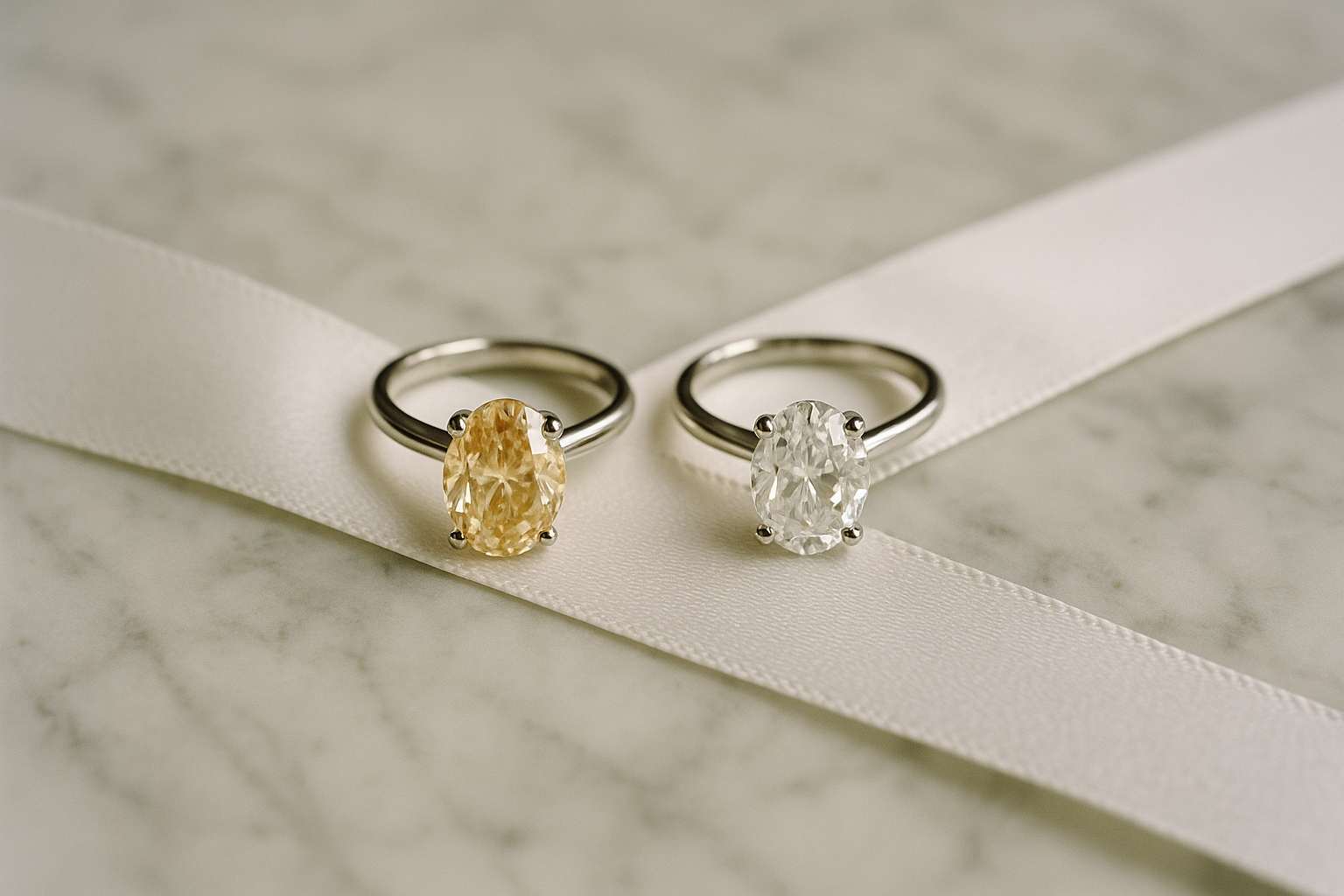
Lab-grown and natural diamonds are physically identical — same hardness, same brilliance, same grading scale. Lab-grown costs 60–80% less in 2026 and now makes up 61% of engagement ring sales. Natural diamonds hold secondary market value better and carry a rarity narrative some couples deeply value. The right choice depends on your priorities, not quality.
The lab-grown diamond question has become one of the most consequential decisions in modern engagement ring shopping — and also one of the most emotionally charged. Some couples feel a lab-grown diamond is the obvious, rational choice; others feel strongly that only a naturally formed stone carries the meaning they want in an engagement ring. Both positions are defensible.
This guide cuts through the noise to give you an honest, current picture of every dimension that matters: what is actually different between the two, what is identical, what the price gap looks like in 2026, and how to think about the decision in terms of your own values and priorities.
What Is Actually Different — and What Is Exactly the Same?
Let us begin where the industry's marketing often muddies the water: the scientific facts.
Lab-grown diamonds are chemically, physically, and optically identical to mined diamonds. They are composed of pure carbon atoms arranged in the same cubic crystal structure. They score 10 on the Mohs scale of hardness — the maximum. They refract light in exactly the same way, producing the same fire and brilliance. The Gemological Institute of America grades both natural and lab-grown diamonds on the identical 4 Cs scale (cut, color, clarity, carat), and no gemologist can distinguish one from the other without specialized spectroscopic equipment.
What is different is origin, price, and secondary market trajectory.
Natural diamonds formed 1–3.5 billion years ago under extreme heat and pressure deep in the earth's mantle. They are geologically finite — supply cannot be increased. A lab-grown diamond was grown over 6–10 weeks in a controlled environment using either High Pressure High Temperature (HPHT) or Chemical Vapor Deposition (CVD) technology. Production capacity is scalable and has expanded rapidly, which is the primary driver of falling lab-grown prices.
| Dimension | Lab-Grown Diamond | Natural Diamond |
|---|---|---|
| Chemical composition | Pure carbon (identical) | Pure carbon (identical) |
| Mohs hardness | 10 (identical) | 10 (identical) |
| Fire and brilliance | Identical | Identical |
| Grading labs | GIA, IGI, AGS | GIA, AGS, IGI |
| Avg. 1-carat retail price (2026) | Under $1,000 | ~$4,200 |
| Avg. 2-carat retail price (2026) | ~$2,500 | ~$18,000 |
| Price trend (2022–2026) | Down 74%+ as production scaled | Relatively stable; slight appreciation |
| Resale value retention | 10–40% of retail | 20–60% of retail |
| Market share (2026) | 61% of center stones sold | 39% of center stones sold |
| Origin narrative | Grown in 6–10 weeks; scalable supply | Billions of years; geologically finite |
| Best certification | IGI (standard), GIA | GIA (gold standard), AGS |
How Large Is the Price Difference in 2026?
The price gap between lab-grown and natural diamonds has widened dramatically over the past four years. Lab-grown wholesale prices fell approximately 74% between 2022 and 2025 as global production expanded far beyond market demand. Retail prices have tracked that decline, though more gradually.
In practical terms:
- A 1-carat G/VS1 lab-grown round brilliant is available under $1,000 at major online retailers
- A 1-carat G/VS1 natural diamond averages approximately $4,200–$5,500 depending on cut and certification
- A 2-carat lab-grown oval is available from approximately $2,500; a natural equivalent runs $15,000–$20,000
- The average lab-grown center stone sold in 2026 is 2.45 carats, up from 1.31 carats in 2019 — because buyers are using savings to go dramatically larger
What this means in practice is that a couple with a $5,000 total ring budget can purchase a beautifully set 1.5–2 carat lab-grown oval or cushion with a premium platinum or 18K gold setting, and have funds remaining. On a natural diamond budget, $5,000 typically yields a well-cut 0.70–0.90 carat stone with a gold setting.
Neither option is inferior — they represent different allocations of the same budget across size, rarity, and material origin.
Does a Lab-Grown Diamond Hold Its Value?
This is where the most meaningful practical difference lives. Natural diamonds retain 20–60% of their retail value on the secondary market, supported by a well-established network of estate jewelers, auction houses, and retail trade-up programs. Lab-grown diamonds currently retain 10–40% of retail — and this figure is likely to compress further as production costs continue falling and the secondary market for lab-grown stones remains thin.
For most couples, this difference is less material than it sounds. An engagement ring is not a financial instrument; most will never sell it. The relevant question is whether the ring might someday be upgraded, traded, or passed down as an heirloom with material value attached.
If the answer is yes — if this ring is intended as a generational piece — natural diamond's value retention and scarcity carry real significance. If the ring's value lives entirely in its symbolism and daily beauty, lab-grown's value trajectory is largely irrelevant to your enjoyment of it.
The Ethical Question: An Honest Answer
Lab-grown diamonds are frequently marketed as the more ethical choice, eliminating concerns about conflict financing and labor conditions in mining. This is a legitimate consideration — the diamond mining industry has had genuine human rights challenges, and the Kimberley Process Certification Scheme, while improved, has acknowledged limitations.
However, lab-grown diamond production is not without environmental cost. HPHT and CVD processes are highly energy-intensive. Factories in regions powered primarily by coal create a meaningful carbon footprint; those powered by renewable energy have a substantially better profile. The ethical calculus depends entirely on the specific manufacturing origin of the stone you are purchasing, which is rarely disclosed at point of sale.
Jewelers such as Brilliant Earth have built their brand around supply chain transparency for natural stones — offering verified origin tracking and routing around conflict-zone sourcing. For buyers for whom ethics is a primary consideration, asking the specific question about a stone's country of mine origin and the manufacturer's energy source is more useful than a blanket natural-vs-lab-grown assumption.
Which Diamond Is Right for You?
The decision between lab-grown and natural is not a quality decision — it is a values decision. Here is a simple framework:
Choose lab-grown if: budget efficiency and stone size are priorities; you are comfortable with newer market conventions; environmental origin matters but supply chain details are hard to verify; you want maximum visual impact per dollar; you do not place high value on geological rarity or long-term resale.
Choose natural if: you place significant emotional or philosophical value on a stone formed by natural forces over billions of years; the ring is intended as a multigenerational heirloom with material value; value retention and resale optionality matter; you or your partner have traditional sensibilities about what an engagement ring means.
There is no wrong answer here. Both stones will sparkle brilliantly on your hand every day for decades. The right ring is the one that feels true to your relationship — and that starts with knowing what each of you actually values, independent of what the market is buying.
Frequently asked
Are lab-grown diamonds real diamonds?
Yes. Lab-grown diamonds are real diamonds in every scientifically meaningful sense. They are composed of pure carbon arranged in the same cubic crystal lattice as mined diamonds, score 10 on the Mohs hardness scale, exhibit the same optical properties (refractive index, fire, brilliance), and are graded using the identical 4 Cs framework by the same laboratories — including GIA and IGI. The only difference is origin: a natural diamond formed deep in the earth over billions of years; a lab-grown diamond was grown over 6–10 weeks using either High Pressure High Temperature (HPHT) or Chemical Vapor Deposition (CVD) technology. No gemologist can distinguish a high-quality lab-grown from a natural diamond without specialized equipment. The term 'real' is not a meaningful distinction between the two.
How much less does a lab-grown diamond cost compared to a natural diamond?
In 2026, lab-grown diamonds typically cost 60–80% less than natural diamonds of comparable quality — and in some size categories, the savings reach 90% or more. A 1-carat lab-grown diamond retails under $1,000 at most reputable online jewelers; a comparable natural stone averages approximately $4,200. On a 2-carat comparison: a natural round brilliant runs roughly $18,000, while a lab-grown equivalent is available around $2,500. Wholesale lab-grown diamond prices dropped another 15–20% through late 2025 as global production capacity expanded. These savings allow many buyers to choose a significantly larger stone, a premium metal setting, or allocate budget toward other wedding priorities without any sacrifice in visual quality.
Do lab-grown diamonds hold their value?
Lab-grown diamonds depreciate more sharply than natural diamonds over time, and this is the most important financial tradeoff in the comparison. Natural diamonds retain approximately 20–60% of retail value on resale, supported by a well-established secondary market (estate jewelers, auction houses, trade-up programs). Lab-grown diamonds currently retain 10–40% of retail value — and that figure may compress further as ongoing production capacity growth continues to reduce manufacturing costs. If the ring will be treated as a generational heirloom, traded up in the future, or passed down as an asset, natural diamond's stronger value retention carries real weight. If the ring is primarily a meaningful daily object of beauty with no expectation of future resale, this tradeoff is less material. Most jewelry insurance providers cover both types equally; insure either ring for its replacement cost, not its resale value.
Which is more ethical — a lab-grown or a natural diamond?
This question is more nuanced than it is often presented. Lab-grown diamonds eliminate concerns about conflict financing and labor practices in mining — legitimate concerns in certain regions of the diamond supply chain. They also avoid the environmental footprint of large-scale mining. However, lab-grown diamond production is highly energy-intensive; HPHT and CVD processes consume significant electricity, and the environmental net benefit depends heavily on the energy source (coal-powered factories in some regions produce a meaningful carbon footprint). Natural diamond supply chains have been substantially reformed since the Kimberley Process Certification Scheme was introduced, and jewelers such as Brilliant Earth offer verified origin tracking on their natural stones. Neither choice is straightforwardly 'more ethical' — both involve tradeoffs that depend on the specific stone's supply chain.
What certification should I look for on a lab-grown diamond?
IGI (International Gemological Institute) has become the most widely accepted certification body specifically for lab-grown diamonds and is the standard used by most major retailers and online jewelers. GIA also certifies lab-grown diamonds, though some in the trade have noted their lab-grown grading reports use a slightly different scale. AGS (American Gem Society) certifies lab-grown stones as well. Any reputable stone above $500 in value should come with a certification from one of these three laboratories, providing an independent assessment of cut, color, clarity, and carat weight. Stones certified only by the retailer's in-house gemologist offer no independent verification — avoid purchasing without a third-party lab report regardless of which type of diamond you choose.
Is a lab-grown diamond right for our engagement ring?
For most couples in 2026, a lab-grown diamond is an excellent choice — particularly those prioritizing budget efficiency, a larger visible stone, or environmental considerations over secondary market value. Lab-grown stones now account for 61% of all engagement ring center stone sales, a figure that reflects genuine market preference rather than compromise. For couples who place significant emotional value on rarity and geological origin — who want to know that their stone formed naturally over billions of years — a natural diamond carries meaning that cannot be replicated in a laboratory, and that meaning is entirely legitimate. Some couples also prefer natural diamonds as multigenerational gifts or family heirlooms with enduring material value. The decision is a values question, not a quality question. Either stone, well-selected and beautifully set, will be a daily joy.