Marriage & Honeymoon
Wedding Bouquet Preservation Methods: Your Complete 2026 Guide
Your bridal bouquet begins wilting within hours of the ceremony. The method you choose — freeze-drying, resin, pressing, silica gel, or air drying — must be planned before your wedding day, not after. Here is an honest comparison of every option, with real 2026 costs and which flowers each method suits best.
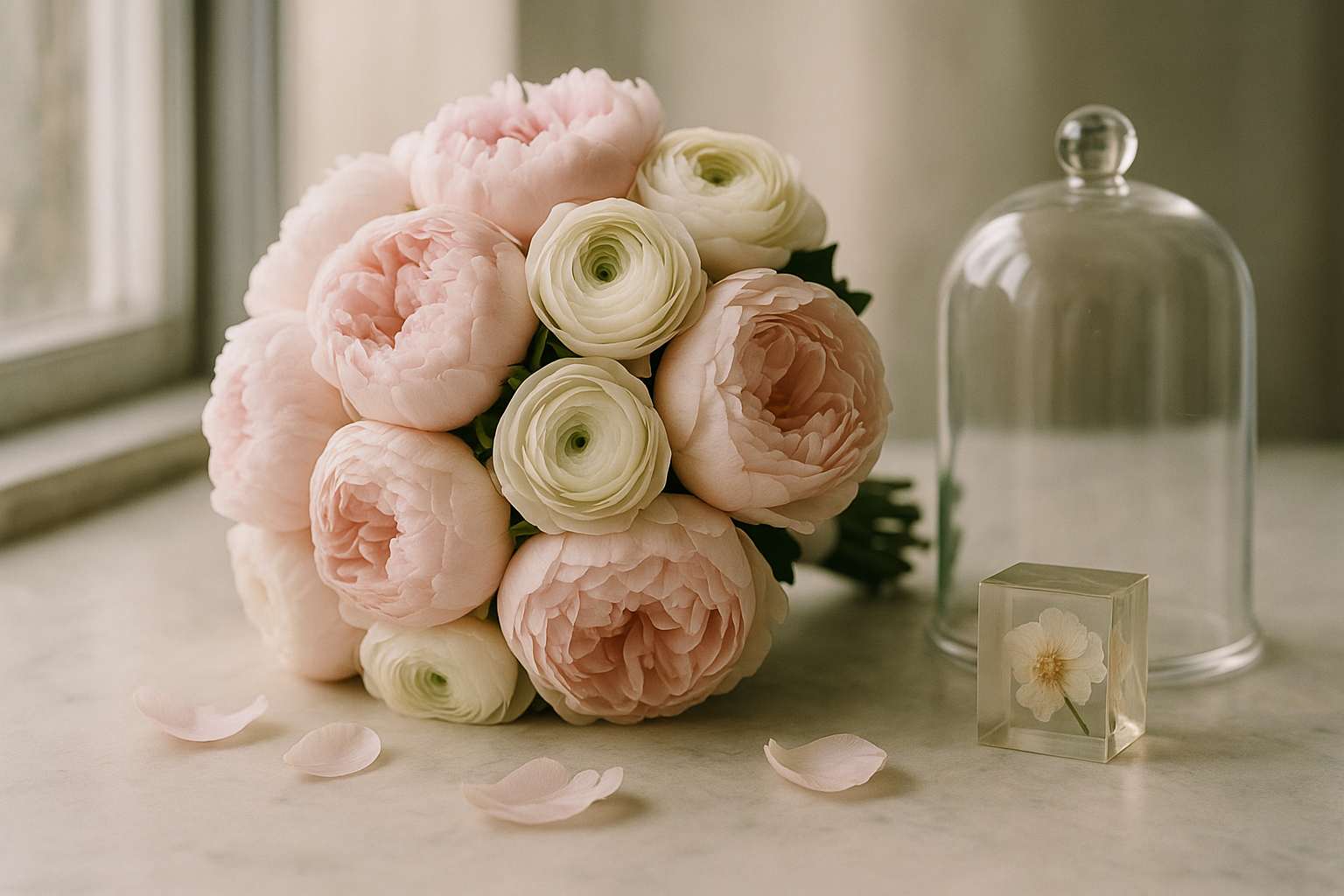
Wedding bouquet preservation must be planned before your wedding day, not decided after — most methods require action within 24–72 hours of the ceremony. Freeze-drying ($250–$700+) delivers the best results for delicate blooms; resin creates durable display pieces; pressing makes beautiful framed art; silica gel and air drying are accessible DIY options. Choose your method and book your professional three to six months ahead.
Your florist spent hours designing it. You carried it down the aisle. It was in every photograph and in your hands at every milestone moment of the most significant day of your life. And within twelve hours of the ceremony, without deliberate intervention, it will begin to wilt, brown, and fade — permanently.
Wedding bouquet preservation is not a post-wedding afterthought. It is a pre-wedding logistics decision that must be made, planned, and partially executed before you say your vows. The method you choose depends on which flowers are in your bouquet, what kind of keepsake you want to display or store, and how much time and budget you are prepared to invest. But the decision itself cannot be delayed until after the honeymoon without compromising the outcome.
This guide gives you everything you need: an honest comparison of all five primary preservation methods, accurate 2026 pricing from real preservation studios, which flowers each method handles best, and a wedding-day logistics checklist so the handoff happens smoothly in the middle of your reception.
What are the five wedding bouquet preservation methods, and what does each actually produce?
Understanding what each method delivers — not just what it costs — is the right starting point. The question to ask is not "which is cheapest?" but "which produces the keepsake I actually want to live with for decades?"
| Method | DIY Cost | Professional Cost | Shape Retained | Color Retained | Durability |
|---|---|---|---|---|---|
| Air Drying | Free | N/A | Low — flowers shrink and flatten | Low — mutes and darkens | Moderate — brittle petals |
| Silica Gel | $30–$80 | $100–$200 | Moderate | Good | Low — brittle |
| Pressing + Framing | $20–$50 | $150–$1,200 | None — fully flat (2D art) | Very good | High with archival framing |
| Freeze-Drying | Not feasible | $250–$900+ | Excellent — 85–95% retained | Excellent | Moderate — fragile to humidity |
| Resin Encasing | $50–$150 (advanced) | $200–$2,000+ | Good to Excellent | Good | Excellent — extremely durable |
According to Everlasting Bloom Co.'s method comparison, freeze-drying comes closest to preserving the original — retaining 85–95% of color and three-dimensional shape — but requires professional equipment and carries the longest turnaround time of any method (four to eight months). Resin encasing creates the most durable and displayable result, with pieces that can last decades without degradation, but involves pre-drying the flowers before the resin pour and works best with simpler bloom structures.
Which preservation method is right for your specific flowers?
The flowers in your bouquet largely determine which methods will succeed and which will disappoint. Matching the method to the bloom is as important as any other decision.
Peonies, ranunculus, sweet peas, and garden roses require freeze-drying. Their dense, multi-petal structures trap moisture in ways that air drying and silica gel cannot handle evenly; the result with other methods is typically collapse, rot at the center, or distorted petals. If these beloved blooms are central to your bouquet — and they dominate the most romantic bridal arrangements — budget for freeze-drying from the outset.
Standard roses, sunflowers, zinnias, and dahlias respond well to silica gel drying, which retains color significantly better than air drying for these denser flowers. They also freeze-dry beautifully but at higher cost. These are the most flexible flowers for DIY preservation attempts.
Lavender, dried grasses, dried flowers, and woody stems are natural candidates for air drying — they were essentially partially dried already when your florist worked with them, and their aesthetic suits the vintage, muted quality that air drying produces.
Any bouquet flowers are candidates for pressing, though the result transforms the full three-dimensional arrangement into a flat botanical composition. This method suits brides who want framed wall art that evokes the bouquet rather than a three-dimensional replica of it — a genuinely beautiful and enduring display option that should not be dismissed as lesser than the volume-preserving methods.
How to plan bouquet preservation logistics before the wedding
The most common and most preventable bouquet preservation failure is logistical: the couple loved the idea of preserving the bouquet but did not plan the handoff in advance, and by the time they thought seriously about it on Sunday morning, the flowers were past the viable preservation window.
Three to six months before your wedding: select your preservation method and book any professional service. Flohral Preservation's 2026 pricing guide notes that top studios — particularly resin artists producing gallery-quality pieces — are booking Summer and Fall 2026 weddings well in advance, with some turnaround times of 26–35 weeks. If freeze-drying or premium resin is your goal, treat booking the preservation studio with the same urgency as booking your florist.
Ask your florist to label the flower varieties in your bouquet. Knowing specifically which blooms are present helps preservation artists choose the optimal method and temperature for each species. A quick photo list from your florist at the time of the final consult takes five minutes and can meaningfully improve your results.
Order a toss bouquet — a simpler, less expensive copy of your actual bouquet — from your florist for $50–$100. This protects your original arrangement from the bouquet toss, which can damage or scatter petals from delicate stems. Your preservation artist will work with what you hand them; arriving with an intact, stem-complete original produces a better result than a toss-damaged bouquet.
On the wedding day: designate a specific bridesmaid as the bouquet guardian. Her responsibility ends of reception is to ensure the bouquet is kept out of direct sunlight, placed in water or wrapped with damp paper towels at the end of the evening, and refrigerated overnight. This single designated responsibility, clearly communicated in advance, is all that stands between a preserved heirloom and a bouquet that wilts beyond recovery.
Frequently asked
How soon after the wedding do I need to start bouquet preservation?
The window for successful bouquet preservation — regardless of which method you choose — is typically 24 to 72 hours from the moment the ceremony ends. Fresh flowers begin wilting immediately without water, and that biological process undermines every preservation technique. Freeze-drying, which delivers the best results for delicate multi-petal blooms, requires flowers to be transferred to a preservation studio as quickly as possible — ideally within 24 hours. Pressing and silica gel drying can begin with flowers that are 24 to 48 hours old, but quality declines the longer you wait. Air drying is the most forgiving of the methods and can be initiated with flowers up to 72 hours old, though some wilting and petal drop is inevitable. The critical planning insight is that this timeline must be arranged before your wedding day, not decided in the days afterward when you are on your honeymoon or recovering from the celebration. Select your preservation method, book any professional service, and plan the logistics at least three to six months before the wedding.
What is the best wedding bouquet preservation method for peonies and ranunculus?
Freeze-drying is the only reliably successful preservation method for peonies, ranunculus, sweet peas, and garden roses — the soft, multi-petal blooms that dominate the most romantic bridal bouquets. These flowers have dense, layered petal structures that trap moisture; air drying causes them to collapse inward or rot at the center, while silica gel tends to distort the petals or cause cracking as the gel removes moisture unevenly from such a complex structure. Freeze-drying removes moisture via sublimation — ice converting directly to vapor without passing through a liquid state — which preserves the cellular structure and three-dimensional shape that makes these blooms so beautiful. The result retains 85–95% of original color and shape. The trade-off is cost ($250–$700+) and turnaround time (four to eight months is typical at professional studios). If your bouquet centers on peonies or ranunculus and preservation matters to you, budget for freeze-drying from the outset and book your studio when you book your florist — the best studios fill quickly.
How much does professional wedding bouquet preservation cost in 2026?
Professional preservation costs vary significantly by method. According to current pricing from Flohral Preservation and Everlasting Bloom Co., freeze-drying for a standard bridal bouquet runs $250–$700, with display framing or encasement adding another $100–$300 and total costs often landing in the $400–$900 range. Resin encasing for a standard piece (a block, paperweight, or ring holder) costs $200–$600, with large custom sculptural pieces reaching $700–$2,000 at premium studios. Professional pressing and framing runs $150–$1,200 depending on size and custom framing choices. Silica gel drying is primarily a DIY method ($30–$80 for materials), with some preservation artists offering professional silica service for $100–$200. Air drying is free to minimal cost as a DIY method. Top preservation studios — particularly resin artists producing gallery-quality pieces — are booking Summer and Fall 2026 weddings well in advance, with turnaround times on resin running 26–35 weeks. Reach out early: the best studios are often booked six to twelve months ahead.
Can I preserve my bouquet myself at home?
DIY preservation is feasible for air drying and silica gel drying and can produce genuinely beautiful results for the right flower types and aesthetic preferences. Air drying — hanging small bunches of stems upside down in a warm, dry, dark room for two to four weeks — is free, requires no materials, and produces a lovely dried botanical aesthetic that suits lavender, dried-look roses, and minimalist bridal styles. Silica gel drying ($30–$80 for materials at any craft store) produces significantly better color and shape retention than air drying for denser flowers and is achievable at home with patience and an airtight container. DIY resin, however, is genuinely challenging without practice: bubbles, clouding, yellowing resin, and improper drying are common results from first attempts, and the cost of materials plus wasted attempts can approach professional pricing quickly. Freeze-drying is not feasible as a DIY method — the specialized equipment (vacuum chambers, industrial freezers at -40°F) is commercial-grade. For a sentimental first-attempt bouquet, silica gel drying is the best DIY starting point; for anything you want to display as a lasting keepsake, professional work is worth the investment.
What are the newest trends in wedding bouquet preservation for 2026?
The bouquet preservation market in 2026 is driven largely by social media and a consumer appetite for functional beauty — pieces that are both meaningful keepsakes and beautiful objects for daily life. The strongest current trends: resin coasters and serving trays embedded with wedding blooms ($150–$400 per set), which guests and family members love receiving as gifts; large sculptural resin blocks incorporating multiple blooms alongside wedding day paper keepsakes (vows, prayer cards, cake toppers) at $500–$2,000+ for gallery-worthy pieces; and a notable industry shift toward preserving flowers in their true post-wedding tones rather than enhancing color artificially — brides in 2026 want their preserved bouquet to look like what was actually on the altar, not an idealized version. Eco-conscious studios using sustainable resin formulations and locally sourced materials are growing in preference. The most significant logistical change: top resin studios are booking months ahead, with lead times of 26–35 weeks becoming standard at premium operations.
How should I handle my bouquet on the wedding day to prepare for preservation?
Bouquet preservation logistics must be planned before the wedding day and executed deliberately during the event. The moment the ceremony ends, your bouquet should be handed to a designated bridesmaid or coordinator — do not leave it on a table, in direct sunlight, or in a car. Use a separate toss bouquet (a simpler, less expensive copy of your actual arrangement, typically $50–$100 from your florist) for the bouquet toss, preserving your original bouquet entirely intact. During reception photos and dancing, keep the bouquet out of direct sunlight and away from heat sources. At the end of the reception, place stems in fresh water or wrap the stem ends in damp paper towels sealed in plastic wrap, then refrigerate at 34–38°F (not frozen) overnight. Within 24 hours, deliver to your preservation artist or begin your chosen DIY method. If shipping to a mail-in service, wrap stems in damp paper towels, pack in a sturdy box with ice packs, and ship overnight — most reputable preservation studios provide detailed packing instructions and some offer their own packing kits.