Marriage & Honeymoon
When to Preserve Your Wedding Dress: The Complete Post-Wedding Guide
The six-week rule is real — and the sooner you act, the better your gown's long-term condition. Here is everything you need to know about timing, cost, professional versus mail-in services, and what to do if you have already waited too long.
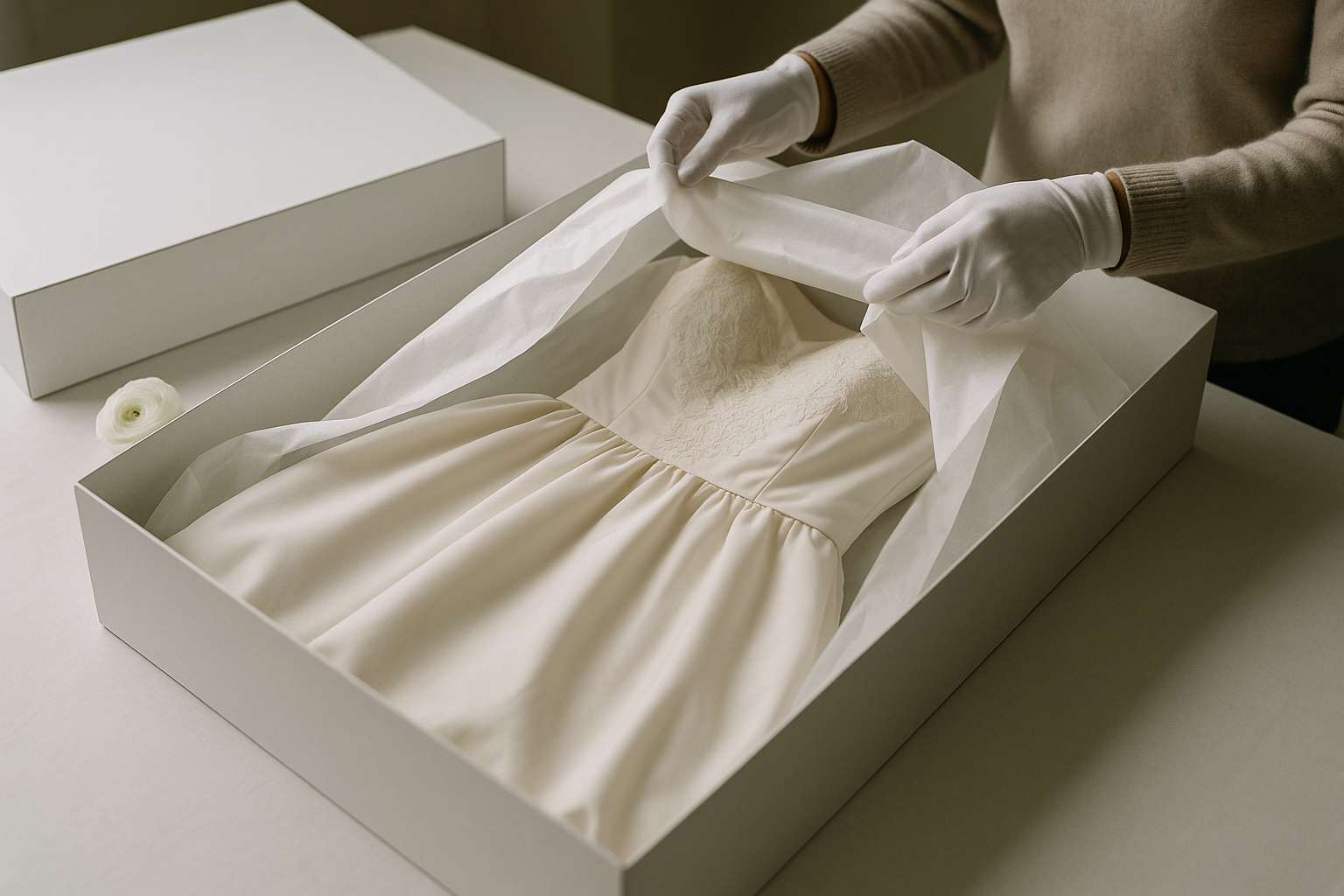
Preserve your wedding dress within six weeks of your wedding for the best results — invisible champagne and perspiration stains begin oxidizing and yellowing over months without treatment. Professional preservation costs $250 to $700 in 2026 and creates a lasting heirloom from one of the most significant garments you will ever own.
Your wedding dress spent months finding you — months of appointments, fittings, decisions, and anticipation. It was worn for one extraordinary day and then, for most brides, never worn again. What happens to it in the weeks immediately after your wedding largely determines whether it remains a beautiful, intact heirloom for decades or quietly deteriorates in a closet into something you can no longer bear to open.
The good news is that preservation is not complicated, and the window of best results is generous — six weeks is a forgiving timeline for a couple in the post-wedding blur of thank-you notes and honeymoon recovery. Understanding what is actually happening to your gown during those weeks, and what professional preservation accomplishes, makes the decision feel as clear as it should be.
Why does the timing of wedding dress preservation matter so much?
The urgency of the six-week rule is chemical, not arbitrary. Wedding gowns are worn under conditions that stress every fiber: dancing, kneeling, heat, perspiration, and celebratory drinks. The stains that result are not always visible immediately after the event. Champagne, white wine, and fruit juices dry transparent on most gown fabrics. Body oils and perspiration leave no visible mark. But these organic compounds are chemically active: they begin reacting with oxygen as soon as they are exposed to air, and that oxidation process progressively darkens the compounds into yellowish or brownish staining over months and years.
According to the Association of Wedding Gown Specialists, "Cleaning your gown is the single most important part of the preservation process, and all the stains — including the hidden ones containing sugar that turn brown over time — must be removed." A gown delivered within two weeks of the wedding is still in the condition closest to the day it was worn. A gown delivered at the six-week mark is at the outer edge of ideal conditions. A gown delivered at six months has already begun the oxidation process, and some stains may have bonded with the fiber irreversibly.
If you must wait before delivering the gown to a professional, the minimum acceptable interim storage is: air the gown completely out of any plastic bag; wrap it loosely in clean, unbleached muslin or acid-free tissue (never plastic); store it flat or loosely folded in an interior room closet — never an attic, basement, or garage — away from light. This buys time without accelerating damage.
What does professional wedding dress preservation include and cost?
| Service Tier | Cost Range | What Is Included | Guarantee |
|---|---|---|---|
| Cleaning only | $200–$350 | UV stain inspection, professional cleaning, pressing | Typically none; no long-term archival boxing |
| Budget preservation (mail-in) | $250–$435 | Cleaning + acid-free archival boxing + shipping kit | Many include 100-year anti-yellowing guarantee |
| Mid-range preservation (local) | $400–$700 | Cleaning + repairs to loose beads/buttons + archival packaging | 25–100 years depending on provider; get it in writing |
| Premium / designer gowns | $750–$1,200+ | Fabric-specific treatment, specialized embellishment care, extended guarantee | Premium multi-decade guarantee; may include insurance |
| Restoration (already yellowed) | $400–$800 | Partial discoloration reversal; results vary significantly | Results-dependent; reputable specialists will set expectations honestly |
| Accessories add-on | $30–$75 per item | Veil, garter, gloves preserved alongside the gown | Typically same guarantee as main gown preservation |
As The Knot's preservation cost guide and Wedding Gown Preservation Kit's 2026 pricing overview both note, the math on preservation is straightforward: the national average wedding dress cost in 2026 exceeds $2,000, and professional preservation at $300 to $500 represents 15 to 25 percent of that investment. For a garment with decades of potential sentimental value, this is among the highest-return post-wedding expenditures available.
How do you choose between a local specialist and a mail-in service?
Both options can produce excellent results. Admiral Cleaners' preservation guide notes that the most important variable is not the service model but whether the specific provider has demonstrable bridal preservation expertise. The wrong question to ask is "local or mail-in?" The right questions are:
- Do you specialize in bridal preservation, or is it an add-on service?
- What cleaning method do you use, and how do you determine which is appropriate for this specific fabric?
- Are your storage boxes and tissue paper acid-free and lignin-free?
- Do you offer a written anti-yellowing guarantee, and for how long?
- Is the dress cleaned on-site, or shipped to a third-party facility?
- What insurance coverage applies if the gown is lost, damaged, or returned in a condition worse than received?
Local specialists offer in-person consultation, allow you to discuss specific stains and concerns directly, and do not require you to ship your gown. For gowns with exceptional complexity — elaborate beadwork, antique or reproduction lace, metallic embellishments, or non-standard fibers — an expert who can physically assess the construction before deciding on a cleaning approach is genuinely preferable to a standardized mail-in process.
Mail-in services are cost-competitive, convenient, and many offer 100-year anti-yellowing guarantees backed by large-scale operations with rigorous quality control. The critical risk to manage is shipping: insure the gown for its full replacement value, follow the service's packaging instructions exactly, and use a carrier that offers tracking and proof of delivery. Confirm the service has received and begun cleaning before you relax.
What about bouquet preservation — should you do both at the same time?
The bouquet operates on an entirely different timeline from the gown. Where you have six weeks for the dress, your bouquet has 24 to 72 hours from the end of the reception before the preservation window closes. The method you choose — freeze-drying ($250 to $700 professionally), resin encasing ($200 to $2,000 professionally), pressing ($150 to $1,200 with framing), or silica gel drying ($30 to $80 DIY) — must be selected and arranged before the wedding day, not decided in the post-wedding haze.
Practical pre-wedding bouquet logistics: designate a bridesmaid as the bouquet guardian from the end of the ceremony through the reception. Use a toss bouquet — a smaller, less expensive duplicate — for the bouquet toss, preserving the original intact. After the reception, place the bouquet stems in fresh water or wrap them in damp paper towels, and refrigerate at 34 to 38 degrees Fahrenheit overnight. Deliver to a professional preservation artist within 24 hours, or begin your chosen DIY method within the same window.
Top resin preservation studios and freeze-drying specialists in metropolitan markets are now booking six to twelve months in advance for summer and fall weddings as of 2026. If your wedding is in a peak season, reach out to preservation artists when you book your florist — not after the wedding has happened.
The wedding dress you wore once is also the heirloom your daughter might wear, the keepsake your granddaughter might touch through a viewing window, the evidence that this day happened in all its beauty. Preservation is the act of saying: this mattered enough to protect. Begin within six weeks of your wedding. Do not leave it longer than you have to.
Frequently asked
How soon after the wedding should I preserve my dress?
The industry standard recommendation, echoed by the Association of Wedding Gown Specialists and every professional preservationist, is to deliver your gown to a professional within six weeks of your wedding date — and sooner is always better. The urgency is chemical: stains from champagne, fruit juice, perspiration, body oils, and even plain water are invisible at the time of the wedding but contain organic compounds that react with oxygen over months and years. This oxidation process darkens the stains progressively, and by the time yellowing becomes visible, the organic material has bonded with the fiber at a molecular level that professional cleaning can reduce but not fully reverse. A gown delivered within two weeks of the wedding is still in pristine condition from a preservation standpoint. A gown delivered six months later has already begun the oxidation process, and some stains may be permanent regardless of how skilled the cleaner. The window from zero to six weeks is your best chance of an outcome indistinguishable from the day you wore it.
How much does wedding dress preservation cost in 2026?
Wedding dress preservation in 2026 typically runs $250 to $700 for a complete service that includes professional cleaning and archival boxing. The most common price point for mid-range preservation is $300 to $500 — roughly 15 to 25 percent of the national average wedding dress cost of $2,000 or more. Cleaning alone, without preservation boxing, costs $200 to $350. Premium preservation for designer or heavily embellished gowns runs $750 to $1,000 or more. Mail-in national services — where you ship the gown, it is cleaned and boxed at a central facility, and returned to you — range from $285 to $435 for most standard gowns and often include 100-year anti-yellowing guarantees. Local specialists in metropolitan markets (New York, Los Angeles, Chicago, San Francisco) typically charge 20 to 40 percent above national averages. Accessories — veil, garter, gloves — are priced separately by most services, adding $30 to $75 per accessory. Rush processing (return within two to three weeks rather than the standard six to eight) adds a premium of $50 to $100 at most providers.
What does professional wedding dress preservation actually include?
Professional wedding dress preservation involves two distinct phases. The first is professional cleaning: the gown is inspected under ultraviolet light to identify invisible stains (champagne and fruit juice are particularly common UV-visible stains invisible to the naked eye), then cleaned using either dry-cleaning solvents or wet-cleaning methods depending on the fabric — the appropriate method varies by fiber type, embellishment, and construction. This phase costs $200 to $350 and includes treating specific stains with appropriate solvents before the main cleaning process. The second phase is preservation and boxing: after cleaning and careful pressing, the gown is padded with acid-free tissue paper to prevent stress folds from becoming permanent creases, wrapped in acid-free muslin, and placed in an acid-free, lignin-free archival box. A sealed viewing window allows you to see the gown without opening the box. Reputable services issue written guarantees against yellowing — typically 25 to 100 years under proper storage conditions. The combined service runs $250 to $700 for most standard gowns.
What is the difference between local preservation specialists and national mail-in services?
Both local specialists and national mail-in services can produce excellent results. The meaningful differences are: local specialists offer in-person inspection, allowing you to point out specific stains and discuss concerns directly, and keep the gown in your region without requiring you to ship a priceless garment. Their pricing varies significantly by market — premium in major cities, competitive or favorable in smaller markets. Mail-in services (national providers who supply a shipping kit, receive the gown, clean and box it centrally, and return it) are often very cost-competitive, ranging from $285 to $435, and frequently offer 100-year anti-yellowing guarantees backed by larger-scale quality control operations. The primary risk of a mail-in service is the shipping itself: a $2,000 gown must be packed carefully and insured for its full replacement value. Always purchase carrier insurance through the shipping provider — never assume standard coverage is adequate. Request that the mail-in service confirm receipt and begin cleaning before you relax. If your gown has exceptional fabric complexity (zardozi embroidery, antique lace, heavy beading), a local specialist who can assess and handle those details in person is generally preferable.
How should I store my wedding dress after preservation?
A properly preserved and boxed wedding dress needs consistent conditions to maintain its state over decades. Store the preservation box in a climate-controlled interior room — a bedroom closet shelf or under a bed — at a stable temperature of 60 to 75 degrees Fahrenheit and relative humidity below 50 percent. Never store a wedding dress in an attic, basement, or garage: temperature swings and humidity in these spaces accelerate yellowing by two times or more compared to interior climate-controlled storage. Keep the box away from any direct or indirect sunlight, even ambient window light. Do not stack heavy items on the preservation box. Open and inspect the gown every two to three years, re-folding along slightly different lines to prevent permanent fold lines from setting. When re-boxing after inspection, use fresh acid-free tissue between layers. Do not break the seal simply out of curiosity — every opening introduces humidity and airborne contaminants into the archival environment. View through the window panel for regular enjoyment.
Is it too late to preserve my dress if it has been more than six months?
It is not too late — and it is always worth attempting. A gown that has been stored for six to twelve months in reasonable conditions (away from plastic bags, heat, and light) can still be professionally cleaned and preserved with good results, though some oxidized stains may have bonded with the fiber in ways that reduce rather than eliminate the discoloration. A gown stored for a year or more, or one that was stored in a plastic garment bag (which traps moisture and emits off-gassing chemicals that cause yellowing), may require restoration rather than standard preservation — a service that costs $400 to $800 and can significantly reduce but not guarantee the reversal of yellowing. The most important thing is to take action rather than continue waiting. The longer the delay, the more the oxidation compounds. Document all stains photographically before delivering the gown to any cleaner, and communicate honestly about storage conditions so the specialist can assess realistically what is achievable. Reputable preservationists will tell you honestly what results to expect before you commit to the cost.
What should I do with my wedding dress after preservation if I am not passing it down?
Preserved wedding gowns have more options than storage. Framing is a growing trend: custom deep-frame shadow boxes professionally mount the cleaned, pressed gown — or a significant element such as the bodice, train, or sleeves — behind UV-protective museum glass, creating heirloom wall art. Professional shadow-box framing runs $500 to $2,000 depending on size and frame selection. Partial repurposing is another choice: lace panels from the gown can become a christening dress, a ring bearer's pillow, or a quilt square; these are irreversible decisions that require having fully processed the emotional weight, but couples who make them thoughtfully describe the result as deeply meaningful. Donation and resale are also genuinely good options: organizations such as Brides Across America and various charitable bridal programs accept donated gowns for military brides and brides facing financial hardship. Consignment and peer resale platforms allow you to recoup some of the gown's original cost. None of these options is better or worse than storage; the right choice is the one aligned with your relationship to the garment.