Photography & Film
Wedding Family Formal Photos List: The Complete 2026 Guide
Family formals done well take 30–45 minutes. Done poorly, they consume 90 minutes and sacrifice your golden hour portraits. The difference is almost entirely in the list. Here is how to build, sequence, and share yours.
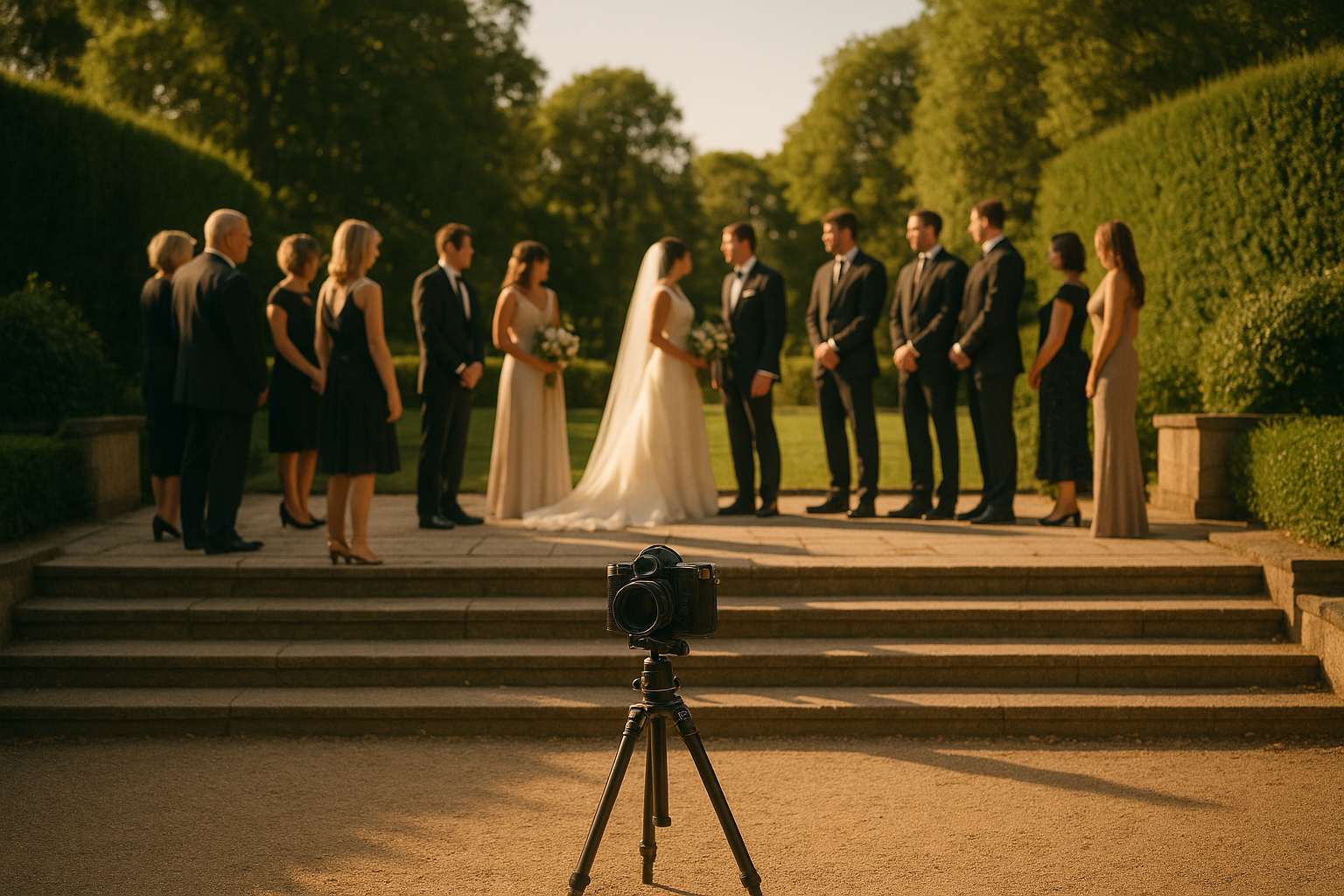
Wedding family formals done well take 30–45 minutes. Done poorly — without a pre-organized list and a family wrangler — they consume 90 minutes and sacrifice golden hour portraits. A prepared list of 15–25 groupings, sequenced largest to smallest and shared with your photographer three weeks before, is the single highest-return planning task in all of wedding photography.
Of all the moving parts in a wedding day timeline, family formal portraits are the element most frequently cited by couples and photographers alike as the greatest source of unanticipated delay. The math is unforgiving: each unorganized grouping costs three to five minutes of calling names, waiting for people to surface from conversations, and redirecting guests who have already drifted toward the bar. Multiply that across twenty combinations and you have consumed an hour of your cocktail hour before anyone has had a first dance.
The solution is not fewer family photos — it is better preparation. A well-organized shot list, a dedicated family wrangler, and a sequencing strategy built around efficiency rather than afterthought can reduce the formal portrait session by 20–30 minutes compared to an unplanned approach. Here is how to build that list.
How many family photo groupings should you plan — and which combinations matter most?
Most professional wedding photographers recommend a hard cap of 15–25 formal groupings for the post-ceremony session. At an efficient pace of 2–3 minutes per combination with a wrangler in place, 20 groupings takes 40–50 minutes — a sustainable window that preserves most of cocktail hour. Beyond 25 combinations, you begin cutting meaningfully into your guests' cocktail experience and, more significantly, into your couple portrait session, which is where the most emotionally resonant images of your wedding day are made.
The priority hierarchy should be built around irreplaceability, not size. Photographs with grandparents — particularly elderly grandparents whose health or mobility may change — are the most irreplaceable images in your gallery. Schedule them first, before fatigue sets in, before the formal session runs long, before anything else intervenes. This is a principle that experienced photographers name consistently: grandparents first, always, without exception.
Here is a sample framework:
| Priority | Grouping | Timing Note |
|---|---|---|
| Must-have | Bride + Groom + Bride's immediate family (parents + siblings + spouses + children) | Largest combination; leads the build-down sequence |
| Must-have | Bride + Groom + Bride's parents only | After full family; parents step in while others release to cocktail hour |
| Must-have | Bride + Groom + Bride's maternal grandparents | Early in the session; photograph before fatigue |
| Must-have | Bride + Groom + Bride's paternal grandparents | Immediately following maternal grandparents |
| Must-have | Bride + Bride's mother only | High emotional value; short to execute |
| Must-have | Bride + Bride's father only | High emotional value; short to execute |
| Must-have | Bride + Groom + Groom's immediate family (parents + siblings + spouses + children) | Mirror of bride's side; maintain build-down sequence |
| Must-have | Bride + Groom + Groom's parents only | After full family |
| Must-have | Bride + Groom + Groom's maternal grandparents | Early; photograph before fatigue |
| Must-have | Bride + Groom + Groom's paternal grandparents | Following maternal grandparents |
| Nice-to-have | Bride + Groom + both sets of parents (the six-person shot) | Powerful combined-family image; requires both families assembled |
| Nice-to-have | Bride + siblings only (no groom) | Intimate sibling portrait; high keepsake value |
| Nice-to-have | Generation shot: Bride + Bride's mother + Bride's grandmother | Heirloom photograph; coordinate generations in advance |
| Extended family (cocktail hour if time allows) | Bride + Groom + each sibling's individual family unit | Move to cocktail hour if formal session runs long |
How do you sequence the list for maximum efficiency?
The build-down principle is the foundation of an efficient formal session: start with the largest combination and progressively reduce as each grouping completes. It is significantly faster to release people from a group than to gather them from across a cocktail hour. When you call for a large group first, everyone is still together and easy to assemble. When you finish with them and release the extended family, the smaller core groups — parents, grandparents, siblings — are already in place for their combinations without additional gathering.
Assign each combination an explicit sequence number on your printed list. Share the list with your family wrangler — one per family side — and instruct them to begin gathering the next grouping while the photographer is still shooting the current one. This eliminates dead time between combinations entirely. An active wrangler with a numbered list is the single difference between a 35-minute formal session and a 90-minute one.
How do cultural and faith traditions affect family formal photography?
Cultural expectations around family photography vary significantly and should be discussed with your photographer during the booking consultation, not revealed on the wedding day.
For South Asian weddings — Hindu, Sikh, and Muslim — extended family is large and culturally central. Family formals can run 60–90 minutes for large guest lists, and this should be explicitly budgeted in the day-of timeline. Pre-ceremony family photography is particularly practical for multi-day South Asian events where the day's schedule is already compressed. For Chinese and Taiwanese ceremonies, multi-generation group shots are culturally significant, and grandparents are prioritized as a matter of tradition. For Nigerian and West African celebrations, families photograph in matching aso-oke fabric, and large groupings are standard — the extended family combinations are not optional extras but central documents of the day.
For Orthodox and Conservative Jewish ceremonies, bride and groom may not be photographed together before the ceremony — family formals on each side can be completed separately during the pre-ceremony window, with combined portraits after. For Catholic ceremonies, family photos are sometimes taken before the ceremony if a first look is planned, which allows the post-ceremony window to focus on couple portraits during cocktail hour.
What do you do if family formals run long?
Running long in family formals is the most common timeline failure on wedding days, and the solution is built into the structure of the list: designate your extended family combinations as cocktail-hour shots rather than formal-session shots. Move them — aunts and uncles, cousins, family friends who are like family — to the cocktail hour, where your photographer can capture them while guests are still gathered and your coordinator is actively managing the space. This strategy protects your golden hour portraits without eliminating coverage you genuinely want. Brief your coordinator and your family wranglers on this contingency before the wedding day, so the transition happens smoothly rather than reactively when the session is already running behind.
Build a 15-minute buffer between the end of family formals and the start of couple portraits on your official timeline. If formals finish on schedule, that buffer becomes extra couple portrait time. If they run long, the buffer absorbs the delay without sacrificing golden hour. This single structural decision prevents more timeline failures than any other planning choice in the formal session.
Frequently asked
How many family formal photos should I plan for at my wedding?
Most professional wedding photographers recommend limiting family formal combinations to 15–25 groupings for the formal session immediately following the ceremony. At an efficient pace of 2–3 minutes per grouping (once you are rolling with a family wrangler in place), 20 groupings takes approximately 40–50 minutes. Beyond 25 groupings, you begin cutting meaningfully into cocktail hour, which affects your guests' experience and your couple portrait session. If your family is large or multicultural and genuinely warrants more coverage, there are two practical solutions: schedule some extended family groupings during cocktail hour rather than the formal session, or add a second shooter whose second camera allows simultaneous capture of different groups. The photographers who consistently deliver the best family formal results are the ones who receive a pre-organized list capped at 20–25 combinations — not because they cannot handle more, but because the time constraints of a wedding day are real and unforgiving.
What is the most efficient sequence for wedding family formal photos?
The most efficient sequence follows the 'build down' principle: start with the largest group and progressively reduce as the session continues. Begin with the full family on each side (bride's entire immediate family together, then groom's), then move to progressively smaller subgroups — parents alone, siblings alone, grandparents — finishing with the smallest combinations. This sequence is faster than building up because it is easier to release people from a group than to gather them from across a cocktail hour. Photographers consistently report that build-down sequencing saves 15–20 minutes compared to random groupings. The other sequencing priority is grandparents first, always — photograph them as early as possible in the session, before fatigue sets in and before they begin to move toward seating. A prepared printed list handed to your photographer three to four weeks before the wedding, organized in this sequence, is the single most effective efficiency tool available.
How do I handle divorced or blended family members in wedding family photos?
This is one of the most delicate logistical areas of wedding photography, and it requires forethought — not improvisation on the wedding day. The foundational rule is: never put estranged family members in the same frame without explicit advance confirmation from both parties. List divorced parents' shots separately on your shot list unless you know with certainty they are comfortable together. If step-parents are meaningful members of your family, include them explicitly in the list — do not assume the photographer will intuit the relationships without being told. Mark any sensitive combinations directly on your shot list with a notation, such as 'Note: parents are divorced — photograph separately unless I instruct otherwise.' Discuss these dynamics privately with your family wrangler before the day so they can navigate the groupings gracefully without requiring you to intervene mid-session. Proactive planning prevents the moment where a photographer unknowingly calls for a combination that causes visible discomfort in front of fifty witnesses.
Should I take family formals before or after the ceremony?
The traditional approach is immediately after the ceremony — the family is already assembled, dressed, and in an emotional state conducive to photographs. However, many couples with a 'first look' plan schedule at least some family formals before the ceremony, which has significant logistical advantages: the ceremony location is still pristine, the light may be better earlier in the day, and completing family portraits before the ceremony frees the post-ceremony window entirely for cocktail hour and couple portraits. If you plan pre-ceremony family formals, coordinate carefully with your vendors so immediate family members know where to be and when. For couples with large or complex family structures — multicultural families, large South Asian or West African families where the extended group can run to 60–90 minutes — pre-ceremony staging is often the only way to complete the coverage without sacrificing cocktail hour entirely. Discuss this with your photographer and coordinator in your planning sessions, not on the wedding day.
What is a family wrangler and do I need one?
A family wrangler is a trusted person — typically a sibling, close family member, or coordinator's assistant — assigned specifically to gather each family grouping during the formal session. They know names, faces, and family dynamics. Their job is to locate the next group while your photographer is still shooting the previous one, so there is no gap between combinations. Without a wrangler, the photographer must call names into a crowd, wait for people to emerge from conversations, and potentially spend three minutes locating a single person — multiplied across 20 groupings, this adds 45–60 minutes of dead time to your session. With a wrangler per family side, that dead time nearly disappears. Industry photographers report that a prepared shot list combined with two active wranglers (one per family) consistently reduces the formal session by 20–30 minutes compared to unassisted sessions. This is not a nice-to-have: it is the highest-return ten minutes of wedding planning you will do.
How do I communicate my family formal shot list to my photographer?
Send your completed shot list to your photographer as a shared Google Doc or PDF three to four weeks before the wedding — not via text, not the week of the event. This timing gives your photographer the opportunity to review the list, flag any potential timing conflicts with your day-of schedule, and print it for day-of reference. The format matters: organize by category (bride's side, groom's side, combined), list each shot in the format 'Bride + Groom + [exact description of group],' and use first names throughout so the photographer can address people directly. Mark the top 5–8 combinations as absolute must-haves and everything else as nice-to-haves — this gives the photographer a clear hierarchy if time runs short. Share the same document with your day-of coordinator so they can align the day's movement with the photography needs. Send it to your designated family wranglers as well, so they know the sequence and can plan accordingly.