Photography & Film
Wedding Photo Shot List Template: What Every Couple Should Know
A detailed shot list does not limit your photographer — it frees them. Here is exactly how to build one, category by category, with a downloadable structure and the mistakes that cost couples their most cherished images.
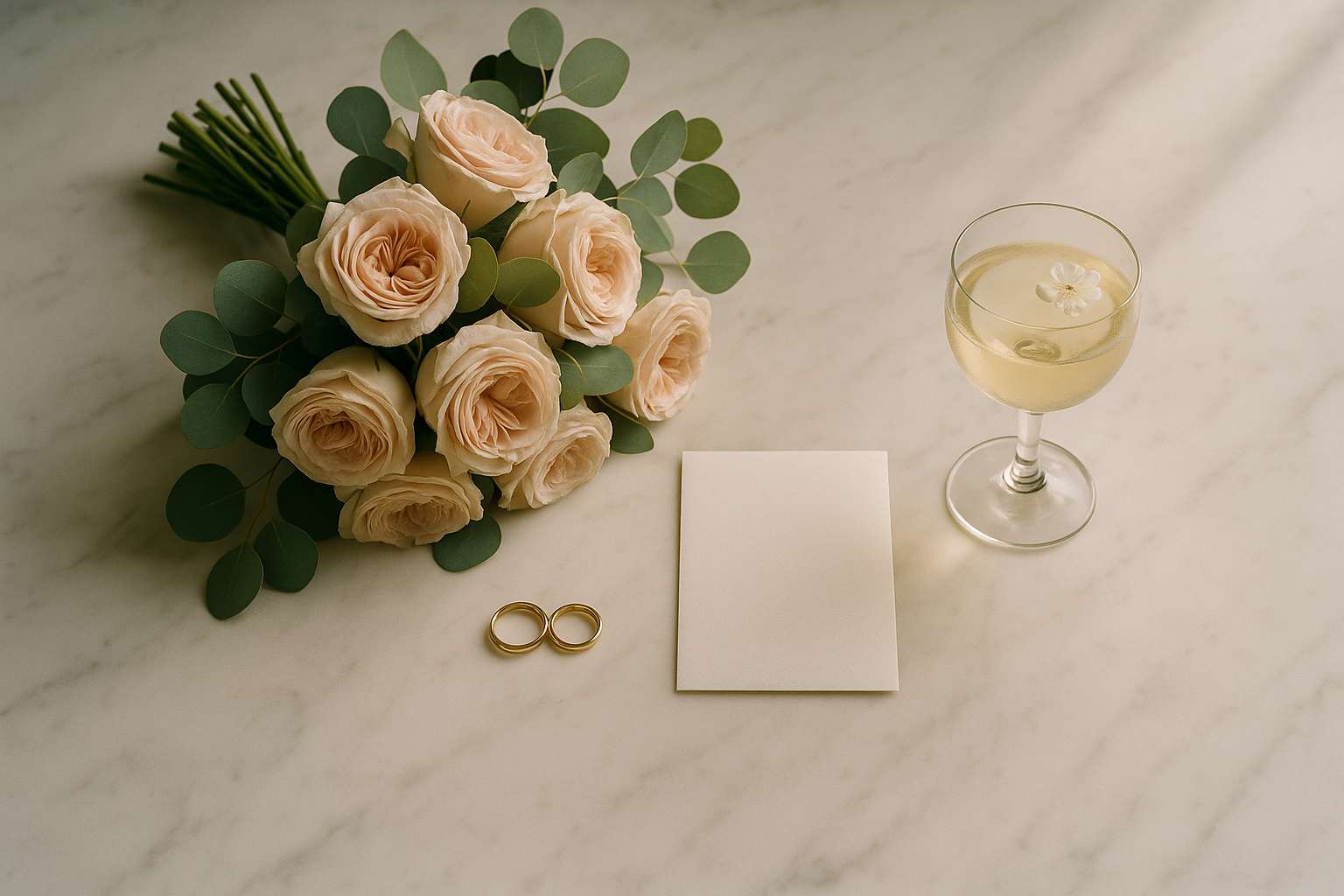
A well-organized wedding photo shot list — delivered to your photographer three to four weeks before the wedding — produces 15–25% more usable images per hour of coverage. Cover eight core categories: getting-ready details, ceremony, family formals (cap at 20–25 combinations), wedding party, couple portraits, golden hour, reception décor, and candids. Build it in a shared Google Doc and assign a family wrangler.
A wedding photograph outlasts every flower arrangement, every centerpiece, and every conversation overheard during cocktail hour. Decades from now, the images your photographer captures will be the primary record of one of the most significant days of your life — the way your daughters, granddaughters, and grandchildren know what it looked like when you said yes. A thoughtfully constructed shot list is the single most effective tool you bring to that relationship.
Contrary to a common misunderstanding, a shot list does not constrain a gifted photographer. It liberates them. When the family formal combinations are pre-approved, the detail subjects are organized, and the golden hour location is scouted, a skilled photographer can move through logistics with confidence and devote their attention to what cannot be planned — the candid moment, the quality of light, the unscripted joy that becomes a couple's most treasured images.
What is the architecture of a complete wedding shot list?
A complete shot list covers eight core categories, each mapped to a specific time block in the day. The structure matters as much as the content — a list organized by sequence rather than whim allows a photographer to work efficiently through a production schedule that will not wait.
| Category | Time Block | Typical Image Count | Primary Requirement |
|---|---|---|---|
| Getting-ready and details | Photographer arrival (T–3.5 hours) | 40–80 | Clean room setup; natural light source |
| Ceremony coverage | Full ceremony duration | 50–100 | Two camera positions if possible |
| Family formal portraits | Immediately post-ceremony, 30–45 min | 20–60 | Written list; family wranglers assigned |
| Wedding party portraits | Cocktail hour window | 10–25 | Location scouted in advance |
| Couple portraits and golden hour | Cocktail hour + sunset window | 20–50 | Sunset time confirmed; timeline protected |
| Reception details | Before guests enter | 20–40 | Access before room opens |
| Reception events and candids | Full reception | 60–150 | "People to watch" list provided |
| Send-off or farewell | End of event | 10–20 | Timing confirmed on day-of timeline |
A 10-hour full-day photography package with an experienced mid-to-high-tier photographer typically yields 600 to 900 edited images. Luxury editorial photographers may deliver fewer, more intensely curated images. Confirm your expected deliverable count in your contract, and confirm the delivery window — the standard in 2026 ranges from 60 to 120 days, with some photographers still operating on 6-month windows that deserve renegotiation.
What should the getting-ready and detail section include?
The getting-ready sequence is the emotional prologue of your wedding story — the intimacy, the quiet, the nerves, the love. Many brides report that their getting-ready images are among the most emotional to revisit. The detail portion requires specific intentionality: your photographer needs to know what objects exist and where they are, or they will arrive in a suite full of hairspray and coffee cups and miss the heirloom earrings your grandmother wore on her wedding day.
Prepare these objects in advance and brief your maid of honor or coordinator on where they will be:
- The gown — hanging near a window, ideally backlit by natural light
- Both wedding rings, together, on a styled surface (not a bathroom counter)
- The invitation suite laid flat — envelope, invitation, all enclosures — with a small floral element
- Shoes, jewelry, veil, and any heirloom accessories
- Something borrowed and something blue items
- Perfume bottle, a family Bible or prayer book if applicable
- The bridal bouquet, once delivered
Request a "clean room" shot — a wide view of the suite before anyone arrives. Your coordinator or stylist should know to keep the space tidy during coverage; hair tools, takeout containers, and scattered clothing belong out of frame, not serving as the backdrop for detail images that will live in your album for decades.
How do you build family formals without losing the cocktail hour?
Family formals are the portion of the day most brides dread and most photographers manage as efficiently as possible. Done well, with a written list and designated wranglers, they take 30 to 45 minutes. Done without preparation, they consume 90 minutes, drain the energy of a wedding party in formal clothing on a warm afternoon, and eliminate golden hour.
The most effective approach has two components. First, build the list in descending order — from the largest grouping down to the smallest. Most photographers call this "building down": begin with the full wedding party, then both families together, then each family's immediate unit, then progressively smaller groupings. It moves faster because you are releasing people rather than gathering them.
Second, assign a family wrangler on each side — one person who knows every name, face, and family dynamic on that side. Not the photographer. Not the wedding coordinator. A trusted family member who can say "Aunt Patricia, over here" with the authority of someone who has known Aunt Patricia for thirty years. Brief them on the list before the wedding day; give them a printed copy.
The Knot's photography resources recommend adding specific notes to the list for any sensitive family dynamics — divorced parents who should not be placed in the same frame without prior confirmation, step-parents who are meaningful and should be explicitly included, estranged relatives who should not be grouped together. Your photographer handles these gracefully when briefed in writing; without that briefing, they cannot know what they do not know.
What does a golden hour portrait session require — and why does it keep getting lost?
Golden hour — the warm, directional light in the 20 to 60 minutes surrounding sunset — is the highest-return creative opportunity in any wedding day and the most consistently squandered one. It gets lost to family formal overtime, toasts that run long, or a couple that simply was never released from their guests because no one scheduled it explicitly.
Protecting it requires four concrete steps. Confirm your specific sunset time by zip code and date (timeanddate.com or the Pix Wedding shot list generator both provide this) and share it with your photographer and coordinator. Place a named time block on the official day-of timeline — "6:45 PM: Couple to golden hour portraits for 20 minutes" — not as a note in a planning document, but in the timeline every vendor receives. Assign your coordinator the specific authority to extract the couple at that time without asking for permission. And scout the portrait location once before the wedding day with your photographer so they can walk directly to it on the day without a search.
Twenty minutes with a photographer who knows exactly where they are going, in the best light of the day, with a couple who knows what is happening — these become the images that appear in albums, on walls, and in anniversary posts for the next twenty years.
Frequently asked
What should be on a wedding photo shot list?
A complete wedding photo shot list covers eight core categories, each tied to a specific time block in the day. Getting-ready coverage (detail shots of the dress, jewelry, and invitation suite; preparation sequence shots; the mother helping with the veil) typically accounts for the first 90 minutes to three hours of photographer coverage. Ceremony coverage runs the full duration. Family formals — formally requested portrait combinations — should follow the ceremony immediately, while subjects are still together and dressed. Wedding party portraits happen during the cocktail hour window. Couple portraits take place during cocktail hour and at golden hour. Reception details (décor, cake, tablescape) are documented before guests enter the space. Reception events and candids run the full reception. Send-off or farewell completes the story. Each category should appear in a shared Google document with enough specificity that your photographer can prepare, time, and execute without administrative guesswork.
How many family photo combinations should be on the shot list?
Most photographers recommend capping formal family portrait combinations at 20–25 shots. Beyond that threshold, the cocktail hour suffers, your guests grow restless, and golden hour is commonly lost to family formal overtime. The structural approach that protects this cap is to build down from the largest group. Start with the full wedding party, then move to both families together, then each family separately, then each immediate family in progressively smaller groupings (couple plus both parents, couple plus each parent alone, couple with siblings and their families). Assign a dedicated family wrangler on each side — not your photographer, but a trusted family member who knows names, faces, and dynamics — to gather each grouping. This single preparation step, done in advance, is responsible for the difference between 30-minute family formals and 90-minute ones.
When should you send the shot list to your photographer?
Deliver the completed shot list to your photographer three to four weeks before the wedding — not the night before, and not the morning of. This lead time allows the photographer to review the family formal combinations for any potential conflicts, flag logistical concerns (a specific outdoor location that requires a weather backup, a tight transition between ceremony and family portraits), and incorporate your priorities into their equipment and staffing plan. Send it as a shared Google Doc rather than a text message or email attachment — a living document that both you and your photographer can access, annotate, and bring to the event on a phone or printed sheet. Also send a copy to your wedding coordinator if you have one; they need the family formal combinations and golden hour timing block to manage the day's movement.
How do you protect the golden hour portrait window on your wedding day?
Golden hour — the 20 to 60 minutes of warm, directional light surrounding sunset — is the highest-return creative opportunity of the day and the most commonly lost one. Protection requires four steps. First, confirm the exact sunset time for your date and location at the time of booking (timeanddate.com provides this by zip code). Second, place a specific golden hour block on the official day-of timeline — "6:45 PM: Couple excused from cocktail hour for 20 minutes" — not just a note to yourself. Third, assign your wedding coordinator the specific authority to extract the couple from whatever they are doing at the designated time without negotiation. Fourth, pre-location-scout the portrait spot with your photographer before the wedding day. Twenty minutes with a photographer who knows exactly where to go is worth three times more than 40 minutes of searching for the right angle while the light disappears.
What are the most commonly forgotten shots on a wedding photo shot list?
The detail shots that brides consistently forget to specifically request include: the invitation suite laid flat as a styled flat-lay (including the envelope, enclosures, and a small floral element); the interior of the ceremony space before any guests arrive (a wide establishing shot that no longer exists once the room fills); a close-up of the rings together on a styled surface before being placed on fingers; the bride's first look at herself fully dressed in the mirror (a candid that requires the photographer to anticipate the moment); a wide overhead shot of the reception tablescape before guests enter; parents' facial expressions during the processional; and quiet private moments between the couple — a forehead-to-forehead, a hand squeeze, a stolen exhale during cocktail hour. These moments are not staged; they require a photographer who is present and anticipatory. Flagging them on the shot list in a 'candid priorities' section creates the shared awareness that allows them to be captured.
Do I need a second shooter at my wedding?
A second shooter significantly expands what is possible in your wedding gallery. The most immediate benefit is simultaneous coverage: while a second shooter documents groom preparation and groomsmen, the primary photographer can give full attention to the bridal suite — capturing details, preparation sequences, and the quiet moments that define getting-ready coverage. During the ceremony, a second camera at a different position (balcony, side aisle, or altar angle) captures expressions from perspectives a single photographer physically cannot occupy simultaneously. During family formals, a second shooter can manage candid coverage of guests while the primary works through portrait combinations. Estimated additional cost in 2026 ranges from $300 to $800 per event. Ask your photographer what specifically the second shooter will be responsible for; the answer should be detailed and reflect a clear division of coverage, not vague reassurance that more images will be delivered.
How long should family formal photos take at a wedding?
Family formal photos should take 30 to 45 minutes when the list is well-organized, a family wrangler is in place, and the groupings are built in descending order from largest to smallest. Poorly organized family formals routinely consume 90 minutes or more, cutting directly into cocktail hour time and golden hour opportunity. The most reliable way to shorten formal time is to finalize the list at least three weeks before the wedding — allowing your photographer to review it, flag any unrealistic sequencing, and arrive with a plan. Build in a 15-minute buffer between the end of formals and the start of couple portraits. If you fall behind, the cuts should come from the lowest-priority extended family groupings, never from the couple's golden hour session. Grandparents specifically should always be photographed first — before energy flags, before lighting fades, and before mobility becomes a concern.