Photography & Film
Wedding Photography Trends 2026: 10 Styles Couples Are Booking Now
Documentary candor, loose editorial direction, direct flash nostalgia, and the full-scale return of film — 2026 wedding photography is the most technically and aesthetically diverse the industry has ever been. Here is what is actually trending, what it means for how you search, and what questions to ask.
2026 photo trendsDocumentary styleFilm photographyDirect flash nostalgiaDrone coverageTrue-to-color editing
The quick verdict
True-to-color editing, documentary candor, and the full return of film are leading a 2026 photography renaissance. Here is what is trending, what it means for how you search, and what to ask.
- Best overall
- Documentary-Editorial Hybrid — The consensus style leader in 2026 — combining the emotional truth of documentary candid coverage with the compositional intentionality of editorial direction, producing galleries that are both genuinely felt and beautifully made.
- Best value
- True-to-Color Documentary (Digital) — The most accessible approach to 2026's authenticity movement — available at mid-range price points from talented emerging photographers and delivering the true-memory aesthetic that couples consistently rate as most emotionally resonant years after the wedding.
- Best for Couples who want timeless photographs that will not look dated in 15 years
- Film Photography (Medium Format) — The tonal warmth, natural grain, and soft palette of medium format film creates images that are structurally resistant to temporal dating — the qualities that make a photograph feel like a memory rather than a moment are maximally present in well-executed film work.
How we evaluated
These ten trends were identified by cross-referencing reporting from Newton Photography Company, Studio Wildlight, Chasing Stone, Eventifai, and The Knot's 2026 editorial coverage of wedding photography, alongside Pinterest's 2026 Wedding Trend Report and data from WedMeGood's photographer survey. Trends were selected for demonstrated commercial momentum — actual booking behavior, not aspirational trend predictions — and rated on creative quality, accessibility to a range of budgets, venue compatibility, and long-term photographic value.
- Creative quality and distinctiveness. Does this style produce images that are memorable, emotionally resonant, and aesthetically distinctive rather than generic?
- Booking accessibility. Is this style available across a range of price points, or is it exclusively a luxury-tier option?
- Venue and lighting compatibility. Which venue types and lighting conditions does this style require or benefit from, and which does it struggle with?
- Long-term photographic value. Will photographs in this style feel timeless in a decade, or are they likely to look dated as trends evolve?
Rating scale: Items are rated on a 1–5 scale for Creative Quality, Booking Accessibility, Venue Compatibility, and Long-Term Value.
Last verified .
At a glance
| # | Name | Rating | Best for | Pricing |
|---|---|---|---|---|
| 1 | Documentary (Photojournalistic) Wedding Photography | 4.9 | Couples who dislike posing, who want to be fully present during their day, and who prioritize emotional truth in their wedding gallery over polish and formal staging | $2,900–$6,000 full day |
| 2 | Loose Editorial Hybrid | 4.8 | Couples who want both beautiful, considered portraits and emotionally genuine candid coverage — the majority of couples planning a visually ambitious 2026 wedding | $3,500–$8,000 full day |
| 3 | True-to-Color Editing (Goodbye, Presets) | 4.8 | Every couple who wants their photographs to feel like an accurate, beautiful memory of their specific day rather than a filtered approximation of a wedding ideal | No price premium; it is an editing philosophy |
| 4 | Film and Analog Wedding Photography | 4.7 | Couples with an aesthetic rooted in vintage, editorial, or fine art photography who want photographs that feel timeless and warm above all other qualities — and whose budget can accommodate premium pricing | $5,000–$20,000+ full day |
| 5 | Direct Flash and Paparazzi-Style Reception Coverage | 4.5 | Couples with fashion-forward, editorial, or nostalgic aesthetics planning evening receptions in ballrooms, restaurants, or indoor venues with strong ambient lighting infrastructure | No premium; it is a technique within standard packages |
| 6 | Drone and Aerial Wedding Photography | 4.4 | Outdoor weddings at venues with dramatic natural or architectural scale — vineyard, estate, beach, mountain, or large garden properties where aerial perspective meaningfully adds to the visual story | $500–$1,500 add-on |
| 7 | Wedding Content Creator Coverage | 4.3 | Couples with an active social media presence who want to share their wedding in real-time or near-real-time, or who are documenting their engagement and wedding process as ongoing content | $800–$2,500 add-on |
| 8 | Micro-Wedding and Courthouse Ceremony Photography | 4.4 | Couples planning celebrations of under 50 guests, elopements, and courthouse or civil ceremonies where the photography is the primary formal documentation of the day | $1,800–$4,500 (shorter coverage windows) |
| 9 | Fine Art Wedding Photography | 4.6 | Couples with strong visual aesthetics and premium budgets who want photographs that function as lasting art objects — particularly those with venues of strong architectural or landscape character | $5,000–$20,000+ |
| 10 | Fine Art Album and Physical Print Revival | 4.3 | Couples who want a physical, curatable heirloom object from their wedding photography — particularly those with family members who would treasure a duplicate album | $1,500–$4,000 per album |
Documentary (Photojournalistic) Wedding Photography
The most emotionally authentic style in 2026 — your day as it actually felt
Editor's pick
Documentary wedding photography — also called photojournalistic — is the dominant style preference in 2026, with industry reporting from Newton Photography Company finding that 67% of couples now explicitly prioritize natural, unposed, candid coverage. The photographer operates as an observer, moving through the day like a skilled journalist — anticipating emotional peaks before they happen, then capturing the apex: the grandmother's hands pressed over her mouth during the first dance, the groom's shoulders dropping in relief as the bride comes into view, the flower girl examining her bouquet with absolute seriousness five minutes before the processional. The defining qualities of great documentary wedding photography are: genuine emotional content (not manufactured sentiment), a consistent observational approach throughout the full day (not just the highlight moments), and editing that honors the actual colors and light rather than applying a preset filter that flattens the uniqueness of each moment. In 2026, the documentary style has evolved beyond pure fly-on-the-wall coverage to include what many photographers call 'loose direction' — a whispered instruction, a gentle suggestion of position — that allows the emotional truth to exist within a compositionally beautiful frame. When reviewing a documentary photographer's portfolio, always request a full gallery from a single wedding, not just their curated best-of. The depth and consistency of storytelling across 600 images reveals the photographer's real capability far more than the ten best shots on their homepage.
Strengths
- Produces the most emotionally authentic gallery — images that look and feel like genuine memories rather than art-directed recreations
- Works at every venue type and in every lighting condition because it responds to what is present rather than requiring specific conditions
- Consistently the style couples describe as most meaningful when they revisit their photographs one, five, or ten years after the wedding
Weaknesses
- Produces fewer formally posed family group portraits, which some families with traditional expectations find insufficient — a truly pure documentary approach requires the couple to accept that some organized group shots will feel less 'perfect' in the traditional sense
- Best for
- Couples who dislike posing, who want to be fully present during their day, and who prioritize emotional truth in their wedding gallery over polish and formal staging
- Pricing
- $2,900–$6,000 full day
Source: Wedding Photography Trends 2026: What Couples Are Loving
Loose Editorial Hybrid
The 2026 consensus style — documentary candor with editorial intention
The dominant style in contemporary wedding photography is not a single approach but a deliberate fusion of two: documentary candor and editorial intention. In 2026, this hybrid is what most leading photographers and the couples who book them describe when they say they want images that feel 'real but beautiful.' The photographer spends the majority of the day in observational mode — capturing genuine emotion as it unfolds — and then carves out intentional portrait sessions where they apply an editorial eye: guided movement rather than stiff posing, the best available natural light rather than bounce flash, and compositional artistry that treats the couple and their surroundings as a conscious frame. The result is described by Studio Wildlight's 2026 trend analysis as 'loose editorial candids: beautifully composed frames that look like they belong in a high-end magazine, but captured in genuine, unscripted moments.' This style requires photographers with two distinct skill sets — the patience and instinct of a documentary photographer and the compositional vocabulary of an editorial one. When vetting photographers for this style, look for portfolios that demonstrate both: raw, felt candids alongside portrait sessions where the direction is clearly present but the subjects look natural and connected rather than stiff.
Strengths
- The broadest appeal in 2026 — delivers the emotional authenticity of documentary coverage and the visual sophistication of editorial photography within a single day's work
- Particularly powerful in venues with strong architectural or natural visual elements — the editorial eye elevates what is genuinely available
- Produces galleries with the highest ratio of images couples describe as 'framing-worthy' — images beautiful enough for a wall print alongside images personal enough to make them cry
Weaknesses
- Requires a photographer with genuine mastery of both documentary and editorial approaches — a common photographer weakness is excelling at one and approximating the other, producing galleries that are great in one register and generic in the other
- Best for
- Couples who want both beautiful, considered portraits and emotionally genuine candid coverage — the majority of couples planning a visually ambitious 2026 wedding
- Pricing
- $3,500–$8,000 full day
Source: Wedding Photography Trends 2026: What the Data Means for Photographers
True-to-Color Editing (Goodbye, Presets)
The anti-filter movement — 2026 couples want their photographs to look like their wedding
True-to-color editing is not a photography style per se — it is an editing philosophy that is reshaping the 2026 wedding photography market. For the better part of a decade, the dominant wedding photography editing aesthetic was a processed, preset-driven look: orange skin tones, teal shadows, overexposed highlights, or a heavy matte finish that flattened the color range. In 2026, couples are explicitly and vocally rejecting these approaches, per both Newton Photography Company's trend reporting and Eventifai's 2026 planning guide, which identifies the shift as 'Goodbye, Filters — couples want true-to-color processing that honors the actual hues of their day.' This means the warm glow of golden hour looks like golden hour, not like a sodium-lamp Instagram filter. The exact shade of the bridesmaids' dusty rose dresses reads as dusty rose, not as an orange-tinted approximation. Skin tones across all guests — regardless of skin color — are rendered accurately and beautifully. This preference has a practical implication for photographer selection: before any booking, ask to see a complete gallery from a recent wedding and evaluate the editing with specific attention to whether colors look like the real world. Ask the photographer directly about their editing philosophy and whether they use consistent presets or edit each image individually for color accuracy.
Strengths
- Images remain meaningful and timeless as editing trends evolve — true-to-color photographs will not look dated in 2031 the way heavily preset-filtered 2020 wedding photos already do
- Serves diverse guest lists with accuracy and respect — true-to-color editing is better at rendering all skin tones faithfully than preset-driven approaches that are typically calibrated for a narrow range
- Produces a gallery that looks like your wedding specifically — the real colors of your flowers, your venue, and your dress — rather than a generically beautiful but decontextualized set of images
Weaknesses
- True-to-color editing requires more time per image than applying a global preset, which can mean longer gallery delivery timelines from photographers who commit to this approach — confirm turnaround expectations specifically
- Best for
- Every couple who wants their photographs to feel like an accurate, beautiful memory of their specific day rather than a filtered approximation of a wedding ideal
- Pricing
- No price premium; it is an editing philosophy
Source: Top 10 Wedding Photography Trends Dominating 2026 (Goodbye, Filters!)
Film and Analog Wedding Photography
The warmest, most timeless option — and the one most likely to look as beautiful in 2040
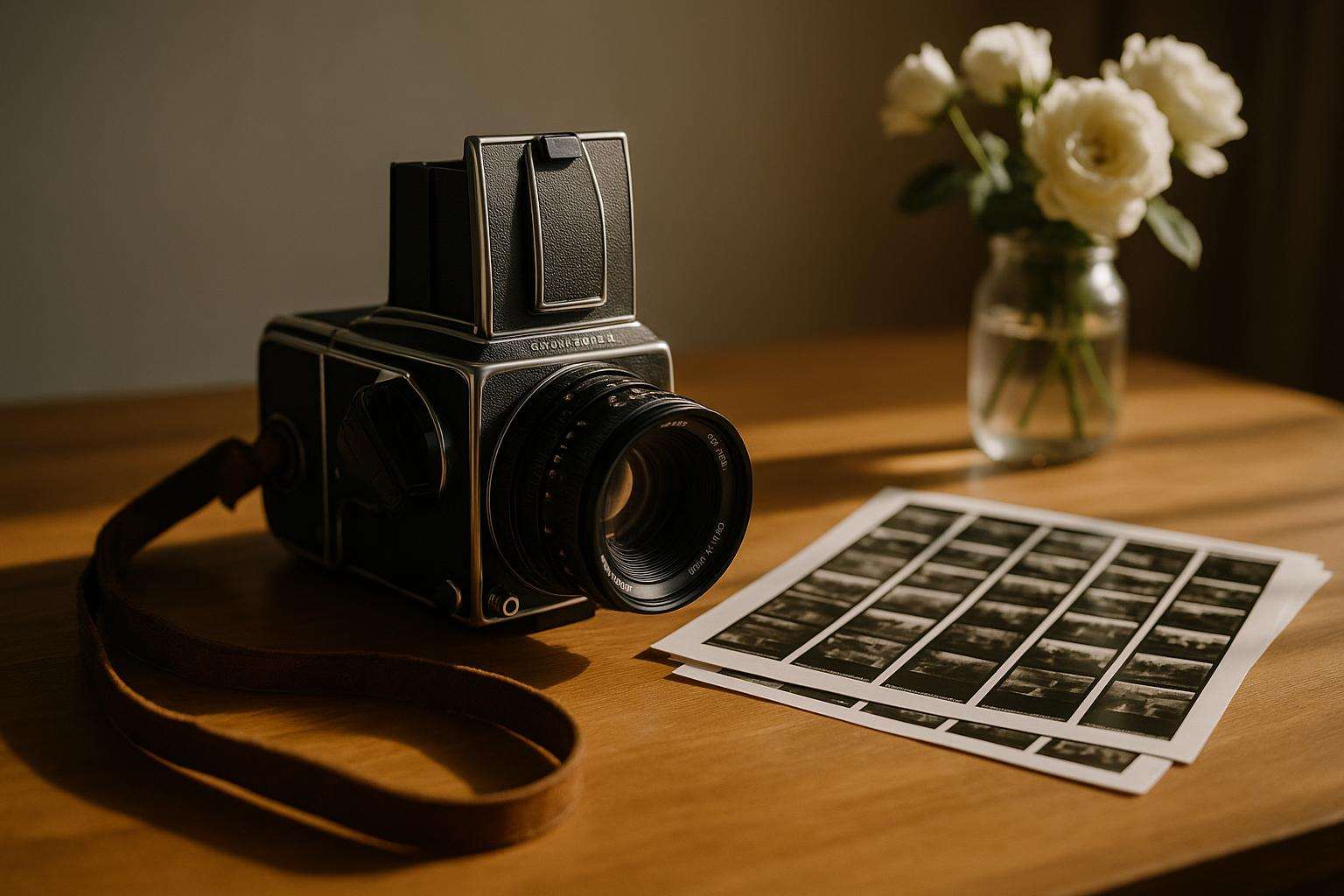
Film wedding photography — shot on medium format film cameras such as the Contax 645, Mamiya 645, and Hasselblad 500 series, or on 35mm color negative film — has completed its transition from a niche specialty into a fully mainstream 2026 wedding photography direction. Pinterest's 2026 Wedding Report identifies film photography as a rising search term alongside its digital counterparts, and studio-wildlight.com's market analysis confirms that couples citing film as their explicit aesthetic preference represent one of the fastest-growing booking segments. What film does technically that digital cannot precisely replicate is a combination of tonal characteristics: a lifted shadow floor (shadows are never fully black in film), a gentle grain structure that adds texture and depth to skin and fabric, a soft highlight rolloff that preserves dress detail without the clinical flatness of digital overexposure, and a warm, slightly golden-tinted color palette that the best digital emulation presets approximate but do not fully achieve. These qualities produce images that read as intrinsically warm and human — 'a photograph that looks like a memory rather than a documentation,' in the words of one medium format specialist. The practical consideration: film photography is significantly more expensive to produce than digital. Film stock, development, and scanning costs alone can run $1,000 to $3,000 for a full wedding day, and most film photographers charge accordingly. Packages typically begin at $5,000 to $8,000 and extend to $20,000 and above for photographers with significant publication records. For couples whose budget allows and whose aesthetic genuinely resonates with the film look, it is among the most distinctive and enduring investments available.
Strengths
- Produces a tonal warmth and textural quality that is structurally resistant to temporal dating — film wedding photographs from 2026 will not look like 2026 in the way that heavily digitally processed images often do
- The grain, lifted shadows, and warm palette of medium format film create a 'memory-like' quality that many couples find the most emotionally resonant of any photographic aesthetic
- A genuine differentiator — film-shot wedding photographs have a visual vocabulary that is immediately distinguishable from digital, giving your gallery a distinctive character no editing preset can replicate
Weaknesses
- Significantly more expensive than comparable digital coverage — film and development costs alone run $1,000–$3,000 for a full wedding day, and film photographers price accordingly; entry-level film packages rarely begin below $5,000
- Best for
- Couples with an aesthetic rooted in vintage, editorial, or fine art photography who want photographs that feel timeless and warm above all other qualities — and whose budget can accommodate premium pricing
- Pricing
- $5,000–$20,000+ full day
Source: 2026 Wedding Photography Trends: Backdrops, Colors and Textures
Direct Flash and Paparazzi-Style Reception Coverage
The retro-editorial trend that is transforming reception photography
Direct flash — on-camera flash used deliberately and boldly, rather than bounced and softened — came back as a prominent trend in 2024 and has consolidated into a mainstream 2026 approach for reception coverage. Newton Photography Company's trend report describes it as photographically recalling 'the boldness of paparazzi photography and vintage editorial archives — moments are fun-filled, bold, and romantic.' The aesthetic is immediately recognizable: high-contrast shadows, slightly darkened backgrounds, crisp subjects caught mid-motion, and a visual energy that feels simultaneously nostalgic and cinematic. For reception coverage specifically — first dance, toasts, dancing, the send-off — direct flash produces images with a lived-in, documentary energy that the softer ambient reception photography of previous years could not achieve. The style particularly suits couples with a fashion-forward, editorial, or nostalgic aesthetic, and ballroom and indoor receptions where the dark backgrounds created by direct flash read dramatically rather than flatly. It is less suited to outdoor daytime ceremonies or getting-ready coverage, where the hard flash is aesthetically jarring. Many photographers now apply direct flash specifically for the reception while using natural light and soft approaches for the ceremony and portraits — a hybrid deployment that uses the technique where it genuinely thrives.
Strengths
- Creates reception coverage with a high-energy, editorial vitality that ambient reception photography consistently cannot match — the images feel alive and in-the-moment
- Performs exceptionally in indoor reception venues with complex or dramatic lighting where ambient-only photography produces muddy or inconsistent results
- The nostalgic, vintage-archive quality gives images a temporal depth that differentiates them from the generic reception photography of the previous decade
Weaknesses
- Divisive aesthetic — couples with a preference for soft, romantic, or fine-art imagery will find direct flash reception coverage visually discordant with the rest of their gallery; it works best when the photographer uses it selectively and skillfully rather than as a default throughout
- Best for
- Couples with fashion-forward, editorial, or nostalgic aesthetics planning evening receptions in ballrooms, restaurants, or indoor venues with strong ambient lighting infrastructure
- Pricing
- No premium; it is a technique within standard packages
Source: Wedding Photography Trends 2026: What Couples Are Loving
Drone and Aerial Wedding Photography
Grand perspective coverage — cinematic, sweeping, and increasingly standard
Drone and aerial photography have transitioned from a specialized luxury add-on into a standard offering for outdoor weddings in 2026. The visual case for drones is straightforward: they produce imagery that is impossible from any ground position — the sweeping estate grounds with the ceremony tent at center, the vineyard rows receding toward a mountain backdrop, the beach ceremony from 200 feet with the Pacific Ocean horizon behind it. These images serve both as standalone showstoppers and as scene-setting openers for wedding albums and video edits. The 2026 market for wedding drone photography is mature enough that most professional wedding photographers either offer it themselves or have a trusted collaborator for add-on aerial coverage. Standalone drone operators are available in most markets at $500 to $1,500 for three to four hours of aerial coverage. Important logistical considerations: drone photography requires an FAA Part 107 certified operator in the United States — any photographer or operator offering drone services without this certification creates legal liability. Confirm FAA certification before booking. Additionally, some venues — particularly those on or near restricted airspace such as urban parks, coastal areas, or military bases — prohibit drone flight entirely. Confirm drone access with your venue before booking and before any deposit is paid.
Strengths
- Produces imagery that is genuinely impossible from any ground position, adding a cinematic scale to outdoor wedding documentation that nothing else can provide
- Particularly powerful for estate, vineyard, beach, and mountain venues where the scale of the landscape is a central aesthetic element
- The market for drone photography is mature and accessible — add-on coverage is available in most U.S. markets from FAA-certified operators at reasonable rates
Weaknesses
- Not appropriate for all venues — urban locations, restricted airspace, and some private estates prohibit drone flight entirely; always confirm drone access before booking; also ineffective for indoor ceremonies and receptions
- Best for
- Outdoor weddings at venues with dramatic natural or architectural scale — vineyard, estate, beach, mountain, or large garden properties where aerial perspective meaningfully adds to the visual story
- Pricing
- $500–$1,500 add-on
Wedding Content Creator Coverage
Behind-the-scenes, social-first documentation for couples building a wedding narrative
Forty percent of 2026 couples are asking their photographers to capture social-first content alongside their traditional gallery — and a growing number are booking a dedicated wedding content creator as a separate vendor entirely. A wedding content creator is not a photographer or videographer in the traditional sense: they produce vertical-format, behind-the-scenes, ready-to-post content designed for Instagram Reels, TikTok, and Stories. They capture the getting-ready candids, the detail flat-lays, the first look reaction from an angle optimized for a phone screen, and the reception energy in the format guests and followers want to consume. The content creator operates in the background of the traditional photographer's work, capturing in vertical format while the photographer captures in horizontal, often with a slightly rawer and more immediate visual style. This vendor category is genuinely new — it did not exist in this form five years ago — and as a result the market is still maturing: quality and pricing vary widely, and there is no universal professional standard. Couples considering a wedding content creator should evaluate their portfolio specifically for weddings (not just general content creation work), confirm turnaround time (same-day delivery of a few posts is the benchmark for the category), and be clear about file ownership and usage rights.
Strengths
- Produces same-day shareable content in the vertical format optimized for social platforms — the traditional photographer's gallery typically takes 6–12 weeks to deliver
- Fills a genuine gap in traditional wedding documentation — the behind-the-scenes, candid, non-curated moments that TikTok and Reels audiences respond to most strongly
- Allows the couple to share their wedding day in real-time without delegating their own phones to the task
Weaknesses
- An immature market with significant quality variation — booking a wedding content creator requires careful portfolio evaluation because professional standards for this category are still developing; pricing ranges from $800 to $2,500 with no reliable quality correlation at any specific price point
- Best for
- Couples with an active social media presence who want to share their wedding in real-time or near-real-time, or who are documenting their engagement and wedding process as ongoing content
- Pricing
- $800–$2,500 add-on
Micro-Wedding and Courthouse Ceremony Photography
Small guest counts enabling deeper, more intimate photographic documentation
Pinterest's 2026 Wedding Report shows that searches for civil ceremony photography, courthouse wedding outfits, and micro-wedding documentation are all growing significantly — a reflection of the sustained popularity of smaller celebrations that came out of the pandemic era and have continued to grow as a genuine preference rather than a compromise. The photography implications are specific and meaningful: small guest counts allow a single photographer to be everywhere at once, capturing the micro-moments that get lost in larger celebrations. A 20-person ceremony produces photographs with a depth of attention per person that a 200-person wedding simply cannot. The documentary approach to micro-wedding photography — following the couple and their small circle with absolute attention throughout a full day — produces galleries of extraordinary emotional richness. For couples planning courthouse ceremonies or elopements specifically, the photography category has matured to include specialists who know how to create meaningful, album-worthy documentation of a civil ceremony that is neither performative nor thin. Couples planning micro-weddings should communicate their specific structure and desired coverage emphasis to their photographer clearly: a micro-wedding photographer who excels at intimate storytelling may not be the strongest choice for a large traditional celebration, and vice versa.
Strengths
- Small guest counts allow a single skilled photographer to document everyone with genuine depth — every family member, every emotional exchange, not just the marquee moments
- The intimacy of a micro-wedding ceremony creates spontaneous emotional moments that are harder to capture in the organized choreography of large weddings
- Growing photographer specialization in micro-wedding and elopement documentation means quality specialists are increasingly accessible
Weaknesses
- Not all wedding photographers adapt well to the intimacy and informality of micro-wedding coverage — photographers trained primarily on large traditional weddings may struggle with the quieter, less structured pacing of a small ceremony
- Best for
- Couples planning celebrations of under 50 guests, elopements, and courthouse or civil ceremonies where the photography is the primary formal documentation of the day
- Pricing
- $1,800–$4,500 (shorter coverage windows)
Source: 2026 Wedding Photography Trends: Backdrops, Colors and Textures
Fine Art Wedding Photography
Each image as an art object — for couples who want photographs that belong on a gallery wall
Fine art wedding photography treats each image as a considered composition in its own right — an art object as much as a document. The photographer brings a visual vocabulary drawn from painting, architecture, and contemporary photography, applying deliberate lighting, intentional negative space, and precise compositional structure to each frame. Fine art photographers often shoot on film or with film-emulating digital processing, producing images with soft tones, gentle grain, and a timeless luminosity that standard digital photography rarely achieves. In 2026, fine art wedding photography is experiencing renewed momentum among a specific couple profile: those with strong visual aesthetics drawn from architecture, fashion, or art, who are willing to invest at the premium tier for images that are genuinely exhibition-worthy. The trade-off is both financial and logistical: fine art photographers require more control over timing and light than the wedding day typically allows, and they are most comfortable with venues that offer strong architectural or natural visual material. Fine art packages from experienced practitioners begin at $5,000 to $8,000 and extend well beyond $20,000 for photographers whose work appears regularly in publications like Magnolia Rouge, The Lane, and Issue Magazine.
Strengths
- Produces images that function as art objects independent of their documentary function — photographs that guests comment on as beautiful before they ask who is in them
- The intentional compositional approach creates a coherence across the gallery that makes album design exceptional — every image has been made rather than found
- Most resistant of any style to temporal dating — fine art photographs from any year in the past 20 years remain visually relevant today
Weaknesses
- Requires a significant premium budget investment — fine art photographers with strong publication records rarely accept bookings below $6,000–$8,000; the style is not accessible at mid-range price points
- Best for
- Couples with strong visual aesthetics and premium budgets who want photographs that function as lasting art objects — particularly those with venues of strong architectural or landscape character
- Pricing
- $5,000–$20,000+
Source: Wedding Photography Trends 2026: What the Data Means for Photographers
Fine Art Album and Physical Print Revival
Digital fatigue is bringing couples back to the heirloom object — the printed wedding album
After a decade during which the digital gallery was the primary deliverable in wedding photography, the fine art printed album is making a significant return in 2026. Studio Wildlight identifies 'physical albums making a comeback' as a concrete data point in their trend analysis — driven by digital fatigue, the desire for a tactile heirloom object, and the practical recognition that cloud storage is not permanent in the way that a beautifully bound linen or leather album is. The value of a fine art album is specific: it is a curated, sequenced, edited narrative of your wedding day in physical form — something you can hold, show, and pass to your children. Albums designed by experienced photographers using professional album design software (Fundy, Smart Albums, Album Stomp) are structurally and aesthetically superior to consumer photo books created at retail sites. They use archival-quality printing, lay-flat spreads that allow double-page imagery without a spine break, and professional binding that is designed to last decades. In 2026, premium album packages from leading photographers run $1,500 to $4,000 for a 20–40 spread album, with parent duplicate albums at $400 to $800 each. For couples who feel genuinely uncertain about whether they want an album, the consistent recommendation from wedding photographers is to include the album in the initial contract at the discounted package rate — even if it is not used immediately — rather than purchasing it separately after the wedding when the price is typically 20 to 40% higher.
Strengths
- The only wedding photography deliverable that genuinely functions as a permanent family heirloom — a fine art printed album survives technology changes, cloud service closures, and the degradation that digital files experience on aging storage media
- A curated album tells the story of the day in a designed, sequenced narrative that a raw digital gallery does not — the photographer's curatorial eye applied to your wedding day
- Including the album at contract signing at the package rate is consistently less expensive than purchasing it post-wedding at the photographer's standard retail price
Weaknesses
- Premium fine art albums are expensive — $1,500 to $4,000 for a high-quality album is a meaningful investment that couples with tight budgets may reasonably deprioritize in favor of coverage hours or a second shooter
- Best for
- Couples who want a physical, curatable heirloom object from their wedding photography — particularly those with family members who would treasure a duplicate album
- Pricing
- $1,500–$4,000 per album
Source: Wedding Photography Trends 2026: What the Data Means for Photographers
Frequently asked
What is the most popular wedding photography style in 2026?
The documentary-editorial hybrid is the consensus most-booked style in 2026 — a fusion of documentary candid coverage and editorial intentionality that produces galleries with both emotional authenticity and visual sophistication. Industry reporting from Newton Photography Company finds that 67% of couples explicitly prioritize natural, unposed, candid coverage, while the loose editorial direction that shapes the portrait sessions ensures those candids are also compositionally beautiful. The shift that most characterizes 2026 versus previous years is the decisive move away from heavily filtered, preset-driven editing toward true-to-color processing — couples want their photographs to look like their specific wedding, with accurate flower colors, real venue light, and faithful skin tones, rather than a generically beautiful but decontextualized version of it.
How do you choose between documentary and editorial wedding photography?
The most reliable guide is your own comfort in front of a camera. Documentary photography works best when the couple genuinely does not want to be posed or directed — the photographer captures who you actually are and how the day actually felt, which requires only your presence and permission. Editorial photography works best when you are comfortable with gentle direction and enjoy the process of being guided into a considered frame — it produces images that are deliberately beautiful in ways that pure documentary shooting cannot guarantee. Most couples discover that the answer is neither pure option but the hybrid: documentary throughout the day for genuine candid coverage, with two or three intentional portrait sessions where an editorial eye is applied. The key question to ask any photographer you consult: show me your portrait work alongside your candid work from the same wedding. If both are strong, you have found a hybrid practitioner.
Is film photography worth the extra cost for a wedding in 2026?
For couples whose aesthetic genuinely resonates with the film look — the warm tones, lifted shadows, and organic grain — film photography is a defensible premium investment. The images produced on medium format film carry a tonal warmth and textural quality that the best digital emulation presets approximate but do not fully replicate, and they photograph well into the future without the temporal dating that heavily preset-filtered digital images accumulate. The practical consideration: film packages typically begin at $5,000 to $8,000 and can easily exceed $15,000, representing a meaningful budget premium over comparable digital coverage. Couples should ask to see film work under the lighting conditions of their specific venue — film performs exceptionally in natural light and soft interiors but is less universally strong in low-light reception environments. For couples who want the film aesthetic without the full film commitment, many photographers offer a hybrid approach: digital coverage throughout the day with a few rolls of film for portrait sessions and ceremony coverage.
What questions should you ask a wedding photographer at the first consultation?
Six questions are non-negotiable in any initial photography consultation. First: will you personally photograph our wedding, or could an associate photographer cover it? Some studios book under one name but send another. Confirm who holds your date specifically. Second: what is your backup plan if you are ill or injured? A professional answer means a named colleague and a genuine protocol, not a vague assurance. Third: have you photographed our venue before? Venue familiarity means knowing where the best light is at key moments of the day. Fourth: can I see a complete gallery from a single wedding, not just your portfolio? A full gallery reveals consistency of quality across an entire day. Fifth: what is your editing philosophy — do you apply presets uniformly or edit each image individually for color accuracy? Sixth: what is your file storage and delivery protocol? Reputable photographers back up to multiple locations immediately after each wedding and retain files for one to two years post-delivery. These questions together reveal both technical competence and professional reliability.
Do I need a second shooter for my wedding photography?
For most weddings with more than 50 guests, a second shooter is a strong recommendation rather than an optional upgrade. The practical case: a second shooter allows simultaneous coverage of the bride's and groom's getting-ready separately, provides an opposite-angle perspective during the ceremony (capturing guest reactions while the lead photographer captures the couple), and creates coverage redundancy if the primary camera experiences a technical failure during a critical moment. The cost of adding a second shooter to a photography package typically runs $300 to $800 as an add-on, or is included in mid-range and premium packages. For micro-weddings and elopements with under 30 guests, a single skilled documentary photographer can provide complete and intimate coverage without a second shooter — the small scale makes simultaneous coverage less critical. The conversation to have with your photographer: show me examples of your second shooter's work, not just yours. The second shooter's portfolio should meet a comparable quality standard to the lead photographer's.