Photography & Film
Is Wedding Videography Worth It? An Honest 2026 Guide
Up to 98% of couples who skip a wedding videographer report regretting it. Here is what the data actually says, what a realistic budget gets you, and how to decide whether — and how much — to invest.
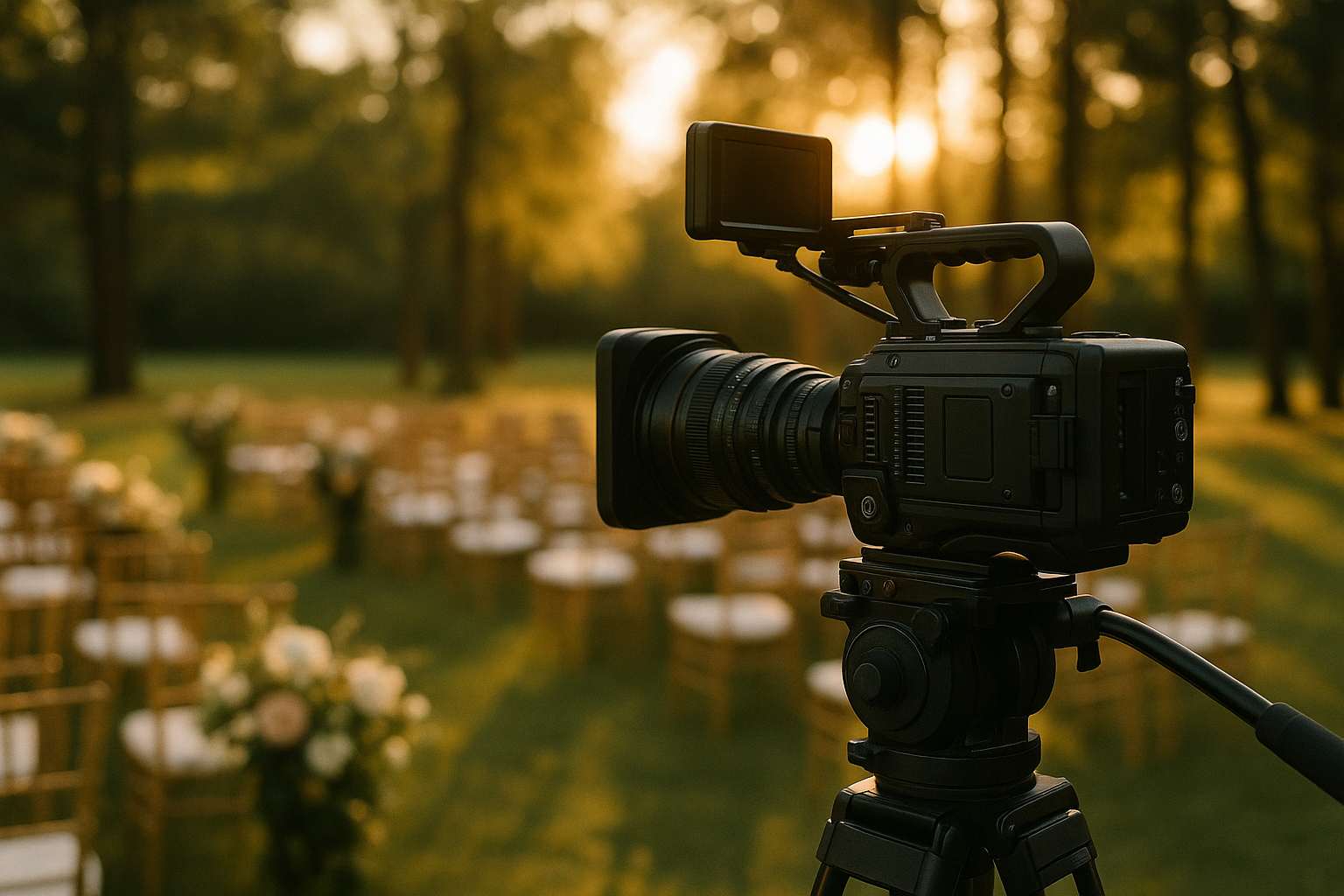
Wedding videography is worth it for the vast majority of couples: regret rates among those who skip it range from 75% to 98%, and the national average cost is $2,300 to $4,000 for a quality mid-tier package. The case against it is almost always about budget — and the case for it is that no photograph can play back the sound of your partner's voice during the vows.
"We decided to cut the videographer to save money." If you have spent any time in wedding communities online, you have read the follow-up to that sentence — the first-anniversary post, the comment thread, the message board reply from a woman who watched her wedding photos a hundred times and still could not remember what her husband said to her at the altar. The data behind that pattern is unusually consistent.
This guide takes an honest look at what the regret statistics actually say, what wedding videography costs in 2026, and how to make the decision that is right for your specific budget — including what to prioritize if you can only afford the minimum.
What do the regret statistics on skipping videography actually mean?
Multiple surveys report regret rates ranging from 75% to 98% among couples who did not hire a videographer. The variation reflects different survey methodologies, but the direction is unmistakable. Wedding videography statistics compiled in 2026 across multiple industry sources consistently place the regret rate among non-bookers at well above 75%, with some surveys reaching into the high 90s.
Why such high regret? Two reasons come up repeatedly in couple interviews. First, couples miss approximately 40% of what happens at their own wedding. You are the center of attention; you are managing your own emotions; you are trying to be present in a way you have never been present before. The ceremony, in particular, passes faster than you believe possible. Many couples report being shocked, at their first anniversary, by how little they actually remember of their own vow exchange. The photograph shows you were there. The video proves what was said.
Second, the regret compounds over time rather than diminishing. A year after the wedding, voices begin to fade in memory. Parents age. Children eventually ask what happened on that day. The film that seemed like a luxury at planning time becomes something that cannot be recreated at any price five years later.
| Package Tier | Typical Cost | Coverage Hours | Deliverables | Best For |
|---|---|---|---|---|
| Entry-Level | $1,000–$2,000 | 4–6 hours | 3–5 min highlight reel; basic color correction | Budget-conscious couples; small intimate weddings |
| Mid-Tier | $2,000–$4,500 | 6–8 hours | Highlight film (5–8 min) + ceremony edit; lapel mic audio; social teaser | Most couples; best value for coverage and quality |
| Premium | $5,000–$10,000+ | 8–12 hours | Cinematic highlight + full-length feature (20–60 min); drone; licensed music | Couples who prioritize visual artistry and complete coverage |
| Ceremony-Only | $800–$1,500 | 2–3 hours | Full ceremony edit; limited color correction | Tight budgets; ensures vows are preserved regardless |
According to Zola's 2026 wedding vendor data, most couples spend between $3,200 and $4,800 on videography — approximately 8% of total wedding budget. The Knot's 2025 Real Weddings Study placed the national average at $2,300. The range between those two figures reflects the same pattern seen across all wedding categories: budget-conscious couples bring the average down while premium market spending brings it up.
What makes a wedding film genuinely good — and what should you look for?
Most couples evaluate videographers by watching highlight reels on Instagram. That is the equivalent of evaluating a restaurant by its menu photographs. A highlight reel is marketing — it shows the best 90 seconds from across dozens of weddings. What reveals consistent quality is a complete ceremony edit and a full-length feature film from a single wedding.
When evaluating those longer samples, listen first. Audio quality is the element that most reliably distinguishes professional videography from amateur work. Inaudible vows — captured only on the room's ambient sound — represent the most common and most irreversible disappointment in a wedding film. Ask specifically: how many microphone sources will you use? Do you have redundant audio recording? Will you take a feed from the venue's soundboard? Vague answers to these questions are a meaningful red flag.
Ask whether the music in your final film will be fully licensed for social media sharing. Commercial music in a video uploaded to YouTube or Instagram will be detected by content ID systems and muted — or the video will be taken down entirely. Reputable videographers subscribe to licensing services such as Artlist, Musicbed, or Epidemic Sound, which provide cleared commercial-use music. Discovering this limitation after your highlight film is delivered, when you cannot share it publicly, is a genuinely disappointing outcome that a single question during booking prevents.
Finally, confirm the delivery timeline in writing. Most mid-tier packages deliver within eight to twelve weeks. Premium productions may run twelve to sixteen weeks. Same-day edits, if contracted, are screened during the reception dinner — an emotionally powerful experience at the $7,000-plus tier. Understand exactly what you are paying for and when you will receive it before the contract is signed.
How do you decide whether videography is worth it for your budget?
The honest case against videography is almost never about value — it is about competing priorities inside a finite budget. The Knot's 2025 Real Weddings Study found that the average wedding costs roughly $33,000, and videography typically claims 7% to 10% of that total. When a couple is choosing between a videographer and forty more guests, a better photographer, or a venue upgrade, videography is frequently the line item that gets cut first because its payoff is invisible at planning time. It only becomes visible months later, when there is nothing left to film.
A clear way to reason about it is opportunity cost. Almost every other wedding expense is consumed on the day itself — the catering is eaten, the flowers wilt within a week, the rented linens go back. Videography and photography are the only two categories that produce something you keep. Of those two, photography is non-negotiable for nearly everyone, which means the real decision is whether to add the one element that captures motion and sound. Framed that way, the question is less "can I justify $3,000" and more "is the moving, speaking record of this day worth roughly the same as one upgraded budget category I will not remember."
There are situations where skipping it is genuinely reasonable. A very small, informal elopement where a trusted friend films the vows on a stabilized phone can preserve the essential audio at no cost. A couple who knows themselves to be deeply uncomfortable on camera, and who would not rewatch a film, may rationally redirect the money. And a couple whose budget is so tight that adding videography would mean going into debt should not. But for the broad middle — couples spending on a venue, a photographer, and a celebration they want to remember — the recurring regret data argues strongly for finding room for at least ceremony coverage.
For budget-conscious couples who genuinely cannot afford a full package: a ceremony-only recording at $800 to $1,500 captures the single most important forty minutes of the day — your vows. It is not the film you imagined, but it is infinitely more than nothing. Couples who chose this option rarely express regret. Couples who chose nothing almost always do.
Frequently asked
What percentage of couples regret not hiring a wedding videographer?
The data on this question is striking and consistent. Multiple industry surveys report regret rates ranging from 75% to 98% among couples who did not book a videographer. The Huffington Post and several wedding industry studies have cited figures as high as 98%. Bridebook and sector surveys consistently find 75% to 86% regret rates within the first year. The high variability in the exact figure reflects differences in survey methodology, but the directional finding is unmistakable: among couples who skip videography, the strong majority report it as one of their greatest planning regrets. The most common explanation in couple interviews is that they were too present in the ceremony to actually remember it in detail — couples routinely report remembering 40% or less of what happened at their own ceremony, particularly during the vow exchange. Photographs preserve the visual; only video preserves the voices, the music, and the emotional movement of the day.
How much does a wedding videographer cost in 2026?
The national average for a wedding videographer is approximately $2,300 to $3,993 in 2026, with The Knot's 2025 Real Weddings Study placing it at $2,300 and Zola's data suggesting a higher average of $3,993. Most couples spend between $2,500 and $4,500 for a mid-tier professional package covering six to eight hours of coverage, one to two videographers, a highlight film (three to five minutes), a full ceremony edit, and digital delivery. Budget entry-level coverage starts at $1,000 to $1,800 for single-camera, shorter-duration packages. Premium cinematic productions with multiple videographers, drone footage, same-day edits, and full-length documentary films run $5,000 to $12,000 or more in major markets. Regional variation is significant: a comparable mid-tier package averages $3,005 in Salt Lake City and $6,091 in San Francisco. For couples on a tight budget, even a basic ceremony-only recording at $1,000 to $1,500 preserves the vows — which most couples identify as the single element they most wish they could watch again.
What is included in a standard wedding videography package in 2026?
A standard mid-tier package in 2026 typically includes six to eight hours of coverage from getting-ready through the early reception, one to two videographers, a cinematic highlight film of three to five minutes set to licensed music, a full-length ceremony edit (typically 20 to 40 minutes), a 60-to-90-second vertical social media teaser, and digital delivery within eight to twelve weeks. Most packages also include lapel microphone audio capture for the groom and officiant. Add-ons that are common but not universal include drone footage ($300 to $800), a second videographer ($500 to $1,500), raw footage files ($300 to $800), a same-day edit screened during the reception dinner ($500 to $1,500), extended reception coverage, and a love story or engagement film. Music licensing for social sharing is critical — confirm that your package includes a licensed music service (Artlist, Musicbed, or Epidemic Sound) before signing, or your highlight film may be muted if you post it to Instagram or YouTube.
Is a highlight film enough, or do I also need a full-length film?
Most professional videographers recommend having both. The highlight film — three to seven minutes, music-driven, emotionally curated — is what you watch on your anniversary, share with friends, and return to most frequently. It is the version of your day that feels like a film trailer for the most important moment of your life. The full-length documentary film — twenty to sixty minutes, chronologically complete — is what you watch years later with your children, what captures the complete text of the vows you wrote and spoke, and what preserves the full speeches that the highlight film can only sample. If your budget allows only one, the highlight film is the more versatile deliverable. But if you can afford both, the combination means you have a film to watch on a Tuesday anniversary and a film to watch when your daughter asks how her parents got married. The emotional return on the full-length film, viewed a decade later, is consistently rated among the most valuable decisions by couples who had both.
How far in advance should I book a wedding videographer?
For premium videographers in major markets — New York, Los Angeles, Chicago, Nashville, and other cities with deep demand for high-end wedding film — the practical minimum is 12 to 18 months before your wedding date. In secondary markets and for mid-tier studios, 8 to 12 months is typically sufficient. Peak-season Saturdays (May through October) fill earliest; if your wedding falls on a Saturday in spring or fall, the earlier you book the better your selection will be. Do not treat videography as an afterthought — the pattern of booking it last means most couples are choosing from whoever is still available rather than from whoever is best. Book videography and photography in the same planning conversation, not sequentially. These vendors work in close proximity throughout your entire day; confirming that they have compatible working styles and have collaborated before protects the quality of both.
What questions should I ask before booking a wedding videographer?
The seven most important questions: First, will you personally be filming my wedding, or will it be a subcontractor? Some studios book under a lead videographer's brand and assign the actual filming to associates. Know who will be there. Second, can I see a complete full-length film from a recent wedding? Highlight reels are marketing; the full film is where consistent quality — or its absence — is visible. Third, how many microphone sources will you use, and do you have redundant audio? Inaudible vows are the most common source of disappointment in a wedding film. Fourth, is the music in my final film licensed for personal use and social media sharing? This is non-negotiable. Fifth, what is your revision policy — how many rounds, and what elements can be changed? Sixth, what is your backup plan if you have an emergency on my wedding day? Established studios have formal backup arrangements; solo operators may not. Seventh, have you worked with my photographer before? Compatible working styles between these two vendors matters significantly to the quality of both deliverables.
Can a social media content creator replace a traditional videographer?
No — they serve genuinely different purposes and should not be confused. A professional wedding videographer produces a cinematic edited film delivered weeks after the wedding, optimized for lasting emotional quality and repeat viewing over a lifetime. A social media content creator captures phone-native vertical footage for near-real-time posting to Instagram Reels and TikTok, optimized for immediate shareability. According to Zola's 2026 wedding vendor data, wedding content creators are now the most-requested unique vendor category, with 22% of couples hiring one. However, the two services are complementary, not substitutes. A content creator cannot produce a cinematic highlight film or preserve your vows in clear audio. If social media documentation matters to you, budget for both — and do not ask your videographer to serve both roles unless that dual service is explicitly contracted.