Wedding Planning
How to Plan a Beautiful Wedding for Under $15,000
A $15,000 wedding budget is not a compromise — it is an intentional set of choices that keeps quality high by keeping the guest list tight and the priorities clear. Here is exactly how to do it in 2026.
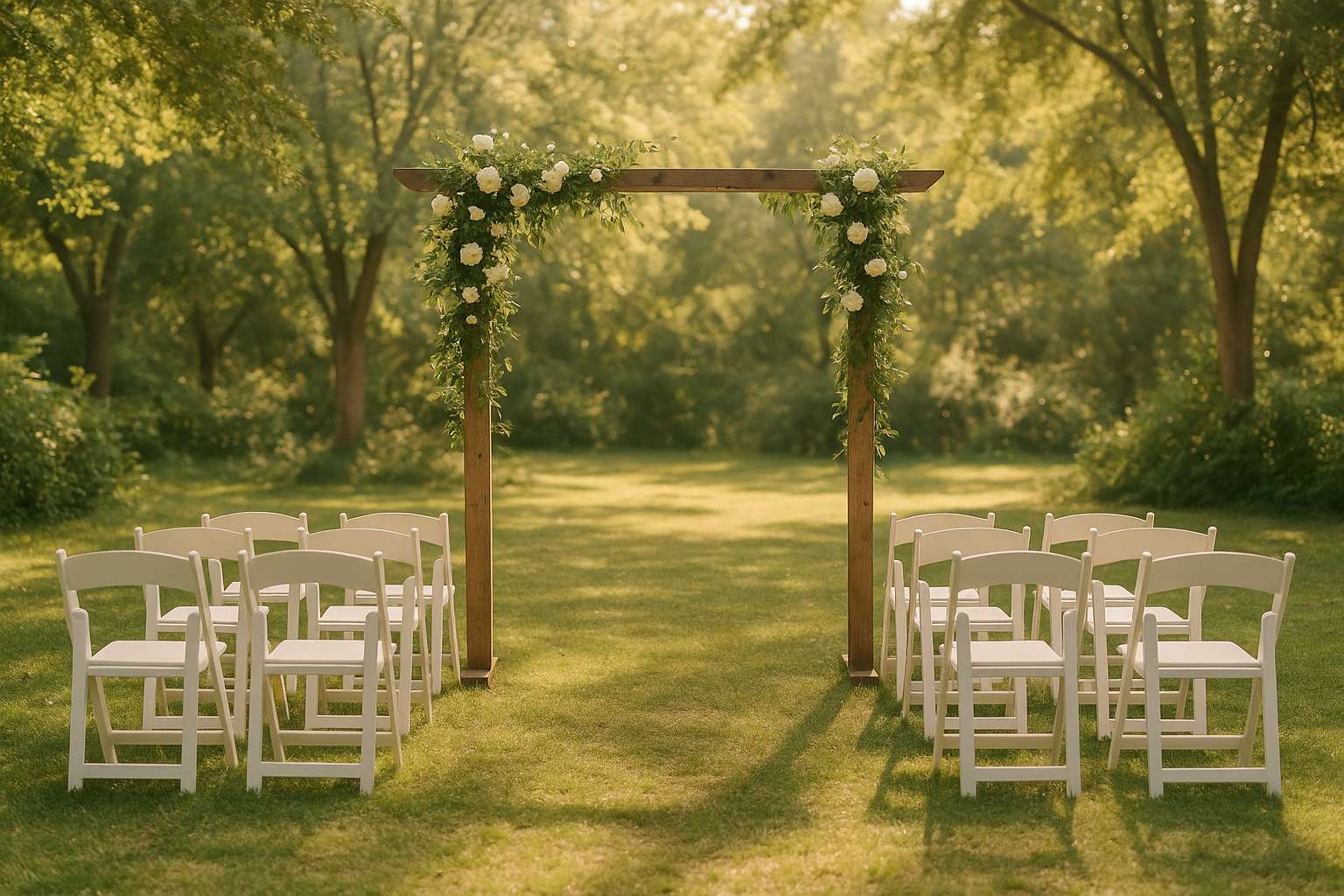
A beautiful, meaningful wedding for under $15,000 in 2026 is entirely achievable — the formula is: keep your guest list to 50–70 people, choose a non-Saturday date or an off-peak month, use a venue that permits outside catering, and over-invest in photography and food while spending minimally on favors, elaborate florals, and other elements guests rarely notice.
The national average wedding in 2026 costs $34,200, according to The Knot's Real Weddings Study. That number makes planning a wedding at $15,000 sound like a significant departure from the norm — and it is. But here is what that same data also shows: couples whose budgets fell in the $0–$15,000 range spent an average of $8,900, meaning the entire $15,000 ceiling gives you real room to work with quality ingredients. The couples who feel most satisfied with a budget wedding are not those who found a way to fake a $50,000 look. They are the ones who built something genuine and intentional at a scale that matched what they could afford without regret.
This guide is built on exactly that principle. You will find specific allocation numbers, venue strategies, the decisions with the highest return, and the categories where cutting is painless — because guests simply do not notice.
What does $15,000 actually buy for a wedding?
Before any allocation decisions, it helps to understand the fundamental math. The single most important variable in your budget is guest count. Every additional guest multiplies cost across catering, seating, cake servings, invitations, and venue requirements. At a realistic all-in per-guest cost of $200 in a mid-size U.S. market, here is what the numbers look like:
| Guest Count | Catering & Venue Cost (est.) | Remaining for Everything Else | Feasibility |
|---|---|---|---|
| 40 guests | $8,000 | $5,500 (after 10% contingency) | Very comfortable |
| 55 guests | $11,000 | $2,500 (after 10% contingency) | Tight but achievable |
| 70 guests | $14,000 | $500 (after 10% contingency) | Not feasible at $200/head |
| 70 guests at $150/head | $10,500 | $3,000 (after 10% contingency) | Achievable with budget venue + buffet |
The lesson is straightforward: a guest list over 60 people with a $15,000 total budget requires very aggressive venue and catering choices to leave any room for photography, attire, and music. Most couples find the sweet spot at 40–55 guests, which reliably allows for quality across the full day.
How do you allocate a $15,000 budget most effectively?
Begin by protecting your contingency fund before allocating anything else. Hidden costs — taxes, service charges, gratuity, last-minute additions — add an average of $3,314 to wedding budgets according to WeddingWire research. Setting aside 10% ($1,500) before you plan anything is not pessimism; it is the single act that most reliably prevents budget overruns. Your working allocation budget is therefore $13,500.
From there, the allocation framework below reflects where budget weddings succeed and where they fail:
| Category | Allocation % | Dollar Range | Strategy Notes |
|---|---|---|---|
| Venue + Catering (combined) | 40–45% | $5,400–$6,075 | Restaurant buyout, church hall, or family property; buffet over plated |
| Photography | 13–15% | $1,755–$2,025 | Emerging photographer; 6-hour coverage; digital gallery only |
| Music / DJ | 9–11% | $1,215–$1,485 | DJ over live band; early booking for best availability |
| Wedding Attire | 7–10% | $945–$1,350 | BHLDN, Azazie, or sample sale; alterations included in budget |
| Florals + Decor | 5–7% | $675–$945 | Greenery-forward; candle-heavy; minimal DIY florals |
| Officiant + Marriage License | 2–3% | $270–$405 | Friend ordained online; marriage license $30–$100 by state |
| Stationery + Invitations | 1–2% | $135–$270 | Canva design, print-at-home, or Zola digital invitations |
| Cake / Dessert | 2–3% | $270–$405 | Small 2-tier cutting cake; supplement with sheet cake from same bakery |
| Hair + Makeup | 2–3% | $270–$405 | Bridal-only; wedding party self-managed or cost-shared |
| Contingency Reserve | 10% | $1,500 | Non-negotiable; covers gratuity, service charges, surprises |
You will notice this model allocates nothing to videography, elaborate florals, favors, transportation, or a wedding planner. These are not omissions born of carelessness — they are the categories where reduced spending consistently goes unnoticed by guests and unregretted by couples in post-wedding surveys. The Zola 2025 First Look Report found that 74% of couples exceeded their wedding budget, and one in five overshot by more than $10,000 — the cause, in nearly every case, was over-investment in visible but low-memory-impact categories.
Which venue types make a $15,000 budget work?
The venue decision is the one most likely to make or break a $15,000 budget — specifically, the question of whether the venue bundles catering at a required minimum spend. A full-service wedding venue with a food-and-beverage minimum of $15,000 is simply incompatible with a $15,000 total budget. The categories that work are different in structure:
Restaurant buyouts are among the most underutilized options. Most mid-tier restaurants in any U.S. market will close their dining room for a private event on a Sunday or Friday for a food-and-beverage minimum of $2,500–$5,000 for 40–60 guests. The food is consistently better than wedding catering at the same price point, service is built in, and the setting already has ambiance that requires minimal decoration.
Church halls and faith-community spaces offer low or no venue fees (typically $300–$800 donation to the congregation) with permission to bring in your own caterer. For couples who are already planning a church ceremony, this creates a natural single-location flow and eliminates transportation costs entirely.
Public parks with pavilion permits charge $500–$1,500 for exclusive use in most markets, permit outside catering, and — in the right season — offer natural beauty that no ballroom can replicate. The tradeoff is weather contingency planning, which should be solidified well in advance.
The family home or a family friend's property is the most budget-efficient venue of all, though it requires the most logistical work: rentals (tables, chairs, linens, lighting), portable restroom consideration for large backyard events, parking coordination, and caterer access. The emotional resonance of a home wedding, however, is unmatched — and the savings are real.
The splurge-and-save trade-off every budget bride should understand
Every successful budget wedding rests on a deliberate decision about where to concentrate quality. The consistent finding across post-wedding surveys of couples who married on tighter budgets is this: the elements that create lasting memories are photography, food quality, and the atmosphere of genuine celebration. The elements that feel important during planning but fade quickly from memory are: centerpiece florals, favors, elaborate stationery, and specialty lighting effects.
Concretely, this means: hire a photographer you love and pay what it takes. If you need to reduce florals to a cluster of white garden roses from Trader Joe's assembled by a talented friend, do that — the photos of those flowers will look beautiful. If you need to skip the wedding cake entirely and serve a beautiful assortment from a local bakery, do that — guests will appreciate the quality and variety. If you need to select a DJ over a live band and save $4,000–$8,000 in one decision, do that without apology. A skilled DJ who reads the room is genuinely indistinguishable from a band in the memory of a great night.
According to a 2025 LendingTree survey, the top category that newlyweds wished they had spent more on was the honeymoon — not the flowers, not the invitations, not the cake. That finding is instructive: the celebration that follows the wedding matters as much as the wedding itself. A $15,000 wedding executed beautifully, with $2,000 saved for a meaningful honeymoon, is a more complete story than a $22,000 wedding with no honeymoon at all.
Frequently asked
Is a $15,000 wedding budget realistic in 2026?
Yes — with deliberate choices, a genuinely beautiful and meaningful wedding is absolutely achievable at $15,000 in 2026, particularly outside major metropolitan markets. The Knot's 2026 Real Weddings Study found that couples with budgets in the $0–$15K range spent an average of $8,900, demonstrating that the full $15,000 ceiling leaves meaningful room for quality. The key constraint is guest count: at typical per-guest costs of $150–$300, a $15,000 budget comfortably supports 50–70 guests when you apply a deliberate allocation strategy. Couples who reach $15,000 without thoughtful planning end up with a bloated guest list and stretched-thin quality everywhere. Those who approach it strategically end up with an intimate celebration that feels elevated and personal. Location is also a major variable: the same budget that is tight in Chicago or Atlanta is genuinely generous in smaller cities, rural markets, or secondary destinations.
What is the biggest money-saving move for a budget wedding?
Guest count reduction is, by far, the highest-leverage budget decision available to any couple — and it is also the hardest emotionally. Every additional guest multiplies cost across nearly every line item: catering, seating, invitations, cake servings, favors, and venue minimums. At a realistic per-guest cost of $200 in a mid-market, trimming 20 people saves approximately $4,000 — more than the cost of an entire photography package. After guest count, date and day-of-week selection is the next most powerful lever. A Friday evening or Sunday afternoon wedding can reduce venue and vendor costs by 15–25% versus a peak Saturday. Choosing January through March (outside the Valentine's Day weekend) or November offers additional discounts — venues in most U.S. markets offer meaningful incentives to fill their calendars during these windows. Neither of these choices forces any compromise on the quality of the day itself; they simply shift the math.
How should I allocate a $15,000 wedding budget across categories?
The most effective allocation model for a $15,000 budget begins by setting aside 10% ($1,500) as a non-negotiable contingency reserve, leaving $13,500 to work with. From there, venue and catering — the largest combined line item — should occupy no more than 45% of the spendable budget, or approximately $6,075. Photography deserves 12–15% ($1,620–$2,025); this is the one area most budget-conscious couples later wish they had spent more on. Music and entertainment can be executed with a skilled DJ for $1,000–$1,800. Wedding attire (dress, alterations, accessories) should be budgeted at $800–$1,500, with BHLDN, Azazie, and sample sales offering beautiful options at accessible price points. Florals benefit from a greenery-forward, DIY-supplemented approach — budget $600–$900. Stationery can be fully executed digitally or through print-at-home designs for $100–$300. The remaining $1,000–$1,500 covers officiant, marriage license, transportation, and day-of miscellany. This model is tight but executable with discipline.
What type of venue works best for a budget wedding?
The venue decision has more impact on a $15,000 budget than almost any other choice — specifically, whether the venue permits outside catering and whether it charges a room rental fee versus a food-and-beverage minimum. The most budget-friendly venue categories include: a family property or backyard (low or no rental cost, but requires rental items and permit research); a church hall or community center ($300–$800 rental with outside catering permitted); a restaurant buyout or private dining room ($2,000–$5,000 all-in for 50–60 guests, including catering); a park pavilion or public garden with a permit ($500–$1,500 permit, outside catering permitted); and a non-traditional but charming space — a local museum, historic library reading room, or art gallery — that may charge a modest rental and allow you to bring your own catering. Full-service wedding venues with in-house catering minimums of $15,000–$30,000 are structurally incompatible with a $15,000 total budget and should be avoided entirely.
Can I have a professional photographer at a budget wedding?
Absolutely, and doing so is one of the most important investments within a $15,000 budget. Budget photography does not mean amateur photography — it means being strategic about how you find and book your photographer. Consider: emerging photographers building their portfolios who charge $1,200–$2,000 for full coverage (look for recent graduates from reputable photography programs or second shooters from established studios striking out on their own); photographers in adjacent markets who travel to your area for a flat travel fee; or shooters who offer a streamlined package — 6 hours, one photographer, digital gallery only — rather than the full premium package with albums and engagement sessions. Review portfolios carefully; the quality of recent work matters far more than years of experience. Budget at least $1,500 for photography, and consider this the last place to cut. According to multiple surveys of married couples, underspending on photography is the single most commonly cited wedding regret.
What should I skip or DIY at a budget wedding?
The highest-return DIY and skip categories — areas where reduced spending has minimal impact on guest experience — are consistent across budget research. Skip elaborate wedding favors: a 2025 Novi Financial survey found 36% of newlyweds called favors a waste of money; guests routinely leave them. Skip videography if forced to choose — photographs serve memory better and cost less. Simplify centerpieces dramatically: clusters of pillar candles with minimal greenery cost $40–$80 per table versus $200–$400 for full floral centerpieces, and the difference is less visible than you imagine. DIY your stationery using Canva and quality paper stock for a fraction of print shop costs. Skip the stretch limo or vintage car in favor of a clean personal vehicle driven by a trusted friend. Skip the wedding cake entirely in favor of a single-tier cutting cake ($150–$250) plus a dessert from a local bakery. Each of these cuts frees meaningful dollars for the elements — catering quality, photography, and atmosphere — that guests genuinely remember.