Wedding Planning
Engagement Ring Insurance: What Every Couple Should Know
Your engagement ring is likely the highest-value item you will wear every day. Here is the complete, practical guide to getting it insured, appraised, cleaned, and protected — so you can wear it with joy instead of anxiety.
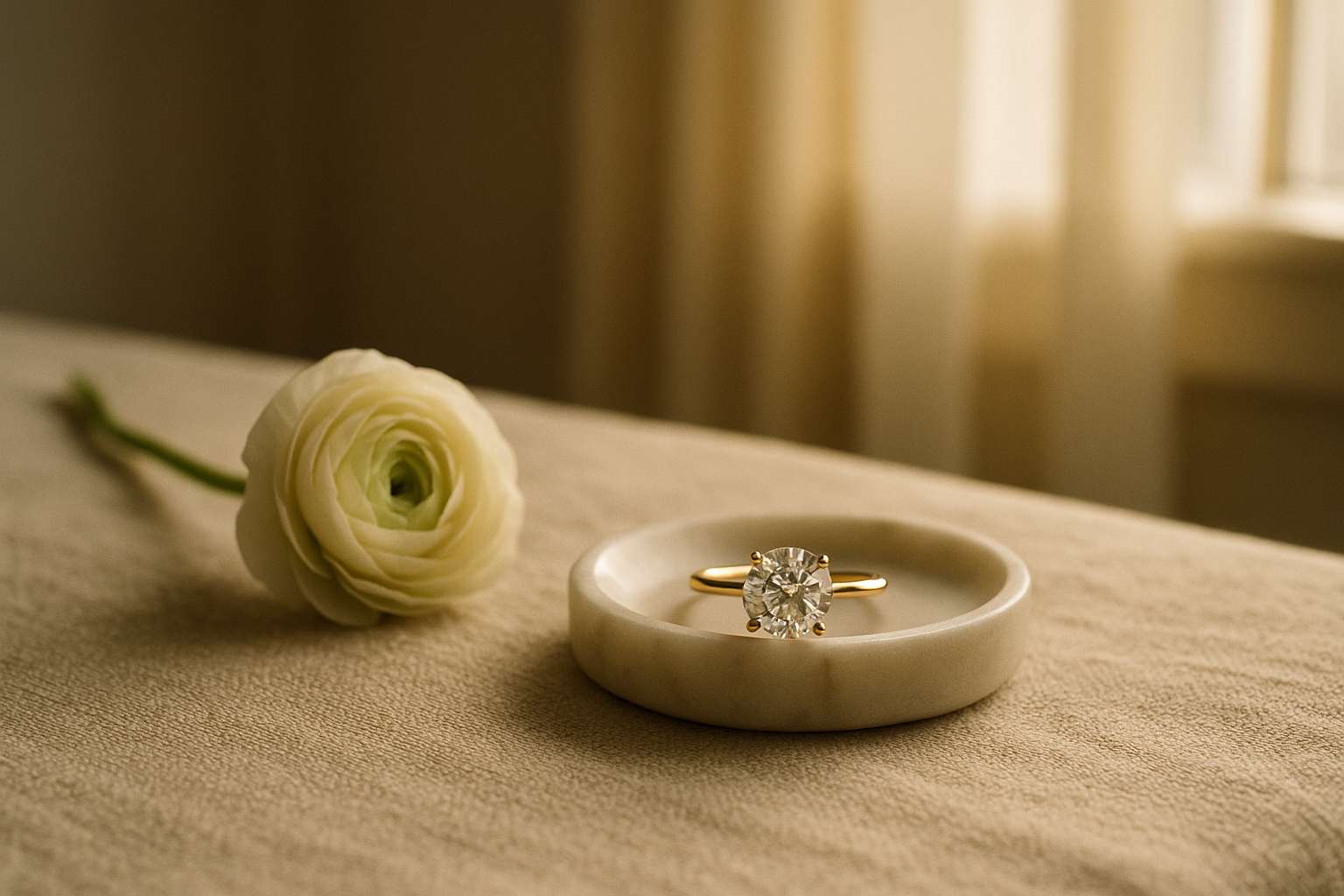
Engagement ring insurance through a standalone provider like BriteCo or Jewelers Mutual costs $33 to $150 per year for most rings, covers loss, theft, damage, and mysterious disappearance, and requires a professional appraisal first. Get insured within the first 60 days of receiving the ring — and build daily care habits immediately.
The average engagement ring in the United States is now valued at approximately $6,500, according to The Knot's 2025 Real Weddings Study. It is almost certainly the highest-value item you will wear every day. Yet approximately half of engagement rings remain uninsured — an unnecessary financial exposure on something with both significant monetary and profound sentimental worth.
This guide covers everything you need to know: what insurance covers, which provider is right for you, what an appraisal involves, and the daily care habits that protect your ring for decades. None of this is complicated. All of it matters.
Do you really need standalone ring insurance, or will homeowners cover it?
This is the most common misconception among newly engaged women, and it is worth addressing directly. Standard homeowners and renters insurance policies cap jewelry loss at $1,500 without a scheduled rider. For a $6,500 ring, that means $5,000 of your ring's value is unprotected. More importantly, standard policies typically exclude mysterious disappearance — the scenario where your ring vanishes and you cannot account exactly for how. That scenario, in practice, describes most ring losses. You notice it is gone; you cannot say precisely where or when.
Standalone jewelry insurance from a specialist — BriteCo, Jewelers Mutual, or Lemonade — is specifically designed to fill this gap. These policies cover loss, theft, accidental damage, and mysterious disappearance on a worldwide basis, typically with no deductible. For most rings, the annual cost is $50 to $150 — less than a single restaurant dinner.
| Feature | BriteCo | Jewelers Mutual | Homeowners Rider |
|---|---|---|---|
| Deductible | $0 | $0 (optional) | Varies ($500–$2,500) |
| Mysterious disappearance | Covered | Covered | Usually excluded |
| Replacement value | Up to 125% of appraised value | Same kind and quality | Scheduled value only |
| Annual value updates | Free and automatic | Manual | Manual |
| Worldwide coverage | Yes | Yes | Varies by policy |
| Typical annual cost ($6,500 ring) | $33–$90 | $65–$130 | $65–$130 (rider add-on) |
| Monthly payments | Yes | Only if premium >$200 | N/A |
According to TheCaratCut's 2026 ring insurance comparison, BriteCo is generally the more affordable option for rings valued under $25,000, offering roughly 40% lower premiums than Jewelers Mutual for equivalent coverage. BriteCo also provides automatic annual value adjustments — important because gold and diamond prices have risen significantly over the past five years — while Jewelers Mutual requires manual re-appraisal to update coverage. For buyers with very high-value rings, heirloom pieces, or a preference for legacy brand trust, Jewelers Mutual's deep industry relationships and jeweler-of-choice flexibility make it a compelling alternative.
How do you get your ring appraised, and what does it actually tell you?
A professional appraisal is the prerequisite for standalone ring insurance. It establishes the ring's replacement value — what it would cost a jeweler to recreate or replace it at current retail — not what was paid for it. Replacement value is typically 20% to 40% higher than the purchase price, which is why your purchase receipt alone is insufficient for insurance purposes.
Use a certified appraiser credentialed by the GIA (Gemological Institute of America), the American Society of Appraisers, or the National Association of Jewelry Appraisers. A standard single-item appraisal costs $50 to $150. Never pay a percentage-of-value fee — this creates a financial incentive for the appraiser to inflate the valuation.
Your appraisal document will include: metal type and weight; gemstone grades (the Four Cs for diamonds — cut, color, clarity, and carat weight); setting description; and a replacement value figure. Keep this document alongside your purchase receipt. A safety deposit box or home safe are both appropriate.
Re-appraise every two to three years. Diamond and gold values have shifted considerably since 2020, and coverage amounts that were accurate at engagement may significantly underinsure a ring today. BriteCo addresses this with automatic annual value updates at no charge; with other providers, you initiate the update yourself.
What daily habits actually protect an engagement ring?
Insurance covers what happens when protection fails. Daily habits are the first line of defense. The habits you establish in the first few weeks of being engaged — when the ring is still unfamiliar and you are learning to live with it — are the habits that will protect it for decades.
Remove your ring before swimming. Cold water causes fingers to contract, increasing the risk of the ring sliding off. Chlorine and saltwater degrade metal settings and can loosen stones over time. This is the scenario where "it just came off in the water" happens — and rings lost in the ocean are never recovered.
Remove it before showering and bathing. Soap, shampoo, and conditioner leave a residue inside the setting that dulls the stone and accumulates into a visible film. Heat from showers can also affect certain settings and stones.
Remove it before intense exercise. Prongs snag on equipment; impact can damage settings; sweat and gym lotion create buildup that degrades the metal's finish over time. A ring dish near your gym bag or workout area makes this a reflex rather than a deliberate choice.
Designate consistent ring parking spots. The most common cause of ring loss is setting it down "somewhere" and losing track of it. A small ceramic or marble ring dish — available for $10 to $30 at most home goods retailers — beside the bathroom sink, on the bedside table, and near the gym bag eliminates this entirely.
For cleaning, the at-home standard is warm water, one drop of mild dish soap, and a soft-bristle toothbrush to clean around and beneath the setting. Rinse thoroughly, pat dry. Repeat every one to two weeks. A professional clean and prong inspection at your jeweler once or twice a year completes the routine.
Have prongs inspected annually. Prongs bend, wear, and snag on fabric over time — and a bent prong is the precursor to a lost stone. Signs of a loose stone: a faint rattle when you tap the ring near your ear, or slight movement when you press the stone gently from the side. Do not wear a ring with a suspected loose stone. One prong repair visit ($50 to $150) is infinitely preferable to replacing a lost center diamond.
The financial and practical guidance here is simple: insure within 60 days, appraise first, choose a standalone policy from BriteCo or Jewelers Mutual, and build the removal habits while the ring is still new. These steps together take less than an afternoon and protect something you will treasure for a lifetime.
Frequently asked
How much does engagement ring insurance cost per year?
Engagement ring insurance through a standalone jewelry insurer typically runs 0.5% to 1.5% of the ring's appraised value annually. For the national average engagement ring value of approximately $6,500 (per The Knot's 2025 Real Weddings Study), that translates to roughly $33 to $98 per year through a provider like BriteCo. Jewelers Mutual pricing is slightly higher on average — one real-world comparison found BriteCo running nearly 40% less for equivalent coverage. A homeowners or renters insurance rider is an alternative, but standard policies cap jewelry loss at $1,500 without a rider and rarely cover mysterious disappearance. For most newly engaged women, a standalone policy from BriteCo or Jewelers Mutual is the most comprehensive and cost-effective choice, covering loss, theft, accidental damage, and disappearance with no deductible on many plans.
What is the difference between BriteCo and Jewelers Mutual ring insurance?
Both are reputable standalone jewelry insurers, but they differ in meaningful ways. BriteCo is a digital-first insurer offering zero-deductible policies, replacement values up to 125% of appraised value (accounting for appreciation), free automatic annual value updates, and monthly payment options. It is generally more affordable and well-suited to most engagement rings in the $3,000–$25,000 range. Jewelers Mutual, founded in 1913 and endorsed by the American Gem Society, brings deep legacy trust and offers flexibility in where you replace the ring — you can return to your original jeweler rather than using a replacement network. Jewelers Mutual is particularly strong for very high-value collections and for buyers who prefer traditional insurer relationships. For most newly engaged women in 2026, BriteCo's pricing and automatic value updates provide excellent value; for heirloom or high-value pieces, Jewelers Mutual's jeweler flexibility is worth the premium.
Do I need a ring appraisal before getting insurance?
Yes, virtually all standalone jewelry insurers require a professional appraisal to set your coverage amount. An appraisal determines the replacement value — what it would cost to recreate or replace the ring at current retail — which is typically 20% to 40% higher than the purchase price. Use a certified appraiser credentialed by the GIA (Gemological Institute of America), the American Society of Appraisers, or the National Association of Jewelry Appraisers. A standard appraisal costs $50 to $150; never pay a percentage-of-value fee, which creates an incentive for inflation. Schedule your appraisal within the first 30 to 60 days of receiving the ring. Keep the appraisal document alongside your purchase receipt in a home safe or safety deposit box. Re-appraise every two to three years, as gold and diamond values have risen significantly since 2020.
What does engagement ring insurance cover?
Comprehensive standalone ring insurance policies typically cover loss (including mysterious disappearance — the ring vanishes and you cannot explain exactly how), theft, accidental damage (a prong bent, a stone chipped, the band cracked during exercise), and loss during travel. BriteCo also covers preventative maintenance events such as prong re-tipping, stone re-tightening, and broken earring posts. Most standalone policies are worldwide in scope, meaning coverage applies whether you are at home or on your honeymoon in Italy. Standard homeowners or renters insurance, by contrast, typically covers only theft and usually caps jewelry at $1,500 without a scheduled rider — and explicitly excludes mysterious disappearance. That exclusion alone makes standalone ring insurance worth the modest annual cost for most newly engaged women.
When should I remove my engagement ring during daily activities?
Remove your ring before swimming in pools, the ocean, or any body of water — cold water causes fingers to contract, increasing loss risk, and chlorine and saltwater degrade metal settings over time. Remove it before showering (soap and shampoo leave a dulling residue), before intense exercise or lifting (prongs snag on equipment; sweat accelerates buildup), before cleaning with household chemicals (bleach, acetone, and acidic cleaners strip finishes and loosen stones), and before applying hand lotion, sunscreen, or cosmetics. Sleeping with an intricate ring — especially one featuring micro-pavé or delicate prong work — risks snagging on bedding. The daily habit that protects rings most consistently is simple: designate a ring dish near your bathroom sink, by your bed, and near your gym bag, and make returning the ring to its dish a reflex every time you remove it.
How do I clean my engagement ring at home?
The safest and most effective at-home cleaning method is warm water, a single drop of mild dish soap, and a soft-bristle toothbrush — particularly useful for cleaning around and underneath the setting where lotion, soap, and debris accumulate. Rinse thoroughly and pat dry with a lint-free cloth. Repeat every one to two weeks for a consistently brilliant stone. An ultrasonic home cleaner (available for $30 to $80 from retailers like Amazon) is appropriate for diamonds in secure settings and can be used monthly, but consult your jeweler before using one on softer gemstones (opals, emeralds, pearls, tanzanite), heat-treated stones, or rings with micro-pavé settings. Never clean with bleach, chlorine, toothpaste (which is abrasive), baking soda paste, or steam on delicate stones. Professional cleaning and prong inspection every six to twelve months, at your jeweler, is the complement to your home routine.
What if I rent rather than own — can I still insure my engagement ring?
Yes. Renters insurance can be supplemented with a jewelry rider, but coverage limits may be lower than ideal and mysterious disappearance is typically excluded. Standalone jewelry insurers — BriteCo, Jewelers Mutual, and Lemonade Jewelry — do not require homeownership. They insure the jewelry itself, regardless of where you live or whether you rent or own. For renters, a standalone jewelry policy is almost always the most complete option: it provides worldwide all-risk coverage, includes mysterious disappearance, and does not depend on the limits or exclusions of your renters policy. The annual cost is modest enough — often $50 to $150 for a ring in the $5,000 to $10,000 range — that it is one of the most straightforward financial decisions a newly engaged woman can make.