Wedding Planning
How to Plan a Wedding in 6 Months: The Complete 2026 Guide
A six-month engagement is entirely workable — if you know what to prioritize, what to let go, and exactly which decisions to make first. Here is the month-by-month playbook every bride on a short timeline needs.
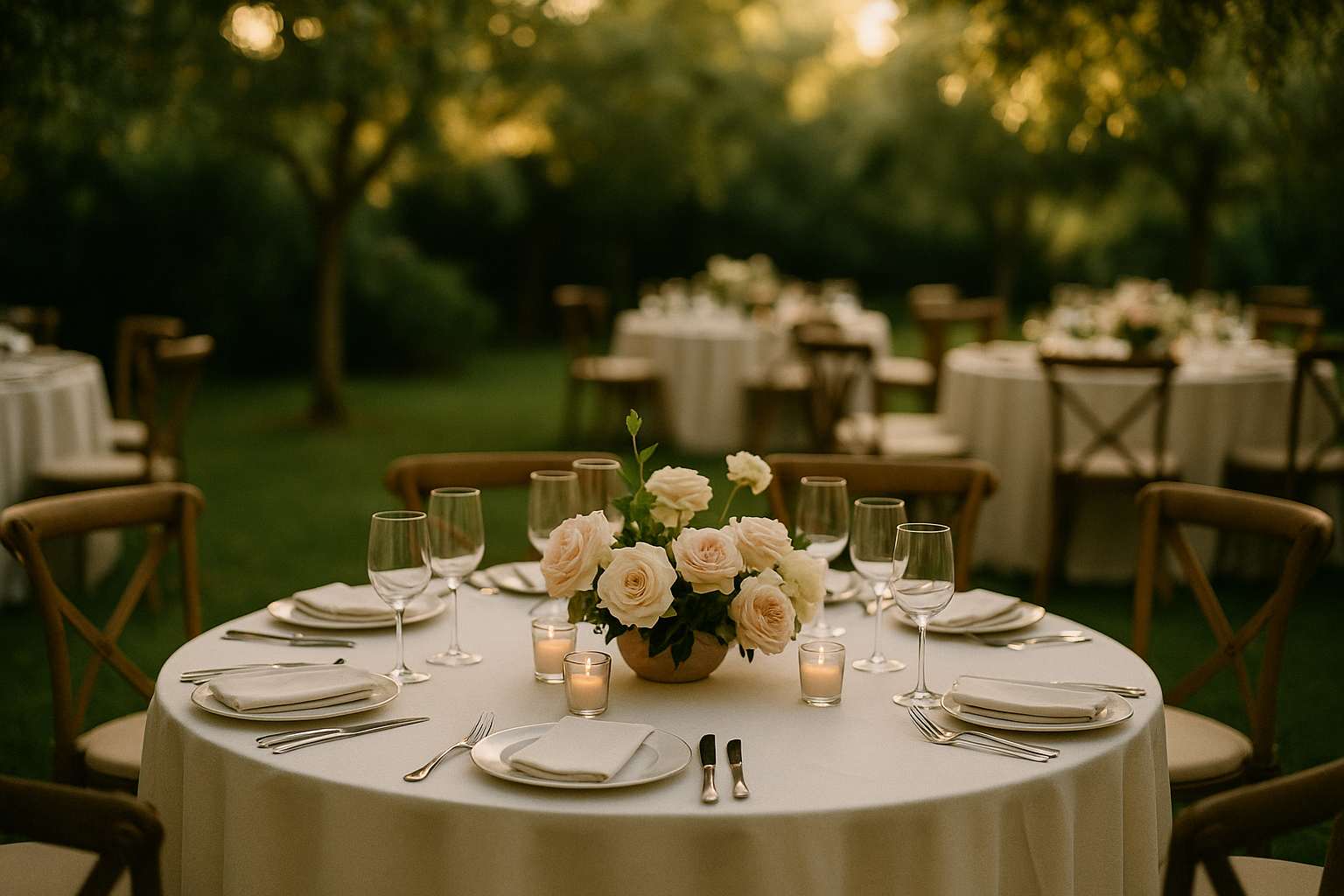
Planning a wedding in 6 months is completely achievable for most couples — roughly 45% of U.S. couples plan in under a year. The formula is simple: book your venue, photographer, and officiant within the first four weeks, choose ready-to-wear or in-stock wedding attire, and let a smaller, more focused celebration emerge from your tighter timeline.
There is a particular kind of bride who plans her wedding in six months. She is decisive. She knows what she wants. She is not interested in spending a year and a half debating centerpiece foliage. And when the wedding day arrives, her celebration tends to be one of the most genuinely personal events her guests have ever attended — because every decision was made quickly, instinctively, and with a clear sense of what truly mattered.
This guide is written for her. Not as a list of compromises to accept, but as a strategic playbook for doing this well.
What makes a 6-month wedding timeline different from a standard engagement?
The standard American engagement lasts approximately 15 months, according to The Knot's Real Weddings Study. That timeline exists not because 15 months is philosophically ideal but because it reflects the actual lead times of the wedding industry: peak-season venues in competitive markets book 12 to 18 months out, custom wedding gowns require 6 to 9 months of production plus several weeks of alterations, and the top photographers in any city fill their Saturday calendar a year or more in advance.
A 6-month engagement means you are working against those lead times. The solution is not to panic — it is to reorder your priorities with precision. On a standard timeline, couples book vendors gradually and with plenty of time to explore. On a 6-month timeline, you must compress what is normally a leisurely discovery process into focused, fast decision-making during the first four to eight weeks.
The good news: roughly 45% of couples plan their wedding in under twelve months. The industry accommodates short timelines. You simply need to know where to apply speed and where flexibility will serve you better.
Your month-by-month checklist: what to do and when
Months 6–5: The Foundation (Book Everything That Matters Most)
The first four to six weeks of a six-month engagement are your most critical period. Your goal is to lock in four things before anything else: your venue, your photographer, your officiant, and your wedding dress approach.
Week 1: Set your total budget and confirm all financial contributors in writing. Draft a working guest list — keep it lean. Estimate headcount drives every other decision, from venue capacity to catering cost. Call and email three to five venues simultaneously; do not wait for one to respond before contacting the next.
Week 2: Book your venue. Choose a date that is available — not necessarily the date you imagined. Friday evenings and Sunday afternoons offer 15 to 25% savings over Saturday rates and significantly better availability on short notice. All-inclusive venues that bundle catering, décor coordination, and a preferred vendor list are your most powerful short-timeline asset — they replace six weeks of vendor research with one contract.
Weeks 3–4: Book your photographer and officiant. Communicate your timeline honestly with every vendor you contact — reputable professionals will tell you immediately whether they are available and what their process looks like at your pace. Begin shopping for your wedding dress now. Visit salons with strong in-stock and sample inventories; tell every bridal consultant your timeline before you try on a single gown.
| Priority | Vendor / Task | Target: Book By | Why It Can't Wait |
|---|---|---|---|
| 1 | Venue + date | Week 1–2 | Locks every other vendor's availability |
| 2 | Photographer | Week 2–3 | Fills 12–18 months out; most time-sensitive vendor after venue |
| 3 | Officiant | Week 2–4 | Legally required; skilled officiants book quickly |
| 4 | Wedding dress (begin shopping) | Week 2–4 | Ready-to-wear and rush orders have their own lead times |
| 5 | DJ or band | Month 5 | Peak-season entertainers book quickly; flexibility in format helps |
| 6 | Caterer (if not in-house) | Month 5 | Requires tasting, contract, and guest count estimate |
| 7 | Florist | Month 4–5 | Seasonal sourcing; needs design brief |
| 8 | Invitations | Month 4–5 | Must mail 6–8 weeks before wedding; design takes 1–2 weeks |
Months 4–3: Details, Attire, and Communication
With your core vendors locked, months four and three are about filling in the supporting cast and communicating with your guests.
Wedding attire decisions: Your own dress should be ordered or purchased by month four at the latest to allow three to six weeks of alterations. For bridesmaids on a short timeline, Azazie and Birdy Grey offer in-stock dresses available in two to three weeks. Men's Wearhouse and Savvi Formalwear accommodate groomsmen measurements across multiple cities, which is essential when your party is geographically dispersed. For flower girls, Azazie offers dresses starting at $29 with quick shipping.
Stationery: On a six-month timeline, digital save-the-dates via Paperless Post or Zola can go out the moment your venue is confirmed — eliminating the four-to-six-week print production timeline of paper stationery. Many short-timeline couples skip save-the-dates entirely and mail invitations eight to ten weeks before the wedding. Your wedding website, launched within the first two weeks, functions as your guests' information hub in the interim.
Marriage license: Research your state's requirements at the four-month mark. Most states allow you to obtain a license thirty to sixty days before the ceremony; some have mandatory waiting periods. Contact your county clerk directly — not a wedding website — to confirm what your specific officiant needs to do to be legally recognized in your county.
Month 2: Finalization and Guest Logistics
By month two, your vendor team is assembled and most creative decisions are made. Now the work shifts to finalization and logistics.
Send formal invitations at the eight-week mark with a three-week RSVP deadline. This gives you one week to chase down non-responders and a two-week window to finalize your catering count. Confirm hotel room blocks for out-of-town guests — even a small block of ten to fifteen rooms at a nearby property is a meaningful gesture and reduces your guests' planning burden. Book transportation and arrange your rehearsal dinner venue.
Month 1: The Home Stretch
The final month is about confirmation and presence, not new decisions. Phone-confirm every vendor in the final week — a brief call surfaces any last-minute access, parking, or headcount questions before they become day-of problems. Schedule your final dress fitting two to three weeks before the wedding. Prepare gratuity envelopes and designate a trusted person to distribute them. Write and finalize your vows.
Most importantly: release the idea that a longer engagement would have produced a better wedding. The couples who plan in six months and show up fully present to their celebration often report that the experience felt more alive, more focused, and more genuinely theirs than a wedding that had been planned for eighteen months in a fog of accumulated decisions.
What can you skip — and what should you never cut?
On a short timeline, ruthless prioritization separates a beautiful wedding from an exhausted one. Here is what experienced planners consistently say you can safely simplify — and what you should protect at all costs.
Safe to simplify: Paper save-the-dates (replace with digital or skip entirely). Elaborate favors (a single nice candle or a small floral cutting is sufficient). Custom-printed programs (a single-page printed insert costs $0.50 each and prints in days). Multiple vendor meetings — a single strong consultation with each vendor is enough when you are decisive.
Never cut: A professional photographer. Your ceremony's emotional substance — whether religious, secular, or humanist, your vows and officiant deserve real thought and preparation, not last-minute improvisation. A day-of coordinator or month-of coordinator, whose value on a short timeline is outsized. Vendor meal counts — skipping meals for your photographer, DJ, and catering team is a false economy that produces tired, disengaged vendors in the final hours of your reception.
A six-month wedding is not a lesser wedding. It is a more focused one. The timeline insists that you decide what matters — and that clarity, more than any extra month of planning, is what produces a celebration that feels genuinely and beautifully like you.
Frequently asked
Is 6 months really enough time to plan a wedding?
Yes — and more couples do it than you might think. According to The Knot's Real Weddings Study, roughly 45% of couples plan their wedding in under twelve months, and many of those fall in the six-to-nine-month range. The key is front-loading your decisions. The first two months of a six-month engagement are the most critical: you must lock in a venue, photographer, and officiant before all other decisions can fall into place. Couples who secure those three anchors within the first four to six weeks of their engagement typically find the remaining months manageable and even enjoyable. A shorter timeline also tends to reduce decision fatigue — when you have fewer weekends to deliberate, you make faster, more instinctive choices, and many couples report that their wedding ends up feeling more authentically like them as a result.
What should I book first when planning a wedding in 6 months?
Your venue is always the first booking — not your dress, not your photographer, not your florist. The venue locks your date, which enables every other vendor to confirm their availability. Once the venue is confirmed, your second and third priorities are your photographer and your officiant. Top photographers in competitive markets book ten to fourteen months out for peak-season Saturdays, so if you are planning a June or October wedding on a short timeline, you may need to be flexible on date or open to newer photographers with strong portfolios. After those three anchors — venue, photographer, officiant — your fourth priority is entertainment (DJ or band), which also books quickly, followed by catering if your venue requires an outside caterer, florals, and stationery. Every other detail flows naturally after those core vendors are in place.
How do I find a wedding dress in 6 months or less?
This is one of the trickiest aspects of a short engagement because custom wedding gowns require six to nine months of production time plus four to eight weeks of alterations. On a six-month timeline, your best options are: ready-to-wear gowns (available immediately or within two to four weeks from retailers like BHLDN, Anthropologie, and independent boutiques with in-stock inventory), sample gowns from bridal salons (discounted, available same-day or within weeks), and rush-order programs offered by designers who can produce a gown in eight to twelve weeks for a surcharge of roughly 15 to 25 percent. The most important thing to do immediately after engagement is walk into bridal salons and communicate your timeline honestly — a good salon will show you only what is achievable in your window, not what is on the rack for brides with eighteen months.
Can I have a beautiful wedding on a short timeline without overspending?
Absolutely — and a short timeline actually creates some natural budget advantages. Six-month weddings almost always fall in the off-peak or shoulder season (since peak-season Saturdays in June, September, and October typically require twelve to eighteen months of advance booking). Off-peak dates save 15 to 35 percent at most venues and give you first pick of vendors who are eager to fill their calendar. A smaller guest list — which shorter timelines tend to produce naturally, since guests have less notice — reduces per-head catering costs significantly. Venues with in-house catering, built-in décor, and coordinated vendor lists compress your logistics enormously. The biggest budget risk on a short timeline is rush fees: avoid them by booking the dress, stationery, and any custom elements within the first three to four weeks of engagement.
Should I hire a wedding planner for a 6-month wedding?
A month-of coordinator is arguably the highest-ROI investment you can make on a short engagement timeline — more so than on a longer one. When you have only six months to build all your vendor relationships, coordinate the day-of timeline, and manage the logistics that typically take eighteen months to sort out gradually, having a professional absorb the operational layer is invaluable. Full-service planners typically run $3,000 to $10,000 and are wonderful if budget allows; month-of or day-of coordinators range from $800 to $2,500 and focus specifically on the final weeks and the event day. Even a single two-hour consulting session ($150 to $300 with many planners) can save you weeks of research by giving you a ranked, vetted vendor shortlist tailored to your date, location, and budget — a superb investment of time and money at the six-month mark.