Reception & Parties
Accessible Wedding Reception Planning: A Complete Guide
One in four American adults lives with a disability. A truly hospitable reception is one every guest can navigate, participate in, and remember with joy — here is exactly how to make yours that way.
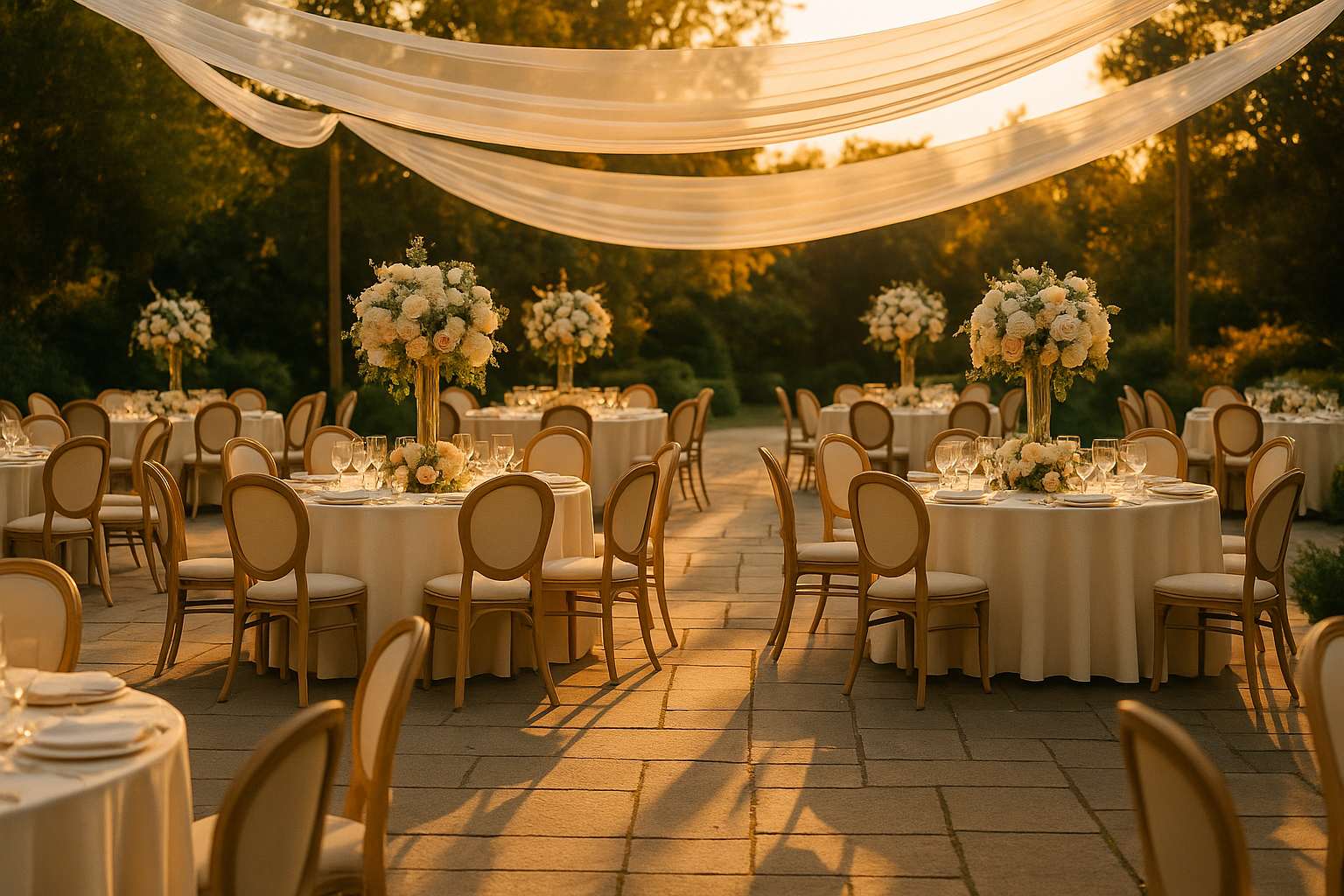
An accessible wedding reception means every guest — including those with mobility limitations, hearing or vision differences, and sensory sensitivities — can navigate the space, participate in every moment, and feel genuinely welcomed. Accessibility is hospitality in its most deliberate form, and it begins with your venue selection and floor plan, not an afterthought checklist.
According to the Centers for Disease Control and Prevention, approximately one in four adults in the United States lives with some form of disability. At a wedding of 150 guests, that is statistically 35 to 40 people whose experience of your celebration depends, in part, on decisions you make months before the day. Add elderly family members who may not identify as having a disability but who navigate differently than younger guests, and the number grows further.
Planning an accessible reception is not a legal compliance exercise — it is an extension of the hospitality that already defines a well-planned wedding. The couple who installs a ramp, widens the aisle, and seats Great-Aunt Margaret where she can reach the bar without help is expressing exactly the same values as the couple who hand-writes place cards and learns guests' dietary restrictions. This guide gives you the practical framework to do it with intention.
How Do You Evaluate a Venue for Accessibility Before You Sign?
The gap between a venue that markets itself as "accessible" and one that is genuinely accessible can be wide. The Americans with Disabilities Act, administered by the U.S. Access Board, sets minimum federal standards — but venues built before 1993 are held to a lower threshold of "readily achievable" barrier removal, not full compliance. A historic property may have a single accessible parking space and a ground-floor restroom but no elevator and a cobblestone courtyard between the parking lot and the entrance.
Ask specific questions during every venue tour:
- What is the surface material of pathways from parking to the entrance and between the ceremony and reception spaces?
- Are all levels of the venue accessible by elevator, and what are the elevator dimensions?
- Does the accessible restroom have adequate turning radius (a minimum of 60 inches) and properly positioned grab bars?
- Are the accessible entrance and the main guest entrance the same, or does accessibility require a separate entrance? (Separate entrances are legal but signal a lesser guest experience.)
- What is the venue's policy if a guest needs a mobility aid on the dance floor or near the bar?
If you have a guest with a specific and significant access need, arrange a site visit with that person before booking. What appears passable in a walk-through may present real obstacles in a wheelchair or with a walker.
| Venue Type | Typical Strengths | Common Gaps | What to Verify |
|---|---|---|---|
| Hotel ballroom | Elevators, ADA restrooms, level surfaces | Lobby-to-ballroom distance can be long | Path length from drop-off to reception space |
| Historic estate | Charming aesthetic, often sprawling grounds | Cobblestone, stairs, limited elevators | All-weather accessible path; restroom location |
| Barn or ranch | Open floor plan inside | Gravel or grass exterior, threshold at entry | Portable ramp availability; restroom accessibility |
| Garden or outdoor | Level grass possible; no indoor constraints | Grass mobility challenges; no weather cover | Firm pathway material; tent flooring plan |
| Restaurant or industrial | Often ADA-compliant by business necessity | Tight layouts; kitchen access may block routes | Table spacing; staff briefing on pathways |
What Does an Accessible Reception Floor Plan Actually Look Like?
Accessible floor planning starts with generous pathways and radiates outward. The ADA requires 36 inches of clear path width for wheelchair access; wedding planners and accessibility specialists consistently recommend 60 inches on primary circulation routes — the aisles between table clusters, the path from the entrance to the seating area, and the route from tables to the bar and restrooms. At 60 inches, two wheelchairs can pass each other, a guest with a walker can navigate without blocking a server, and the flow of 150 people moving between dinner and the dance floor does not create dangerous bottlenecks.
The standard dance floor sizing formula — one square foot of floor per two guests — works for standing guests. When the reception includes guests using mobility aids who want to participate in, or be near, the dancing, build a 5-to-6-foot buffer of clear floor between the outermost edge of the dance floor and the nearest tables. This zone serves as both a sound buffer and maneuvering space. Do not populate it with chairs or décor.
The bar placement matters more than most couples realize. The single most reliable guide to bar placement — never at the entrance, use bars to direct traffic through the space — also serves accessibility: a bar positioned in a lower-traffic area of the room, with clear approach from the main pathway, allows guests who move more slowly to reach it comfortably without contending with a crowd. Bartop height should be counter-accessible (28 to 34 inches) for at least one section; most standard bars meet this standard, but confirm with your caterer.
How Do You Handle Seating for Guests with Mobility Limitations?
Seating guests with mobility aids thoughtfully is one of the highest-impact, lowest-cost accessibility improvements available to any couple. The principles are simple:
Position, not isolation. Guests who use wheelchairs or walkers should be seated at aisle-adjacent positions at the ends of tables — not in a separate zone, not at a back table, and not at a table that requires passing through a dense cluster of chairs to reach. Remove the standard chair from their position before they arrive. Mark these seats on the seating chart and brief your venue coordinator and catering captain in writing.
Sightlines matter. The sweetheart table, the toasting area, and the dance floor are the three places guests watch most during a reception. Guests with mobility limitations should have unobstructed sightlines to all three from their seats. A guest who cannot stand to see over other guests during the first dance has been, effectively, excluded from one of the most meaningful moments of the evening.
Proximity to necessities. Seat guests with mobility limitations within comfortable reach of an accessible restroom route and a bar station. The standard calculation — one bar station per 75 to 100 guests — applies equally when considering accessible pathways to each station. If one station is only reachable by navigating past three rows of tightly packed chairs, it is functionally inaccessible.
Hearing and vision considerations. Guests with hearing loss are typically most comfortable seated 20 to 30 feet from the primary speaker or DJ setup — close enough to hear comfortably, far enough to avoid distortion. Guests who lip-read benefit from seating where primary light falls on the faces of speakers, not behind them. The most common error is backlighting the ceremony or toast area, which makes lip-reading impossible for anyone more than 10 feet away.
Communication: Before, During, and After
The most accessible wedding is one where accessibility needs are known in advance. A single, warm field on your RSVP form — "Please share any accessibility needs so we can ensure your comfort" — opens the conversation without singling out any guest. Follow up personally with anyone who responds. Your wedding website's FAQ section should address the venue's terrain (grass, gravel, pavement), elevator availability, accessible restroom locations, and parking arrangements. Out-of-town guests benefit from knowing the accessibility features of your hotel room block as well — an accessible guest room at the hotel is part of the full weekend experience.
On the day itself, brief your venue coordinator and catering captain on the specific accessibility arrangements. Provide them with a printed copy of accessibility notes alongside the seating chart. Designate one member of the wedding party as the informal accessibility liaison — someone guests can approach comfortably if they need help locating the restroom, need a chair moved, or need assistance with a transition between spaces. This role does not require special training; it requires warmth and awareness.
The 2025–2026 trend toward lounge seating integrated into receptions — sofas, armchairs, and cocktail tables as permanent features alongside dining tables — is an accessibility gift in disguise. Guests who find it difficult to sit in standard dining chairs for three to four hours have alternatives without requiring any special accommodation. When you are selecting lounge furniture, choose pieces with firm cushions and arms, which are significantly easier to rise from than soft, low seating without support.
Accessibility is not a checklist to complete before moving on to flowers and music. It is a continuous orientation toward the full spectrum of your guests' experiences — the same orientation that produces a thoughtfully timed reception, a warm welcome note on each chair, and a late-night snack for guests who have been dancing since eight o'clock. The couple who plans their wedding with every guest in mind creates an event that every guest remembers.
Sources and further reading: U.S. Access Board ADA Standards; The Knot — Accessible Wedding Venue Guide; Accessible Aisle — ADA Compliance for Wedding Venues.
Frequently asked
Do wedding venues have to be ADA compliant?
Most commercial wedding venues — hotels, ballrooms, restaurants, and purpose-built event spaces — are required to comply with the Americans with Disabilities Act. However, ADA standards distinguish between facilities built or renovated after 1992 and those predating those regulations. Older or historic venues face a lower legal threshold of 'readily achievable' barrier removal rather than full compliance. In practice, this means a stunning 19th-century estate may have no elevator and no legal obligation to install one. When touring venues, request their specific accessibility documentation rather than accepting 'ADA compliant' as a guarantee. Ask about parking, pathways, restrooms, and interior routes in detail — the U.S. Access Board at access-board.gov publishes the exact standards. If a guest has a specific need, call the venue directly and verify with a site visit.
How wide do reception pathways need to be for wheelchair users?
The ADA requires a minimum clear pathway width of 36 inches for wheelchair access; however, wedding designers and accessibility specialists consistently recommend 60 inches (five feet) on primary guest circulation routes during a reception. The reason is practical: at a wedding, people stop, turn, embrace, and carry plates and glasses. A 36-inch path that technically meets code creates a bottleneck in motion. For service corridors — the routes your catering team uses between the kitchen and tables — 48 inches minimum is standard practice. Table spacing is equally important: allow 42 inches minimum between chairs when guests are seated; 60 inches on aisles adjacent to high-traffic areas. If a guest uses a power wheelchair, 60-inch clearance is the minimum for safe independent navigation. Build these dimensions into your floor plan from the beginning rather than trying to retrofit them after the table count is set.
Where should I seat guests who use mobility aids at the reception?
Guests who use wheelchairs, walkers, canes, or other mobility aids should be seated in aisle-adjacent positions — not in the center of a row where other guests would need to move to let them through. The best placement is at the end of a table nearest a primary pathway, close enough to the action to feel included but positioned so they can arrive, leave, and move independently at any time. Remove the standard chair from that position entirely before the guest arrives, and ensure venue staff know which seats to leave clear. Sightlines matter too: guests with mobility limitations should have clear views of the dance floor, the sweetheart table, and any entertainment area without needing to stand or crane around the people in front of them. Note these positions on your seating chart with a brief explanation for venue staff.
What should I include in the accessible parking and arrival plan?
Accessible parking spaces must be closest to the accessible entrance — not simply marked and located at the edge of the lot. The ADA requires one accessible space for every 25 total spaces; for lots over 100 spaces, at least two must be van-accessible with an 8-foot access aisle. If the venue's lot is on uneven terrain, confirm that the path from accessible parking to the main entrance is paved, level, and properly lit for evening events. If you are providing a guest shuttle service, confirm that at least one shuttle is wheelchair-accessible. For venues with valet, verify that staff are trained to handle adaptive vehicles. Include clear directions to accessible parking in your wedding website's travel section, and add a note to your RSVP form inviting guests to share any accessibility needs so you can prepare.
How do I make the dance floor and entertainment area accessible?
The dance floor itself should have a firm, level surface with no exposed edges that create a tripping hazard. If you are renting a portable dance floor, ask the rental company about their edge-treatment options — beveled or ramped edges are available from most quality vendors and prevent the 1-to-2-inch lip that standard panels create. Leave a clear 5-to-6-foot buffer between the outermost edge of the dance floor and the nearest guest tables, which serves both as a sound buffer and as maneuvering space for guests with mobility aids who want to be near the dancing without being in the flow of traffic. For guests with hearing loss, seating near (but not immediately against) the speakers — roughly 20 to 30 feet away — often provides a better experience than the back of the room. If you have guests who are deaf or hard of hearing, consider adding visual elements to entertainment moments, such as lighting cues that signal when toasts begin.
What communication steps can I take before the wedding to support guests with disabilities?
The most effective step is asking, not assuming. Include a brief, warm field on your RSVP form — 'Please let us know about any accessibility needs so we can make sure you are comfortable' — and follow up personally with any guest who responds. Your wedding website's FAQ page should proactively address: parking and drop-off arrangements, the nature of the venue's terrain (grass, gravel, cobblestone), whether there is elevator access, restroom accessibility, and whether any part of the event is outdoors. For guests with vision impairments, offer to send the seating chart in advance so they can orient themselves mentally before arrival. For guests who lip-read, seat them where they have clear sightlines to the person speaking and ensure primary ceremony and reception lighting is on faces rather than silhouetting speakers from behind.