Reception & Parties
How Many Bridesmaids Should I Have? A Real-Numbers Guide for 2026
The national average is 4–5 bridesmaids, but the right number for your wedding has nothing to do with averages. Here is how to decide, by wedding size, relationship depth, and budget — with honest guidance on every scenario from one attendant to eight.
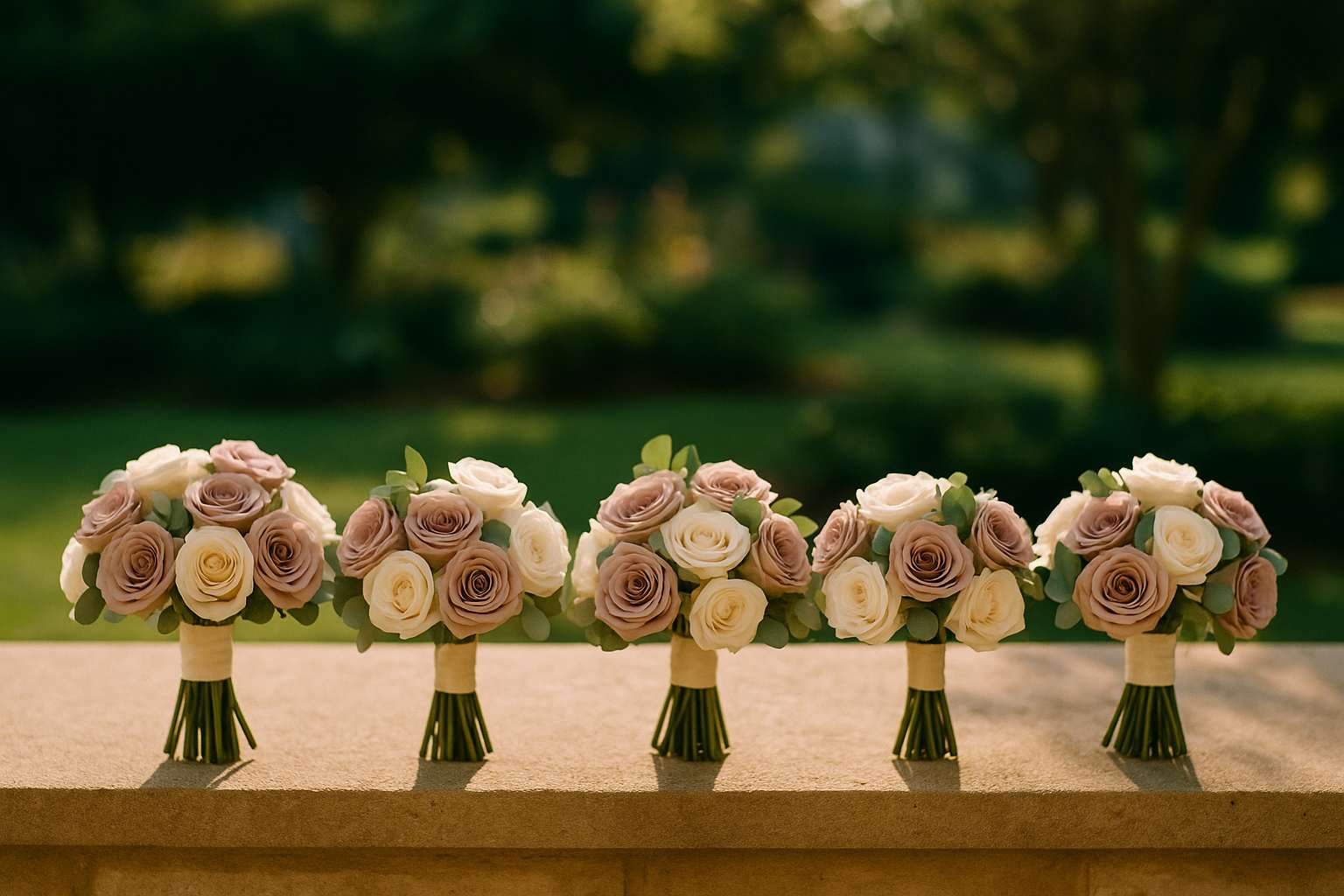
The national average is 4–5 bridesmaids, per The Knot's 2026 Real Weddings Study, but the right number is the one that reflects the depth of your real relationships. Scale by guest count, not social pressure — and never ask anyone out of obligation.
The question sounds simple. It is not. Behind "how many bridesmaids should I have" lives a tangle of friendship loyalty, family politics, budget reality, and the quiet anxiety of making some people feel chosen and others feel overlooked. This guide untangles it — with real numbers, honest cost figures, and enough nuance to cover every scenario from one bridesmaid to eight.
What does the data actually say about bridesmaid numbers?
According to data tracked by The Knot and corroborated by independent analyses, the U.S. national average sits at 4.39 bridesmaids, with a median of 4. The most common range is 3 to 6. What lies beyond that range is instructive: 7 or more bridesmaids is above average; 10 or more places you in the 98th percentile of American weddings. Only 2% of U.S. brides have 10 or more. To reach the top 1%, you need 11. These are not numbers to aim for or avoid — they are simply the landscape, so you can locate yourself in it honestly.
Regional culture exerts a strong pull on these figures. The South, particularly South Carolina, Louisiana, and Alabama, shows roughly a 25% probability that any given wedding will feature 7 or more bridesmaids, per data compiled by Priceonomics. Charleston consistently ranks as the city with the highest average party size nationally. New Mexico sits at the opposite end of the spectrum. Neither is more correct. Both reflect genuine cultural values about celebration and community.
The Knot's 2026 Real Weddings Study, covering more than 10,000 couples who married in 2025, found the average U.S. wedding hosted 117 guests. Wedding party size tends to scale with guest count — which brings us to the most practical framework for your decision.
How many bridesmaids should you have by wedding size?
The most useful way to approach this question is to match your wedding party size to your guest count and the formality of your celebration. The table below reflects the practical ranges that work visually and logistically at each scale.
| Wedding Size (guests) | Recommended Bridesmaids | Notes |
|---|---|---|
| Micro wedding (20–50) | 1–3 | One or two is often more beautiful than more; the intimacy of the day calls for it |
| Small wedding (50–100) | 2–5 | The sweet spot for most couples; allows a processional without complexity |
| Medium wedding (100–150) | 4–7 | Proportionate with the ceremony and reception scale; plan logistics carefully |
| Large wedding (150–200+) | 5–10 | Works well in formal, Southern, or culturally expansive celebrations |
These are ranges, not rules. The bride who has one treasured best friend and a 200-person guest list should have one bridesmaid. The bride with a deeply connected group of six and a 60-person guest list should have six. The numbers are a starting framework; your relationships are the final answer.
Does your party need to match in number on both sides?
No — and this deserves to be said plainly, because the myth persists with surprising durability. Uneven wedding parties are completely normal. Experienced photographers and coordinators handle them every single day. A skilled photographer composes the group around the couple; she does not line people up in strict alternating pairs. A coordinator adjusts processional pairings without ceremony. There is no visual or logistical problem that arises from having five bridesmaids and three groomsmen, or three bridesmaids and six groomsmen.
The only reason to force symmetry is social pressure, and social pressure is a poor reason to ask someone into one of the most intimate roles in your wedding. Choose the number that reflects your relationships honestly. The ceremony will be more genuine, and the photographs will be better, for it.
What is the real cost of adding each bridesmaid?
Every additional bridesmaid is a real financial commitment — for her and, to a meaningful degree, for you. Transparency about this is one of the most loving things you can offer when making your asks.
| Expense | Who Pays | Typical Range |
|---|---|---|
| Bridesmaid dress | Bridesmaid (typically) | $69–$300+ (avg. ~$128 at Azazie to ~$300 at Jenny Yoo) |
| Alterations | Bridesmaid | $30–$150 |
| Bachelorette party share | Bridesmaid | $300–$1,300+ per person |
| Bridal shower gift + wedding gift | Bridesmaid | $175–$335 combined |
| Hair and makeup (if requested) | Bridesmaid or couple | $100–$250 per person |
| Bridesmaid bouquet | Couple | $75–$175 each |
| Rehearsal dinner seat | Couple | $50–$150 per person |
| Thank-you gift | Couple | $50–$150 per person |
The total cost for a bridesmaid at a local wedding falls between $1,200 and $1,900 on average, per data from Joy and The Knot. That number climbs to $3,000–$5,000 for destination celebrations. According to a LendingTree survey, 56% of bridesmaids reported feeling expected to spend significantly more than they could comfortably afford. Keeping dress costs accessible — Azazie's dresses start at $69, and Birdy Grey's begin around $90 — is one of the most meaningful things a bride can do when assembling a larger party.
The 2026 shift: smaller parties and mixed-gender attendants
Two structural trends are reshaping the American wedding party. The first is the move toward smaller, more intentional celebrations: 30% of couples now consider eloping or hosting a micro wedding, per The Knot's 2026 data, and as intimate formats grow in popularity, wedding party sizes naturally pull smaller with them. A party of one maid of honor at a 30-person micro wedding is not a compromise — it is a deliberate, beautiful choice that keeps the focus exactly where it belongs.
The second trend is the mainstreaming of mixed-gender parties. "Bridesmen," "groomswomen," and unified "I Do Crews" that organize attendants by relationship depth rather than gender are no longer uncommon. The practical question — attire coordination — is more solvable than ever: a bridesman in a suit or tuxedo that coordinates with the color palette, a groomswoman in a gown in the party's palette, or a unified group in separates are all workable, and increasingly photographed beautifully. As Joy notes, micro weddings with small, intentional parties also cost bridesmaids significantly less — as little as $300–$1,000 total — making the financial conversation considerably easier.
How to handle the hardest edge cases
Nearly every bride encounters at least one of these situations. Here is how to navigate each with warmth and clarity.
The obligation ask. You feel pressure — from family, from social history, from not wanting to hurt someone — to ask a woman you are not genuinely close to. This is the most common source of bridesmaid regret. The honest path: do not ask. You can honor a person's place in your life with a meaningful role that does not require her in the processional — a reading, a guest book table, an usher role, a special seat in the front row. If the relationship is close enough that excluding her from the party would genuinely damage it, you should probably ask her. If the only motivator is obligation or avoiding awkwardness, the more loving answer for both of you is not to.
The geographically distant friend. Before asking, have an honest conversation about what the role requires: fittings, pre-wedding events, the rehearsal dinner, and the wedding day itself. A close friend three time zones away faces a real logistical and financial burden. A considerate bride names all of this clearly before the ask and gives the person genuine permission to say no. "I would love to have you as a bridesmaid and I want to be completely honest about what it involves" is one of the most friendship-protective things you can say.
The financial situation you're aware of. If you know a woman you deeply want in your party is navigating real financial strain, pair the invitation with transparency: tell her what the dress will cost, share that you are choosing accessible options (Azazie and Birdy Grey start under $100), and let her know that her participation matters more to you than her presence at every optional event. Some couples offer to cover the dress entirely for one or two beloved people in this situation. Naming this possibility — even if you can only afford it for one person — transforms the ask.
Adding someone after the initial asks. This is fine if done promptly. Ask within the same week you are completing the rest of your party, make the ask personally and warmly, and do not let a gap develop between your first and last invitations. A long gap quietly signals that someone was not your first thought.
The one question that settles it
Strip away the convention, the symmetry pressure, and the worry about what any photograph will look like. Ask yourself: on the morning of my wedding, when my dress is on and the ceremony is an hour away, whose presence in that room with me is genuinely irreplaceable? The answer to that question is your bridesmaid party. Everything else is noise.
Frequently asked
What is the average number of bridesmaids at a U.S. wedding?
According to data compiled by The Knot and corroborated by independent surveys, the national average is 4.39 bridesmaids, with a median of 4. Most U.S. weddings feature between 3 and 6 bridesmaids per side. Having 7 or more bridesmaids puts you above average; 10 or more places you in the 98th percentile — meaning only 2% of U.S. brides have that many. That said, regional culture matters significantly: Southern states, particularly South Carolina, Louisiana, and Alabama, show roughly a 25% probability of a wedding featuring 7 or more bridesmaids. The average guest count for U.S. weddings in 2025 was 117, per The Knot's 2026 Real Weddings Study, and wedding party size tends to scale accordingly. The number you land on should reflect your relationships, not your desire to hit the mean.
How many bridesmaids do I need for a small or micro wedding?
For a micro wedding of 20–50 guests, one to three bridesmaids is entirely proportionate and, many would argue, more beautiful. When your entire guest list fits around a few tables, a large ceremonial lineup can feel mismatched with the intimacy you have chosen. One maid of honor standing beside you carries enormous meaning and keeps the logistics simple. Two to three bridesmaids works well for a 30–50 guest celebration where you want a small processional presence without the coordination overhead of a larger party. According to The Knot, 30% of couples now consider eloping or holding a micro wedding — and the trend toward intimate celebrations naturally pulls wedding party size down with it. There is no minimum. The right number is the number of people whose presence on that specific day you cannot imagine replacing.
Do bridesmaids and groomsmen need to match in number?
No — and this deserves to be said plainly, because the myth persists. Uneven wedding parties are completely normal, create no visual or ceremonial problem, and are handled effortlessly by experienced photographers and planners every day. A skilled photographer will never line people up by strict alternating pairs; they compose the group around the couple. A coordinator adjusts processional and recessional pairings without any drama. The only reason to force symmetry is social pressure, and social pressure is a poor reason to ask someone to be your bridesmaid. If you have five women you want beside you and your partner has three groomsmen, have five bridesmaids and three groomsmen. The ceremony will be more genuine — and the photographs will be better — for it.
How much does each bridesmaid cost the couple?
There are expenses the couple typically bears, and they add up. Per bridesmaid, plan for: a bouquet ($75–$175), a contribution to day-of hair and makeup if you are requesting a specific professional ($100–$200 per person), a rehearsal dinner seat ($50–$150 per person), and a personal thank-you gift ($50–$150). Across a party of five bridesmaids, the couple's out-of-pocket costs can reach $1,500–$3,500 before the bridesmaids spend a dollar of their own money. Bridesmaids themselves spend an average of $1,200–$1,900 per local wedding, including the dress (average $128 according to The Knot), alterations, bachelorette party share, bridal shower gift, and wedding gift. The total cost picture is one of the most honest reasons to be intentional about size — every additional bridesmaid is a real financial ask of a real person.
When is a large bridal party (6 or more) the right choice?
A large bridal party makes sense when your social world is genuinely expansive, your wedding is formal and large (150 or more guests), and you have close relationships of equal depth with more than five women. It also suits certain cultural traditions beautifully — many Southern, West African, and Nigerian-American celebrations embrace large, formal parties as an expression of community and joy. If you are choosing a large party, the operational requirements scale accordingly: dress orders must be placed 5 to 6 months ahead, communication needs a dedicated point person (typically the maid of honor), and the day-of logistics — hair and makeup, transportation, photography timing — become genuinely complex. A large party is wonderful when it is authentic; it becomes a burden when it is assembled from obligation rather than love.
Can I ask someone to be a bridesmaid after I've already asked others?
Yes, but do it promptly — ideally within the same week you are asking the rest of your group, so no one feels like an afterthought. If circumstances change significantly after your initial asks (an unexpected reconnection with an old friend, a family member you originally planned to exclude), it is fine to add someone. Simply reach out personally, explain that you had been holding off on finalizng the full party, and make the ask warmly. What you want to avoid is a long gap between the first and last asks, which will quietly communicate to the later invitees that they were not your first thought. Ask your maid of honor first, always, and in a dedicated one-on-one conversation — her role is meaningfully distinct from the others and deserves that acknowledgment.
What if I want to ask someone but worry about the financial burden for her?
Have the conversation before you ask — not after. When you are reaching out to a close friend you know is navigating financial strain, the most loving thing you can do is pair the invitation with a transparent, honest picture of what it will cost. Tell her you would love to have her, share what the dress situation looks like (especially if you are considering Azazie or Birdy Grey, where bridesmaid dresses start at $69–$90), and make clear that her ability to participate matters more to you than her presence in every optional event. If you can cover her dress, say so. Some couples contribute to dress costs for close friends they particularly want in the party. Addressing this honestly before the ask preserves the friendship and ensures the person's "yes" is a genuine one, not one made out of reluctant obligation.