Reception & Parties
How to Choose Your First Dance Song: A Step-by-Step Guide
The first dance is the most photographed moment of the reception and the one most couples wish they had thought through more carefully. Here is everything you need to choose a song you will never regret.
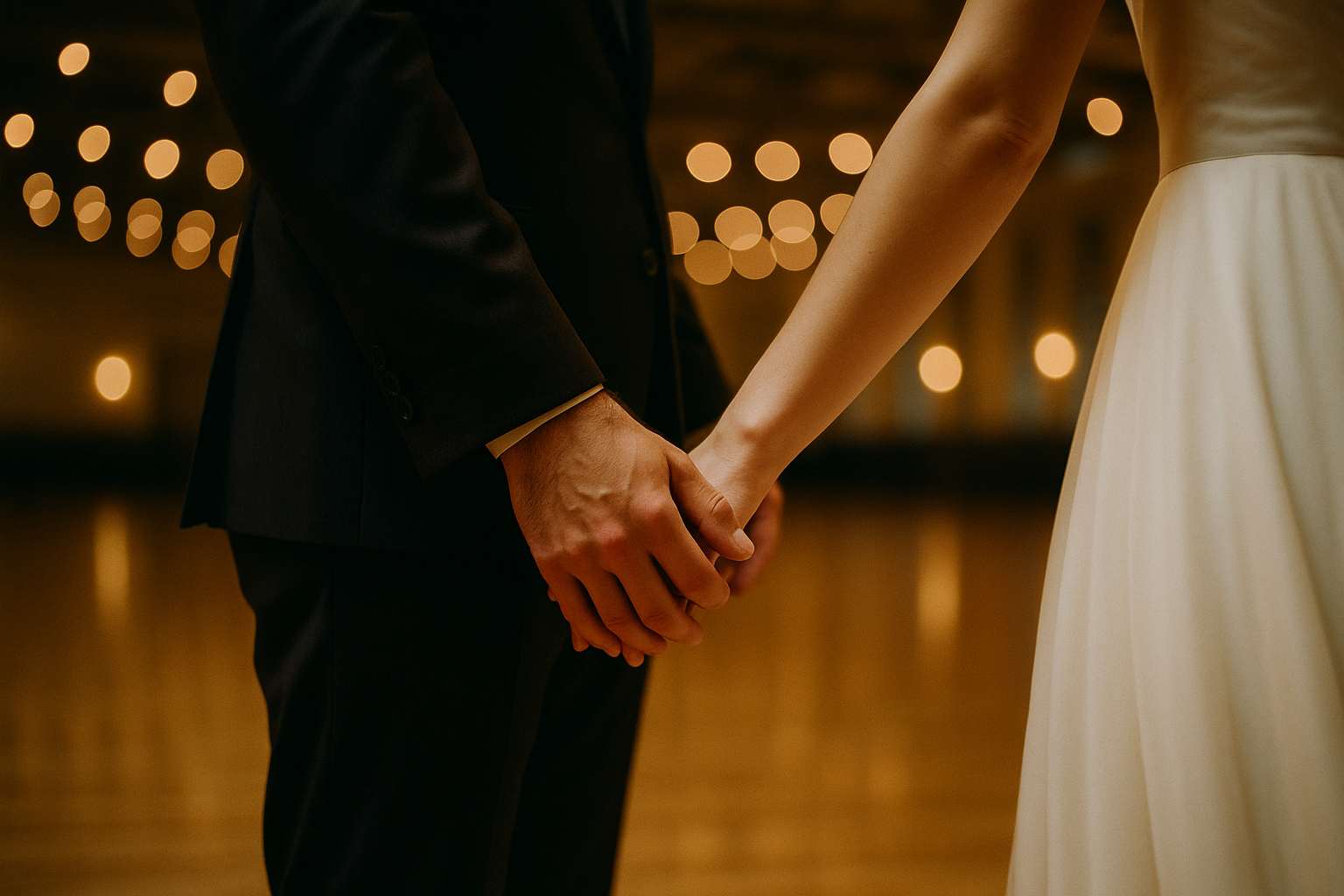
Choose a first dance song based on personal meaning first, then lyrics, then tempo — in that order. Edit to 2.5–3 minutes, confirm the edit with your DJ at least two weeks before the wedding, and practice in your actual wedding shoes. Trends matter less than whether the song feels like you.
The first dance is the most photographed, most emotionally anticipated moment of the wedding reception. Every guest is watching. Your photographer and videographer are repositioning for their best angles. Your DJ is cued and waiting. And somewhere in that charged space between the announcement and the first step onto the floor, you will have chosen a song that either carries the moment — or falls flat because you picked it for the wrong reasons.
The right song is almost never the most popular one, the most played one, or the one your best friend used at her wedding. It is the one that sounds like you and your partner, played at the right length, with lyrics you have actually read. Here is how to get there.
What criteria actually matter when choosing a first dance song?
Most couples approach this decision by browsing lists — which is a reasonable starting point but a poor ending point. The strongest first dance selections satisfy four distinct criteria, in rough order of importance:
1. Personal resonance. The song should have a genuine connection to your relationship — a song from a meaningful trip, a track that was playing somewhere significant, or lyrics that capture something specific about your dynamic as a couple. Songs chosen for trend appeal rather than personal meaning feel hollow on the dance floor, to the couple most of all. As 24 Karat Band's 2026 planning guide notes: "Start with what the song means to you. Is it from your first date, a shared road trip, or lyrics that echo your journey?"
2. Lyrical integrity. Read the full lyrics of every song you are considering — not the chorus, not the first verse, the complete song. This step prevents one of the most avoidable first dance mistakes in wedding planning. "Every Breath You Take" by The Police is the perennial cautionary tale: a song almost universally recognized as a romantic ballad that is, on close reading, a surveillance obsession narrative. Songs with bittersweet themes, references to breakups or loss, or problematic undertones in later verses are common and almost always chosen by couples who did not read past the hook.
3. Tempo fit. A first dance works best at 60–90 BPM — slow enough for close movement and intimate connection, fast enough that the dance does not feel like a standstill. Songs significantly above 90 BPM require actual footwork and become more of a performance than a moment. The acoustic flip technique (discussed below) solves for many beloved fast songs elegantly.
4. Appropriate length. Most original recordings are too long for a reception dance. Plan to edit.
How do you use the acoustic flip technique?
The acoustic flip is one of the most valuable tools in first dance selection and remains underused. The principle: if you love a song but its original recording is too fast, too produced, or too poppy for a slow dance, search for a stripped acoustic or piano cover version. Nearly every popular song from the past fifteen years has multiple acoustic covers available on streaming platforms, often played at a slower tempo, with softer dynamics and more intimate emotional texture than the original production.
| Approach | Best When | What to Confirm |
|---|---|---|
| Original recording played by DJ | The original version is already the right tempo and length; lyrics are clean throughout | Edit point, fade or hard cut, volume balance for the room |
| Acoustic or stripped cover version | You love the song but the original is too fast, too electronic, or too produced | DJ has the specific cover version; confirm it is available without licensing complications |
| Live band performance | Band is hired and can learn or already plays your song; you want a custom arrangement | Confirm the song is in their repertoire or they can learn it; give 3+ months notice for learning a new piece |
| Live band surprise switch | You want to open with a slow dance then transition to a choreographed high-energy routine | Rehearse the transition beat with the band and your DJ; have the switch fully coordinated in advance |
| Instrumental arrangement only | You love the melody but lyrics are inappropriate for a wedding or for your faith tradition | Confirm arrangement exists in the instrumentation available (strings, piano, acoustic guitar) |
What are the top first dance song choices in 2026?
The 2026 wedding season has produced a clear picture of what resonates at receptions right now. According to booking data from FixTheMusic's 2026 first dance roundup and the Alive Network's database of 100+ current choices, the most consistently requested songs span three tiers: contemporary breakouts, modern standards, and timeless classics.
2026 breakout selections: "Until I Found You" by Stephen Sanchez has become the defining first dance song of the mid-2020s — its vintage-inflected, soft crooner quality resonates across age groups and photographs beautifully. "Die With A Smile" by Lady Gaga and Bruno Mars is the current high-drama choice for couples wanting a cinematic spotlight moment. Both are being requested at a significantly higher rate in 2026 than in prior years.
Modern standards (consistently popular 2022–2026): Ed Sheeran's "Perfect" logs approximately 3.7 billion streams globally and remains the most-booked first dance song by DJ frequency. "A Thousand Years" by Christina Perri follows closely, with a natural dynamic arc that maps beautifully onto the progression from wedding party entrance to bride's walk. "Beyond" by Leon Bridges and "Hold My Hand" by Lady Gaga also appear frequently in 2025–2026 bookings.
Timeless classics: "Can't Help Falling in Love" — particularly Kina Grannis's acoustic version — continues to draw emotional responses that cross generational lines. "At Last" by Etta James is the choice for couples who want a soul-forward, richly arranged moment. "The Way You Look Tonight" by Frank Sinatra remains the clearest expression of old-world romance at a formal reception.
The dominant 2025–2026 trend, confirmed by multiple DJ surveys, is a shift toward authenticity over virality: couples are increasingly choosing songs that mean something specific to their relationship rather than what is trending on wedding TikTok. Acoustic and live arrangements — piano versions, stripped string quartet arrangements — are strongly preferred for their emotional intimacy over polished studio productions.
How do you coordinate the first dance with your DJ or band?
The production details around the first dance deserve as much attention as the song selection itself. Submit the following to your DJ or bandleader in writing, at least two weeks before the wedding:
- The exact song title, artist, and specific version or recording (not just the song name)
- The desired edit length — 2:30 to 3:00 is the standard recommendation
- The edit point: where to fade, or the hand signal you will use for the DJ to fade on your cue
- Whether you want guests invited to join the floor mid-song, and at what point
- The cue for when to start the music — not when you enter the holding area, but precisely when the doors open and you step onto the floor
Your DJ should do a sound check of the first 30–45 seconds of your entrance song in the actual reception room during setup. What sounds perfect in headphones sounds different in a reverberant ballroom or a tented space. Ensuring the opening notes of your song fill the room the way you imagined is a small step that prevents a jarring surprise on the night itself.
If your band is performing the first dance live, give them at least three months' notice to learn a song that is not already in their repertoire — and request a short recording of their rehearsal version so you can confirm the arrangement feels right before the wedding day.
Frequently asked
What if we do not have 'our song' as a couple?
You are in very good company — many couples do not have a designated song when they begin wedding planning. Rather than feeling pressured to manufacture a personal history around a track, treat the first dance as an opportunity to choose a song you will forever associate with your wedding day. Work backwards from feeling: play a selection of candidates alone in your living room, dim the lights, and slow dance together. The song that makes you both feel most like yourselves — relaxed, present, genuinely moved — is your answer. It does not need to predate your relationship. Some of the most beloved first dances are songs discovered specifically for the wedding, now permanently woven into the couple's story.
How long should a first dance song be?
The sweet spot for a first dance is 2 minutes 30 seconds to 3 minutes. Professional DJs and wedding musicians are consistent on this point: guests remain fully engaged through approximately the first two minutes of any spotlight dance; attention drifts meaningfully after 3 minutes 30 seconds. Many commercially released songs run 3 minutes 30 seconds to 5 minutes — standard studio-length versions that feel appropriate for a playlist but genuinely too long for a reception dance floor. A well-edited version that removes extended intros, repeated bridges, or instrumental outros not only keeps guests attentive but lets you end the dance on your own terms, at an emotionally peak moment, before the energy disperses.
Should we take dance lessons for the first dance?
Even two or three lessons deliver a transformation in floor confidence that no amount of home practice replicates. The difference between couples who have had lessons and those who have not is not technical skill — it is presence. Couples who have worked with an instructor know how to hold frame, where to put their weight, how to recover from a misstep, and crucially, how to stay with each other instead of staring at the floor. A full choreographed routine requires 10–20 lessons over several months and a genuine enthusiasm for performing. A polished natural dance requires only 3–5 lessons. Both produce something beautiful. What does not produce something beautiful is learning dance etiquette from YouTube while wearing rehearsal sneakers two weeks before the wedding.
How does the acoustic flip work, and when should couples use it?
The acoustic flip is one of the most practical tools in first dance planning. If you love a song but it is too uptempo for a slow dance — a pop hit, a dance track, or an uptempo love song — search for a stripped acoustic or piano cover version. Most popular songs from the past decade have at least one strong acoustic version recorded by an independent artist or produced by a streaming platform. These covers frequently play at a lower tempo, with softer dynamics, and often with a more intimate emotional quality than the original. Your DJ can use the original recording in its acoustic version, or a live band can perform their own arrangement. The result: a deeply personal song played in a way that works for the dance floor and photographs beautifully.
Can we ask guests to join the dance floor before the song ends?
Yes, and many planners recommend it — particularly for couples who feel self-conscious under a spotlight. Inviting guests onto the floor after 90 seconds or 2 minutes accomplishes two things simultaneously: it releases the performance pressure on the couple and it transitions the room naturally into open dancing. The DJ makes a brief invitation over the mic, the energy shifts, and the evening opens up without any awkward punctuation. The couple has still had their featured moment — fully photographed and captured on video — and the spotlight ending feels intentional rather than abrupt. This approach works especially well for receptions with younger or more energetic guest demographics.
What are the most popular first dance songs for 2026 weddings?
The dominant 2026 trend is personal authenticity over social media popularity — couples are choosing songs that mean something to their specific relationship rather than simply what is trending. That said, several songs are appearing consistently at 2026 receptions. 'Until I Found You' by Stephen Sanchez leads among couples seeking a vintage-inflected, romantic crooner feel. 'Die With A Smile' by Lady Gaga and Bruno Mars is the current breakout choice for couples who want a cinematic, high-emotion spotlight moment. Ed Sheeran's 'Perfect' remains the single most-played first dance song globally by booking frequency. Among timeless classics, 'A Thousand Years' by Christina Perri and 'Can't Help Falling in Love' by Elvis Presley continue to appear at receptions in significant numbers.