Reception & Parties
Rehearsal Dinner vs. Welcome Party: What Is the Difference?
Both events happen the night before your wedding — but they serve different guests, carry different traditions, and cost very different amounts. Here is how to decide which one (or both) belongs in your wedding weekend.
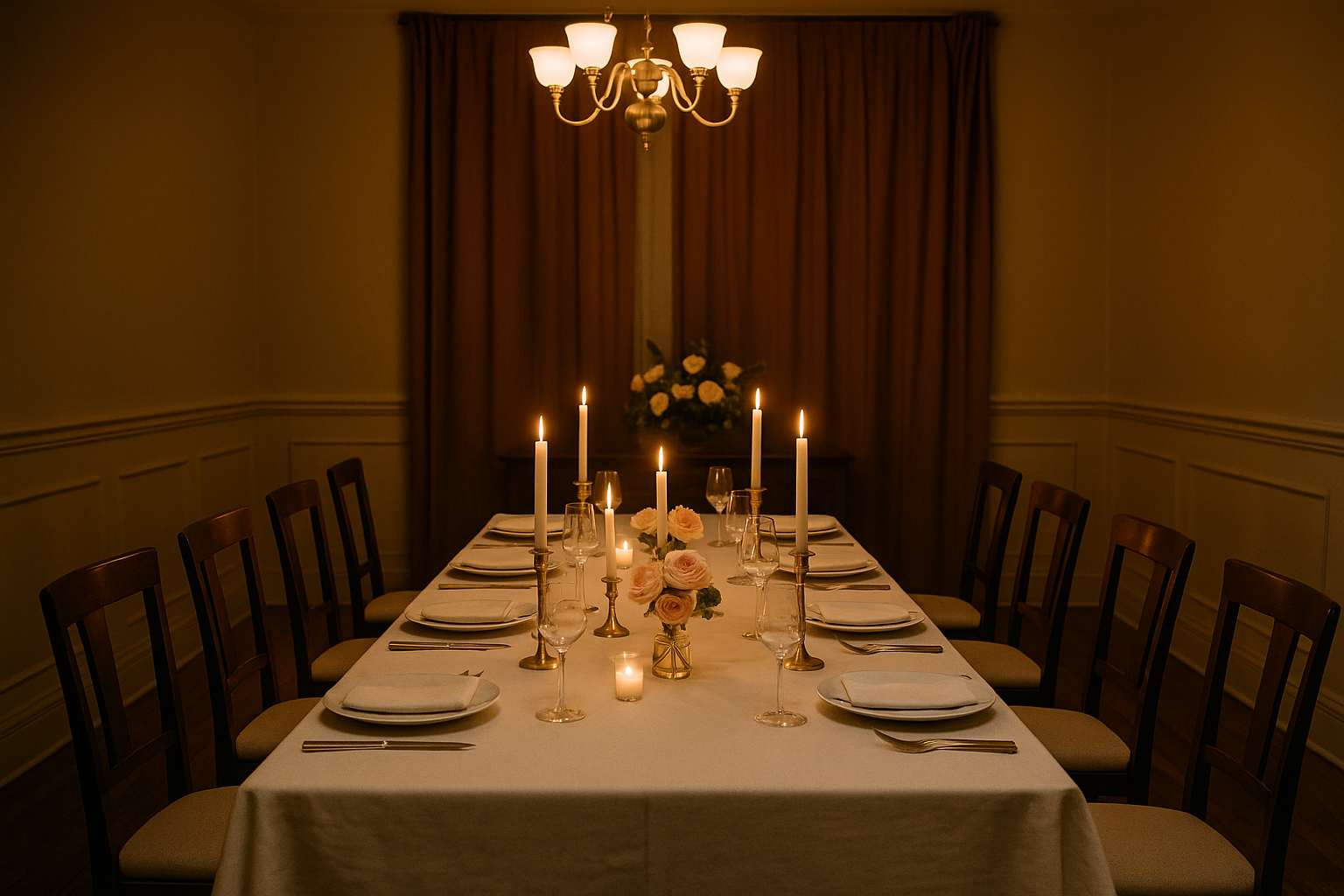
A rehearsal dinner is an intimate, private gathering for the wedding party and inner family — structured, traditional, with toasts and gifts. A welcome party is an inclusive, festive event for all traveling guests. Many couples host both; the right choice depends on your guest mix and budget.
What exactly is a rehearsal dinner, and what is it for?
The rehearsal dinner is one of the most enduring traditions in American wedding culture. It takes place the evening of the ceremony rehearsal — almost always the night before the wedding — and serves several distinct purposes that a welcome party cannot replicate.
Practically, it is where the wedding party walks through the rehearsal itself (held at the ceremony venue, typically from 5:00–6:30 pm), then gathers for a hosted dinner that allows everyone to exhale, connect, and prepare emotionally for the next day. It is the moment when the groom's father toasts the couple, the best man reveals a story that will be repeated for years, and the bride distributes gifts to her bridesmaids with tears and genuine gratitude. The intimacy of a small group — typically 25–50 guests at a 120-person wedding — makes these moments land with a weight that the reception, with its hundreds of logistics, never quite achieves.
By long-standing American etiquette, the groom's family hosts and pays for the rehearsal dinner. This tradition traces to the historical division of wedding costs: the bride's family bore the full expense of the wedding and reception, and the groom's family reciprocated with the rehearsal dinner. While this arrangement is far from universal today, it remains the expected norm in many Southern families, faith-based communities, and households with strong generational ties to wedding customs.
What is a welcome party, and when does it replace or supplement the rehearsal dinner?
A welcome party is a different creature entirely. Where the rehearsal dinner is intimate and structured, the welcome party is broad and festive. Its defining characteristic is inclusivity: it is open to some or all of your wedding guests — particularly those who have traveled significant distances — and its tone is deliberately casual and celebratory rather than ceremonial.
The welcome party's primary purpose is community-building. Guests who arrive the night before a wedding as strangers to each other leave a well-hosted welcome party as a community. The introductions made over cocktails at 7 pm become the warm, effortless conversations that fill the reception the following evening. As Michelle Leo Events and multiple wedding planning authorities confirm, couples who host a welcome party consistently report higher overall guest satisfaction scores for their weddings — the community foundation has already been laid.
| Dimension | Rehearsal Dinner | Welcome Party |
|---|---|---|
| Guest list | Wedding party + immediate family + close family; ~25–50 guests at a 120-person wedding | All guests or all traveling guests; can be 80–150+ people |
| Tone | Intimate, structured, ceremonial; toasts and speeches | Festive, casual, inclusive; mingling and celebration |
| Traditional host | Groom's family | Couple, both families, or combined |
| Typical format | Plated or prix-fixe dinner in a private dining room | Cocktail reception, buffet, outdoor gathering, bar buyout |
| Cost range (estimate) | $1,500–$7,000 for 25–40 guests | $2,000–$10,000+ depending on guest count and format |
| Duration | 2.5–3.5 hours; end by 10:30 pm | 2–3 hours; casual flow in and out |
| What happens there | Toasts, wedding party gifts, family bonding | Guest introductions, pre-wedding excitement, community building |
How do destination weddings change the calculus?
Destination weddings almost entirely dissolve the distinction between rehearsal dinner and welcome party — because when every guest has traveled, the traditional separation of "inner circle" from "everyone else" no longer makes social sense. At a destination wedding in a vineyard, a coastal resort, or an international venue, the rehearsal dinner frequently expands to become a group welcome dinner for all guests. The intimacy of geography — everyone staying in the same hotel or villa cluster, everyone exploring the same new city — creates the closeness that the rehearsal dinner was designed to foster, extended to the full guest list naturally.
For destination weddings, the practical planning guideline is clear: host a welcome event for all guests on the evening of their arrival. Whether you call it a rehearsal dinner or a welcome party is less important than the hospitality it represents. Budget accordingly: a catered welcome dinner for 80 destination guests in an elevated setting typically runs $5,000–$10,000.
What does each event typically cost in 2026?
Budget is often the decisive factor in choosing between the two events — or deciding to host both in a modified form.
| Event | Format | Estimated Total | Per-Head Range |
|---|---|---|---|
| Rehearsal dinner | Restaurant private dining room, 30–40 guests | $1,500–$7,000 | $65–$175 before tax/gratuity |
| Rehearsal dinner (home/catered) | Family home or garden, 25–35 guests | $1,200–$4,000 | $45–$120 |
| Welcome party (cocktail format) | Hotel bar, lounge, or outdoor space, 50–80 guests | $2,000–$5,000 | $35–$65 |
| Welcome party (dinner format) | Catered buffet for all guests, 80–120 | $5,000–$10,000+ | $55–$90 |
| Combined event (staggered) | Rehearsal dinner + welcome cocktails for all | $3,500–$9,000 | Varies by group split |
Always add 20–22% for service charges, tax, and gratuity when comparing quotes — this is the single most overlooked line item in pre-wedding event budgets, per The Knot's welcome party planning guide.
What are the most important etiquette rules for each event?
Rehearsal dinner etiquette for the hosting family: Extend invitations (formal or informal) four to six weeks in advance. Communicate the dress code clearly — typically one level below the wedding formality. Never use the rehearsal dinner as a venue for airing wedding-day logistics; keep the focus on celebration. The dinner should end no later than 10:00–10:30 pm so the wedding party arrives at the ceremony day rested.
Welcome party etiquette for the couple: The most important rule is this: if you send a formal invitation, you are hosting — guests must never pay for a formally invited event. If budget prevents full hosting, communicate informally rather than sending an invitation. Welcome party details belong on a separate card or the wedding website, never on the wedding invitation itself. Ensure the venue communicates clearly — address, dress code, duration — so traveling guests know exactly what to expect after a long day of travel.
For guests attending either event: RSVP within one week. Dress one level below the wedding formality unless stated otherwise. Do not arrive with wedding gifts — the rehearsal dinner and welcome party are not gift-giving occasions. If you are considering a toast at the rehearsal dinner, ask the host's permission first, prepare written remarks, and keep them under three minutes.
Should you combine the rehearsal dinner and welcome party into one event?
The staggered combination is the most elegant solution for couples who want to honor both traditions without doubling their pre-wedding budget. The structure is straightforward: host a rehearsal dinner for the inner circle at 6 pm, then invite all guests to join for dessert, drinks, and an informal gathering at 8 or 8:30 pm. The transition signals a natural shift in tone — from the ceremonial intimacy of the dinner to the festive inclusivity of the welcome. Guests who attended the full dinner transition seamlessly; traveling guests who arrive at 8 pm feel fully welcomed without having missed anything intended for them.
The key to making this work is clear communication: the invitation to the full gathering should specify the 8 pm arrival time and describe it warmly as a welcome celebration — not as a continuation of a dinner they were not invited to.
Frequently asked
What is the fundamental difference between a rehearsal dinner and a welcome party?
The rehearsal dinner is a private, structured gathering for the couple's inner circle — the wedding party, immediate family, the officiant, and typically out-of-town relatives. It follows the ceremony rehearsal the evening before the wedding and features toasts, heartfelt speeches, and the distribution of wedding party gifts. By long-standing American etiquette, the groom's family hosts and pays. The welcome party, by contrast, is designed for a broader audience — all guests, or at minimum all who have traveled — with a distinctly lighter, more inclusive tone. It is casual and festive rather than ceremonial. While both events typically occur the evening before the wedding, they serve different relational purposes: the rehearsal dinner deepens bonds with those closest to you; the welcome party builds community across the full guest group. Couples with significant out-of-town guest percentages increasingly benefit from hosting both.
Who pays for the rehearsal dinner versus the welcome party?
By traditional American etiquette, the groom's family hosts and pays for the rehearsal dinner — a counterpart to the bride's family bearing the wedding and reception costs. In practice today, hosting varies: both families may split costs, the couple may self-host, or an extended family member may step in. Whoever is named on the invitation assumes all costs. For the welcome party, the same principle applies: whoever extends a formal invitation is the host — guests should never pay at a formally invited event. If budget prevents full hosting, communicate informally rather than sending a formal invitation. The average rehearsal dinner runs $1,500–$7,000 for 20–40 guests at a restaurant private room ($65–$175 per head before tax and gratuity). A mid-range welcome party for the full guest list typically runs $2,000–$5,000 for 50–100 guests.
Should we host a rehearsal dinner, a welcome party, or both?
The right answer depends on your guest list composition and budget. If most guests are local and the wedding party is small, a rehearsal dinner alone may fully serve your needs. If a significant portion of guests have traveled — the typical threshold is more than 30–40% of your list coming from over two hours away — a welcome party becomes nearly essential. Destination weddings almost universally call for a welcome event open to the full guest list. Many couples do both in a staggered format: rehearsal dinner for the inner circle at 6 pm, then all guests join at 8 or 9 pm for dessert and drinks. This acknowledges both obligations — the intimate tradition of the rehearsal dinner and the broad hospitality of the welcome party — without fully doubling the budget. It is the most common and elegant solution for couples with large out-of-town guest percentages.
What is the right guest list for each event?
The rehearsal dinner has a clear traditional core: the full wedding party, both sets of parents and step-parents, immediate siblings not in the wedding party (and their partners), the officiant and partner, grandparents of the couple, and out-of-town guests who have traveled significantly. Readers and ceremony performers are also typically included. A rehearsal dinner usually runs 25–40% of total wedding guest count — for a 120-person wedding, 30–50 guests is natural. The welcome party guest list is more expansive: either all wedding guests or all traveling guests (those coming from more than two hours away). The guiding rule is clear: never send a formal welcome party invitation to guests you are not fully hosting — a formal invitation creates an obligation that a casual mention does not.
How far in advance should we plan and book a rehearsal dinner venue?
Book your rehearsal dinner venue at the same time you book the wedding venue — typically 9–12 months in advance for peak-season dates (May through October in most U.S. markets). Private dining rooms at well-regarded restaurants in major metropolitan areas book 6–9 months out for Saturday evenings in the wedding season. Waiting until three to four months before the wedding sharply limits your options and may force a compromise on venue quality or capacity. The practical sequence: decide on format and approximate guest count first, then contact two to three venue candidates simultaneously to compare availability, minimum spends, and package options. Sign a contract and pay a deposit immediately once you identify the right venue. The rehearsal dinner venue should be finalized before the wedding save-the-dates are sent, so you can include the rehearsal dinner invitation or details on the wedding website for those who will receive it.
What are the current trends in rehearsal dinners and welcome parties for 2025–2026?
The 2025–2026 landscape has shifted in several clear directions. Experiential formats — cooking classes, wine tastings, boat cruises, vineyard farm-to-table dinners — are increasingly replacing restaurant private dining rooms, particularly for couples under 35. Aesthetic cohesion is a defining trend: couples are designing rehearsal dinners and welcome parties as visual previews of the wedding itself, with matching color palettes and coordinated florals. Micro rehearsal dinners of 10–15 people are growing among couples who want an intimate pre-wedding period, paired with a separate, more inclusive welcome cocktail party. Craft mocktail menus have moved from afterthought to feature attraction. Digital invitations via Paperless Post are now widely accepted. Videography at rehearsal dinner toasts — capturing candid emotional moments that often surpass polished reception speeches — is a strongly rising priority.