Reception & Parties
Wedding Band Cost: A 2026 Breakdown
A live wedding band is one of the highest-emotion investments in your reception — and one of the widest cost ranges in any wedding budget. Here is exactly what you are paying for, what moves the price up or down, and how to get the most value at every tier.
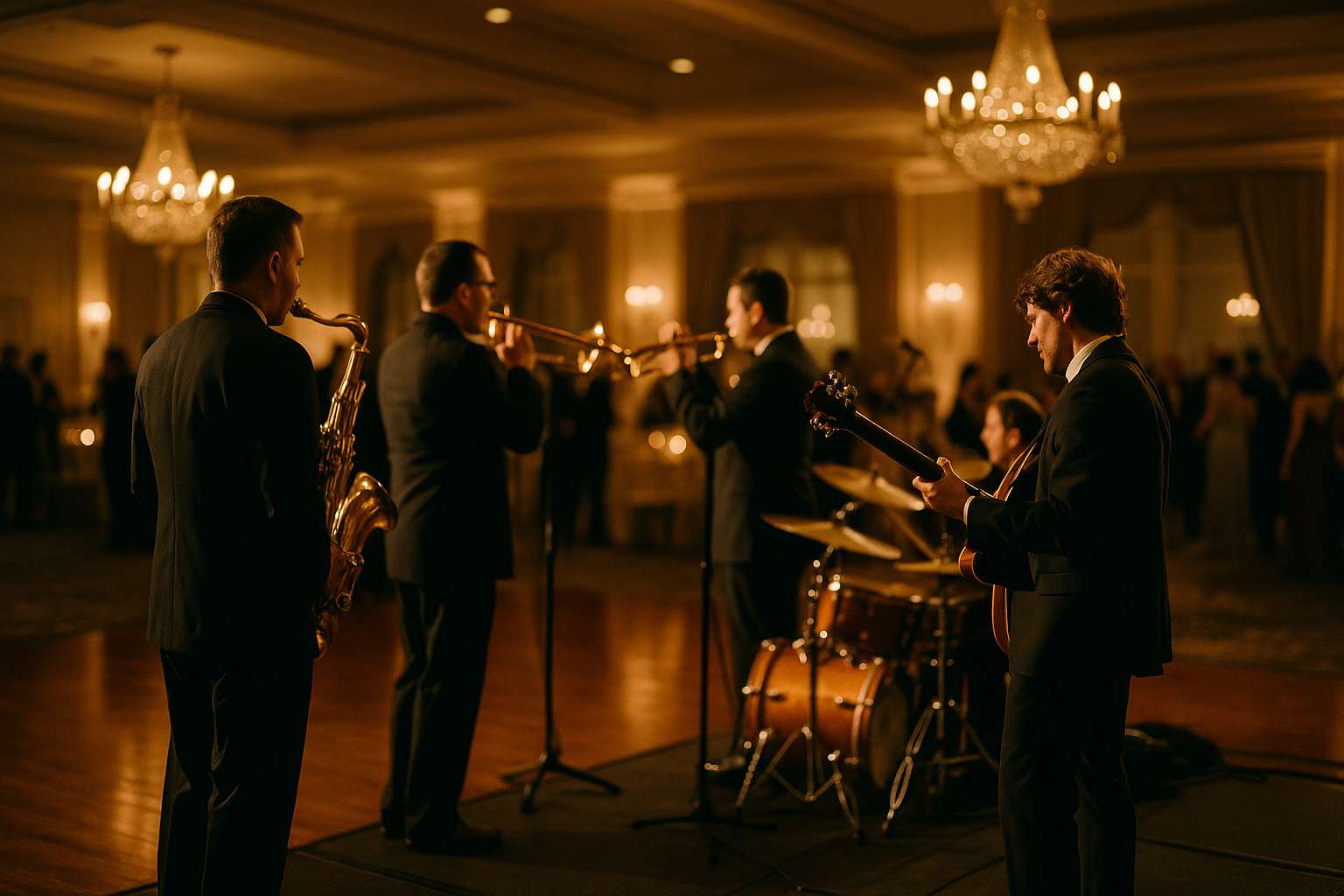
Wedding bands cost an average of $4,500–$5,000 nationally in 2026, but the real working range for professional-quality ensembles is $4,000–$12,000+ depending on band size, market, and configuration. The single largest cost driver is the number of musicians — not experience level or performance duration.
Entertainment is not a line item on your wedding budget — it is the emotional engine of your reception. The music shapes whether guests dance until midnight or drift to the bar by 9 PM. It determines whether the first dance feels like a private moment or a genuinely cinematic one. It is what guests describe when they tell friends about your wedding months later.
A live wedding band delivers something a DJ fundamentally cannot: the electricity of a shared musical performance happening in real time. According to The Knot's 2025 Real Weddings Study, approximately 30% of couples choose a live band for their reception — and among those who do, the investment is among the most consistently cited highlights of their day. Here is exactly what that investment looks like in 2026.
How much does a wedding band cost by size and configuration?
Band size is the single largest variable in wedding band pricing. Every additional musician adds their professional rate, their equipment, and their travel to the total. The following ranges reflect 2025–2026 national data from The Knot, WeddingWire, Livent Group, and Cap City Band:
| Band Configuration | Typical Cost Range | Best For |
|---|---|---|
| Solo acoustic performer | $800–$2,000 | Intimate ceremony; low-key cocktail hour |
| Acoustic duo or trio | $1,800–$3,500 | Ceremony + cocktail hour; small venue; background elegance |
| 4-to-5-piece band | $3,500–$7,500 | Full reception; the most common professional wedding configuration |
| 6-to-7-piece band | $5,000–$10,000 | Mid-size ballroom; broader repertoire; two vocalists |
| 7-to-9-piece show band | $7,500–$14,000 | Large ballroom; estate or luxury venue; concert-style experience |
| 10-piece and above | $12,000–$25,000+ | Grand receptions; full horn section; destination or luxury market |
| DJ + live saxophonist hybrid | $1,800–$3,500 | Live energy at DJ pricing; urban and contemporary aesthetic |
WeddingWire's cost guide places the overall range for wedding bands at $1,200–$7,500 with an average near $2,050 — but this average, as with all aggregated wedding data, encompasses a wide spectrum from student ensembles to professional touring acts. The professional standard that couples in competitive markets encounter is $4,000–$12,000 for a four-to-seven-piece band, per Cap City Band's industry analysis. Green Light Booking, which books top-tier wedding bands nationally, places the upper end of the professional market at $7,500–$15,000 for sought-after acts in peak markets.
What factors move the price up — or down?
Understanding the cost drivers allows you to make informed decisions about where to invest and where to reduce scope without sacrificing what matters most to your reception.
Geographic market is among the most significant variables. A four-piece professional band that costs $4,500 in the Midwest might quote $8,000–$10,000 for the same performance in New York City or Los Angeles. Regional averages from Uptown Drive's 2025 pricing analysis show Northeast markets at $4,500–$12,000 for professional bands; West Coast at $4,000–$15,000+; Midwest at $2,500–$7,500; Southwest/Texas at $3,000–$9,000 for a five-to-seven-piece ensemble.
Peak-season Saturdays in May, June, September, and October command 20–40% premiums over quoted base rates across virtually all entertainment categories. A Friday or Sunday date, or an off-season winter date, can represent a genuine 20–25% savings on the same band at the same quality level.
Custom song arrangements are billed separately by most bands — $100–$300 per new song arranged and rehearsed for your specific request. For a first dance song outside the band's existing catalog, confirm the arrangement cost explicitly before signing.
Overtime rates are among the most financially consequential contract terms and among the least carefully read. A band contract with overtime at $200–$500 per musician per hour for a nine-piece band means an extra hour of dancing costs $1,800–$4,500 beyond the base contract. Read this clause, decide whether overtime is a realistic scenario for your reception, and budget accordingly.
What does a wedding band quote include — and what costs extra?
A standard wedding band quote typically covers: all named musicians and vocalists for the contracted performance hours; basic sound equipment (speakers, monitors, microphones); MC duties for reception announcements through the band leader or lead vocalist; and load-in and breakdown within a specified window. Travel fees are frequently not included and must be confirmed separately — most bands charge $0.65–$1.00 per mile or a flat travel day rate for venues beyond their home radius, typically 30–50 miles. Production lighting, photo booths, and cold sparkler effects are almost always add-on items, priced separately at $500–$2,500 per element.
The most important question to ask when comparing quotes: what is the overtime rate per musician per hour, and is travel included? A lower base quote with a high overtime rate and a travel fee can exceed a higher base quote with overtime and travel included. Always compare total-event costs, not base rates.
How does band size affect your venue choice?
This is the dimension most couples underestimate, and it can override any other preference. A four-to-five-piece band requires a comfortable stage footprint of roughly 16 by 20 feet — not including dance floor or seating. A 10-piece ensemble needs 24 by 30 feet or more, consuming 500–700 square feet of space. In venues under 3,000 square feet, a large band's stage effectively competes with your guest experience.
Electrical requirements also diverge: a full band with amplifiers, backline gear, monitors, and production lighting may require 20–30 amps across multiple circuits, which historic buildings, loft conversions, and many outdoor tents cannot provide without bringing in a licensed electrician. Confirm electrical capacity with your venue before any entertainment commitment. A band that cannot be accommodated by your venue's infrastructure is no longer a valid choice regardless of its quality or price.
Strategies for getting more value at any budget level
Entertainment typically represents 5–10% of a total wedding budget. For couples prioritizing music and dancing, 10–15% is a sound allocation. Within that framework, the highest-value approaches at each tier:
- At $2,000–$4,000: An acoustic duo or trio for ceremony and cocktail hour, paired with a professional DJ for dinner and dancing. This hybrid delivers live music for the most photographed and emotionally resonant moments without the full-band investment for the entire evening.
- At $4,000–$7,000: A four-to-five-piece band for the full reception at an off-peak date (Friday or winter Saturday) in your market, which typically saves 20–25% compared to peak-season pricing for the same ensemble.
- At $7,000–$12,000: A seven-to-nine-piece show band for a peak-season Saturday, with overtime and travel negotiated into the base contract rather than billed separately, and the replacement musician clause protecting your specific lead vocalist in writing.
One final note from experienced planners: the best way to evaluate a wedding band is to attend a live showcase or real wedding performance — not review a highlight reel. Video editing can make a mediocre band compelling. A live performance in a real event space tells you everything the camera omits: how the vocalist connects with an audience, how the band reads a room, how their MC handles transitions, and how they fill an actual acoustic space with real sound. If a band cannot facilitate a live audition opportunity, that is a data point worth noting.
Frequently asked
What is the average cost of a live wedding band in 2026?
The national average cost of a live wedding band in the United States sits at approximately $4,500–$5,000 based on 2025–2026 data from The Knot, WeddingWire, and industry sources. However, this average spans an enormous range: WeddingWire places the typical range at $1,200–$7,500; professional band booking agencies and performing ensembles cite $4,000–$12,000 as the working range for professional-quality bands; and Livent Group reports the average cost for a three-to-six-piece band at approximately $5,000. The national average is pulled down by small acoustic duos and semi-professional groups that cost $1,800–$3,500. The true cost for a full-sized, experienced wedding show band in a competitive market is $6,000–$15,000 or more. Budget based on the specific configuration and market you are shopping, not the national average.
What is included in a wedding band's quote, and what typically costs extra?
A standard wedding band quote typically includes the musicians and vocalists for an agreed number of performance hours, basic sound equipment (speakers, monitors, microphones), and MC duties via the band leader or lead vocalist. What is frequently billed as extras: setup and breakdown time beyond what is included in the base contract (often $200–$500 per musician per additional hour); travel fees for venues beyond a set radius from the band's home base ($0.65–$1.00 per mile or a flat travel day rate); custom song arrangements for requests outside the band's existing catalog ($100–$300 per new song); overtime rates if the reception runs beyond the contracted hours; and production lighting or enhanced audio systems beyond basic setup. Always request an itemized quote and ask explicitly about overtime rates and travel fees before signing. What looks like a $6,000 quote can become $9,000 with three additional overtime hours and a travel day.
What size band do I need for my wedding reception?
For most wedding receptions, a four-to-five-piece band — lead vocalist, guitar, bass, drums, and keyboards — delivers a complete, professional sound that fills a standard ballroom or event space. This is the most common professional band configuration for weddings with budgets in the $4,000–$8,000 range. For receptions of 200 or more guests in large ballrooms, a seven-to-nine-piece show band with additional vocalists and horn sections creates a significantly more immersive experience and better fills the acoustic space. For intimate receptions or cocktail hours where atmosphere is the priority over dance-floor energy, an acoustic duo or trio ($1,800–$3,500) is entirely appropriate and often preferable. The matching principle is important: a 10-piece band in a 150-person loft space creates logistical problems and competes with the dance floor for square footage; a three-piece acoustic group in a 500-person ballroom will feel small.
How far in advance should I book a wedding band?
For peak-season Saturday dates — particularly in May, June, September, and October — top wedding bands in competitive markets book 12–18 months in advance. The Knot's planning data confirms that entertainment vendors fill their calendars faster than most couples anticipate. A reasonable target booking window is 9–12 months for peak dates; 6–9 months is typically sufficient for off-peak Fridays, Sundays, and winter dates. The cost of waiting is not just higher prices for remaining dates — it is the loss of the specific band configuration and the specific lead vocalist you want. Unlike floral or catering substitutions where a skilled professional can often refer within their network, a band contract specifies individual musicians and vocalists. Once you have confirmed your venue and date, begin entertainment research immediately.
Can I negotiate the price of a wedding band?
Some negotiation is possible, but it is more limited than in many wedding vendor categories because band pricing reflects the collective cost of multiple professional musicians, not a single vendor's discretionary margin. The most effective negotiation happens at the package level rather than the rate level: asking what is included in the base quote and negotiating add-ons — lighting packages, the second vocalist, overtime language — before signing is more likely to yield favorable terms than asking for a raw discount on the quoted rate. Off-peak dates (Fridays, winter Sundays) genuinely do command lower rates from most bands, typically 15–25% below peak Saturday pricing. Booking early gives you leverage to negotiate contract language — particularly the 'replacement musician' clause, which should guarantee your specific lead vocalist rather than a generalized substitute. These protections are most negotiable at signing and nearly impossible to add after the contract is executed.
Should I tip the wedding band?
Yes — gratuity for live musicians is expected and appreciated. The standard is $50–$100 per musician in cash at the end of the reception, delivered through your wedding coordinator or a trusted family member in pre-prepared envelopes. For a five-piece band, that means budgeting $250–$500 in gratuity; for a nine-piece show band, $450–$900. Some couples tip a percentage of the total band fee (15–20%) rather than a per-musician flat amount, which yields similar results at the same scale. Build gratuity into your entertainment budget from the beginning — it is a professional expectation, not optional, and discovering it has been omitted from the budget at the week-before planning stage creates unnecessary stress. Pre-prepare the envelopes before the wedding day.
What should I watch out for in a wedding band contract?
Read the 'replacement musician' clause carefully — some band agency contracts allow substitution of any musician, including the lead vocalist, without notice. Insist on a clause that guarantees your specific lead vocalist and at least 75% of the musicians you auditioned, or requires your written approval for any substitution. Confirm the overtime rate explicitly: a $6,000 band whose contract reads '$800 per musician per overtime hour' becomes dramatically more expensive if your reception runs long. Verify the load-in and setup time requirements: a band that needs three hours of setup access requires contractual coordination with your venue. Confirm what happens if the band cancels — a force-majeure clause and a replacement guarantee from the agency are appropriate protections at this price point. Finally, confirm that your specific song requests — particularly the first dance — are in writing as part of the agreed performance, not a verbal understanding.