Reception & Parties
Wedding Music Timeline: Every Segment from Prelude to Last Dance
A complete song-by-song, segment-by-segment guide to planning music for every moment of your wedding day — from the first note guests hear as they find their seats to the final song that sends you into married life.
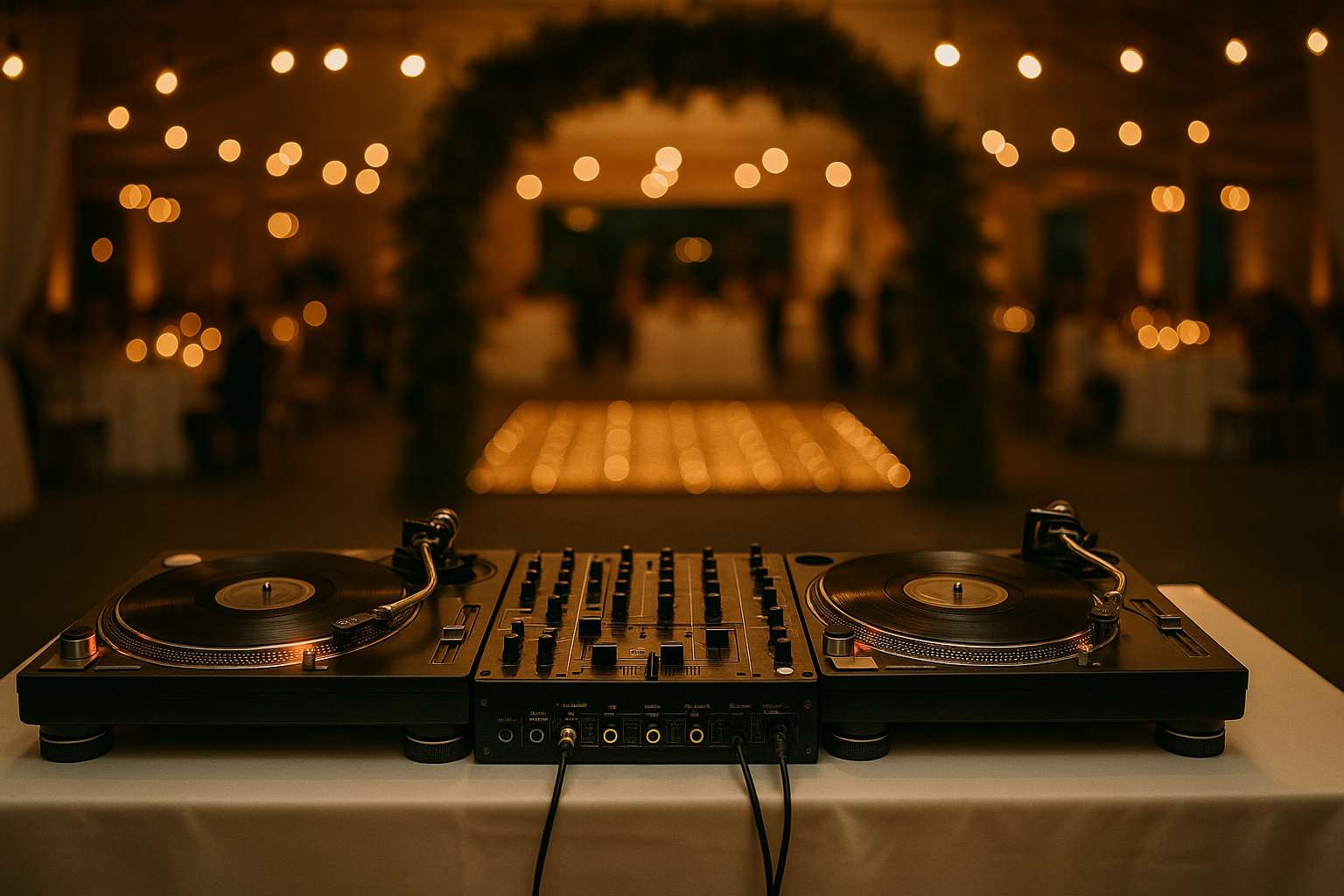
A full wedding day requires 75 to 120 songs across eight distinct musical segments, from the ceremony prelude through the last dance. Plan the ceremony music and special dances personally; give your DJ directional guidance for the rest. The single most important rule: cluster all formalities into the first 75 minutes and open the dance floor by 8:30 PM at the latest.
Why does a wedding music timeline matter so much?
Music is the only sensory element of a wedding that is experienced continuously from the moment guests arrive until the moment they leave. The flowers are noticed as people walk in and then recede into the background. The food is present for a single hour. But music is the constant emotional current running beneath every moment of the day — and how it flows through those moments determines, more than almost any other variable, whether guests describe your wedding as extraordinary or merely pleasant.
According to Uptown Drive's 2026 wedding timeline guide, approximately 70 percent of couples who hire a professional DJ for their wedding do not provide a detailed segment-by-segment music brief — they send a playlist and leave the structural decisions to the entertainer. The result is almost always acceptable. But the couples whose receptions feel genuinely memorable — the ones where people clear their chairs, fill the floor, and stay until the last song — are almost always the ones who planned the music timeline deliberately and briefed their entertainer specifically.
This guide gives you that deliberate plan.
What are the eight segments of a wedding music timeline, and what does each one need?
| Segment | Duration | Songs Needed | Volume (dB) | Energy Level |
|---|---|---|---|---|
| Prelude (guest arrival) | 20–30 min | 5–8 | 65–70 | Warm, conversational ambient |
| Processional (grandparents, wedding party, bride) | 5–10 min total | 2–4 | 70–75 | Stately, building to emotional peak |
| Ceremony interludes | Variable | 3+ | 65–70 | Intimate, devotional |
| Recessional | 1–2 min | 1 | 75–80 | Joyful, celebratory peak |
| Cocktail hour | 60–90 min | 15–20 | 65–70 | Sophisticated, conversation-friendly |
| Dinner service | 45–75 min | 15–20 | 60–65 | Atmospheric, gradually building |
| Special dances + formalities | 15–30 min | 3–5 | 75–80 | Intimate then celebratory |
| Open dancing through last dance | 2–2.5 hours | 30–50 | 85–95 (dance floor) | Building, sustained, triumphant close |
The Prelude: Your guests' first impression
The prelude begins 20 to 30 minutes before the ceremony starts, as guests are finding their seats and the space is filling. Its job is to establish tone, convey that something meaningful is about to happen, and create enough warmth that guests feel welcomed without feeling performed at. Volume should sit comfortably below conversation level — guests should be able to greet each other naturally.
Classical selections (Bach, Pachelbel's Canon in D, Vivaldi), instrumental covers of meaningful contemporary songs, and soft jazz all work beautifully for prelude music. Prepare 5 to 8 songs, knowing the set may run longer if guests arrive early or ceremonies start late. Avoid anything with jarring energy changes or aggressive dynamics — the prelude is not the place for a statement, it is the place for a welcome.
The Processional: Three distinct musical moments
Most couples treat the processional as a single musical event, but it is actually three: the seating of grandparents and parents (typically 1 to 2 songs, soft and stately), the entrance of the wedding party (1 to 2 songs, slightly more energy), and the bride's entrance (1 dedicated song, typically the most emotionally significant). Each deserves individual attention.
For the bride's processional, the most important preparation step is walking the aisle with a timer running and a sense of the desired pace. Most aisles take 60 to 120 seconds at processional speed. Share that timing with your DJ or musician so the song can be cued to a specific starting point — ensuring the most meaningful section of the music plays precisely during your walk, rather than beginning with a long instrumental intro that resolves to something beautiful three seconds after you have already arrived at the altar.
The 2025–2026 trend in processional music has moved meaningfully toward acoustic covers of contemporary songs alongside classical selections. The Kina Grannis acoustic cover of 'Can't Help Falling in Love,' Hozier's 'From Eden,' and Stephen Sanchez's 'Until I Found You' are among the most frequently chosen processional songs for brides in their late twenties and thirties who feel a stronger emotional resonance with this repertoire than with Pachelbel. Neither choice is more or less valid — both work — but the contemporary acoustic option has been the stronger growth trend in 2024 through 2026.
Cocktail hour: The most under-planned segment
Of all eight segments, cocktail hour is most consistently under-planned and under-resourced — yet it is the period when your guests form their first impression of the reception's tone and quality. It is also frequently the segment during which the couple is occupied with portraits, making it entirely autonomous from any of your real-time influence.
A 60 to 90-minute cocktail hour requires 15 to 20 songs — more if the catering team runs late and the hour stretches to 90 minutes, which is common enough to plan for. Volume should sit at 65 to 70 decibels: audible and creating atmosphere, but never loud enough to require guests to raise their voices. The mood should be sophisticated and welcoming — jazz, bossa nova, acoustic covers of pop standards, and warm upbeat folk all accomplish this beautifully. Live music (a guitar-and-vocals duo, a jazz trio, a string duo) at cocktail hour delivers disproportionate emotional impact relative to cost because it is the most photographed and socially experienced segment outside the ceremony. According to Boston Common Band's 2026 wedding music trends report, retro soft-rock and yacht-rock tribute sets have been gaining significant ground at cocktail hours, offering a warm and conversational energy that resonates across age demographics.
Open dancing: The heart of the reception
The open dancing segment is where your wedding music investment is most directly tested. A skilled DJ or band can sustain energy and fill a floor for two to two and a half hours; a poor entertainer can empty the room within forty minutes despite a strong playlist. The difference is in crowd-reading — the ability to pivot tempo, genre, or energy level in real time based on what the floor is telling you.
The genre-rotation principle that professional DJs consistently cite: never play more than three songs from the same era or genre consecutively. After three consecutive similar songs, guests who do not connect with that repertoire drift toward the perimeter or return to their tables. A brief pivot — one throwback anthem, one current hit, one crowd singalong — refreshes the floor and pulls people back. A well-programmed two-hour dancing set feels like it moved effortlessly through the evening; the management behind that feeling is active, skilled, and essentially invisible.
In 2026, the songs that consistently fill dance floors across markets and demographics include: Earth Wind and Fire's 'September,' Beyoncé's 'Crazy in Love,' Usher's 'Yeah!,' Journey's 'Don't Stop Believin',' and nearly any Taylor Swift anthem from her post-2019 catalog. The Killers' 'Mr. Brightside' has maintained its status as the most reliably universal singalong request across every market and demographic for the third consecutive year. Plan your last dance as intentionally as your first — the final song is the emotional closing note of the entire day.
How do you brief your DJ or band for maximum results?
The most effective entertainment brief is structured around three lists and a segment-by-segment directional note. Provide your DJ or band with these materials at least three to four weeks before the wedding, not the night before.
The must-play list (10 to 15 songs): non-negotiable tracks that are directly tied to your relationship, your story, or deeply important to key guests. These can span segments — one for the processional, one for the first dance, a handful for the open dancing set.
The do-not-play list (5 to 10 entries, specific tracks or genre-level): genuine deal-breakers. Songs with negative personal associations, genres that conflict with your values or key guests' experience, or tracks you know would remove certain guests from the floor. Keep this list tight — it should contain genuine prohibitions, not personal preferences.
The directional brief: one to three sentences per segment describing the mood and energy you want. For example: Ceremony: classical and acoustic contemporary, reverent. Cocktail hour: sophisticated jazz and acoustic pop, conversational. Dinner: warm cross-generational, gradually building energy. Dancing: 90s-heavy opening, current hits through the middle, nostalgic close.
Send these materials via email in a clean document — not in a text message thread or a voice note — so your entertainer can print them, annotate them, and bring them to the wedding. A well-prepared entertainer reads this brief and builds the rest from it; an ill-prepared one is reading it for the first time on the wedding morning.
Frequently asked
How many songs do you need for an entire wedding day?
A complete wedding day — covering ceremony through reception — typically requires between 75 and 120 songs in total, though your DJ or band handles the majority of that with your directional guidance rather than a specific song-by-song mandate. Here is a practical breakdown: 5 to 8 songs for the ceremony prelude; 2 to 4 songs for the processional; 3 or more for ceremony interludes; 1 recessional; 15 to 20 for cocktail hour; 15 to 20 for dinner service; 3 to 5 special dances (first dance, parent dances); and 30 to 50 for open dancing. The ceremony and special dance songs you should select personally with care. For cocktail, dinner, and open dancing, you are best served providing your DJ or band with directional preferences — a genre and energy description, a must-play list of 10 to 15 specific songs, and a do-not-play list — rather than mapping every song individually. Micro-managing a complete playlist constrains your entertainer's ability to read the room in real time, which is exactly where their professional skill creates the most value.
What should the processional music be, and how do I time it to the aisle?
The processional is one of the most emotionally weighted musical moments of the entire day, and it requires more practical preparation than most brides give it. Walk the aisle at a measured, deliberate pace — approximately one step every two beats of a four-four time song — and time how long it takes you to reach the altar from the entrance point. Most aisles take between 60 and 120 seconds at processional pace. Choose a song whose most meaningful section (usually the verse or chorus you most want to hear as you walk) falls within that window. Ask your DJ or musician to prepare a version that begins from a specific cue point, or to gently loop or fade the intro if needed. Popular 2025–2026 processional choices that work beautifully in this format include: the Kina Grannis acoustic cover of 'Can't Help Falling in Love,' 'A Thousand Years' by Christina Perri, 'Until I Found You' by Stephen Sanchez, and classical selections like Bach's 'Jesu, Joy of Man's Desiring' — all of which have pacing and emotional arcs well-suited to a processional walk.
What is the right volume level for each part of the wedding?
Volume calibration is one of the most practical and most commonly neglected aspects of wedding music planning — and a DJ or band that handles it well makes the entire day feel more sophisticated and considered. During the ceremony prelude as guests are seated, music should sit at approximately 65 to 70 decibels — clearly audible, creating atmosphere, but allowing guests to greet each other and find their seats without straining to be heard. Cocktail hour should hold the same range, never louder than conversation. During dinner service, drop slightly below cocktail-hour volume; the goal is pleasant ambient sound rather than foreground entertainment. Open dancing can and should be louder — around 85 to 95 decibels in the dance-floor area — because the energy and immersive quality of the music is what fills the floor. A DJ who knows how to modulate volume across these phases creates an experience that feels intentional and flowing; one who runs everything at maximum volume exhausts guests and erodes the dance-floor energy well before midnight.
When should open dancing begin, and how do we keep the floor full?
Open dancing should begin no later than 90 minutes into your reception, and ideally closer to 60 minutes after the guests are seated. Every minute of delay beyond that point represents energy that quietly dissipates. The most effective timeline structure clusters all formalities into a single block: grand entrance, first dance, parent dances, and toasts delivered consecutively, without breaks between them, in the first 60 to 75 minutes. Serve dessert or cake just before the floor opens — the physical movement of people getting dessert creates a natural transition toward the dance floor. Once the floor opens, your presence on it is the most powerful variable in whether others join. Couples who dance early and enthusiastically fill their floors; couples who stand at the edge talking fill their floors with emptiness. Ask your wedding party to be on the floor for the first three songs without exception — a floor with ten people dancing will pull the rest of the room in within two songs.
Should I give my DJ a full song-by-song playlist, or just a style direction?
Provide a must-play list of 10 to 15 specific songs, a do-not-play list of 5 to 10 specific songs or genre-level restrictions, and a directional brief for each phase of the evening — then trust your DJ to fill the remaining space with their professional judgment. A playlist of 50 or more mandatory songs effectively turns a skilled DJ into a jukebox and eliminates their ability to read the room in real time, which is precisely where the best professionals create the most value. The 10 to 15 must-plays give the DJ a clear window into your musical identity and your guests' likely tastes; the do-not-play list protects you from surprises; the directional brief (for example: 'cocktail hour: jazz and acoustic; dinner: something warm and cross-generational; dancing: 90s nostalgia into current pop') gives them a framework they can build from intelligently. DJs who have prepared well for your wedding typically spend 10 to 15 hours on preparation per event — they need enough space to apply that preparation creatively.
What are the biggest wedding music trends for 2026?
The clearest 2026 trends in wedding music reflect a broader cultural pull toward warmth, authenticity, and the emotional resonance of shared reference points. According to industry data from The Boston Common Band and The Knot, nearly half of 2026 couples are including at least one Taylor Swift song in their wedding programming. 90s and early-2000s nostalgia continues to dominate dance floors — Earth Wind and Fire's 'September,' Beyoncé's 'Crazy in Love,' and Usher's 'Yeah!' are among the most consistently requested songs across markets and demographics. For ceremony music, acoustic covers of contemporary songs — particularly 'Can't Help Falling in Love' in its various acoustic versions and Stephen Sanchez's 'Until I Found You' — are replacing traditional classical processionals for many couples, especially those in their late twenties and thirties who feel a stronger connection to this repertoire. String quartet covers of current pop songs (Taylor Swift, Coldplay, Shawn Mendes) have grown significantly as a ceremony option, blending live-music elegance with familiar contemporary melodies. And the hybrid entertainment model — live musicians for ceremony and cocktail hour, DJ for reception — continues to be the fastest-growing format in 2025–2026.