Reception & Parties
Wedding Reception Table Shapes: The Complete 2026 Guide
The table shape you choose determines how your guests converse, how your florals are arranged, how your photographer shoots the room, and how your reception feels. A complete guide to every option — rounds, banquet, serpentine, square, and mixed configurations — with real space calculations and the 2026 trends reshaping how receptions are designed.
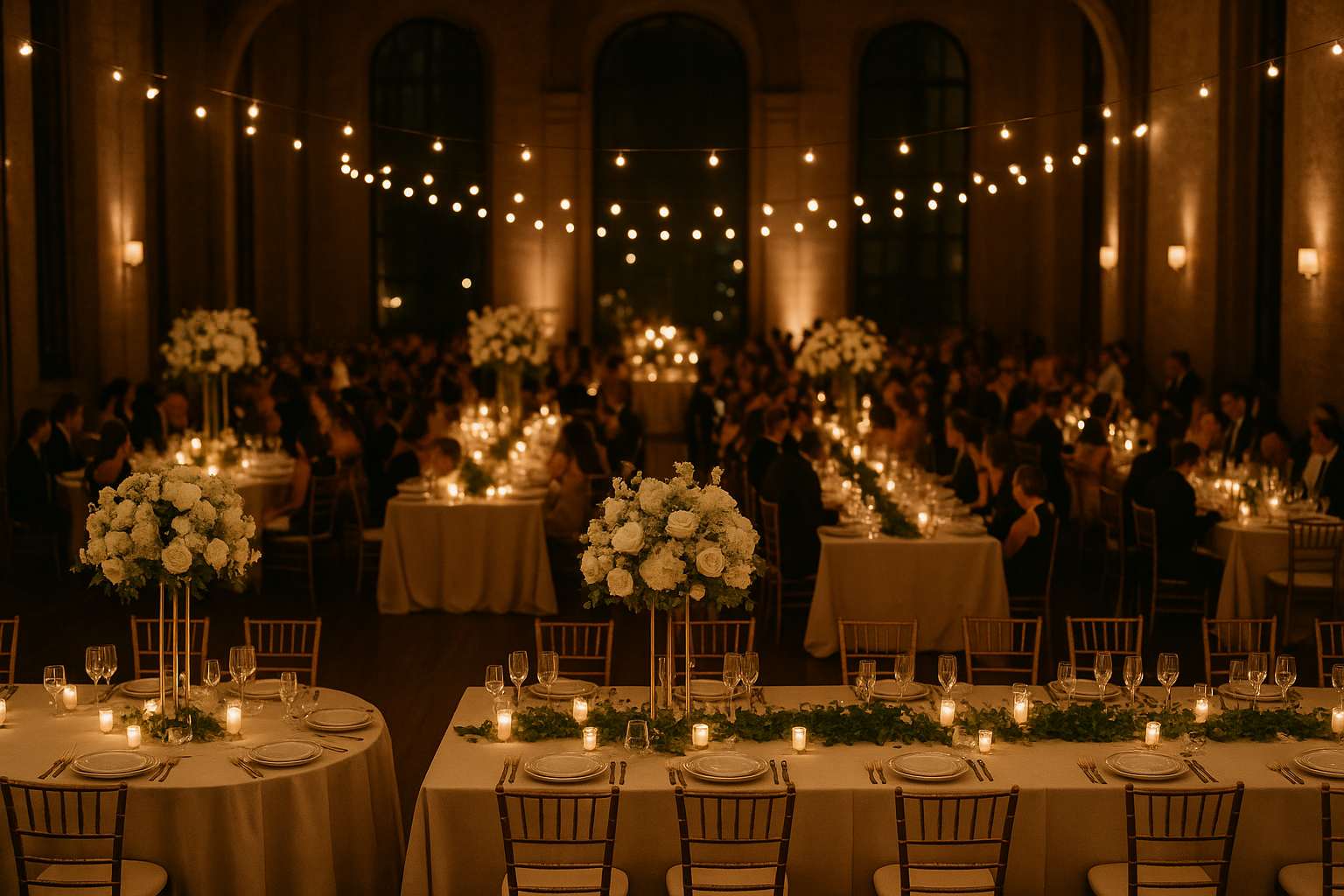
Round tables remain the most versatile choice for most formal receptions above 80 guests. Long banquet tables create intimacy for smaller gatherings and barn venues. Serpentine and mixed configurations are the defining 2026 trend — visually spectacular, but requiring 20-35% more floor space and higher rental costs. Match the shape to your venue, guest count, and aesthetic before falling in love with a trend.
Of all the design decisions in a wedding reception, table shape is among the most consequential and least discussed during early planning. It affects how guests interact with each other (round tables encourage conversation among eight; banquet tables run it the length of the room). It shapes how your florist designs centerpieces. It determines how your photographer composes room shots. It governs how your catering team circulates and serves. And it sets a fundamental tone — communal feast, formal seated dinner, design-forward installation — that no amount of floral or lighting investment can override if the underlying structure works against it.
According to Amy Abbott Events, a leading event design firm, 2026 represents a genuine rethinking of what a reception table is supposed to do: "The table is no longer being treated as a surface for a centerpiece — it is being designed as a complete composition in which every element contributes to a larger visual and experiential story." Here is what every major table shape option looks like in practice.
What are the main wedding reception table shapes and which works best?
| Table Shape | Typical Seating | Space Required | Best Venue Type | Floral Style |
|---|---|---|---|---|
| 60-inch round | 8–10 guests | 100–120 sq ft per table | Ballroom, estate, traditional | Tall statement, low lush centerpiece |
| 72-inch round | 10–12 guests | 120–140 sq ft per table | Large formal receptions | Tall statement; conversation at distance |
| 6-foot banquet | 6–8 guests | ~144 sq ft per table | Barn, industrial, rustic | Low runner of greenery and seasonal flowers |
| 8-foot banquet | 8–10 guests | ~168 sq ft per table | Communal-dining concept | Low runner or candle-forward installation |
| Serpentine / wave | Varies by length | 20–35% more than equivalent straight | Design-forward; large open venues | Organic, asymmetrical, trailing installations |
| Square | 4–8 guests | Similar to round | Modern, minimalist, architectural | Geometric, structured arrangements |
| Mixed configuration | Varies | Requires custom calculation | Any venue with planning attention | Unified through consistent linen and floral |
How does each shape affect the guest experience?
Round tables are the most socially generous shape for a formal wedding. The circular form places all guests facing the center, creating eye contact and conversation without directional bias. A 60-inch round seats eight guests at a comfortable distance; a 72-inch round seats ten to twelve but requires guests to raise their voices to reach the opposite side — which is why event designers consistently recommend the 60-inch over the 72 when the choice is available. Per veteran event planner guidance: "Guests at a 5-foot table connect; guests at a 6-foot table strain to hear each other."
Banquet and harvest tables create a fundamentally different social dynamic. Conversation flows primarily with immediate neighbors rather than across the whole group — which means table seating becomes more consequential, since guests who do not know each other and are placed side by side will have a longer evening than those seated at a round table where four different conversations may emerge simultaneously. The upside is that long tables feel intimate and convivial for guests who do know each other, and the communal-feast format of passing shared dishes works most naturally at this configuration.
Serpentine tables are neither fully round nor fully straight — they create flowing curves that encourage organic movement through the room and produce a reception space that feels more like a living, breathing environment than a static dining arrangement. The social dynamic is closest to banquet, but the visual experience is dramatically different. According to WeddingRSVP.org's 2026 layout guide, serpentine configurations are now among the most-requested layouts at design-forward venues, though the 20 to 35% space premium and higher rental costs remain meaningful practical constraints.
What are the 2026 trends shaping reception layouts?
Five directions define reception design in 2026:
1. Mixed configurations as the standard. The single-shape room — all rounds or all banquet — is giving way to intentional mixing. A serpentine or long harvest table serves as the design focal point and houses immediate family or the wedding party; standard rounds handle the efficient guest-seating majority. This combination captures the drama of non-traditional shapes while keeping service, logistics, and cost manageable.
2. Sweetheart tables over full head tables. The full wedding-party head table — a long row of chairs all facing the guest room — continues its decline in favor of the sweetheart table, which seats only the couple. This gives the couple privacy during dinner, allows wedding party members to sit with their dates and families, and creates a more romantic visual focal point.
3. Lounge zones integrated into the dining footprint. Sofas, armchairs, and coffee tables placed alongside or among dining tables — particularly near the bar or on the dance floor perimeter — reflect a shift toward hospitality-style dining that functions as a destination rather than a staged event. These lounge elements reduce the total dining table count needed and create flexible secondary spaces for conversation.
4. Beverage experience zones replacing standalone bars. The single bar station is giving way to distributed beverage moments — a cocktail curation cart near the dance floor, a champagne tower at the sweetheart table, a specialty coffee station in a quieter lounge corner. These destination moments shape how guests move through the space and contribute meaningfully to the overall floor plan design.
5. Overhead and aerial photography shaping design decisions. As drone shots and overhead venue photography become standard in wedding coverage, couples and planners are increasingly making layout decisions with the bird's-eye view in mind. Serpentine tables read as spectacular from above; standard all-rounds configurations are more expected. If overhead photography matters to you, discuss the floor plan with your photographer before finalizing it with your venue.
Space planning: the numbers that matter
The most common reception planning mistake is underestimating how much floor space a layout requires once chairs are pulled out and guests are moving. Here is the quick formula for a full-service reception where guests dine and dance:
- Dining footprint: 18 to 21 square feet per guest
- Dance floor: (Guests ÷ 2) × 4.5 square feet for 50% participation
- Bar stations: one station per 75 to 100 guests; allow 100 to 150 square feet per station
- Stage or DJ area: 100 to 400 square feet depending on entertainment
- Service circulation: minimum 36 inches primary aisles; 48 inches catering corridors
For 150 guests: approximately 2,700 to 3,150 square feet of dining, 300 to 400 square feet of dance floor, and 400 to 600 square feet for bar, stage, and specialty stations — totaling roughly 3,400 to 4,150 square feet before service circulation. Add 15% to any vendor-quoted square footage estimate to account for actual consumption when guests begin moving.
Free digital floor plan tools through Zola, The Knot, and AllSeated allow couples to test configurations before committing. For large or complex layouts, AllSeated's spatial planning tools provide scaled 3D visualization that catches space planning errors early — before the flowers are ordered and the linen is cut. The floor plan distributed to every vendor three weeks before the wedding is the document that prevents the most common day-of surprises. Every vendor should receive the same version; a caterer and florist working from different room configurations is a recipe for chaos that a printed, confirmed, distributed floor plan entirely prevents.
Frequently asked
What is the best table shape for a wedding reception?
There is no single best table shape — the right choice depends on your guest count, venue dimensions, aesthetic goals, and catering style. Round tables (60-inch diameter, seating 8 to 10) remain the most popular choice for formal and semi-formal weddings above 80 guests because they encourage eye contact and conversation, pack efficiently into most room shapes, and work with nearly every catering style and floral arrangement. Long banquet or rectangular tables are strongly preferred for barn venues, intimate or communal dining concepts, and smaller guest counts where the shared-table atmosphere feels warm rather than sparse. Serpentine or wave tables are the defining trend of 2025 to 2026 — they create visual drama, photograph beautifully from above, and encourage organic guest movement, but require 20 to 35% more floor space than equivalent straight tables and carry higher rental costs.
How much space does each table shape require?
Space planning is the most practically important variable in table selection, and the numbers differ meaningfully by shape. A 60-inch round table requires approximately 100 to 120 square feet of total floor space including chair pull-out room and a service aisle — that is the table footprint plus the walking clearance that allows servers to circulate and guests to push back their chairs. A 6-foot banquet table requires approximately 24 square feet per seat including service access, or roughly 144 to 168 square feet for an 8-seat table. Serpentine table sections require planning a 20% floor space premium over an equivalent straight configuration because the curves consume corner space that straight runs do not.
What are serpentine tables and are they right for my wedding?
Serpentine tables are curved or S-shaped table sections that create flowing, wave-like configurations in a reception space. They are the most-discussed layout trend in wedding design for 2025 to 2026, driven by their dramatic visual quality — particularly in aerial drone photography and overhead venue shots — and their ability to create organic movement through a room in ways that straight table rows do not. Serpentine tables encourage mingling, feel less formally regimented than parallel rows of rounds, and give florists an organic canvas for asymmetrical centerpieces and trailing greenery installations that follow the curve. The practical considerations: serpentine sections cost significantly more to rent than standard banquet tables (budget an additional 20 to 35% for table rentals), require more floor space per guest, and create more complex service paths for catering teams.
Can you mix different table shapes at a wedding reception?
Yes — and mixed configurations are the dominant design direction in elevated wedding reception planning as of 2025 to 2026. Combining shapes, when done with visual intention, produces rooms that feel curated and alive rather than institutional. The most common and visually successful combinations: a serpentine or long harvest table for immediate family as a central design statement, with standard 60-inch rounds accommodating the remaining guest seating; or a long sweetheart table flanked by rounds — which creates a visual focal point while keeping practical service efficient for the majority of guests. The key to mixed configurations is cohesion: consistent linens, a unified floral aesthetic, and matching tabletop details (chargers, glassware, candleholders) that tie disparate shapes together visually. Couples who mix shapes without a consistent visual language create rooms that read as accidental rather than designed.
What table shape works best for small or intimate weddings?
For guest counts below 60, the traditional all-rounds model often loses its warmth — round tables for 8 to 10 in a half-empty room can feel sparse and formal in an uncomfortable way. Small weddings are where the long communal table approach genuinely excels. A single long harvest or banquet table, or two parallel long tables, creates a family-style dinner atmosphere that feels intentional and intimate at any guest count. Single-table configurations for 20 to 40 guests are particularly beautiful when matched with a farm-to-table or feast-style meal service — guests pass dishes, conversation flows naturally across the full length of the table, and the event feels like a celebration rather than a seated function. A long table also concentrates your floral investment into a single runner installation, which is often more visually dramatic per dollar than spreading the same budget across multiple round centerpieces.
Does the table shape affect the photography and florals?
Significantly. Photographers who cover a wide range of reception layouts report that serpentine and mixed-shape rooms are among the most photogenic from an aerial or elevated perspective — the curves and organic flow of the configuration create a visual composition that standard all-rounds layouts rarely match in overhead shots. Long banquet tables photograph well in a specific way: they draw the eye through the frame and create a sense of depth and intimacy in perspective shots taken from one end of the table. Round tables are the most flexible for portrait-style detail photography — the circular frame of a centerpiece and place settings is compositionally versatile and works in both close-up and wide shots.