Reception & Parties
Wedding Usher Duties: The Complete Briefing Guide
Ushers are the first faces guests see, the people who seat grandmothers gracefully and manage the unexpected quietly. Here is exactly what they do — and how to brief them so they can do it well.
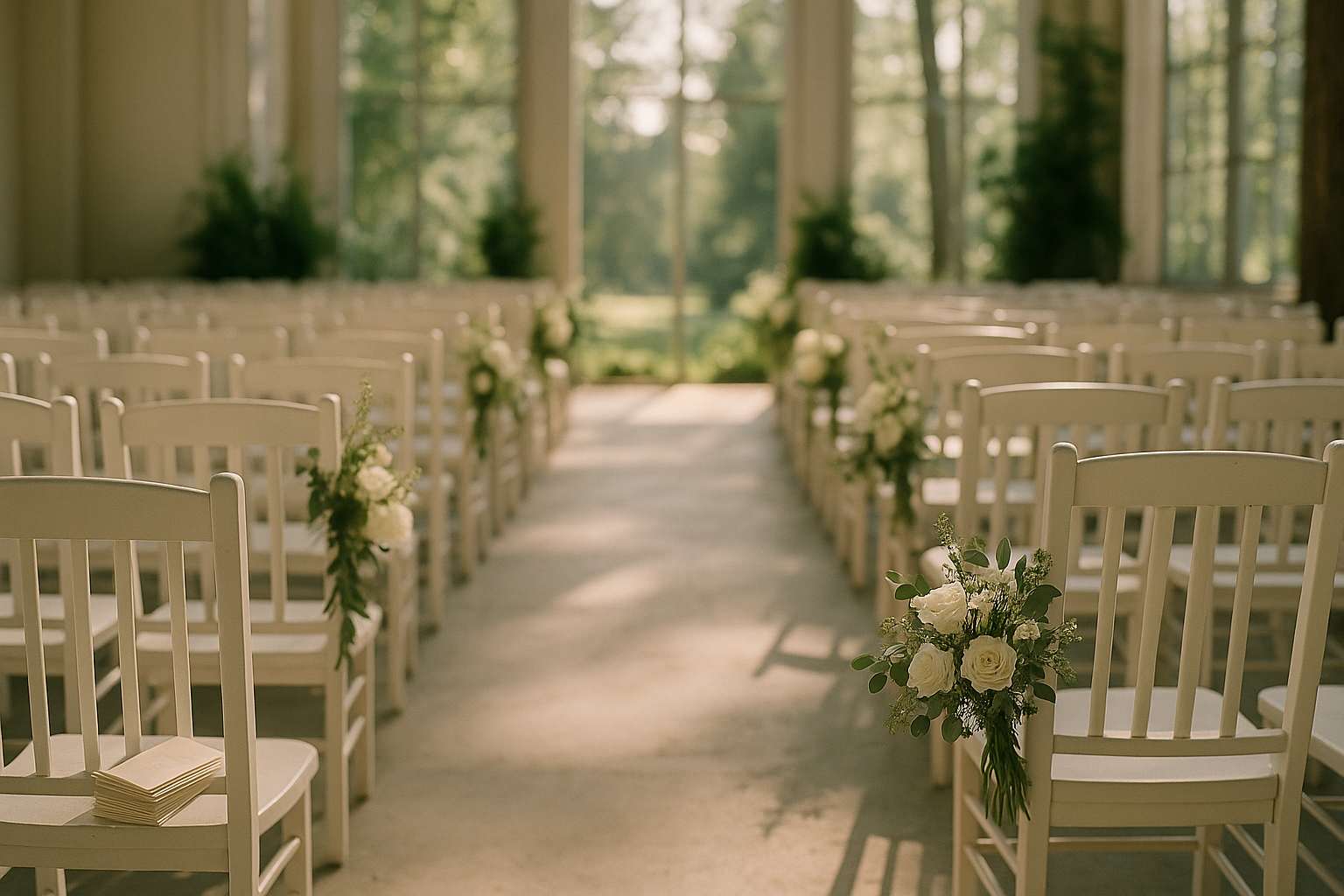
Wedding ushers greet guests, escort them to seats, distribute programs, manage reserved rows, and handle late arrivals and special situations — all before the processional begins. The standard ratio is one usher per 50 guests, and they should be briefed thoroughly at the rehearsal, not the morning of the wedding.
Why does the usher role matter so much?
The usher is the most underappreciated member of the wedding party — and the one whose absence is felt most immediately. While the maid of honor, the best man, and the bridesmaids walk in photographs and stand at the altar, it is the usher who shapes the first experience every guest has of the entire day. Before the music starts, before the processional, before the vows — every arriving guest passes through an usher's hands. According to The Knot's wedding party guide, ushers are among the most guest-facing roles in a wedding, and a well-briefed usher team transforms arrival from a confusing shuffle into a warm, organized welcome.
The usher is also the person who handles what most of the wedding party cannot: real-time improvisation. When a grandmother arrives late in a mobility scooter and needs a specific seated position, when two estranged relatives appear at the same moment and must be separated gracefully, when the left side fills to capacity and the right side still has rows empty — these are usher problems to solve in real time, quietly, without involving the couple. That combination of hospitality, logistical intelligence, and discreet problem-solving is exactly what good ushers provide.
Who should serve as a wedding usher?
Ushers are typically close friends or extended family members of the groom — people who are important to the couple but may not have a place in the formal wedding party. It is also a meaningful role for a sibling or cousin who wants a defined responsibility beyond simply sitting in a pew. The qualities that make an exceptional usher: warmth with strangers, patience under pressure, physical ability to escort guests of varying mobility, and the emotional maturity to navigate sensitive family dynamics without making them worse.
Ushers do not need to be groomsmen, and groomsmen do not automatically become ushers. At smaller weddings — roughly 100 guests or fewer — groomsmen often serve both functions simultaneously, standing at the altar during the ceremony and assisting with seating during the pre-ceremony period. At larger weddings, the roles are typically divided: the groomsmen hold their place in the wedding party while a dedicated usher team manages the floor.
| Guest Count | Recommended Ushers | Notes |
|---|---|---|
| Under 50 | 1–2 | Groomsmen can double as ushers |
| 50–100 | 2 | One dedicated usher per 50 guests |
| 100–200 | 2–4 | Assign entrance and seating lanes |
| 200–300 | 4–6 | Divide by section or family side |
| 300+ | 6+ | Zone-based system; supervisor usher recommended |
What are the full duties of a wedding usher, step by step?
Arrive 45–60 minutes before the first guest is expected. This is not optional. An usher who arrives when guests are already milling about without direction has already failed the first assignment. Use the early arrival time to collect programs from where they are stored, confirm which rows are reserved and for whom, walk the space to know where the restrooms, accessible entrances, and parking are, and meet the lead coordinator or venue contact to confirm logistics for the morning.
Greet every arriving guest. Stand near the ceremony entrance — not inside, not hidden to the side. Be visible. As each guest arrives, offer a warm greeting by name if you know them, or simply with eye contact and a smile. Ask: "Will you be sitting on the bride's side or the groom's side?" For guests who knew both partners equally well, the simple answer is to seat them on whichever side has more empty rows.
Escort guests to their seats. For women arriving alone, offer your right arm and walk them to the row. Her companion, if any, follows one step behind. This practice is rooted in hospitality, not formality — it makes people feel genuinely welcomed and looked after rather than left to hunt for a seat on their own.
Distribute programs. Hand one program to each guest as you escort them, or position a program on each seat as guests are arriving. If programs run short, alert the coordinator immediately rather than continuing to distribute until they are gone.
Manage reserved seating. Rows 1 and 2 on each side are traditionally reserved for immediate family. These rows should be clearly marked with ribbon, florals, or reserved cards at the end of each row. Grandparents of the couple receive the most prominent reserved seats and should always be escorted by a family member or designated usher rather than finding their own way. Remove reserved markers once those family members are seated, so late-arriving guests do not continue to avoid the front rows unnecessarily.
Seat immediate family in the correct sequence. The ceremonial seating order for immediate family — in a traditional Christian ceremony — begins with the groom's grandparents, then the bride's grandparents, then the groom's mother, and finally the bride's mother, whose seating is the signal that the ceremony is about to begin. Deviations from this order can create unintentional slights; review the correct order with the couple at the rehearsal and follow it precisely.
Handle late arrivals after the processional begins. When the processional music starts, stop seating guests in the main aisle. Any guests who arrive after the processional begins should wait at the entrance with an usher until the bridal party is fully positioned and the officiant begins speaking. Then escort latecomers quietly to the nearest back rows using a side route, not down the main aisle. Move without drawing attention and settle them quickly.
Assist guests with special needs. Elderly guests, guests with mobility devices, guests carrying infants — these individuals benefit most from a genuine escort. Know where the accessible entrance is located. Know which rows are easiest to reach without navigating stairs. Know which seats offer the most space. This is not a formality; it is genuine hospitality in practice.
Dismiss guests after the ceremony. Once the recessional concludes and the wedding party has exited, ushers signal the guest dismissal. Begin from the front rows and work backward, row by row. This prevents a crush of 150 people attempting to exit a single door simultaneously and allows family members near the front to transition smoothly into the receiving line or post-ceremony gathering.
How should you brief ushers at the rehearsal?
Ten well-spent minutes at the rehearsal is worth infinitely more than a three-minute briefing on the morning of the wedding. Gather all ushers together at the rehearsal and walk through the following: the seating protocol for each side of the aisle, the names and descriptions of any reserved-row family members, any sensitive family situations that require separation or sensitivity, the location of accessible entrances and restrooms, the processional start signal and what to do with latecomers, and who is the point of contact if something unexpected arises.
Give each usher a small printed reference card with the reserved row assignments and any family notes. This takes fifteen minutes to prepare and prevents the situation where a well-meaning usher accidentally seats someone's estranged ex-partner one row behind their former spouse. The couple has enough to manage on the wedding day; a properly briefed usher team removes an entire category of potential stress from their plate.
Frequently asked
What is the difference between a wedding usher and a groomsman?
A groomsman stands with the groom at the altar and appears in formal wedding party photographs. An usher focuses on guest-facing duties during the ceremony — greeting arrivals, escorting guests to seats, distributing programs, managing reserved rows, and directing traffic. At smaller weddings, groomsmen frequently serve both functions at once. At larger weddings, the roles are typically distinct: the groomsmen stand at the altar while a dedicated usher team runs the pre-ceremony floor. If you are deciding whether to separate the roles for your wedding, a general guideline is that 100 guests or fewer can usually be served by groomsmen doubling as ushers; above that threshold, dedicated ushers significantly improve the guest experience.
How many ushers do you need for a wedding?
The standard industry guideline is one usher per 50 guests. A wedding of 100 guests needs two ushers; a wedding of 200 guests needs four. For a large wedding of 300 or more, five to six ushers with clearly assigned zones prevent bottlenecks and ensure no guest arrives to find the entrance unmanned. The ratio is not about having enough bodies to escort people — one usher can escort many guests — but about having enough coverage to greet warmly, manage programs, handle questions, and respond to the unexpected without one person being stretched across the whole room. It is always better to have one usher too many than one too few; an idle usher costs nothing.
What is the traditional ceremony seating protocol for ushers?
In a traditional ceremony, the bride's family and friends are seated on the left side as guests face the altar; the groom's family and friends sit on the right. In Jewish ceremonies, the sides are reversed. Ushers greet each arriving guest and ask whether they are with the bride or groom, then escort them to an appropriate row. Grandparents of the couple receive priority escorting to reserved front rows — never left to find their own seats. The groom's mother is seated before the bride's mother; the bride's mother's seating is the final ceremony of the pre-processional, signaling the ceremony is moments away. When one side fills significantly more than the other, ushers should seat mutual friends on the fuller side's overflow to prevent a visually imbalanced room.
What should ushers do when guests arrive late?
Late arrivals after the processional has begun should be seated discreetly, using a side aisle or a back route around the central aisle so they do not cross in front of the wedding party or interrupt the officiant. Ushers should move quietly, make no announcements, and settle latecomers in the nearest available seats rather than attempting to guide them to their originally intended rows. A gentle hand signal or soft whisper is sufficient direction; avoid anything that draws attention to the arrival. If the ceremony venue has doors that close for the processional, ushers should remain outside with any late guests until an appropriate moment — usually after the bridal party has been seated and the officiant begins speaking — before leading them inside quietly.
How do ushers handle sensitive family situations like divorce or estrangement?
Divorced parents or estranged family members need to be briefed on at the rehearsal, not discovered by the usher on the wedding day. Ask the couple directly: are there any guests who should not be seated near each other? Are there former spouses, estranged relatives, or family members whose proximity would create tension? Get names and brief physical descriptions if necessary, and assign specific ushers to those families so there is no confusion under pressure. When a divorce involves the parents of the bride or groom, both should still receive prominent reserved seating in the front rows — seated in separate sections of the same row if the venue layout allows. This requires advance coordination but is entirely manageable when planned properly.
What should ushers wear, and do they need to match the wedding party?
Ushers' attire is typically coordinated with the groomsmen's wardrobe, since ushers are often former groomsmen, close friends, or extended family members drawn into a service role. At a minimum, ushers should wear the same formality level as the overall wedding: a dark suit for a formal ceremony, smart business attire for semi-formal, and neat casual for an informal setting. Many couples provide ushers with a matching tie, pocket square, or boutonniere so they are visually identifiable. Ushers who are not groomsmen should receive clear attire guidance several months before the wedding — do not leave this to the week-of. A well-dressed, identifiable usher conveys professionalism and sets a positive first impression before a single word is spoken.