Reception & Parties
Who Hosts the Rehearsal Dinner? A 2026 Guide
Tradition says the groom's family. Modern reality is more nuanced. Here is everything you need to know about who hosts, who pays, and how to handle every variation.
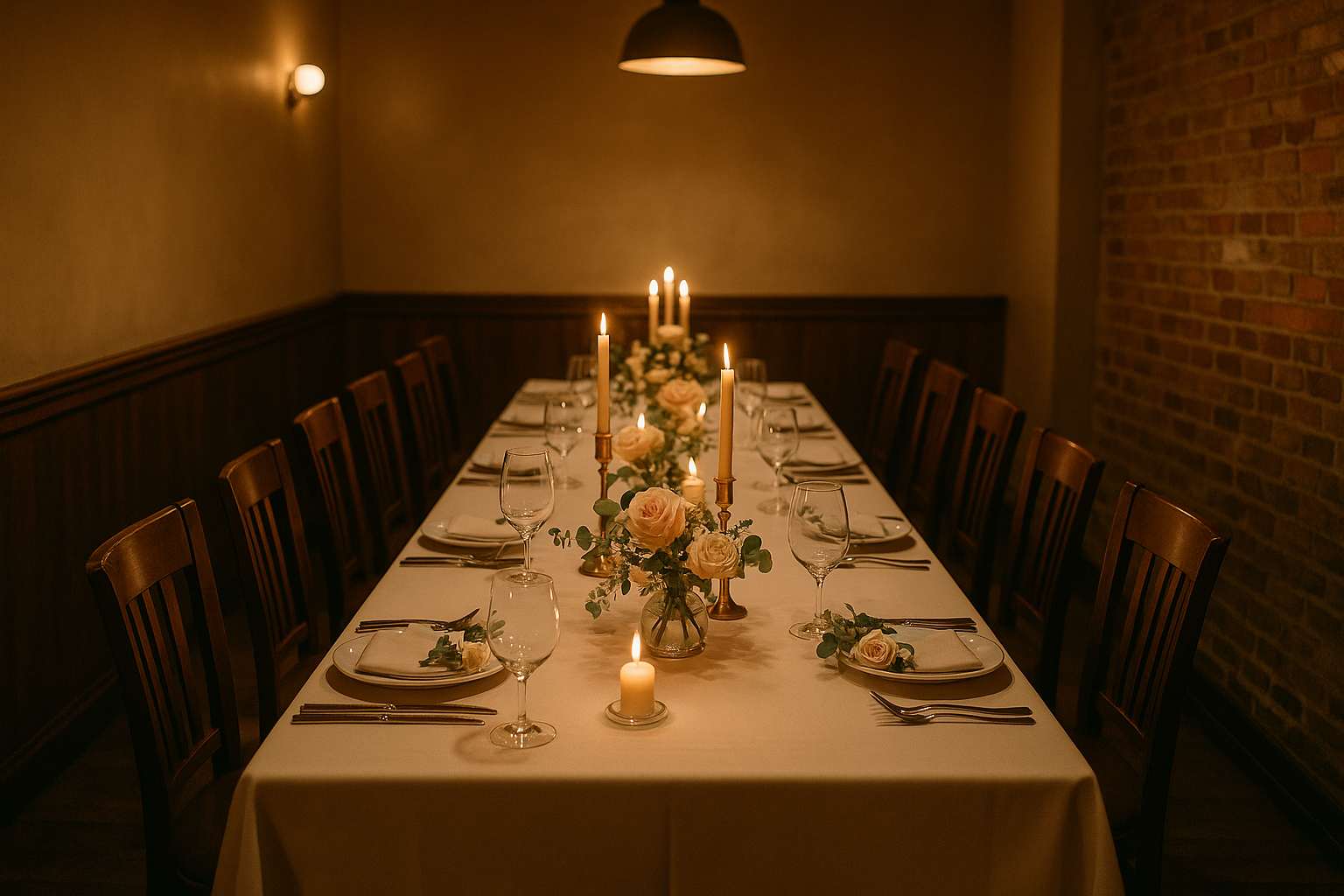
By long-standing American tradition, the groom's parents host and pay for the rehearsal dinner — but in 2026, both sets of parents sharing the responsibility, or the couple hosting themselves, is equally common and fully accepted. The most important thing is settling the arrangement early, clearly, and without assumption.
The rehearsal dinner is one of the most emotionally resonant events of the entire wedding weekend — a candlelit, intimate gathering of the people who will stand closest to the couple the following day. Unlike the wedding reception, which belongs to all your guests, the rehearsal dinner belongs to your inner circle: the wedding party, both families, the people who know you well enough to hear the stories.
Who hosts it is one of the questions that generates the most quiet anxiety in the months before a wedding. Assumptions go unspoken on both sides, and when neither family raises the subject, everyone waits — sometimes too long. This guide gives you the clear, warm framework you need to have the conversation well before it becomes a problem.
What does tradition say about who hosts?
By long-standing American tradition, the groom's parents host and pay for the rehearsal dinner. The convention emerged from the historical structure of wedding finances: the bride's family bore the full cost of the wedding and reception, and the groom's family reciprocated with the rehearsal dinner. This division made sense within a cultural framework where wedding costs were family obligations rather than couple expenses.
The tradition holds most strongly in the Southern United States, in Catholic and Jewish communities, and in families with strong generational ties to wedding customs. In these contexts, the groom's family reaching out to the bride early in the engagement — ideally within the first few months — to discuss vision, format, and budget remains the expected, gracious move.
As Emily Post articulates it: "It is customary, but not obligatory, for the groom's family to host the rehearsal party. If the groom's family chooses not to host, then it's fine for the bride's family, or the bride and groom to do so. It's also perfectly fine for the two families to host together."
What do modern couples actually do?
Wedding finances have evolved significantly, and rehearsal dinner hosting in 2026 reflects that evolution. According to OurVows and The Knot's 2025–2026 research, today's couples handle the arrangement in several common ways:
| Hosting scenario | Where it is most common | Key etiquette note |
|---|---|---|
| Groom's parents host alone | Southern US, Catholic, Jewish communities; families with strong generational ties | Groom's parents should initiate within first few months of engagement |
| Both sets of parents co-host | Growing trend; works well when families are similarly situated financially | Designate one point of contact for the venue and vendor; shared planning requires clear communication |
| Couple hosts themselves | Common when parents are unavailable, estranged, or deceased; popular among couples marrying in their 30s–40s | Couple's names appear on the invitation as hosts; parental contributions remain private if involved |
| Bride's parents host or co-host | When groom's family is overseas, has financial hardship, or offers to share | Entirely appropriate; acknowledge on invitation by listing both families |
| Extended family member hosts | Godparent, aunt, or grandparent stepping in as a gift to the couple | A meaningful gesture; ensure the couple's wishes for format and guest list are central |
The key principle: whoever hosts owns the vision and the budget. If the groom's family is hosting, the bride and her family should offer opinions when invited and refrain from taking over decisions. Tensions around rehearsal dinner control are among the most common pre-wedding friction points — and they are almost entirely preventable with clear, early communication.
When should the hosting conversation happen?
Ideally, within the first three to four months after the engagement — the same window when you are booking the wedding venue and establishing the overall planning calendar. Private dining rooms at popular restaurants book six to nine months in advance in peak wedding season (May through October). A groom's family that does not raise the subject by the six-month mark should be gently prompted.
The conversation belongs first to the couple — agree privately on what you want before either set of parents is consulted. Once you have a clear sense of your preferred format (casual restaurant dinner, catered garden event, experiential evening) and approximate guest count, the financial conversation with the hosting family becomes much more productive.
Who belongs on the guest list?
The rehearsal dinner has a clear inner circle. The people who should always be invited:
- The full wedding party — all bridesmaids, groomsmen, flower girls and ring bearers plus their parents if the children are minors
- The officiant and their partner or spouse
- Both sets of parents and any step-parents
- Immediate siblings not already in the wedding party, and their spouses or partners
- Grandparents of the couple if they are attending the wedding and physically able
Out-of-town guests who have traveled 150 or more miles are customarily included — a gesture of gratitude that is genuinely felt by those who have made the effort to travel. Readers, musicians, and anyone performing a ceremony role are typically invited. Ceremony coordinators or wedding planners who will be present at the rehearsal are often included.
The rehearsal dinner is not a second reception. Work colleagues, general social acquaintances, neighbors, and anyone invited to the wedding as a courtesy obligation are not part of the rehearsal dinner guest list.
What does it cost, and what format works best?
Cost depends primarily on guest count. For a seated dinner of 20–40 guests at a restaurant private dining room, the national average falls between $1,500 and $7,000, with per-head costs of $65–$175 before tax and gratuity. Budget for gratuity of 20–22% on top of food and beverage.
The classic private dining room remains the most common format, but 2025–2026 has brought genuine creativity to rehearsal dinner options. Experiential formats — cooking classes, private tastings, farm-to-table dinners at local vineyard properties — are popular among younger couples. A catered home event is deeply meaningful when the family home carries sentimental value. Brewery taprooms, rooftop bars, and private gallery spaces offer a festive, contemporary alternative.
Whatever format you choose, the evening should end by 10:00–10:30 PM. The couple and wedding party need rest before the wedding day; a rehearsal dinner that runs long is a gift that costs more than it gives.
Cultural and regional variations
The Southern rehearsal dinner is a cherished institution: almost universally hosted by the groom's family, often formal or semi-formal, frequently held at a private club or fine restaurant. Monogrammed touches, multi-course meals, and extended family inclusion are standard.
In Ashkenazi Jewish tradition, the rehearsal dinner may overlap with or replace an Aufruf Shabbat dinner — the Friday night dinner before a Saturday wedding — which carries religious significance and is hosted by the groom's family.
For Catholic and many evangelical Christian families, the rehearsal dinner often opens or closes with a prayer, and the tone is reverent and family-centered.
For Latin American families, the Ensayo dinner is often hosted by the groom's godparents (padrinos) as a sponsorship gift — a beautiful tradition that assigns the rehearsal dinner to the community rather than exclusively to the immediate family.
For destination weddings, the rehearsal dinner typically expands to include the full guest list as a group welcome dinner, since everyone has traveled and the traditional inner-circle dynamic naturally extends to all arrivals.
Frequently asked
Is it still traditional for the groom's parents to host the rehearsal dinner?
Yes — the tradition is still alive and widely followed, particularly in the Southern United States, in Catholic and Jewish communities, and in families with strong generational ties to wedding customs. The convention emerged historically from a clear division of wedding responsibilities: the bride's family bore the full cost of the wedding and reception, and the groom's family reciprocated by hosting the rehearsal dinner. Emily Post's modern guidance affirms this while clarifying that it is a custom, not an obligation: "It is customary, but not obligatory, for the groom's family to host the rehearsal party. If the groom's family chooses not to host, then it's fine for the bride's family, or the bride and groom to do so." The tradition is most meaningful when the groom's family initiates the offer early — within the first few months of the engagement — and brings genuine enthusiasm to the planning.
What if the groom's parents don't offer to host the rehearsal dinner?
If the groom's family has not raised the rehearsal dinner by the six-month mark, the bride or her mother may gently initiate the conversation. The tone should be inclusive rather than pointed: "We've been thinking about the rehearsal dinner — we'd love to plan it together if you're open to that, or happy to take it on if you'd prefer." This opens the door without implying negligence. If the groom's parents are financially unable to host, are estranged, or are deceased, there is no social stigma in the couple or the bride's family hosting instead. The couple paying for their own rehearsal dinner has become increasingly common — particularly among couples in their 30s and 40s who are financially independent and want full creative control. The only etiquette requirement: whoever hosts should be acknowledged as the host on the invitation.
Who should be invited to the rehearsal dinner?
The rehearsal dinner has a clear inner circle that should always be included: all members of the wedding party (bridesmaids, groomsmen, flower girls and ring bearers plus their parents if the children are minors), the officiant and their partner, both sets of parents and any step-parents, immediate siblings not already in the wedding party and their spouses, and grandparents of the couple if they are attending the wedding and physically able. Out-of-town guests who have traveled significant distances — generally accepted as 150 or more miles — are customarily included as a gesture of gratitude for their travel. Readers, musicians, and others with a ceremony role are also typically invited. The rehearsal dinner is not a second reception; work colleagues, general social acquaintances, and anyone you invited to the wedding as a courtesy obligation are not included.
How much does a rehearsal dinner cost in 2026?
Costs vary significantly by guest count, format, and market. For a seated dinner of 20–40 guests at a restaurant private dining room, the national average falls between $1,500 and $7,000, with per-head costs of $65–$175 before tax and gratuity. Budget for gratuity of 20–22% on top of food and beverage — this is often the single largest line item that catches hosts by surprise. The total range nationally runs from approximately $1,200 for a casual 15-person dinner to $25,000 or more for a large, fully catered event. The single greatest cost driver is guest count: every additional guest adds meaningfully to the bill at the per-head rates involved. Keeping the list focused on the genuine inner circle — the 20–40 people closest to the couple — both manages cost and preserves the intimacy that makes the rehearsal dinner distinct from the wedding itself.
What format options are there beyond a sit-down restaurant dinner?
The classic private dining room at a restaurant remains the most common format, but 2025–2026 has seen a genuine expansion in what couples and hosts are choosing. Experiential formats — cooking classes, private wine or whiskey tastings, murder mystery dinners, farm-to-table experiences — are popular among couples under 35. A catered home or garden event is meaningful when the family home has sentimental value. Brewery taprooms, rooftop bars, vineyards, and private art galleries are trend-forward alternatives that feel more like a celebration and less like a logistics meeting. For destination weddings, the rehearsal dinner often expands to include the full guest list as a welcome dinner, since everyone has traveled and the traditional inner-circle dynamic shifts. The unifying principle across all formats: the evening should conclude early enough — by 10:00 to 10:30 PM — that the couple and wedding party arrive at the wedding day rested.
What is the etiquette for rehearsal dinner toasts?
The rehearsal dinner is the primary toast event of the wedding weekend, and it accommodates more speakers than the wedding reception because the audience is intimate and knows every speaker personally. The traditional order begins with the host (typically the groom's father, or the couple if self-hosting) welcoming guests and thanking both families, followed by the bride's father, then the best man, maid of honor, groom, and bride. An open floor of two to four additional speakers is appropriate, but total toasting time should not exceed 35 minutes — beyond that, attention wanes even in an intimate room. Every speaker should limit remarks to two to three minutes (approximately 400–450 spoken words). Written notes are entirely acceptable and produce better toasts than improvisation. Designate a master of ceremonies — usually the best man — to manage the order and gently enforce time limits.