Invitations, Registry & Gifts
How Many Wedding Invitations Should You Order?
Most couples order too few invitations because they confuse guest count with household count. Here is the exact formula, the buffer strategy, and every hidden quantity most brides forget until it is too late.
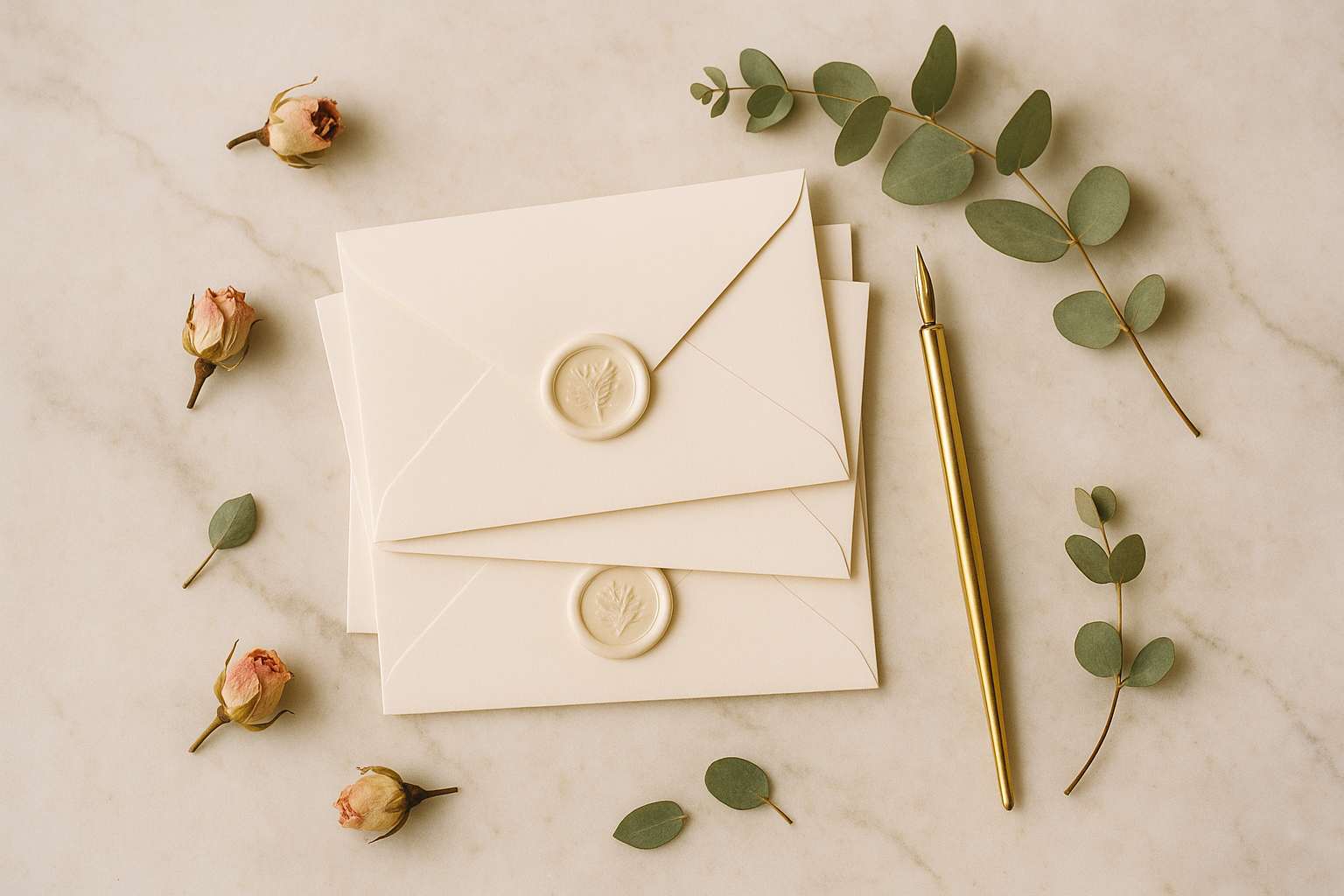
Count mailing addresses, not individual guests. Divide your total invited guest count by approximately 1.8 to estimate household count, then add 20 to 30 buffer invitations. For a 150-guest wedding, order approximately 110 invitations — never fewer than 25 above your calculated minimum, because reprinting small quantities later costs nearly as much as the original order.
The most common stationery mistake brides make is ordering the exact number of invitations they think they need, only to realize — when the calligrapher makes five errors, a grandmother's address was wrong, or a last-minute guest addition arrives — that they needed twenty more. Invitation reprints are expensive per unit, require new production lead time, and almost never match the original paper stock perfectly. Ordering correctly the first time is the only real solution.
This guide walks through the exact formula, every quantity consideration, and the complete list of hidden extras most couples forget until the assembly table reveals the gap.
What is the formula for calculating how many wedding invitations to order?
The foundation of the calculation is this: invitations are sent per household, not per guest. A couple receives one invitation. A family of four receives one invitation. Two roommates who are both invited receive one invitation each (separate social units at one address). Guests aged 18 and older living at a parent's home traditionally receive their own invitation.
The fastest estimate if your guest list is not yet finalized:
(Total guests ÷ 2) + 25 = estimated invitation quantity
The more precise method, once addresses are confirmed:
Count the number of distinct mailing addresses on your list, then add 20 to 30 buffer units.
Per Paperlust's complete invitation calculator, a quick working estimate is to take approximately 60% of your total guest count as your invitation quantity before adding the buffer.
How many buffer invitations should you order, and why?
Add a minimum of 20 to 30 invitations above your calculated household count. Here is where every extra unit goes:
| Use | Estimated Units Needed | Notes |
|---|---|---|
| Calligrapher addressing errors (extra envelopes) | 5–10 | Calligraphers work from your list but make mistakes; build this in |
| Last-minute guest additions | 3–5 | Inevitably, someone gets added after the order is placed |
| Invitations lost or damaged in mail | 2–3 | USPS damage and loss happens; a follow-up mailing requires a spare |
| Keepsake copies (yours) | 2 | Keep at least two sealed and untouched — one for your album, one for your parents |
| Photographer flat-lay styling | 1 | Your photographer will want a pristine suite for detail shots |
| Wedding planner or coordinator | 1 | A professional planner's file often requests a copy |
| General safety margin | 5–8 | What remains after all the above; never order with zero margin |
Total buffer recommendation: add 20 to 30 units above your household count for a standard local wedding. For destination weddings, round up to 30 to 35 extra units, as addressing international envelopes increases the error rate and replacement shipping is slower and more expensive.
How many invitations does each guest count translate to in practice?
Here are the working estimates by guest count using the household formula plus a standard buffer:
- 75 guests: approximately 45–50 households + 20–25 buffer = order 70–75 invitations
- 100 guests: approximately 60–65 households + 20–25 buffer = order 85–90 invitations
- 150 guests: approximately 85–90 households + 20–25 buffer = order 110–115 invitations
- 200 guests: approximately 110–120 households + 25–30 buffer = order 140–150 invitations
- 250 guests: approximately 140–150 households + 25–30 buffer = order 170–180 invitations
What about extra envelopes and suite components?
Your invitation order is not just the invitation card. A full suite typically includes an outer envelope, an inner envelope (if using the formal double-envelope format), an RSVP card with pre-stamped return envelope, a details or information card, and possibly an accommodations card and menu pre-selection card. Each component has its own quantity consideration:
- Outer envelopes: Order 10–15% more than your invitation count, specifically for calligrapher errors.
- Inner envelopes: Same 10–15% overage.
- RSVP cards: One per invited household — no buffer needed beyond your general invitation buffer.
- Details cards: One per invitation; no overage necessary unless you anticipate design changes.
- Pre-stamped RSVP envelopes: Etiquette requires pre-stamping. Verify current postage rates — as of 2025–2026, standard first-class postage is $0.68; assembled suites with multiple enclosures frequently require $0.87 to $1.44 per outer envelope. Take a fully assembled test suite to the post office before purchasing postage in bulk.
Per Shutterfly's invitation ordering guide, a practical guideline is to order 10 to 15 extra invitations beyond your calculated need — the cost of extra units at the time of initial printing is minimal compared to the cost of a reprint order.
The single most important action to take before mailing: weigh a fully assembled invitation suite at the post office and confirm the correct postage before purchasing stamps for the full batch. Invitations returned for insufficient postage are both embarrassing and logistically painful to reroute.
Frequently asked
Should I order one invitation per guest or per household?
Always per household. An invitation goes to an address, not an individual. A couple counts as one invitation; a family of four counts as one invitation. Two college roommates who are both invited but share an apartment each get their own invitation, because they are two separate social units at the same address. Guests who are 18 or older living at their parents' home traditionally receive their own invitation. The most reliable method is to count the number of distinct mailing addresses on your guest list — that number is your base invitation quantity before adding the buffer. Couples who order by headcount reliably end up with 30 to 50 more invitations than they need, which is money wasted on items that go directly to recycling.
How many extra invitations should I order as a buffer?
Order a minimum of 15 to 25 extra invitations beyond your calculated household count. This buffer covers: last-minute guest additions you have not yet confirmed; addressing errors that damage envelopes (a calligrapher will use 5 to 10 extra envelopes on a typical order); replacement for any invitations lost or damaged in the mail; at least two complete suites kept sealed as personal keepsakes; and copies for your parents, photographer (for the flat-lay styling session), and wedding planner if applicable. The single most common regret among brides after the wedding is not saving a pristine, unsealed copy of the invitation suite. Order the buffer. Reprinting a small quantity later costs nearly as much as the original order and requires significant lead time that you will not have.
What is the cheapest way to order wedding invitations without sacrificing quality?
Digital flat printing from platforms such as Minted, Zola, or Artifact Uprising produces beautiful results at accessible price points, typically $150 to $400 for 100 units including envelopes. The perception gap between a well-designed digital print and letterpress is significant to those who know the difference, but the vast majority of wedding guests — particularly those in their 20s to 40s — will not notice. Where couples can meaningfully stretch toward a premium experience: a heavier cardstock weight ($30 to $60 extra on most orders), a wax seal add-on ($50 to $150 for 100 units), and inner envelopes if using a double-envelope format. These three upgrades produce most of the tactile luxury associated with high-end suites at a fraction of the letterpress cost. Letterpress and foil are worth the investment primarily when a bride's stationery aesthetic is central to her overall wedding design vision — not as a default.
How far in advance should I order wedding invitations?
Order your invitation suite approximately 4 to 5 months before your wedding date to allow sufficient time. This timeline accounts for: the vendor's production time (1 to 6 weeks depending on print method, with letterpress and foil taking longest); shipping and receipt at your home; an audit of the full order for quality and count; calligrapher addressing (allow 2 to 4 weeks and book the calligrapher at least 3 to 4 months out); assembly; and postage preparation. After mailing, standard invitations should arrive 6 to 8 weeks before the wedding for local guests, or 3 to 4 months out for destination weddings. For couples using letterpress or foil stamping, add 3 to 4 additional weeks to the production estimate and order 5 to 6 months out. As a rule: the more elaborate the print method, the earlier you must order.
Do I need to order extra envelopes separately from the invitations?
Yes — and this is one of the most frequently overlooked parts of the order. Always order 10 to 15% more outer envelopes than your invitation count, specifically to accommodate calligrapher errors and damaged envelopes during assembly. If your invitation is being hand-addressed by a calligrapher, tell them your extra envelope quantity when booking — they will confirm whether it is adequate for their error margin. Inner envelopes (if using a formal double-envelope format) follow the same 10 to 15% overage rule. You cannot easily reorder envelopes after the fact: a small reorder run is expensive, and matching the paper stock exactly after the fact is not guaranteed. It is far better to have 10 surplus envelopes than to discover you are 5 short when your calligrapher is two hours from finishing.
How do I handle invitation quantities for a destination wedding?
Destination weddings require two specific adjustments to the standard formula. First, your guest list will skew more heavily toward couples and pairs rather than individual guests, because the travel commitment naturally filters toward those with a companion — meaning your household count as a percentage of your total guest list will be slightly higher, and your per-invitation quantity may be 5 to 10% lower than for a local wedding. Second, you must mail invitations significantly earlier: 3 to 4 months before the wedding rather than 6 to 8 weeks. Guests booking flights and accommodations need maximum lead time. Save-the-dates for destination weddings should go out 10 to 12 months in advance. Budget for heavier postage: international destinations require verified postage rates, and large suites with multiple enclosure cards often require additional postage that should be tested at the post office before mailing the full batch.