Invitations, Registry & Gifts
How Much Do Wedding Invitations Cost: A 2026 Breakdown
The national average for a complete wedding invitation suite is $518, but what you actually spend depends entirely on printing method, guest count, and where you shop. Here is an honest breakdown — from $190 digital suites to $3,500 letterpress masterpieces — and exactly where to spend and where to save.
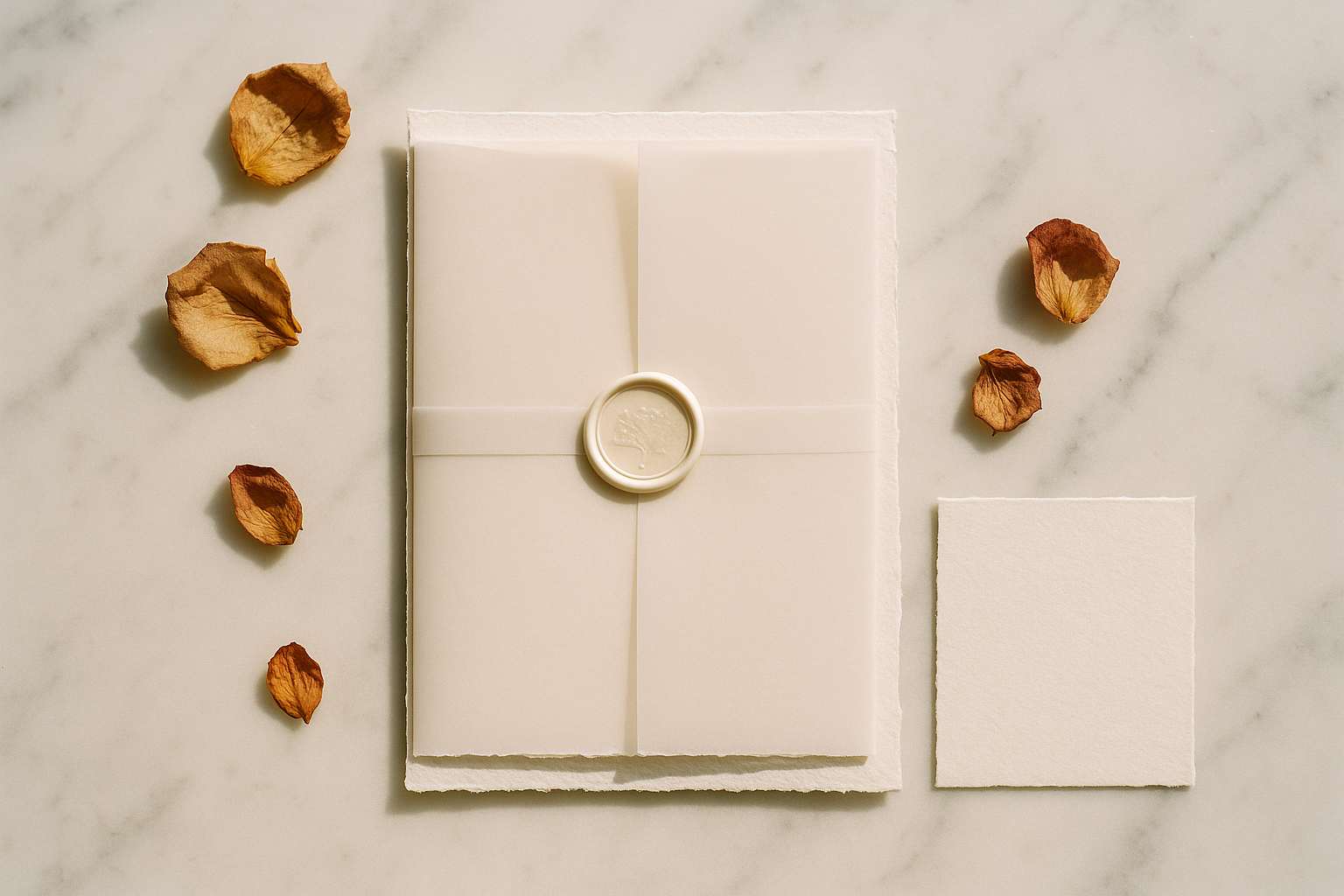
The national average for a complete wedding invitation suite is $518, but real couples in 2026 spend anywhere from $190 on digital suites from Zola to $3,500 and beyond for boutique letterpress. The single biggest driver of cost is print method — and understanding the tradeoffs between digital, letterpress, and foil before you fall in love with a design is the clearest path to an invitation budget that does not surprise you.
Wedding invitations are the first tangible experience your guests have of your wedding — before they see the flowers, hear the music, or taste the food, they hold a piece of paper that tells the entire story of your day in miniature. Given that significance, it is worth understanding exactly what you are paying for before you begin comparing quotes and falling for portfolio images. This breakdown covers every cost dimension of the 2026 invitation landscape, from the suite itself to the postage stamp.
What does a complete wedding invitation suite actually cost in 2026?
The national average for a complete wedding invitation suite, per The Knot's 2025 real weddings research, is approximately $518. But that average obscures enormous range. Minted reports that couples on their platform average $480 for an invitation order; Zola couples average $190. A boutique letterpress suite from a custom studio for 100 guests typically runs $1,500 to $3,500. The difference is almost entirely explained by print method and the platform tier you choose.
The total stationery investment for a full wedding — including save-the-dates, the formal invitation suite, postage, and day-of paper goods — typically runs $1,200 to $4,100 at the mid-range, and $5,300 or more at the luxury tier. Industry guidance places stationery at 2 to 5 percent of the total wedding budget, which on a $30,000 wedding is $600 to $1,500.
| Print Method | Cost Range (100 Suites) | Lead Time | Best For |
|---|---|---|---|
| Digital / offset printing | $150–$500 | 1–3 weeks | Budget-conscious couples; vibrant full-color designs |
| Thermography (raised ink) | $400–$900 | 2–4 weeks | Traditional feel; budget-friendly alternative to letterpress |
| Foil stamping | $600–$1,500 | 4–8 weeks | Metallic shimmer; modern luxury aesthetic |
| Letterpress | $820–$3,500+ | 3–6 weeks | Maximum tactile quality; heirloom impression |
| Engraving | $1,200–$5,000+ | 6–10 weeks | Formal, traditional, black-tie events |
| Letterpress + foil combo | $2,000–$6,000+ | 6–10 weeks | Maximum luxury; significant lead time required |
What are the hidden costs of wedding invitations that couples miss?
The printing quote is rarely the final number. The most consistently underestimated invitation costs arrive in four categories that appear nowhere in the stationer's initial proposal.
Postage: In 2026, a standard rectangular invitation at one ounce requires a $0.78 USPS stamp. Square or oversized envelopes require a $1.27 non-machinable surcharge — that $0.49 difference sounds small but adds $49 to a 100-invitation order. For a fully assembled suite including a RSVP return envelope (which must be pre-stamped as a matter of etiquette), total postage for 100 invitations runs $150 to $300 depending on suite weight. Always take a fully assembled suite to the post office before purchasing stamps — never estimate from weight alone.
Calligraphy: Hand-addressed envelopes are the most noticeable upgrade to any invitation suite and cost $4 to $10 per outer envelope at mid-range professional studios, adding $400 to $1,000 for a typical wedding. Premium calligraphers in major metropolitan markets charge $8 to $20+ per envelope. Book at least three to four months in advance — sought-after calligraphers in New York, Los Angeles, and Chicago book six months out or more.
Add-ons and embellishments: Wax seals add $0.50 to $2.50 per invitation; vellum wraps add $0.50 to $2.00 each; belly bands add $0.50 to $1.50. These details are individually small and collectively meaningful — a fully embellished suite of 100 invitations can add $150 to $600 in finishing touches on top of the base printing cost.
Buffer quantity: Order 10 to 15 percent more suites than your exact household count. Reprinting a small quantity later costs nearly as much as the original order, and the paper lot or ink may not match precisely. Order envelopes at 15 to 20 percent above your suite count, especially if a calligrapher is addressing them — addressing errors are expected and budgeted for by every professional in the field.
How should I allocate my invitation budget across the different tiers?
The most effective budget strategy for most couples is to invest in the invitation card itself and simplify everything else. The invitation card is what guests hold first and remember longest; the RSVP card is functional and read once. A semi-custom letterpress invitation card paired with coordinated digital printing for the RSVP card and details card delivers a premium first impression at roughly half the cost of a fully letterpress suite. Platforms like Paperlust, Artifact Uprising, Papier, and Rifle Paper Co. offer genuine design quality at semi-custom price points, bridging the gap between mass-market templates and fully custom boutique studios.
For couples on a tight budget, digital invitations from Zola, The Knot, or Minted produce beautiful, professional results at $190 to $480 for 100 suites — and the stationery savings can be redirected toward photography, florals, or the honeymoon. For couples who consider beautiful physical stationery a genuine design priority and a keepsake, a letterpress or foil suite represents a meaningful investment in an object that guests will keep and that you will look at for the rest of your married life. Neither choice is wrong; both require knowing which one you actually care about before the first quote request goes out.
Frequently asked
What is the average cost of wedding invitations in 2026?
The national average for a complete wedding invitation suite in 2026 is approximately $518, according to The Knot's real weddings research. However, this figure has wide variation by platform and print method. Zola reports that couples using their platform spend an average of $190, while Minted couples average $480. The difference reflects platform pricing tiers and the printing methods couples choose: digital printing on standard paper stock is genuinely affordable; letterpress or foil-stamped suites from boutique studios cost three to five times more. The $518 average also typically represents only the invitation card and RSVP card — add save-the-dates, postage, calligraphy, and enclosure cards, and a mid-range complete stationery program for a 100-guest wedding runs $1,200 to $2,500 total.
What percent of the wedding budget should invitations take?
Industry guidance consistently places total stationery — including save-the-dates, the invitation suite, postage, and day-of paper goods — at 2 to 5 percent of the total wedding budget. On a $30,000 wedding that is $600 to $1,500. On a $20,000 wedding it is $400 to $1,000. Couples who prioritize letterpress or custom illustration sometimes allocate 5 to 8 percent because the stationery is a genuine design priority for them, not merely a communication tool. For budget-conscious couples, digital printing from Minted, Zola, or Papier keeps the stationery line well under 2 percent without sacrificing quality. The guiding principle: decide how much the physical stationery matters to your wedding's aesthetic identity, then allocate accordingly — never default to a printing method merely because it appears to be expected.
How much does letterpress wedding invitation printing cost?
Letterpress is the most tactile and visually distinctive of the major wedding printing methods — the hallmark impression left in the paper surface is unmistakable and beloved — and it carries a meaningful price premium. A letterpress suite of 100 invitations (invitation card, RSVP card, and one enclosure) from a boutique studio typically runs $1,500 to $3,500. Some studios offering simpler designs can deliver letterpress suites starting around $820 to $1,220 for 100 units. Production lead time is three to six weeks minimum, with more complex designs requiring six to ten weeks. If letterpress is a priority, order at the six-month mark — not later. Rush surcharges of 15 to 30 percent apply when the timeline compresses below the standard production window.
What hidden costs should couples budget for beyond the invitation printing price?
The most commonly overlooked invitation-related costs are postage, calligraphy, and the buffer quantity. For postage: a standard rectangular invitation at one ounce costs $0.78 to mail in 2026; square or oversized envelopes require a $1.27 non-machinable surcharge. For 100 invitations with RSVP return envelopes, total postage runs $150 to $300 depending on suite weight. For calligraphy: hand-addressing outer envelopes runs $4 to $10 per envelope at mid-range studios, adding $400 to $1,000 for a typical wedding. For buffer quantity: order 10 to 15 percent more suites than your household count to account for addressing errors, late additions, and keepsakes — reprinting small quantities later is expensive and may not match the original print run. Combined, these additions can increase the stationery line by 25 to 40 percent beyond the quoted printing price.
Is it worth paying more for letterpress or foil over digital printing?
The honest answer is: it depends on how much your invitation suite matters to your wedding's overall aesthetic and how it will be experienced. Letterpress and foil-stamped suites create a sensory experience — the impression in the paper, the shimmer of metallic ink — that a digital print cannot replicate. Guests who receive a letterpress invitation notice and remember it in a way that affects how they anticipate the wedding. For couples whose wedding is designed around beauty, detail, and a premium guest experience, the investment is often genuinely worthwhile. For couples whose priorities lie in the venue, photography, or florals, a beautifully designed digital suite from a platform like Minted or Artifact Uprising looks polished and professional at a third of the cost. The worst outcome is spending $3,000 on invitations to impress people and then resenting the budget shortfall elsewhere.
How many wedding invitations should I order?
Order based on households, not individual guests — a couple receives one invitation, not two. Take your total invited guest count, divide by approximately 1.8 (the average household size for wedding guest lists, which skew toward couples), and add 25 to 30 units as a buffer for addressing errors, late additions, keepsakes for parents and yourselves, and vendor copies for photographers who style flat-lay detail shots. For 150 guests: roughly 83 households plus 27 buffer units equals approximately 110 invitations to order. Never order the exact minimum — reprinting even a small quantity costs nearly as much as the original order, and the paper or ink lot may not match perfectly. Order envelopes at 15 to 20 percent above your invitation count, especially if using a calligrapher, to account for addressing mistakes.
Can we save money on invitations without the suite looking budget?
Yes, and the savings can be substantial with the right strategy. The most effective cost-reduction approach is to invest in one premium element — the invitation card in letterpress or on heavy cotton paper — while keeping all enclosures in coordinated digital printing on standard stock. The invitation card is what guests see and hold first; the RSVP card and details card are functional. This hybrid approach delivers a premium first impression at roughly half the cost of a full letterpress suite. Additional savings strategies: choose standard rectangular envelopes rather than square to avoid non-machinable postage surcharges; use digital RSVPs through your wedding website rather than a printed RSVP card with a pre-stamped return envelope; source from semi-custom platforms like Papier, Artifact Uprising, or Rifle Paper Co. where design quality is genuinely high at a meaningful discount from fully custom boutique studios.