Invitations, Registry & Gifts
How to Hire a Wedding Calligrapher: The Complete 2026 Guide
Hand-lettered envelopes transform an already beautiful suite into something genuinely memorable — but only when you hire the right artist, brief them correctly, and plan your timeline with care.
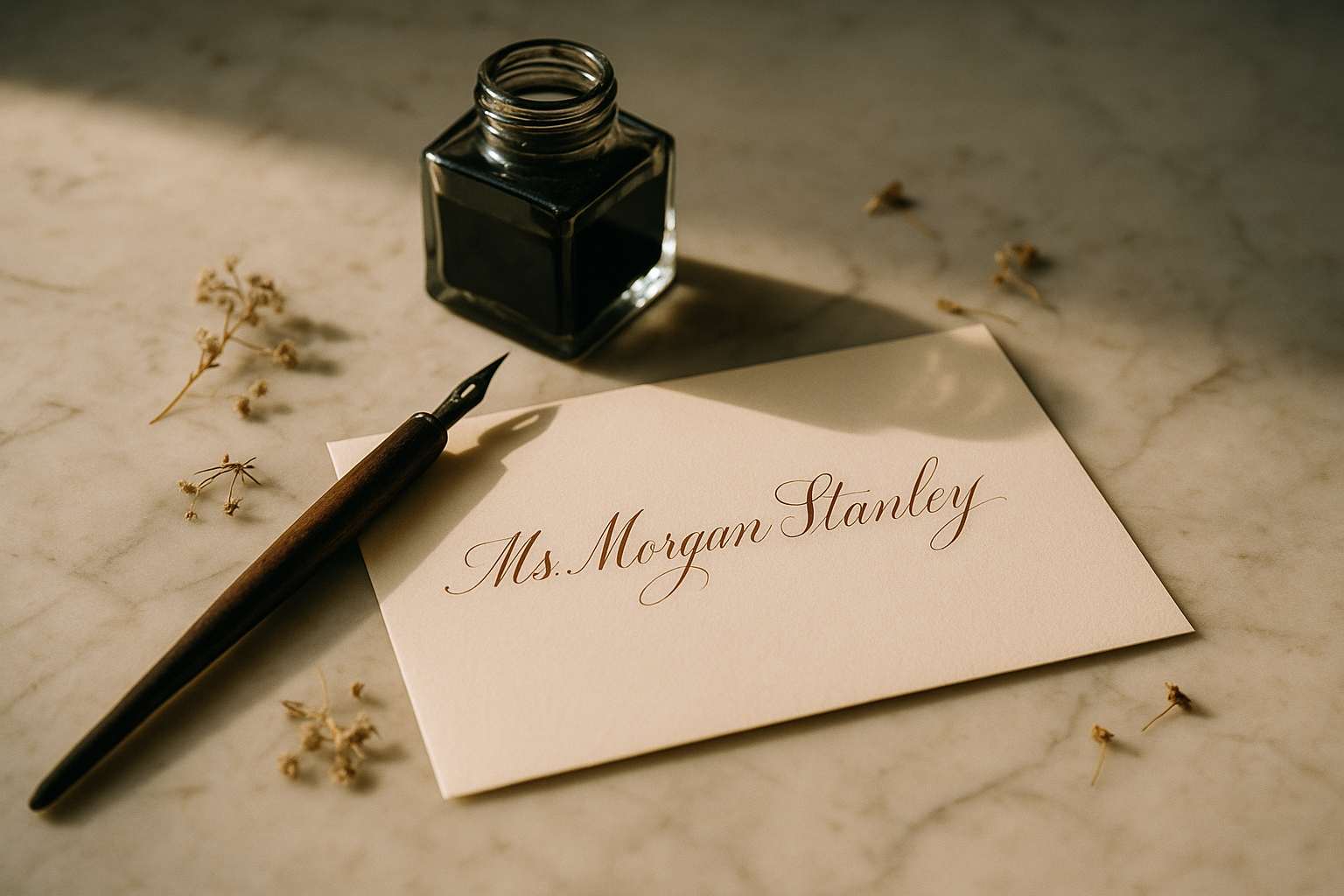
Book your wedding calligrapher three to six months before your wedding date — the same time you finalize your stationer. Provide a clean, proofread address spreadsheet with 15–20% extra envelopes. Pricing runs $2.50–$20 per outer envelope depending on market and artist, with day-of signage averaging $750 and up. Style should match your invitation suite's formality level and venue aesthetic.
Hand-lettered envelope addressing is one of those wedding details that guests never consciously plan to notice — and then remember for years. The graceful arc of well-executed calligraphy on a beautifully weighted envelope communicates something about the occasion before a single word inside is read. It is the first tactile experience of your wedding that most guests will have, months before they set foot in your venue.
Hiring the right calligrapher is not complicated, but it requires earlier action than most brides anticipate, a clearly prepared address list, and a few specific questions asked before any deposit is paid. Here is everything you need to know.
When should you book a wedding calligrapher — and where do you find one?
Book your calligrapher three to six months before the wedding as a minimum. In major metropolitan markets and for peak-season dates (late April through June; September and October), the most sought-after artists book six to twelve months out. A calligrapher is not a vendor who can be hired in the final weeks — they require a finalized, verified address list, and most need two to four weeks to complete a full wedding order of 100 or more envelopes.
The best places to find a wedding calligrapher include:
- Your stationer's recommendations: If you are working with a boutique stationer or letterpress studio, they often maintain a preferred list of calligraphers whose work pairs well with their paper and printing style.
- Instagram: Search location tags at wedding venues in your area, combined with 'calligraphy' or 'bridal calligraphy,' to find artists whose in-person, real-wedding work matches your aesthetic. A calligrapher's Instagram portfolio is typically their most current and complete body of work.
- The Knot and WeddingWire directories: Both offer verified reviews and geographic filtering. Look for artists with at least 10–15 recent reviews from actual brides.
- Your photographer: Wedding photographers see the finished results at every event they shoot and consistently know which calligraphers' work photographs well.
When evaluating candidates, review their portfolio not only on their website but across all social media platforms. Confirm that the style you see in their portfolio reflects recent work, not a style they have moved away from.
What are the calligraphy style options and which is right for your wedding?
Calligraphy is not a single aesthetic — it is a family of related scripts, each with a distinct character and formality level. Matching the script to your suite and setting is as important as the quality of execution.
| Style | Character | Best paired with | Formality level |
|---|---|---|---|
| Traditional copperplate | Looping, formal, deeply classical — the script of historic correspondence | Engraved or letterpress suites; black-tie receptions; religious ceremonies | Very formal |
| Modern calligraphy | Loose, expressive, organic — the most widely requested bridal style in 2025–2026 | Romantic, garden, bohemian, estate venues; any mid-level formality | Relaxed formal |
| Brush lettering | Bold, textural, organic — strong visual presence | Outdoor, rustic, winery, barn venues; casual-luxe aesthetics | Casual to relaxed formal |
| Gothic / blackletter | Dramatic, heritage-forward, high-contrast | Winter weddings; dark-romance or maximalist aesthetics; historic venues | Formal (distinctive) |
| Italic / pointed pen hybrid | Clean, slightly formal — legibility-forward | Contemporary or minimalist invitation suites; modern venues | Semi-formal |
The practical rule: the formality of the calligraphy style should match the formality of the invitation suite and the venue. A loose, expressive modern calligraphy hand on a heavily engraved letterpress suite creates visual tension. A formal copperplate on a casual, digital-print garden party invite feels over-dressed. When in doubt, ask your stationer — they have seen every combination.
What does wedding calligraphy actually cost in 2026?
Pricing varies significantly by artist, market, and scope. According to the 2026 pricing guide published by professional calligrapher Carla Schall, the structure is as follows:
- Outer envelope addressing: $2.50–$6 per envelope (mid-market professional); $8–$20 per envelope (luxury, high-demand artists)
- Inner envelope addressing: $1.50–$3 per envelope
- Place cards and escort cards: $1.50–$5 per card
- Day-of signage: Welcome sign, seating chart, and bar signs starting at $750; full-suite day-of calligraphy averages $3,000 in mid-market settings
- Rush surcharge: 25–50% above standard rates for turnaround under three weeks
Industry guidance places total calligraphy spend — envelopes, place cards, and basic signage — at 3–5% of the overall wedding budget. On a $30,000 wedding, that is $900–$1,500. Couples who also commission a full day-of signage package should budget 5–8%.
One critical pricing note: a lower per-envelope starting rate does not always mean a lower total cost. Confirm what is included in any quoted price — intricate designs, specialty inks (gold, silver, white), and inner-envelope addressing all carry premium charges at most studios.
What questions should you ask before booking?
Before signing any contract or paying a retainer, the following questions are essential:
- What is your current availability for my wedding date? Confirm their schedule is genuinely open — not tentatively available pending another booking.
- What is included in your base rate, and what are the add-on costs? Inner envelopes, intricate designs, specialty inks, and rush fees should all be quoted explicitly.
- How do you handle errors? Do you absorb the cost of replacing envelopes you address incorrectly, or does that fall to the couple?
- What format do you need the address list in? Most calligraphers require a spreadsheet with consistent column headers. Confirm their exact format preference before cleaning your data.
- What is your turnaround time for a full wedding order? Two to four weeks is standard; confirm this against your invitation mailing date.
- Can I see samples of your work in the specific style I am requesting? Portfolio images are not always representative of every style the artist offers.
- Is a physical sample available before the full order is placed? Many calligraphers will letter one or two sample envelopes for a nominal fee so you can approve the look before committing to the full order.
Expect to pay a non-refundable retainer at booking — typically 25–50% of the total order — to secure your date on the calligrapher's calendar. This is standard professional practice in the stationery industry, not a red flag.
How to prepare your address list for flawless results
The single most impactful thing you can do before handing work to a calligrapher is deliver a clean, thoroughly proofread address list. According to Laura Hooper Design House, the majority of addressing errors trace back to inconsistent or inaccurate data from the couple, not mistakes by the artist. A calligrapher letters exactly what you submit.
Use a spreadsheet with these exact column headers: Title | First Name | Last Name | Address Line 1 | Address Line 2 | City | State | ZIP. Every row should use consistent formatting. If you want 'Street' spelled out, write it out in every row — do not abbreviate 'St.' in some rows and spell it out in others. Have two people outside the planning process review the complete list for spelling errors, honorary title accuracy, and address completeness before you send it to the calligrapher.
And always order more envelopes than you think you need — at minimum 15% extra. The reprint cost for a small quantity of envelopes from your stationer is almost always higher per unit than the original run.
Frequently asked
How far in advance should I book a wedding calligrapher?
Book your calligrapher three to six months before your wedding date as a minimum, and ideally at the same time you finalize your stationer — since both the calligrapher and the stationer need to coordinate on paper dimensions, envelope stock, and timeline. In high-demand markets (New York, Los Angeles, San Francisco, Chicago) and for peak wedding season dates (late spring and early fall), the most sought-after artists book six to twelve months in advance. A calligrapher is not a day-of booking — they require your finalized, verified address list, and most need two to four weeks to complete a full wedding order. Missing the booking window forces you into rush fees of 25–50% above standard rates, a smaller pool of available artists, and the stress of an unresolved planning item as the date approaches.
What is a realistic budget for wedding calligraphy in 2026?
According to the 2026 calligraphy pricing guide published by professional calligrapher Carla Schall, per-envelope pricing for outer addresses ranges from $2.50 to $6 per envelope at the professional mid-market level, with luxury and in-demand artists charging $8 to $20 per outer envelope. For a 100-guest wedding (approximately 80–90 invitation households plus 15–20 buffer envelopes), outer-envelope addressing alone runs $200–$600 at mid-market rates. Place cards add $1.50–$5 per card; escort cards $1.50–$4; day-of signage (welcome sign, seating chart, bar sign) starts at $750 and averages $3,000 for a full suite. Industry guidance places total calligraphy spend at 3–5% of the overall wedding budget. Always confirm what is and is not included in any quoted price — intricate designs, specialty inks, and rush turnaround all carry premium charges.
What calligraphy style should I choose for my wedding?
The five primary bridal calligraphy styles each carry a distinct aesthetic register. Traditional copperplate — formal, looping, and deeply classical — pairs naturally with black-tie ceremonies and religious settings. Modern calligraphy, with its loose and expressive letterforms, suits romantic, garden, or bohemian aesthetics and is the most widely requested style in 2025–2026. Brush lettering, which produces bold and organic strokes, works beautifully at outdoor and rustic celebrations. Gothic or blackletter script is dramatic and heritage-forward, best suited to winter, dark-romance, or formal evening weddings. The most practical guidance: browse the calligrapher's complete portfolio before selecting a style and match the script's formality level to your venue and invitation suite's overall aesthetic. A modern brush-letter script on an engraved letterpress suite creates visual tension; a copperplate hand on a casual garden-party invitation feels over-formal. Ask your stationer and calligrapher to review each other's work before the order is placed.
What do I need to prepare before handing my address list to a calligrapher?
Your address list is the single most important thing you give your calligrapher — and the quality of what you hand over directly determines the quality of what comes back. Provide a clean spreadsheet (Google Sheets or Excel) with consistent column headers: Title, First Name, Last Name, Address Line 1, Address Line 2, City, State, ZIP. Every entry should use the same format and spelling conventions you want on the final envelope. Calligraphers replicate exactly what you send them, including abbreviations, so spell out 'Street' rather than 'St.' if you want it spelled out. Run a final proofreading audit on every row — two independent proofreaders, at least 48 hours apart — before sending. Also confirm with your calligrapher whether you need outer-envelope-only addressing or both inner and outer, and provide your return address for the upper left corner or back flap in the same format.
How many extra envelopes should I order for calligraphy?
Order 15–20% more envelopes than your final invitation count. For 100 invitation households, order 115–120 envelopes minimum. This buffer accounts for calligrapher mistakes during practice runs, addressing errors that cannot be corrected, last-minute guest list additions, and postal damage. This is entirely standard practice — every professional calligrapher will inform you of this requirement at booking. Ordering the exact count you need is one of the most common and costly stationery mistakes because reprinting a small quantity of envelopes from your original stationer's press run nearly always costs more per unit than the original order. Confirm with your stationer at the time of ordering that you need the additional quantity; many stationers build envelope overages into their standard packages, but not all do.
Can a calligrapher also create day-of stationery, signs, and menus?
Many calligraphers offer a comprehensive suite of day-of services beyond envelope addressing: welcome signs, seating charts, escort and place cards, table numbers, ceremony programs, bar and menu signs, vow books, and custom illustrated items. Using a single calligrapher for both invitation envelopes and day-of elements ensures perfect visual cohesion — the same hand, the same ink, the same letter shapes carrying through the full guest experience from mailbox to reception. When evaluating calligraphers, ask explicitly whether they offer day-of services, what their day-of pricing includes, and whether they can reference your invitation suite's design for consistency. Industry estimates from The Knot place the average day-of calligraphy investment (for a full welcome sign, seating chart, and escort cards) at $1,500–$3,000 in a mid-market setting, with significant regional variation.