Invitations, Registry & Gifts
Letterpress vs. Digital Wedding Invitations: Which Is Right for You?
Letterpress costs 3 to 5 times more than digital printing — and the tactile difference is real. A complete comparison of every invitation printing method for 2026, with honest cost breakdowns, timelines, and the questions to ask before you decide.
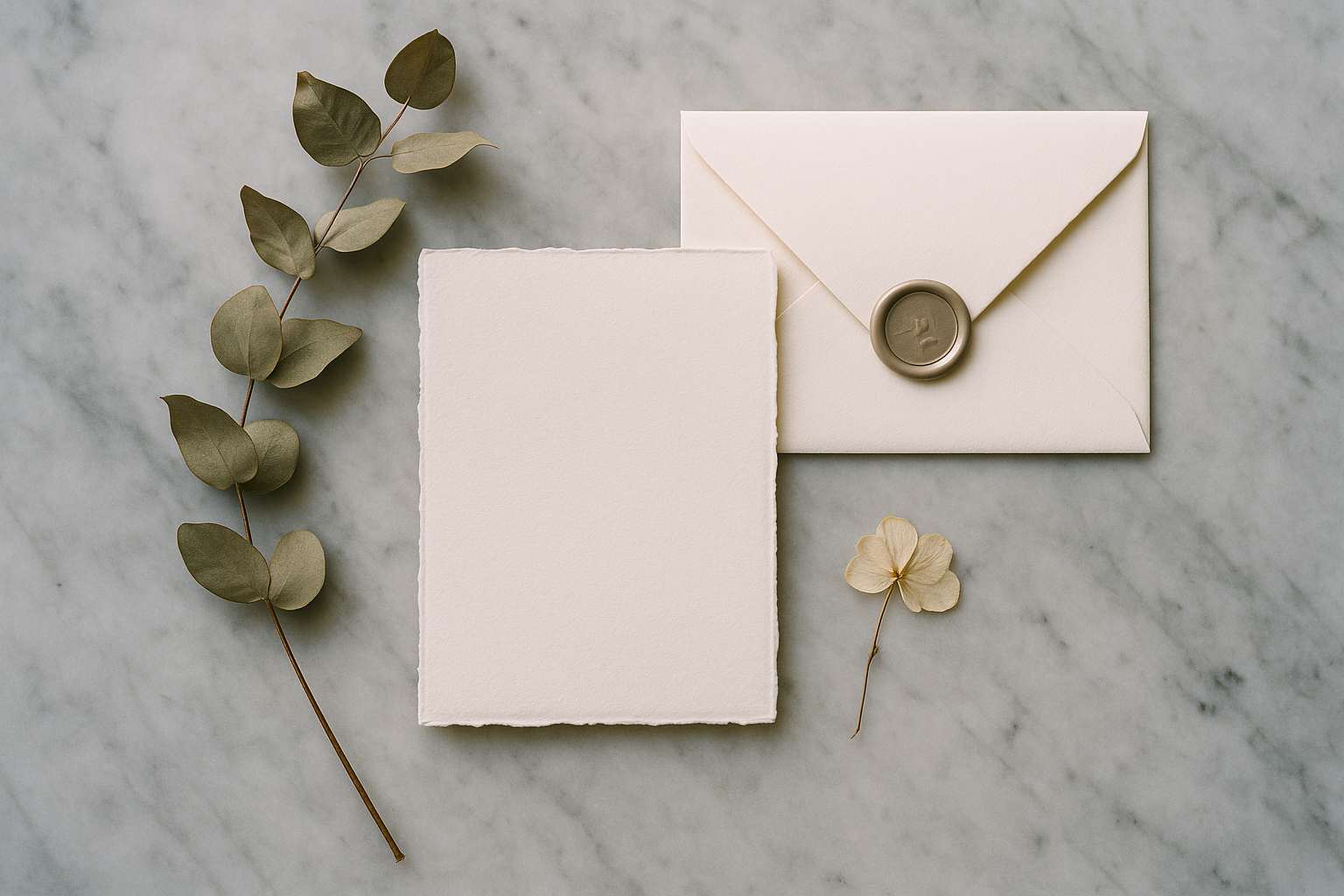
Letterpress costs 3 to 5 times more than digital printing and requires 8 to 10 weeks of production lead time, but delivers a tactile impression that no printed alternative can replicate. For formal weddings where physical detail is part of the aesthetic, it is worth it. For couples prioritizing budget or with a shorter timeline, premium digital printing on quality stock is genuinely beautiful.
A wedding invitation is the first physical artifact guests hold from your celebration. Before they read a word, they feel the paper, register its weight, notice whether the printing sits flat or presses into the surface. That first moment of contact communicates something about the wedding's formality, the couple's attention to detail, and the care that went into the planning. The printing method you choose shapes all of that — and it also shapes your budget, your timeline, and how much flexibility you have if details change.
In 2026, the range of options spans from fully electronic invitations at essentially zero cost to fully custom engraved suites in the thousands. Here is how every major method compares across the variables that actually matter.
What are the main wedding invitation printing methods?
Understanding what each method actually does makes the tradeoffs immediately clear.
| Method | Per-Card Cost | Full Suite (100 guests) | Production Time | Tactile Quality |
|---|---|---|---|---|
| Digital / offset print | $1–$3 | $400–$800 | 1–3 weeks | Flat; crisp; full color |
| Flat foil stamping | $3–$10 | $700–$1,800 | 4–8 weeks | Flat with metallic shimmer |
| Letterpress (1 color) | $6–$10 | $800–$1,400 | 3–6 weeks | Deep impression; tactile; classic |
| Letterpress (2 color) | $10–$15 | $1,400–$2,500 | 4–8 weeks | Deep impression; richer visual |
| Letterpress + foil combo | $14–$20+ | $2,500–$5,500+ | 6–12 weeks | Maximum luxury; impression + shimmer |
| Engraving | $15–$25+ | $3,000–$8,000+ | 8–12 weeks | Raised ink; formal; heirloom |
| Online / digital only | $0–$30 total (flat) | $0–$30 (no per-unit cost) | Immediate | Screen only; no physical item |
Source: Paperlust 2026 Wedding Invitation Cost Guide; Bodega Press letterpress pricing; InviteDrop digital comparison.
What does the tactile difference actually look and feel like?
This is the question that most comparison guides answer in theory but rarely demonstrate concretely. Here is what each method produces when held in the hand.
Letterpress creates a physical impression — a debossing visible as slight shadow and texture that you can trace with a fingertip. On premium 110 to 184 lb cotton or bamboo paper, the invitation is noticeably heavy, creamy, and dimensional. The ink sits in the impression, and the combination of depth and saturation gives the design a warmth no printed alternative has. Guests who receive a letterpress invitation often remark on it before they have read the details. This is the method's essential value proposition: it is noticed, remembered, and saved.
Digital print produces a clean, flat image. High-resolution digital printing on quality paper stock — 100 lb matte, 120 lb linen, premium cotton — looks excellent in photographs and reads as polished in person. At arm's length or in a snapshot, a well-printed digital invitation on quality stock is beautiful. Held in the hand and examined closely, the absence of impression is apparent. Whether that absence matters depends entirely on the couple's aesthetic priorities and whether the invitation is meant to be a keepsake or a practical communication tool.
Foil stamping does something neither letterpress nor digital can: it makes specific design elements shine. The metallic reflection of gold foil on a couple's names or a floral border detail catches light and photographs exceptionally well, which matters for flat-lay styling photos. Foil sits flat (no impression depth), which distinguishes it from letterpress — but its visual glamour is real and immediate.
How do you decide between them?
The decision framework simplifies when you align it with what you are optimizing for.
Choose letterpress if: Your wedding is formal or black tie. Physical details throughout the event — specialty linens, custom florals, high-end catering presentation — are part of your aesthetic. You have a standard engagement timeline (twelve months or more) that accommodates the eight-to-ten-week planning window. You want the invitation to function as a keepsake your parents will frame. Your budget treats stationery as an investment, not a line item to minimize.
Choose digital print if: Your budget is under $1,000 for the full invitation suite. Your engagement is shorter and timeline flexibility matters. Your wedding aesthetic is modern, minimalist, or casual — environments where letterpress impression might feel over-formal. You plan to invest budget primarily in florals, catering, or photography rather than stationery.
Choose a digital-print invitation with foil elements if you want visual impact — the shine and glamour guests photograph and share — without the production time and cost of full letterpress. This combination is the most popular 2026 middle-ground option and is available from mid-market platforms including Minted, Basic Invite, and Artifact Uprising.
The questions no one tells you to ask
Before placing any invitation order above $500, run through these practical considerations:
Postage weight: A fully assembled letterpress suite — thick paper, multiple enclosures, inner envelope — can weigh significantly more than standard. Always take a fully assembled sample to the post office before mailing the full batch. As of 2026, USPS Forever Stamps cover $0.73; suites exceeding one ounce require additional postage. Square envelopes incur a non-machinable surcharge. Miscalculated postage on 120 invitations is a meaningful expense and a stressful morning-of problem.
Order quantity: Never order the exact minimum. Calculate your household count (guests ÷ 1.8), add 25 to 30 buffer units for keepsakes, vendor copies, and addressing errors. Reprinting a short run of letterpress costs nearly as much as the original order. Order the buffer upfront — it is far cheaper than a reprint.
The physical proof: For any letterpress or foil order, a physical press proof ($75 to $250) is mandatory. Digital PDFs do not accurately represent impression depth, foil shimmer, or paper color under light. The investment protects an order that may be $1,500 to $4,000. Stationers who discourage physical proofs for premium orders are a vendor relationship to reconsider.
The invitation you send tells guests something about the wedding before they arrive. Make sure it tells them what you mean.
Frequently asked
How much do letterpress wedding invitations cost compared to digital printing?
The cost difference is significant. For a 100-guest wedding requiring roughly 75 to 85 invitation suites, digital offset printing from a mid-range platform like Minted or Zola typically produces a full suite — invitation, RSVP card, envelope — for $400 to $800 total. A semi-custom letterpress suite from a boutique studio runs $1,200 to $2,500 for the same quantity. A fully custom letterpress design from an independent designer or luxury stationer can reach $3,500 to $8,000 or more, particularly with two-color printing, custom illustration, or specialty paper. Letterpress's higher cost reflects the setup of printing plates for each design, the time-intensive hand-feeding process, and the premium cotton or bamboo papers that best receive the impression. Per-card, letterpress runs approximately $6 to $15 for standard single-color designs; digital print runs $1 to $3 per card.
What does letterpress actually look like and feel like compared to digital printing?
The primary distinction is tactile. Letterpress creates a physical impression in the paper — a slight debossing visible as shadow and texture that you can feel with a fingertip. This impression is the defining characteristic of the process and the reason couples choose it: it reads as quality before anyone has processed a word of the text. On premium cotton paper (commonly 110 to 184 lb weight), the invitation feels substantial and heirloom in a way that digital print cannot replicate. Digital printing produces a clean, crisp, flat image — excellent color reproduction, no texture, no impression. At a distance or in a photograph, high-quality digital print on quality paper stock looks beautiful. Held in the hand, the difference between the two methods is immediately apparent to most people. Whether that tactile difference justifies the two-to-four times cost premium is a values question that varies by couple.
How much longer does letterpress take than digital printing?
Timeline is one of letterpress's most practically important limitations. Digital offset printing from established online vendors like Minted, Zola, or Basic Invite typically ships within one to three weeks of proof approval. Letterpress from a boutique studio requires three to six weeks of production time — and this does not account for the design phase, which may add two to four additional weeks if you are working with a custom designer rather than selecting from a template collection. For a standard engagement timeline, this means letterpress suites should be ordered at least eight to ten weeks before your intended mailing date, compared to three to four weeks for digital. If you are also having envelopes addressed by a calligrapher — which pairs naturally with letterpress aesthetically — add two to three additional weeks for calligraphy turnaround. The cumulative planning window for letterpress is meaningfully longer.
Are digital or online wedding invitations ever appropriate for formal weddings?
Online digital invitations — through platforms like Paperless Post, Greenvelope, or Evite — occupy a distinct category from printed digital invitations and carry different etiquette weight. For casual celebrations, rehearsal dinners, and engagement parties, online invitations are fully appropriate and widely preferred for their speed and environmental efficiency. For formal and semi-formal weddings, traditional etiquette still places paper invitations as the standard — and most guests, particularly older family members who will attend a formal wedding, receive them more warmly than digital alternatives. The most common 2026 hybrid approach: mailed paper save-the-dates plus a detailed wedding website functions as the primary communication platform, with the formal paper invitation suite reserving its weight for the ceremony and reception invitation itself. This hybrid respects traditional sensibilities while leveraging digital convenience for the informational layer.
What is foil stamping and how does it compare to letterpress and digital?
Foil stamping applies metallic or pigmented foil to the paper surface using heat and pressure, creating a reflective, luminous effect that is distinct from both letterpress (which creates impression depth) and digital print (which is flat). Gold, silver, rose gold, and copper foils are the most popular choices for weddings. Per-card cost for foil stamping typically runs $3 to $10 — higher than digital but generally below letterpress. Production time is four to eight weeks, between digital's one to three and letterpress's three to six. The visual effect of foil is the most immediately glamorous of the three methods: the metallic shine catches light in a way that photographs exceptionally well and creates strong social media shareability, which matters to some couples. The practical limitation is that foil is applied to flat surfaces only — it cannot add the impression depth of letterpress.
What questions should I ask before choosing a letterpress stationer?
Five questions worth asking before committing: First, can I see a physical sample of your letterpress work? Digital proofs do not accurately represent impression depth, paper texture, or ink saturation — a $20 to $35 sample kit from most premium stationers is mandatory for a purchase at this price point. Second, what is your current production lead time, and have you accounted for my mailing date? Get this in writing. Third, how many proofing rounds are included, and what is the cost per additional revision? Most studios include two to three rounds; beyond that, fees of $25 to $75 per round are common. Fourth, how do you handle errors on your end versus errors I approved in the proof? The answer to this tells you everything about the vendor's accountability.