Invitations, Registry & Gifts
Wedding Plus-One Etiquette: Who Gets One and How to Communicate It
A plus-one is a gift of hospitality, not a right — and your policy must be consistent to avoid hurt feelings. Here is every rule, exception, and script you need to navigate this gracefully in 2026.
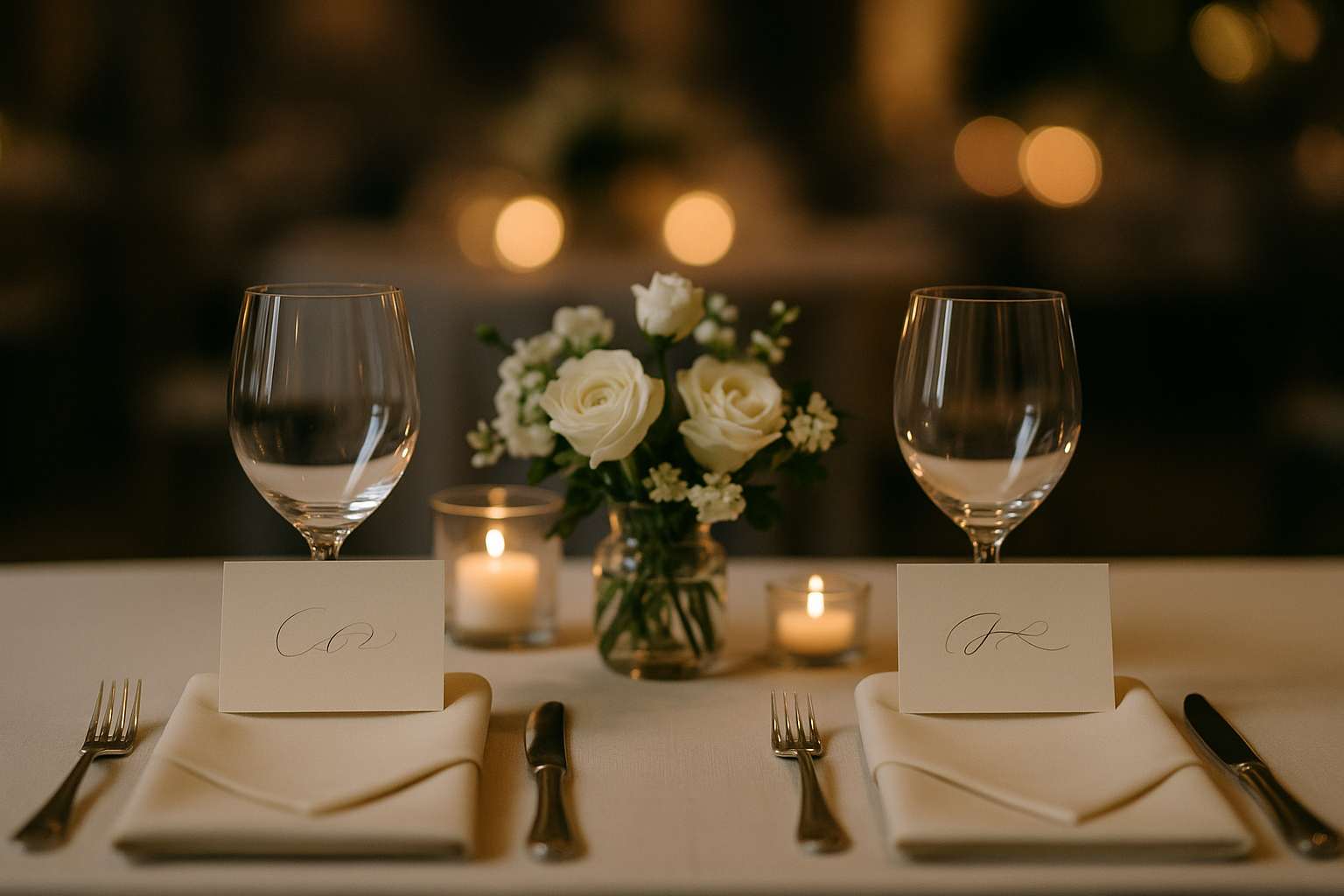
A plus-one is a gift of hospitality, not a guest's right. Three categories are universally entitled: spouses, engaged partners, and cohabiting long-term partners. Beyond those, the policy is yours to set — but consistency within each tier is non-negotiable. Communicate early, warmly, and directly.
Why Plus-One Policy Deserves Careful Thought Before a Single Invitation Is Addressed
The plus-one question surfaces in almost every wedding planning conversation — and 78% of couples report that uninvited plus-one requests are among the most common guest list complications they encounter (The Knot research). The frustrating truth is that most of this friction is preventable. A clear, consistent policy communicated early and warmly eliminates the vast majority of uncomfortable conversations before they happen.
Understanding the current etiquette is the starting point. In 2025–2026, as average per-guest wedding costs approach $290–$300 nationally, limiting plus-ones has become a widely understood and accepted choice — no longer seen as stingy or rude when the policy is applied consistently and explained graciously.
Who Automatically Gets a Plus-One? The Three Unconditional Categories
These three categories carry no ambiguity in current etiquette standards:
- Married guests. A spouse is always invited — always. Separating married couples on wedding invitations is a fundamental etiquette violation. Their partner's name appears directly on the invitation, not as a "plus-one" but as a co-named guest.
- Engaged guests. A fiancé or fiancée should be included as a named guest, not a generic plus-one. If you know the partner's name (and for an engaged couple you almost certainly do), use it.
- Cohabiting couples in long-established relationships. Guests who are living with a partner — particularly for 6 months or more — have a strong etiquette expectation of being invited together. As The Knot's etiquette guide notes, respecting an established relationship is not the couple's call to make.
Building a Consistent Plus-One Policy Across All Guest Tiers
Beyond the three unconditional categories, the plus-one decision is yours — and the governing principle is consistency. Set clear tiers and apply the same rule to every guest in each tier.
| Guest Relationship Status | Standard Etiquette | 2026 Context |
|---|---|---|
| Married / legally partnered | Always invite together — no exceptions | Non-negotiable in all contexts |
| Engaged | Partner always invited; named on invitation | Non-negotiable |
| Cohabiting 6+ months | Strong expectation to invite together | Widely expected; exceptions cause friction |
| Long-term relationship (1+ year, not cohabiting) | Couple's discretion; apply same rule to all | Extending is gracious; not extending is acceptable if consistent |
| Wedding party members | Plus-one is standard courtesy | Strong expectation given their time and financial investment |
| Casual dating / new relationship | No obligation; apply consistently across this group | Increasingly accepted to limit; communicate proactively |
| Single with no partner | No automatic entitlement to a generic plus-one | Acceptable to not extend; consider for travelers and outlier guests |
The budget reality is straightforward: at $290–$300 per guest, a single additional guest costs the couple roughly that amount. For a 150-person wedding, granting 20 plus-ones adds $5,800–$6,000 to the total budget. This is a legitimate factor, and stating it plainly to yourself and your partner helps clarify the decision.
How to Communicate Your Plus-One Policy Clearly and Graciously
The invitation is your primary communication tool. Address the envelope to the specific names invited — not "and family," not "and guest" unless you are extending a plus-one. Pre-print the number of seats on RSVP cards: "We have reserved _2_ seats in your honor" or "We have reserved _1_ seat in your honor" communicates the same information without requiring explanation.
Your wedding website's FAQ section handles the broader conversation. A statement that consistently works: "Due to our venue capacity, we have extended plus-ones to our wedding party and guests in long-established relationships. We know this means some of you are coming solo and we truly appreciate your understanding — we cannot wait to celebrate with you."
According to Kennedy Blue's etiquette guidance, the critical rule is not to grant ambiguous plus-ones on save-the-dates. Wait until you are certain of your policy before the invitation stage, then commit to it uniformly. Changing course mid-process creates more complications than the original decision ever would have.
What to Say in the Most Common Plus-One Conversations
When a guest calls to ask about bringing someone: "We are so excited to see you there. We've had to be really strict about guest count because of our venue — we weren't able to extend plus-ones to everyone. We reserved a seat just for you and we truly cannot wait to celebrate together." Warm, clear, final.
When a guest RSVPs with an uninvited partner: Call them. "We are so glad you are coming! I wanted to reach out because it looks like there may have been some confusion — our venue capacity means we reserved a seat just for you. We so look forward to seeing you." Never handle this by email or text; a warm voice eliminates almost all awkwardness.
When a family member pushes back on the policy: Present a united couple's front — "We have decided" is far more powerful than one partner appearing uncertain. Offer an alternative if one is genuine: a post-wedding gathering, a personal call after the wedding with photos. One sincere, final conversation is all that is required.
Frequently asked
Who is automatically entitled to a plus-one at a wedding?
Under current etiquette standards, three categories are universally entitled to a plus-one: (1) married guests — a spouse is always invited, no exceptions; separating a married couple on an invitation is a firm etiquette violation; (2) engaged guests — a fiancé or fiancée should always be included by name; and (3) cohabiting long-term partners, typically living together 6 months or more. Beyond these three groups, the decision is yours — and must be made consistently. Wedding party members are widely expected to receive a plus-one as courtesy for their time and financial investment. Guests traveling long distances also benefit from a plus-one, since asking someone to travel internationally or across the country alone to celebrate a relationship is a significant ask. Single guests with no partner have no automatic entitlement.
What is the current etiquette around plus-ones as wedding costs rise in 2026?
As of 2025–2026, limiting plus-ones is widely accepted and no longer considered a breach of etiquette when applied consistently and communicated clearly. With the average U.S. wedding costing approximately $290–$300 per guest (The Knot 2026 Real Weddings Study), each additional person is a real financial commitment. Couples increasingly extend plus-ones only to immediate family, wedding party members, and guests in clearly established long-term relationships — rather than blanket plus-ones for every single guest. This approach is well understood by guests of all ages when communicated early and warmly. The governing word is consistency: if one single friend receives a plus-one and another in an identical situation does not, the disparity will cause hurt feelings. Apply your policy uniformly across every tier of relationship status.
How do we communicate our plus-one policy on our invitations?
The invitation itself is your clearest communication tool. Address invitations to the specific names invited — 'Ms. Rachel Stern and Mr. David Park' for a couple, 'Ms. Rachel Stern' for a single guest without a plus-one. Do not address to 'Rachel Stern and Guest' unless you are extending a plus-one. On RSVP cards, pre-print the number of seats reserved: 'We have reserved _2_ seats in your honor' tells the couple how many seats; 'We have reserved _1_ seat in your honor' communicates the same information to a single guest without requiring explanation. Your wedding website's FAQ section is the ideal place for a warm, full-sentence statement of your policy: 'Due to venue capacity, we have extended plus-ones to our wedding party and guests in long-established relationships — we hope you understand and look forward to celebrating with you.' This frames the policy positively and proactively answers the most common question before it becomes a conversation.
What do we say when a guest who was not given a plus-one asks if they can bring someone?
Be warm, clear, and final — and deliver the message by phone or in person rather than by text or email, which can read as cold. The script that works consistently well: 'We would absolutely love to have you there — we're so excited. We've had to make some really hard choices about guest count due to our venue capacity, and we weren't able to extend plus-ones to everyone. We've reserved a seat just for you and we really can't wait to celebrate together.' Three elements make this effective: it affirms genuine desire for their presence, it attributes the limit to an impersonal constraint (venue capacity), and it is final without being harsh. Do not say you will 'check' or that you might be able to 'fit someone in' — this opens a negotiation. One gracious, clear, final conversation is all it takes in the vast majority of cases.
What do we do if a guest RSVPs 'yes' and adds an uninvited partner on the response card?
Call them directly — a warm phone call, not a text. The message: 'We are so excited you can make it! Our venue has a strict capacity limit and we've reserved a seat just for you — we weren't able to extend plus-ones to all guests. We cannot wait to celebrate with you.' Do not approach this as a confrontation; approach it as a clarification between friends or family who genuinely care about each other. Most guests respond graciously when they receive a warm, direct call — the situation is almost always the result of a misread invitation rather than intentional boundary-testing. If the guest responds with genuine pressure or upset, ask your partner to back you up in a follow-up conversation. Presenting a united front ('we have decided') is far more effective than one partner appearing to enforce a policy the other is unsure about.
Should destination wedding guests receive a plus-one more generously than local guests?
Yes — destination wedding etiquette explicitly recognizes that asking a single guest to travel internationally or to a remote location is a significantly larger ask than asking them to attend a local Saturday wedding. Many single guests will decline a destination wedding invitation without a plus-one, not because they are offended, but because traveling alone to celebrate someone else's relationship in an unfamiliar location is a genuinely difficult thing to do with joy. For destination weddings, extending plus-ones more broadly — to any single guest you genuinely want there — is both gracious and practical. It also increases your acceptance rate from single guests, which affects your overall headcount planning. The cost difference is offset by the naturally smaller total guest list that destination weddings produce: the Knot's 2026 data shows the average destination wedding has 50–70 guests, making per-guest generosity more financially manageable.