Venues & Destinations
Bridal Suite Checklist: Everything to Look for and Pack
The bridal suite is where the morning of your wedding actually lives — and what you find (or don't find) in that room shapes every getting-ready photograph and every quiet moment before you walk down the aisle.
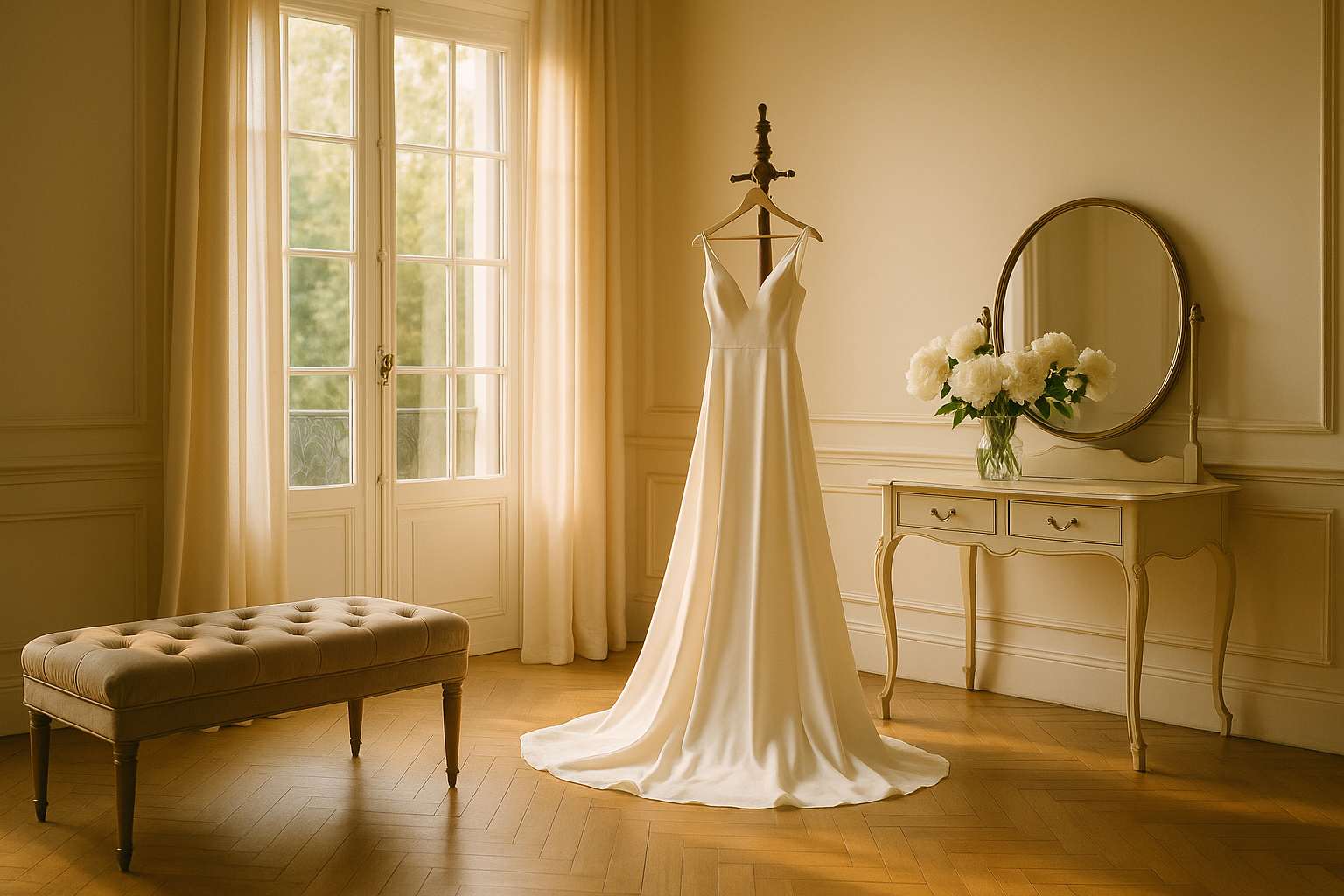
The bridal suite is the launchpad for your entire wedding day — the space where photographs begin, where emotions settle, and where the final hour before your ceremony unfolds. Evaluating the suite during venue tours (not as an afterthought after signing) and packing deliberately the night before are the two decisions that determine whether the morning feels calm or chaotic.
Most couples spend considerable time evaluating ceremony spaces and reception layouts during venue tours — and then glance briefly at a small back room that is described as the bridal suite before moving on. This is one of the most consequential oversights in wedding planning. The suite is where the day actually begins. It is where your photographer arrives first, where the emotional weight of the morning is held, and where a wrong detail — a single outlet for five blow-dryers, no natural light, a bathroom shared with venue staff — can cascade into schedule problems that compress the rest of the day.
This checklist covers both sides of the equation: what to evaluate rigorously when touring venues, and what to pack so that the suite is fully equipped regardless of what the venue provides. According to wedding planning resources including Scioto Reserve Weddings, the bridal suite is among the most underscrutinized elements of a venue selection decision — yet it shapes the first four to six hours of your wedding day entirely.
What Should You Evaluate in a Bridal Suite During a Venue Tour?
The venue tour bridal suite evaluation has two layers: the physical space itself, and the operational details that determine whether the space is actually usable for your specific getting-ready team and timeline. Both matter equally.
The physical space. Natural light is the single most important feature, and it is non-negotiable for quality getting-ready photographs. Ask which direction the windows face and what time of day they receive direct or diffuse light. A north-facing room provides consistent, soft, even light throughout the day — ideal for makeup application. An east-facing room receives beautiful morning light but may be dim by early afternoon. West-facing rooms are bright in the afternoon. South-facing rooms can be harsh and variable. Visit the suite at approximately the time you will be using it on your wedding day if possible.
Size is the second critical variable. Most bridal suites range from 400 to 600 square feet, according to venue design resources, though dedicated bridal villas at some properties reach 1,200 square feet. For a party of four bridesmaids plus two stylists and a photographer, you need a minimum of 500 to 600 square feet in usable floor area — not total square footage that includes closet, bathroom, and built-in furniture footprints. Walk the room and mentally place four styling chairs, a photography position, and a dress hanging area. If the room feels crowded with just you and the venue coordinator, it will be uncomfortable with ten people.
The operational details. Count the electrical outlets and confirm their locations relative to the vanity area. Hair dryers, curling irons, flat irons, ring lights for makeup artists, and phone chargers all require power simultaneously. One outlet behind a sofa is not a workable solution. Ask the venue coordinator whether a power strip is provided or whether you need to bring one.
Confirm the private bathroom arrangement in writing. A suite that shares a bathroom with a general event space or catering area is not truly private. Ask whether the bathroom has full natural light or good artificial lighting — a dim bathroom makes touch-up application impractical.
Ask specifically about suite access timing. For a 4:00 p.m. ceremony with a standard bridal party, getting-ready typically begins at 9:00 or 10:00 a.m. Confirm your venue's policy in writing — some include full-morning access in the base rental; others charge an hourly fee or restrict access to two to three hours before the ceremony.
| Feature | What to Verify | Ask In Writing? |
|---|---|---|
| Natural light | Window direction; light quality at your getting-ready time | No — verify in person |
| Square footage | Usable floor area; fits your party size + vendor team | Yes |
| Electrical outlets | Count and proximity to vanity; power strip available? | Yes |
| Private bathroom | Exclusive to bridal party; lighting quality | Yes |
| Suite access timing | Start time; overtime policy; included or add-on cost | Yes — in contract |
| Full-length mirror | Permanently installed or requires setup | Yes |
| Gown hanging space | Hook, rod, or dedicated hanger area | No — bring own hanger |
| Lockable door | Secure from guest areas; who holds the key? | Yes |
| Climate control | Dedicated HVAC or thermostat; not shared with ballroom | Yes |
| Furniture | Comfortable seating, vanity surface, storage hooks | Confirm in walkthrough |
What Should You Pack in Your Bridal Suite Kit?
Even an exceptionally equipped bridal suite will not stock everything you need. The items below fall into categories that most venues do not provide — and that are genuinely difficult to retrieve once the morning is underway.
Wardrobe essentials. Pack double-sided fashion tape (the Fearless Tape brand is a favorite among stylists), safety pins in sizes small through large, a small sewing kit with white, ivory, and skin-tone thread, a lint roller, a spot-removing pen such as Tide To Go, and a steamer if your venue does not provide one. If your gown has custom buttons or a specific closure, carry one spare. A bustling kit (ribbon loops or thread loops plus a crochet hook sized to your gown) should be packed and briefed to the maid of honor in advance.
Beauty touch-up items. Your makeup artist will leave you with a small touch-up kit after completing your look, but there are items to supplement: bobby pins and hair ties in your exact hair color, travel-size hairspray (Paul Mitchell Super Clean Extra or Kenra Platinum Silkening Mist are widely used by bridal stylists), the exact lipstick or lip gloss shade your artist applied, makeup remover wipes for any setting spray that drifts, and oil-blotting sheets. If you wear contact lenses, pack a small bottle of rewetting drops — nerves and dry venue air make dry eyes a near-certainty.
Physical comfort and logistics. Pack ibuprofen or acetaminophen, antacid tablets, bandages specifically sized for the backs of heeled shoes (Moleskin or Band-Aid Blister cushions), and deodorant. Pack your marriage license in a dedicated folder that will not be confused with other items — designate one specific person in the party whose job is to bring this folder to the ceremony officiant. Bring breath mints, not gum, for the ceremony. Confirm your vow books or cards are in the kit if you are reading personal vows.
Styling additions for photographs. A decorative padded hanger for the gown, a small arrangement of fresh flowers (coordinate with your florist for a bud vase delivery the morning of), a ribbon or silk fabric piece to style around the bouquet stem, and the detail items your photographer will arrange for flat-lay shots: invitation suite, shoes, rings, perfume bottle, and any inherited jewelry. Have these items organized in a single tray or box so your photographer can work quickly and efficiently.
How Do You Set Up the Bridal Suite for Maximum Photograph Quality?
Your getting-ready photographs are some of the most candid and emotionally resonant images from the entire wedding day — they capture a version of intimacy that ceremony photographs rarely achieve. Positioning the getting-ready space deliberately for photography makes a meaningful difference in the images you carry forward.
Position the primary makeup and hair chairs near the strongest natural light source — directly perpendicular to a window rather than facing away from it. This sidelong natural light creates soft, dimensional portraits that require no additional lighting. Ask your photographer in advance whether they bring a portable LED panel for darker suites — many do, but it is worth confirming.
Create a dedicated gown display position before your photographer arrives. An antique-looking padded hanger, a simple hook on a bright wall or doorframe, or a wooden coat stand placed in front of a window creates the detail image that anchors the getting-ready gallery. Bring the hanger from home — venue-supplied wire hangers are rarely photogenic.
Keep surfaces clear except for intentional styling. A vanity covered in random product packaging photographs as clutter; the same vanity with a small flower arrangement, the perfume bottle, and your grandmother's brooch reads as editorial. Brief your bridal party to keep personal bags and clutter in one designated corner out of camera range.
The bridal suite, more than any other element of the venue, is yours to shape entirely. The choices you make in that room — before the first guest arrives, before the ceremony begins, in the quiet company of the people you love most — are the real beginning of your wedding day. A checklist that covers both the venue evaluation and your personal packing means that when the morning arrives, you are genuinely present for it rather than problem-solving through it.
Further reading: 48 Fields Farm — Getting Ready in Your Bridal Suite; The Round Barn — Creating the Perfect Bridal Suite.
Frequently asked
What size should a bridal suite be for a wedding party of six or more?
Industry designers recommend a minimum of 500 to 600 square feet for a bridal party of six, with 700 to 800 square feet or more being ideal when you add two hair stylists and a makeup artist to the mix. For parties of nine or more, many planners suggest booking an adjacent hotel suite or a nearby Airbnb as overflow space to give everyone room to move comfortably. The critical constraint is not just square footage — it is workstation positions. Each vendor (hair, makeup, photography) needs a dedicated zone with access to natural light and electrical outlets. Ask the venue how many people have used the suite simultaneously before and whether the room felt crowded. A venue that claims a suite accommodates ten people may be counting seated guests at cocktail chairs, not a full vendor team in working configuration.
How early should you have access to the bridal suite on your wedding day?
For a ceremony at 4:00 p.m. with a bridal party of four to six people plus a hair and makeup team, you will typically need the suite from approximately 10:00 a.m. — a six-hour window. This allows roughly ninety minutes per person for hair and makeup (staggered), plus time for the photographer to capture getting-ready details before the final look is complete. Some venues include suite access from the morning of the wedding in their base rental; others charge an hourly add-on or limit access to two to three hours. Ask specifically: 'What time can we begin in the bridal suite, and is that time included in our contract?' A rushed getting-ready timeline is one of the most common reasons wedding-day schedules fall behind before the ceremony even begins.
What are the most important amenities to confirm in writing before booking a venue?
The five amenities that matter most — and are most often misrepresented during venue tours — are: natural light (verify that the windows face a direction that provides flattering morning or midday light, not a parking lot or a north-facing wall); electrical outlets in multiple locations close to the vanity area; a full-length mirror that is already installed, not one that requires setup; a private dedicated bathroom accessible only to the bridal party; and secure storage for the gown, valuables, and personal bags throughout the day. Confirm all five in your venue contract, not only in conversation. Many couples have arrived on their wedding morning to find the 'bridal suite' is a shared green room with no mirror and a single outlet.
Should you tip the bridal suite staff or the getting-ready vendor team?
Hair stylists and makeup artists who work on your wedding day should receive gratuity unless it has already been factored into their quoted rate — and many artists do not include it. Industry standard is 15 to 20 percent of the service total per artist, distributed in labeled envelopes. If a stylus travels to the venue, a travel allowance is typically built into their rate; additional gratuity for exceptional service is always appreciated but not obligatory. If the venue provides a dedicated suite attendant or coordinator for the morning, a $50 to $100 tip is a thoughtful acknowledgment. Confirm with your wedding planner or venue coordinator whether gratuity for any on-site getting-ready support is already included in your contract — assumptions in either direction create awkward moments on the morning of the wedding.
Can you decorate the bridal suite for photographs, and does the venue allow it?
Most venues welcome light styling of the bridal suite because beautiful getting-ready photographs ultimately serve as marketing for the venue as well. Common additions that photograph well and require no damage to the space include fresh flower arrangements (sourced from your florist, who can deliver a small arrangement the morning of), a ribbon-tied robe or hanger for the gown, personalized champagne flutes on the vanity, and a small letter board or framed sign with the wedding date. Before adding candles, confirm the venue's open-flame policy — many do not permit them in getting-ready spaces. For hanging a gown or veil, bring a decorative padded hanger and identify a hook, doorframe, or curtain rod at the venue during your final walkthrough. Avoid heavy adhesive products that could damage painted walls or woodwork.
What should go in a bridal suite emergency kit?
A well-prepared bridal emergency kit addresses three categories of potential crisis: wardrobe, beauty, and physical comfort. For wardrobe: double-sided fashion tape, safety pins in multiple sizes, a small sewing kit with white and ivory thread, a lint roller, a spot remover pen such as Tide To Go, and a spare set of dress buttons if your gown has them. For beauty: bobby pins and hair ties matching your hair color, travel hairspray, the exact lipstick shade your artist applied, makeup wipes, oil-blotting sheets, and a travel perfume atomizer. For physical comfort: ibuprofen or acetaminophen, antacid tablets, bandages for heeled shoes, deodorant, breath mints, eye drops for contact lens wearers, and tampons or pads regardless of timing. Pack the kit the night before, not the morning of, and designate one person in the bridal party as the kit keeper for the day.