Venues & Destinations
Church Wedding Requirements: What Every Couple Should Know
Getting married in a church when you are not an active member is possible — but the process is specific, the timeline is long, and the requirements vary significantly by denomination and congregation. Here is a complete, tradition-by-tradition guide.
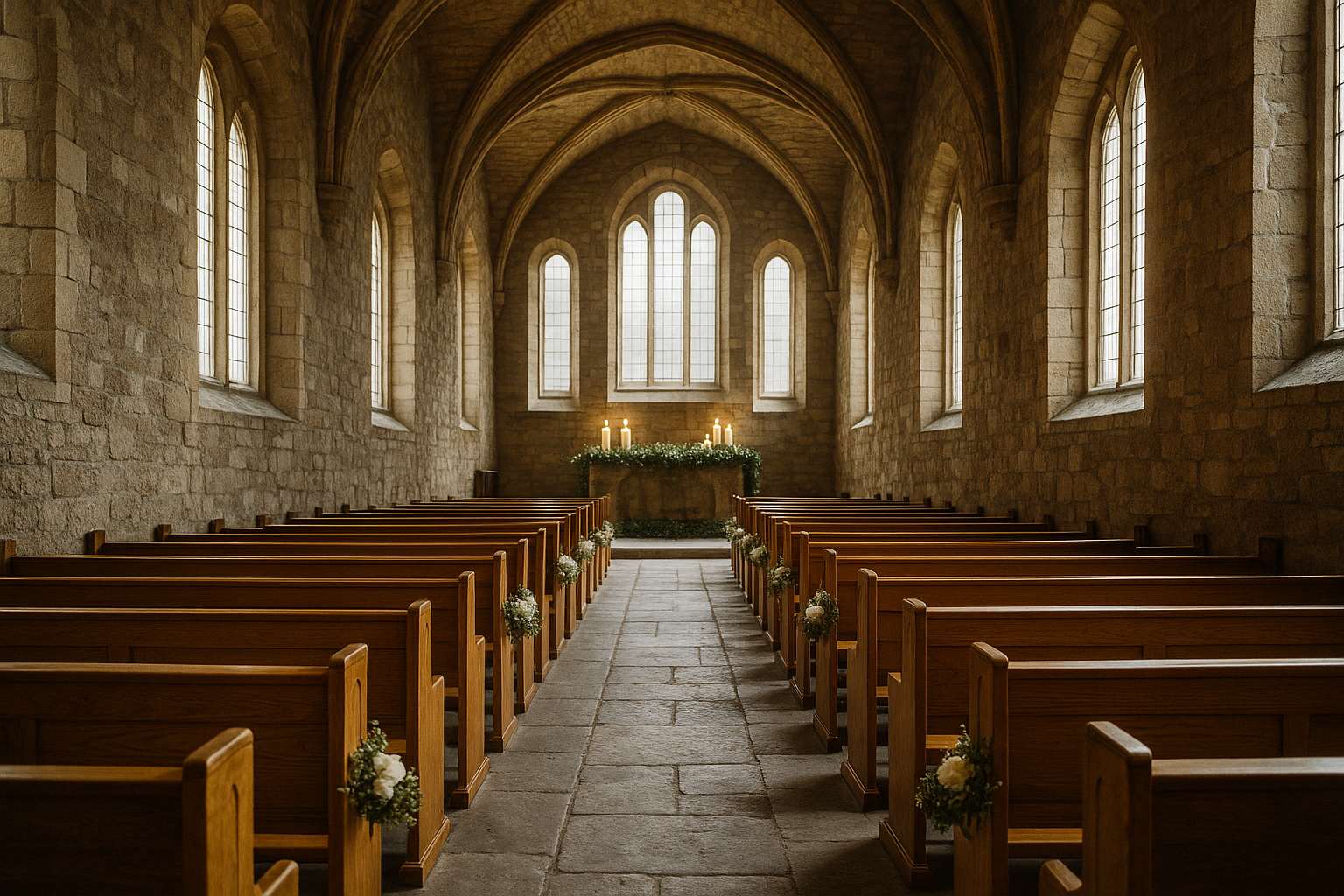
Getting married in a church as a non-member is possible across most Christian traditions — but the process requires 12 to 18 months of lead time, formal pre-marital preparation, membership documentation, and a clear-eyed understanding of music, photography, and décor restrictions that vary significantly by denomination and congregation. Start the conversation early and get every permission in writing.
For many brides, a church wedding is not simply a venue choice — it is a homecoming. The sanctuary where your grandmother was married, the chapel of the college where you met your husband, the cathedral whose bells you have heard your entire childhood. No secular ballroom can replicate what a house of worship provides: height, history, solemnity, and the accumulated weight of every vow spoken there before yours.
But religious venues operate on a different logic than event spaces. Their first obligation is to their congregation and their faith, not to the wedding industry. Understanding that distinction — and approaching your inquiry with genuine respect rather than a consumer mindset — is the foundation of every successful non-member church booking.
This guide draws on current requirements published by the United States Conference of Catholic Bishops, the Prepare/Enrich program documentation, and reported practices from clergy and pastoral coordinators across major denominations.
What is the church wedding booking timeline for non-members?
Timeline is the most urgent practical reality for any couple pursuing a religious venue. Popular churches in desirable wedding markets are frequently booked solid for Saturday dates up to two years in advance. Non-member couples who require additional pastoral meetings, documentation gathering, and counseling programs face even more lead time pressure.
| Milestone | Recommended Lead Time | Notes |
|---|---|---|
| Initial clergy inquiry | 16–24 months out | Popular venues may be fully booked closer than this |
| Formal application and date hold | 12–18 months out | Requires initial documentation; deposit may be required |
| Pre-marital preparation begins | 9–12 months out | Catholic dioceses require minimum 6 months; 9 months recommended |
| Documentation submitted | 6–9 months out | Baptism certificates, freedom-to-marry letters, dispensation applications |
| Vendor briefings (photographer, florist, musicians) | 6 months out | Venue restrictions must be communicated before vendor contracts are signed |
| Final clergy meeting and ceremony run-through | 4–8 weeks out | Confirm all logistics, music cues, and day-of timeline |
| Rehearsal | 1–2 days before | Treat as a dress rehearsal for reverence; arrive on time |
The most common mistake: falling in love with a reception venue, booking it, and then discovering the church cannot accommodate the date or the couple does not meet the eligibility requirements. Always lock the religious ceremony first. The reception venue follows the ceremony; not the other way around.
What are the requirements by denomination — and who can actually book?
The eligibility rules for non-members vary sharply by tradition. Here is what each major denomination actually requires:
Roman Catholic. At least one party must be a baptized Catholic. For a marriage between a Catholic and a non-Catholic Christian, a dispensation for mixed religion must be filed with the diocese — a routine process, but one that requires lead time. For a Catholic-non-Christian marriage, a dispensation for disparity of cult is required. Both parties must be free to marry in the Church (no prior sacramental marriage without an annulment). Non-member Catholics — those not registered at the specific parish — are often accommodated but typically pay a higher donation and may have fewer Saturday date options. The parish you approach should be one with a genuine connection: a childhood parish, a faith community you plan to join, or a church connected to your family.
Episcopal (Anglican). Episcopal churches are among the more welcoming to non-members and interfaith couples. Couples are typically required to meet with the rector or officiant multiple times and complete the Prepare/Enrich inventory, a research-based premarital assessment ($35 per couple) reviewed over two to four sessions. The officiant must be a licensed Episcopalian priest or deacon, though a non-denominational or civil officiant may sometimes be invited to participate in a non-sacramental role. Fees range from $800 to $2,500 depending on the parish.
Methodist, Presbyterian, Lutheran. Requirements vary significantly by congregation. Most require two to six pastoral sessions. Some use structured programs like Prepare/Enrich; others rely on the pastor's pastoral discretion. Non-member couples are generally welcome if they demonstrate genuine reasons for wanting to marry in that specific church and show respect for its traditions. Fees typically range from $400 to $1,500.
Baptist and Evangelical. Independent churches set their own policies, and these vary enormously — from a single pastoral meeting to membership requirement with no exceptions. Call first; do not assume. Many independent evangelical churches warmly welcome non-members with pastoral counseling requirements; others do not use their sanctuary for non-member weddings as a matter of policy.
Eastern Orthodox. Both parties must be baptized Orthodox Christians, or the bishop must grant a specific dispensation for a non-Orthodox Christian party. Orthodox canon law prohibits weddings during Great Lent, the Apostles' Fast, the Dormition Fast, and the Nativity Fast — eliminating significant portions of the calendar. This constraint is often unknown to couples until they have already settled on a date. Confirm the liturgical calendar before committing to any date.
Jewish (synagogues). Reform synagogues are most welcoming to interfaith couples; requirements vary by rabbi. Conservative synagogues typically require both parties to be Jewish. Orthodox synagogues generally do not officiate interfaith marriages. For any Jewish ceremony, a ketubah (marriage document) is required — simple versions run $50 to $100; custom-illustrated ketubot range from $300 to $1,500 and have become treasured artwork for many couples. Synagogue venue fees for non-members typically run $1,500 to $5,000.
What are the practical restrictions that affect your vendors?
The restrictions that most directly shape your vendor planning are music, photography, and décor. These must be understood and communicated before you sign any vendor contract — a photographer who later discovers they cannot move inside the sanctuary, or a florist who has planned an aisle runner, has a problem that is entirely avoidable.
Music: Most Catholic, Orthodox, and mainline Protestant churches require sacred music throughout the ceremony. Your ceremony musicians must work with the church's list of approved pieces and are typically required to coordinate directly with the church's music director. Most parishes have a contracted organist or cantor whose services must be engaged or whose release fee must be paid — budget this line item regardless of your musician plans.
Photography: Obtain the complete photography policy in writing and share it with your photographer before they are hired. Flash photography is prohibited at most churches during the ceremony. Access to the sanctuary or altar area is typically restricted. Arrive at the church during the actual time of day your ceremony will occur to assess available light — this is information your photographer needs before they commit to a package.
Décor: Pew flowers, altar arrangements, and any structures require explicit pastoral approval. Bring a detailed florals plan to your initial meeting with the venue coordinator — not your wedding day. Confirming permissions early prevents the far more painful conversation of redesigning your entire ceremony vision six weeks before the wedding.
The consistent thread through every successful non-member church booking is relationship. The couples who secure their ideal sacred space — and have a joyful experience doing it — are the ones who approached the church as a community of faith to be honored, not a venue to be negotiated. Meet in person. Come prepared with your venue packet. Lean into the tradition's liturgical richness rather than working around it. The result is almost always a ceremony of deeper meaning and more lasting beauty than anything a neutral event space can offer.
Frequently asked
Can you get married in a church if you are not a member?
Yes, in many cases — but the path is more involved than for registered members, and it is never guaranteed. Most Catholic parishes require at least one partner to be a baptized, practicing Catholic and may require formal membership at the specific parish. Many mainline Protestant churches (Episcopal, Methodist, Presbyterian, Lutheran) welcome non-member couples who are willing to meet with the pastor, complete pre-marital preparation, and often commit to a stated connection to the faith community. Some Baptist and evangelical congregations reserve their sanctuary for members only. The key step is contacting the church directly and requesting a pastoral meeting — ideally 14 to 18 months before your desired wedding date. Come prepared to explain your connection to the faith and your genuine reasons for wanting to marry in that particular church. A heartfelt, respectful conversation almost always produces a more welcoming response than a form inquiry.
What are the pre-marital preparation requirements for a Catholic wedding?
Catholic pre-marital preparation is the most structured of any major Christian tradition in the United States. Every U.S. diocese requires some form of marriage preparation; the specific format varies by location. The most common program is Pre-Cana, a series of sessions covering communication, finances, family planning, faith, and conflict resolution — typically offered as a weekend retreat (Engaged Encounter), a series of six to eight parish meetings, or, increasingly, an approved online program. Couples are also required to complete the FOCCUS (Facilitating Open Couple Communication, Understanding and Study) inventory, a written questionnaire completed independently that a priest or deacon then reviews with the couple. Documentation requirements include a baptismal certificate issued within six months of the wedding, confirmation records, and a statement of freedom to marry — or proof of annulment if either party was previously married. Most dioceses require preparation to begin at least six months before the wedding; nine to twelve months is the recommendation. Non-Catholic parties should ask their parish contact about the specific dispensation process, which is routine but requires lead time.
What are the music restrictions at a church wedding?
Music is one of the most common points of friction between couples and religious venues, and the restrictions are genuinely meaningful in most traditional traditions. Catholic and Orthodox churches generally require sacred music throughout the ceremony — meaning pieces with liturgical or classical sacred texts rather than secular songs. Notably, Wagner's 'Bridal Chorus' (Here Comes the Bride) is discouraged or prohibited in many Catholic parishes because it originates from an opera and is not sacred music. Pachelbel's Canon in D, Ave Maria, and classical instrumental pieces are broadly acceptable. Most Episcopal, Presbyterian, and Lutheran churches permit greater flexibility but still exercise pastoral discretion over song selection. The most important practical step: ask the church's music director for a written list of acceptable and prohibited pieces before discussing options with your ceremony musician. Churches also typically have a contracted organist or music director whose services must be engaged — or whose release fee must be paid even if you bring your own musicians. Budget $200 to $800 for the house musician regardless of your arrangement.
What photography and videography restrictions should couples expect in a church?
Photography and videography restrictions vary by denomination and often by individual parish, but certain policies are widespread enough to plan around. No-flash photography during the ceremony is standard at Catholic, Orthodox, and many mainline Protestant churches — your photographer must be skilled with available light. Restrictions on photographer positioning are common: moving to the altar or sanctuary area is typically prohibited, meaning your photographer works from the side aisles, balcony, or rear of the church. Videography lighting rigs are rarely permitted in older sanctuaries. Some Orthodox Jewish and Eastern Orthodox ceremonies restrict photography entirely inside the sanctuary during the ceremony. The critical step: share the church's photography policy with your photographer before they sign a contract, and schedule a venue walk-through together so the photographer can assess the light and plan their positions. A photographer who has worked in religious venues routinely is invaluable here. Document all restrictions in writing so there are no misunderstandings on the wedding day itself.
How much does it cost to get married in a church as a non-member?
Church wedding costs are framed as donations rather than rental fees in most traditions, which can make budgeting feel uncertain. For Roman Catholic parishes, member couples typically make a donation of $400 to $1,200 to the parish and pay separately for an organist ($200 to $600), a sound technician ($150 to $400), and a sexton or custodial fee ($100 to $300). Non-members are often asked for a meaningfully higher parish donation — $1,000 to $3,000 or more at many parishes — reflecting the additional pastoral time their preparation requires. Urban Episcopal and Presbyterian churches charge $800 to $2,500 for venue use. Conservative and Reform Jewish synagogues typically charge $1,500 to $5,000 depending on size and location. Beyond the venue donation, the pre-marital counseling program costs $150 to $450 for retreat formats. The total ceremony venue cost — including all fees, the house musician, and counseling — commonly runs $1,500 to $4,000 for a non-member Catholic wedding and $2,000 to $5,000 for a non-member synagogue wedding in a mid-tier market.
What are the décor restrictions at a church wedding?
Religious spaces are not blank canvases, and understanding the décor rules before you meet with your florist will prevent expensive misalignments. Aisle runners are prohibited at many Catholic and Episcopal churches due to trip hazards on uneven stone or marble floors — and some congregations view the sanctuary floor itself as sacred space not to be covered. Pew flower arrangements must use non-damaging attachment methods: no tape, no staples, and only approved clips or pew cones. Open-flame candles may be restricted by fire code; LED substitutes are sometimes accepted but should be confirmed. Confetti, rice, dried flower petals, and sparklers are almost universally prohibited inside the church and often outside as well. Floral arches may require explicit pastoral approval. For Catholic weddings during the liturgical seasons of Advent and Lent, there are strict restrictions on flowers in the sanctuary — purple and penitential tones replace festive florals. If your wedding date falls between Ash Wednesday and Easter, confirm décor expectations at your very first venue meeting. All permissions should be confirmed in writing.