Venues & Destinations
Destination Wedding Guest Guide: What Every Couple Should Know
Helping your guests say yes — and show up — is one of the most loving things you can do when you choose a destination wedding. This is the complete guide to invitations, room blocks, travel logistics, gift etiquette, and the event weekend, written for couples who want to be brilliant hosts.
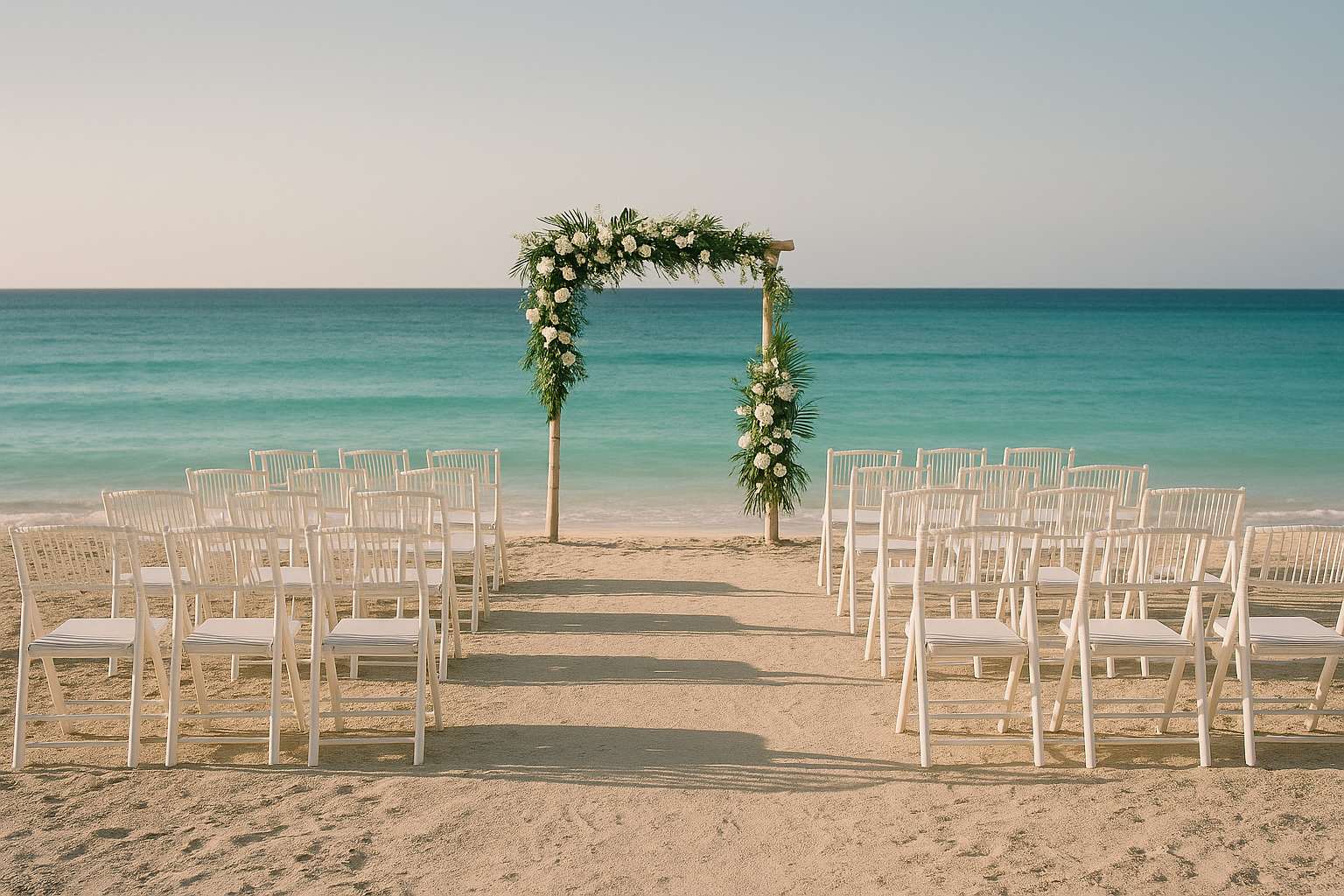
A destination wedding asks something real of every guest who says yes — time, money, and logistical effort. The couples who become legendary hosts at destination weddings do one thing consistently: they treat guest communication and support as a central design project, not an afterthought. Start early, be exhaustively clear, and make every guest feel that the trip was worth every mile.
Approximately 25 to 31 percent of all U.S. weddings are now destination celebrations, according to 2025 industry tracking data — a figure that has grown steadily as couples prioritize intimacy, experience, and the immersive quality that only a multi-day gathering in a beautiful place can provide. The global destination wedding market reached an estimated $41.6 billion in 2025. And yet for all its romance, a destination wedding places real demands on the people you love most. Understanding those demands — and designing your guest experience to address them proactively — is one of the most gracious things you can do as a couple planning this kind of celebration.
What do guests need to know first, and when?
The single most impactful thing couples can do for their destination wedding guests is send save-the-dates ten to twelve months in advance. This lead time is not a formality — it is the difference between guests being able to book flights at $280 round-trip versus $650, and between a room at the contracted block rate versus a nearby hotel that may require guests to purchase day passes to attend your wedding. Destify's 2026 destination wedding travel guide recommends that save-the-dates for international celebrations go out no later than twelve months before the date, and that the booking link for the room block be included from that first communication.
Your wedding website is your guest experience infrastructure. It should be live the day your save-the-dates go out and should include, at minimum: destination overview and venue details, the room block booking link with the release deadline prominently displayed, recommended airports and typical fare ranges from your guests' home cities, the full event schedule across all days, packing guidance suited to the destination and season, an FAQ section, and an emergency contact for day-of issues. Treat the wedding website as a living document — update it as details are confirmed, and tell guests when you have added information.
| Timeframe | Action | Key Content |
|---|---|---|
| 10–12 months before | Send save-the-dates | Date, destination, room block link, wedding website URL |
| 8–10 months before | Follow up with guests who haven’t booked room block | Reminder with block release date; direct booking assistance if needed |
| 10–16 weeks before | Send formal invitations | Full event schedule, dress codes, travel logistics, RSVP deadline |
| 4–6 weeks before | Send pre-travel welcome packet | Final event schedule, activities, packing tips, emergency contacts |
| 1 week before | Send arrival-day logistics | Shuttle or transport schedule, check-in details, first event timing |
How do you manage the room block, attendance expectations, and the cost question honestly?
The room block is the structural foundation of a well-run destination wedding. Most all-inclusive resorts — in Mexico's Riviera Maya, Jamaica, the Dominican Republic, and Caribbean destinations — offer complimentary or deeply discounted ceremony packages in exchange for a guaranteed minimum number of room nights booked by your group. Book outside the block and those packages disappear; guests who book outside may also face day-pass fees to attend the event itself. This reality should be communicated to every guest warmly but clearly, as early as the save-the-date stage.
Negotiate room blocks at two or three price tiers when possible — a standard room category, a mid-tier, and a premium option. This accommodates guests with different travel budgets and demonstrates thoughtfulness about the financial reality of the ask. Confirm the block release date with the resort, typically 30 to 60 days before the event, and follow up personally with guests who have not yet booked as that date approaches.
On attendance: a realistic planning assumption for destination weddings is that 60 to 70 percent of invited guests will accept. Close family and your wedding party typically attend at rates approaching 90 percent; good friends at 70 to 75 percent; more distant connections at 30 to 50 percent or lower for international events. These numbers are not a measure of how much people love you — they reflect genuine financial and logistical constraints. Plan your catering, floral, and logistics minimums around the lower end of realistic attendance projections so you are never scrambling to cover unexpected costs.
Guests attending a destination wedding are investing substantially in your celebration. Per-person travel expenditure for an international destination wedding typically runs $2,500 to $4,500, including flights, accommodations, and incidental spending. A gift in the $75 to $150 per person range is the accepted norm for international travel; $100 to $200 per couple for domestic destination events. Many destination wedding couples register a honeymoon fund on Honeyfund or Zola rather than a traditional registry — this gives guests a clear, practical way to contribute that acknowledges the financial gesture they are already making by attending.
What does the event weekend experience look like from a guest's perspective?
One of the most meaningful differences between a destination wedding and a local celebration is the multi-day format. Most destination wedding weekends span three to four days, and guests — particularly those who have traveled internationally — expect a curated experience beyond the ceremony and reception alone. A welcome dinner or cocktail gathering on the arrival evening, a ceremony and reception on the main day, and a farewell brunch before departures is the minimum structure guests appreciate. For celebrations at larger resort properties, a group excursion — a sunset catamaran cruise, a guided tour, a cooking class — on the day before or after the wedding adds genuine value to the trip and is one of the details guests remember most vividly.
Leave unscheduled time. This is one of the most sophisticated choices you can make as a destination wedding host: guests who have flown to Puerto Rico or the Amalfi Coast want hours that belong to them, not a conference schedule from dawn to dusk. Destination weddings work best when they feel like a genuine escape interrupted by a beautiful wedding, not a wedding with a travel brochure attached.
Travel insurance deserves explicit mention in every communication to guests. Flight delays, medical emergencies, and unexpected complications are real risks for any international trip, and the per-person investment guests are making in attending your wedding is significant. Encourage every guest to purchase a policy covering trip cancellation, interruption, and medical emergencies. As a couple, purchase wedding event insurance covering vendor cancellation, weather disruption, and liability. According to PlayaDelCarmen.com's destination wedding guest guidance, travel insurance should be treated as a non-negotiable expense, not an optional add-on, for any celebration involving international travel.
Finally: honor every guest who cannot attend. Some of the people who love you most will not be able to travel — because of finances, health, family obligations, or work constraints. Express genuine warmth and understanding toward every decline, and honor those guests with a celebration at home after you return. A post-wedding party for friends and family who could not make the destination event is one of the loveliest traditions in destination wedding culture, and it ensures no important relationship in your life is inadvertently strained by the choice you made for your ceremony location.
Frequently asked
How far in advance should we send save-the-dates for a destination wedding?
Send save-the-dates for a destination wedding ten to twelve months before the ceremony date — and no later than eight months out under any circumstances. Guests attending a destination wedding need time to request vacation days, research flights while fares are still reasonable, and arrange accommodations at your room block rate before the block fills. For international destinations with higher travel complexity — Italy, Greece, Bali, Japan — the twelve-month window is strongly preferred, giving guests the full runway they need. Include your wedding website URL on the save-the-date from day one so guests can immediately access the room block booking link, tentative event schedule, and travel logistics. Earlier communication is a direct act of hospitality.
What attendance rate should couples realistically plan for at a destination wedding?
Plan for 60 to 70 percent of invited guests to attend a destination wedding — meaningfully lower than the 80 to 85 percent acceptance rate typical of local weddings. Close family (parents, siblings, wedding party) tend to attend at rates approaching 90 percent. Good friends typically accept at 70 to 75 percent. More distant acquaintances and coworkers accept at 30 to 50 percent, and sometimes lower for international events. These numbers are not a reflection of your guests' love for you — they reflect real financial and logistical constraints. Build your invitation list and your budget scenarios around realistic attendance projections, not optimistic ones. The self-selection that occurs at destination weddings tends to leave you surrounded by exactly the people who most want to be there.
Do guests at a destination wedding still need to bring or send a gift?
Yes — but the expectation is adjusted downward to reflect the significant travel investment guests are making. According to Destify's destination wedding etiquette guidance, a gift in the $75 to $150 per person range is widely considered appropriate for guests who have traveled internationally to attend. For domestic destination weddings, $100 to $200 per couple is the accepted norm. Many destination wedding couples register a honeymoon fund through Honeyfund or Zola, which makes it easy for guests to contribute a specific amount toward the honeymoon experience rather than shipping a physical item. Physical gifts should always be shipped directly to the couple's home address — never transported by plane, where fragile items risk damage and excess baggage fees become an issue for guests.
What should a destination wedding website include?
A destination wedding website should be the complete informational hub for every guest from save-the-date through farewell brunch. At minimum it must include: a clear overview of the destination and venue, the room block booking link with the cutoff deadline prominently displayed, recommended airports and airlines with typical fare ranges from your guests' major home cities, the full event schedule (welcome dinner, ceremony, reception, farewell brunch) with timing and dress codes, local activities and excursion suggestions for guests who arrive early, a packing guidance section tailored to the destination and season, a FAQ page covering the most common guest questions, and an emergency contact for day-of issues. Update it throughout the planning process as details are confirmed. The wedding website replaces dozens of individual emails and text messages — invest time in making it comprehensive.
Is it rude to choose a destination that requires guests to travel internationally?
Choosing a destination wedding means accepting that some guests, through no fault or failing of their own, will not be able to attend. This is the nature of the choice, not an oversight in planning. The kindness lies in how you handle it: give maximum lead time via early save-the-dates, negotiate room rates at multiple price tiers so guests with tighter budgets have an affordable option, communicate travel logistics with unusual clarity and generosity, express genuine warmth and understanding toward those who decline, and host a celebration at home after you return for those who could not travel. Never pressure guests to attend; never imply disappointment at a decline. Destination weddings work because they create a deeply intimate gathering of the people most committed to celebrating with you — not despite a smaller guest list, but because of it.
How does the room block work, and why is it important for guests?
A room block is a negotiated reservation of a set number of hotel or resort rooms at a contracted rate, held for your guests until a specified release date. Most all-inclusive destination wedding resorts require couples to guarantee a minimum number of room nights in exchange for complimentary ceremony packages — making the room block foundational to your pricing, not just a convenience. Guests who book within the room block typically receive the best available rate, preferred room locations, and are guaranteed access to the venue on the wedding day; guests who book outside the block may be charged day-pass fees to attend the event. Communicate the room block booking link, the contracted rate, and the release deadline clearly and repeatedly — in the save-the-date, on the wedding website, and via direct follow-up with guests who have not yet booked as the deadline approaches.