Venues & Destinations
How to Plan a Destination Wedding: The Complete 2026 Guide
From choosing a location and navigating international paperwork to building your room block and managing vendor relationships across time zones — everything you need to plan a destination wedding with clarity and confidence.
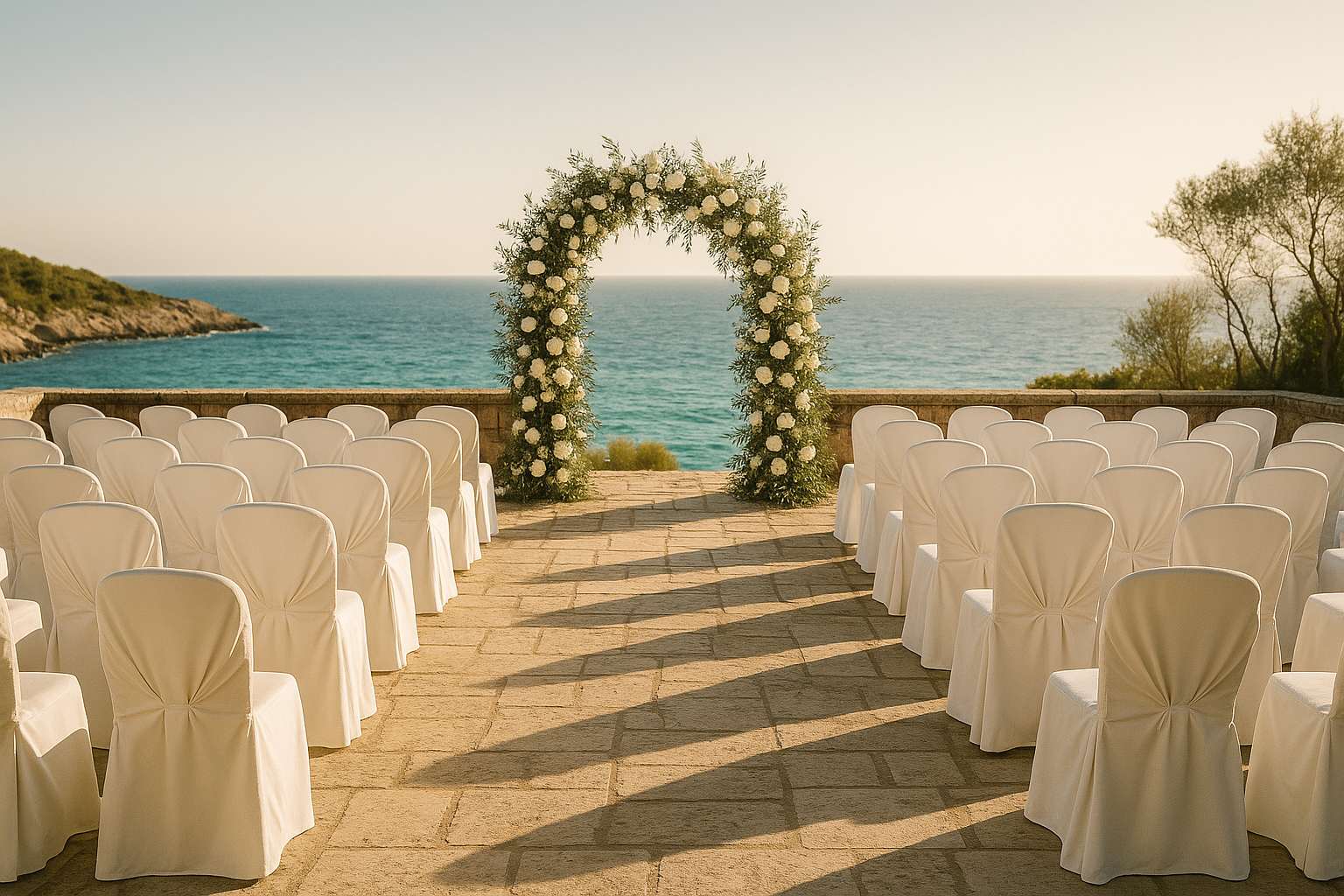
A destination wedding requires 12 to 18 months of planning, a local planner at the destination, room block coordination, and honest communication with guests from the save-the-date forward. All-inclusive resort packages in Mexico or the Caribbean can cost the couple $5,000 to $15,000; custom European events typically run $39,000 to $70,000+.
Destination weddings have crossed into the mainstream. According to industry data, approximately 25 to 31 percent of all U.S. weddings in 2025 were destination weddings — roughly 350,000 celebrations annually, representing an estimated $41.6 billion global market. The reasons are genuine: a smaller, more invested guest list, a setting that does much of the decorative work, a built-in honeymoon or extended celebration format, and, when the all-inclusive route is chosen, a cost structure that can compete favorably with a traditional hometown reception.
But a destination wedding is not simply a local wedding held in a prettier place. It carries its own logistics, legal considerations, vendor relationships, and guest communication demands — and the couples who navigate it most gracefully are those who understood what they were taking on before they chose the destination.
How do you choose the right destination for your wedding?
The destination decision shapes every other planning choice that follows, so it deserves more than a beautiful Instagram scroll. The questions that matter most are practical: How many direct flights serve this location from your guests' home cities, and what do round-trip fares cost? What are the legal requirements for marriage — and do you want the ceremony to be the legal marriage or a symbolic celebration backed by a courthouse ceremony at home? What is the weather during your target season? Does the location have an established ecosystem of English-speaking vendors?
| Category | Key Destinations | Couple's Estimated Cost | Best For |
|---|---|---|---|
| All-Inclusive Beach Resort | Mexico (Riviera Maya, Los Cabos), Dominican Republic, Jamaica | $5,000–$15,000 (with complimentary package) | Budget-conscious couples, ease of logistics, multi-day formats |
| U.S. Tropical Island | Puerto Rico, Hawaii, U.S. Virgin Islands | $15,000–$35,000 | No international legal complexity, tropical setting |
| European Romance | Italy (Amalfi, Tuscany), Greece (Santorini), Portugal, France | $25,000–$70,000+ | Luxury, historic architecture, wine country, editorial photography |
| Domestic Destination | Napa Valley, Charleston, Sedona, Nashville, Asheville | $25,000–$45,000 | Familiar logistics, still "away" for guests, no legal complexity |
| Exotic / Adventure | Costa Rica, Bali, Patagonia, Thailand | $20,000–$60,000 | Unique experiences, sustainability focus, adventurous couples |
Mexico remains the undisputed leader, capturing approximately 34 to 44 percent of all international destination weddings. The Riviera Maya corridor — anchored by resorts like Moon Palace and the Playa Mujeres collection — accounts for the majority of Mexican destination weddings, with properties like Sandals resorts in Jamaica gaining significant momentum as alternatives. Europe accounts for roughly 20 to 26 percent of the international market, with Italy's Amalfi Coast, Lake Como, and Tuscany vineyards representing the aspirational standard. Portugal's Alentejo and Algarve regions are emerging as more accessible European alternatives for couples seeking the continental aesthetic at a lower price point.
What does a destination wedding actually cost, and what are the hidden expenses?
The cost reality of a destination wedding hinges on a single choice: all-inclusive resort package or custom event. Couples who choose a complimentary resort wedding package — available when the guest group books a minimum number of room nights — can plan a complete ceremony and reception for $5,000 to $15,000 of direct couple's expense. Couples who build a custom event in a European villa or private estate typically spend $39,000 to $41,000 on average, and premium European weddings regularly reach $60,000 to $80,000.
The hidden costs that consistently surprise couples include: apostille authentication and certified translation fees for legal documents ($150 to $500 per document set); vendor travel and accommodation fees when importing a photographer or florist from home; foreign transaction fees on credit cards; customs and import duties on wedding items shipped ahead; and post-wedding U.S. marriage registration steps. Travel insurance for the couple ($200 to $600) and wedding event insurance covering vendor cancellation and weather disruption are genuinely non-optional in the destination context — a hurricane-season Caribbean wedding without event insurance has devastated real couples. Budget a 10 to 15 percent contingency above your itemized estimate for these and other unforeseeable expenses.
What is the right planning timeline for a destination wedding?
According to Here Comes the Guide's destination wedding checklist, the planning window breaks into five distinct phases, each with its own critical actions. Working backwards from the wedding date, here is the phase structure experienced planners use:
14 to 18+ months before: Set and document the budget. Identify two to three destination candidates. Research visa requirements, weather windows, and legal complexity. Begin interviewing local planners. Schedule a site visit trip if at all possible — choosing a destination based on photographs alone without ever walking the venue is a risk that has disappointed many couples.
12 to 14 months before: Confirm destination and venue; sign contracts. Hire the local planner. Negotiate and confirm the room block. Send save-the-dates with room block details and launch the wedding website. Begin passport renewals. Start the legal documentation research process — apostilles take time, and most country-specific requirements demand 6 to 12 months of lead time.
8 to 12 months before: Book photographer and videographer (the best international photographers fill 12 to 18 months out). Confirm officiant and establish whether the ceremony will be legal or symbolic. Build out the full event schedule: welcome dinner, ceremony, reception, farewell brunch. Begin excursion planning for guests.
4 to 8 months before: Send formal invitations with full travel logistics. Confirm all vendor contracts in writing. Purchase travel and wedding event insurance. Order the wedding dress with appropriate lead time for overseas alterations if applicable. Plan and order welcome bags.
2 to 4 months before: Confirm final guest headcount and finalize room block. Complete all legal documentation and submit to relevant authorities. Finalize catering menu, floral designs, and décor. Confirm transportation — airport transfers, shuttles between venues. Brief all vendors on the day-of timeline.
The single most common planning mistake is starting the legal paperwork too late. Whether you are pursuing a legal ceremony in Mexico, Italy, Jamaica, or Greece, the documentation process requires weeks to months — and some countries' requirements (France's 40-day residency requirement, Italy's six-month apostille timeline) have ended couples' plans to marry legally abroad when discovered too late. Begin this research the week you confirm your destination.
How do you communicate with guests and manage attendance expectations?
Destination wedding guest communication is its own discipline, and the couples who handle it most gracefully treat it as such from the first save-the-date. Guests need to know: where they are going, how to get there, where to stay (with the room block booking link and deadline prominently featured), what events they are expected at, what to pack and wear for each event, and what local activities are available around the wedding weekend.
Your wedding website — launched simultaneously with the save-the-date — should answer every practical question before guests have to ask it. According to Minted's destination wedding planning guide, a well-built destination wedding website includes the destination overview, recommended flights and arrival airports, room block booking instructions, the full event schedule, packing and dress code guidance, local activities and excursions, FAQ, and an emergency contact. Update it throughout the planning process; stale information on a wedding website is a quiet source of guest anxiety.
The most important emotional communication skill in destination wedding planning is grace around declined RSVPs. Destination weddings draw 60 to 70 percent of invited guests rather than the 80-plus percent typical of local weddings. This is not a rejection of you or your relationship; it is the honest reality of travel costs, work schedules, and family logistics that your guest list will navigate. Never guilt a guest who cannot attend. Give maximum lead time, provide clear information, express genuine understanding, and — a tradition that has grown beautifully in recent years — host a belated celebration at home for those who could not make the trip. That gathering is often just as meaningful, and sometimes more so.
Frequently asked
How far in advance should you start planning a destination wedding?
The 2026 industry standard is a minimum of 12 months of planning lead time, with 14 to 18 months strongly recommended for European destinations or complex multi-day events. Popular resort venues in peak season — particularly in Mexico's Riviera Maya and the Caribbean — book 18 to 24 months in advance. In-demand international photographers fill their calendars 12 to 18 months out. If your timeline is shorter, a domestic destination wedding (Napa Valley, Charleston, Sedona, Nashville) offers the same sense of occasion with significantly simpler logistics and a 9 to 12 month planning window. For an intimate destination elopement with fewer than 15 guests, 6 to 9 months can be sufficient if the destination's legal requirements are straightforward.
Is a destination wedding actually cheaper than a local wedding?
It depends entirely on the format you choose. An all-inclusive resort package wedding for 50 guests in Mexico can cost the couple $5,000 to $15,000 when the resort offers a complimentary ceremony package in exchange for a minimum number of room nights booked — far below the $34,000 to $35,000 U.S. average. A fully custom destination wedding at a European villa for the same guest count, with imported florals, a local planner, international photographer, and custom catering, can easily reach $60,000 to $80,000. The all-inclusive route is genuinely cost-competitive. The custom European or premium resort route typically costs more than a traditional local wedding. Knowing which path you are on before the planning begins is critical to budget accuracy.
Do you need a local wedding planner for a destination wedding?
Yes — a local destination wedding planner is one of the wisest investments you can make, and trying to replicate their value remotely is not realistically possible. A qualified local planner brings relationships with vetted vendors, fluency in the local language and legal processes, permits knowledge, day-of ground presence, and often proprietary access to venues not listed publicly. Budget $2,500 to $10,000 for a quality local planner depending on destination, scope, and experience level. If your all-inclusive resort provides an on-site coordinator, understand that this person is a resort employee whose primary loyalty is to the property. For complex, custom, or multi-day events, an independent local planner working exclusively for you — alongside the resort coordinator — is the most protective investment in your wedding's outcome.
How do you handle legal marriage requirements for a destination wedding abroad?
Many couples make the pragmatic choice to legally marry at home — a quiet civil ceremony at the local courthouse — and hold their destination celebration as a symbolic ceremony. This eliminates all foreign legal complexity while delivering the full aesthetic and emotional experience at the destination. If you want the destination ceremony to be the legal marriage, plan for additional documentation: valid passports, apostille-authenticated birth certificates, certified translations of U.S. documents, an Affidavit of Eligibility to Marry, and country-specific requirements that vary significantly. Mexico requires documents translated into Spanish and blood tests in some states. Italy requires apostille authentication, Italian translation, and potentially 6 months of lead time for document processing. Jamaica is one of the more streamlined options, requiring only 24 hours in-country before the ceremony.
What is a room block and why does it matter for a destination wedding?
A room block is a set of reserved guest rooms at a contracted rate negotiated between the couple and the venue or hotel. For destination weddings at all-inclusive resorts, the room block is often the foundational financial mechanism: most resorts offer complimentary ceremony packages when the group books a minimum number of room nights, meaning the room block directly determines whether the couple pays for the wedding venue or receives it as part of the group booking. Couples should block rooms at two to three price tiers to accommodate different guest budgets, communicate the booking link and deadline clearly to all guests, and understand that guests who book outside the block may be unable to access the ceremony property without purchasing a day pass. The block release date — after which unbooked rooms revert to general inventory — should be confirmed in writing.
How many guests should you expect to attend a destination wedding?
Plan for 60 to 70 percent of invited guests to say yes. This is markedly lower than the 80-plus percent typical of local weddings. Close family members — parents, siblings, your wedding party — tend to attend at rates near 90 percent. Good friends average around 75 percent. More distant acquaintances may decline at rates of 50 percent or higher. These lower attendance rates are not a social failure; they reflect the real financial and logistical demands the destination format places on guests, and the couples who choose destination weddings typically anticipate and accept this tradeoff. Build your budget models around realistic attendance numbers rather than optimistic ones. The average destination wedding guest count is 50 to 70, compared to 116 for a traditional wedding — a scale that allows deeper per-guest investment and a more intimate experience.
When should you send save-the-dates for a destination wedding?
Send destination wedding save-the-dates 10 to 12 months in advance — a minimum of 8 months. This lead time is not excessive; it is the practical minimum for guests to request time off work, budget for travel costs, research flights, and arrange childcare. Include the room block booking link with your save-the-date and launch your wedding website simultaneously so guests have a single reference point for all travel and event information. Send formal invitations 10 to 16 weeks before the wedding with the full travel logistics package: recommended flights and airports, room block instructions, event schedule, dress codes, and a local activities guide. Guests who are surprised by the logistics late in the planning process — or who cannot book the contracted room block because they were not notified in time — become a source of stress that pre-planning can entirely prevent.