Venues & Destinations
Vineyard Wedding Planning: What Every Couple Should Know
Rows of golden grapevines at dusk, barrel-lined tasting rooms, harvest light that photographers chase all year — vineyard weddings are among the most beautiful settings a couple can choose. Here is how to plan one without the costly surprises.
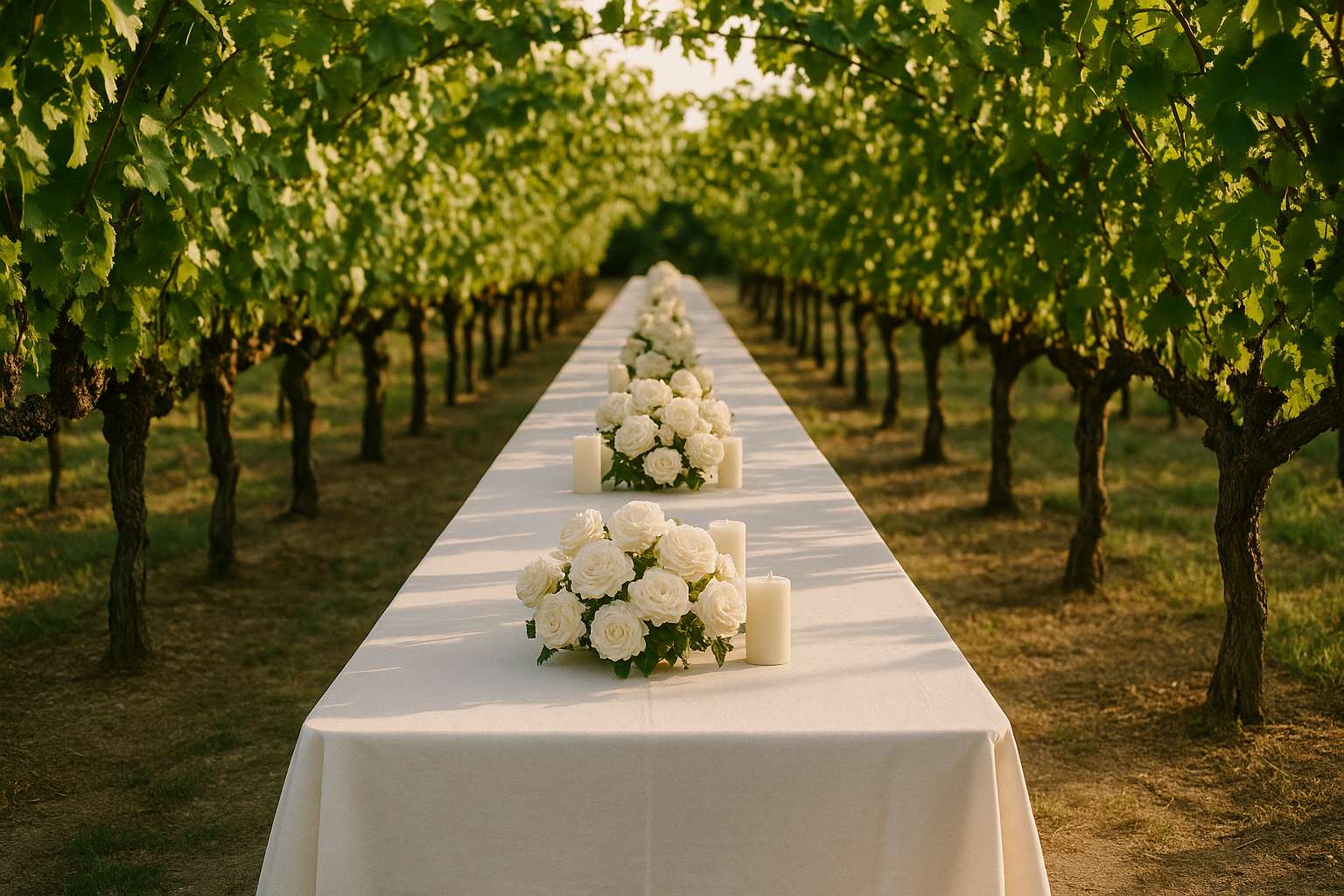
Vineyard weddings offer some of the most naturally beautiful settings available — golden harvest light, geometric vine rows, and built-in romance — but the total cost at premium properties like Napa Valley can reach $100,000 to $150,000 for 100 guests. Outside top markets, site fees of $5,000 to $15,000 make wine country accessible at a fraction of that price.
There is a reason vineyard weddings have been one of the fastest-growing venue categories in the United States since 2022, and it is not simply aesthetics. A vineyard ceremony offers something that no ballroom or hotel event space can replicate: a landscape that is actively alive, seasonally specific, and visually complete before a single floral arrangement arrives. The vine rows do the work. The golden-hour light does the work. Your photographer already knows exactly what to do with it.
But vineyard weddings are not frictionless. They require understanding a specific kind of venue — working agricultural properties with permit considerations, harvest-season conflicts, and vendor logistics that differ meaningfully from conventional event spaces. Couples who arrive at their vineyard venue having done this homework have extraordinary weddings. Couples who do not often encounter expensive surprises. This guide gives you everything you need to fall into the first category.
What does a vineyard wedding actually cost — and what drives the price?
The single most important planning reality about vineyard weddings is that the venue type spans one of the widest cost ranges in the entire wedding industry. A boutique family winery in Texas Hill Country or the Finger Lakes might charge $5,000 to $8,000 for the site and be a genuinely beautiful experience. A premier estate in Napa Valley might charge $25,000 to $40,000 for the site alone and require an additional $50,000 to $80,000 in food, beverage, and vendor fees before the day is over.
Understanding the specific cost structures of real venues helps calibrate expectations. RoamRecs' 2026 venue pricing survey of Napa and Sonoma properties documents this range vividly. At the mid-market end, V. Sattui Winery in Napa Valley charges site fees of $7,500 to $13,750 depending on season and day (with peak months running $9,500 to $13,750 on Saturdays). Wente Vineyards in the Livermore Valley offers larger capacity with food and beverage minimums of $12,000 to $27,000 in peak season plus facility rentals of $4,000 to $6,000. Milagro Winery in a secondary California wine region is more accessible at $5,500 to $9,500 for high-season events, with tables and chairs included in the rental.
| Region | Site Fee Range | Total Wedding Cost (100 guests) | Off-Season Discount |
|---|---|---|---|
| Napa Valley, CA | $15,000–$40,000 | $80,000–$150,000+ | 20–30% (Nov–March) |
| Sonoma County, CA | $10,000–$25,000 | $50,000–$100,000 | 20–25% (Nov–March) |
| Willamette Valley, OR | $5,000–$15,000 | $35,000–$70,000 | 15–25% (Nov–April) |
| Finger Lakes, NY | $3,500–$10,000 | $25,000–$55,000 | 20–30% (Nov–April) |
| Virginia Wine Country | $4,000–$12,000 | $28,000–$60,000 | 15–20% (Dec–Feb) |
| Texas Hill Country | $3,500–$9,000 | $25,000–$55,000 | 10–20% (Jul–Aug, Jan–Feb) |
The cost drivers that most surprise couples at vineyard venues are not the site fee itself but the infrastructure costs that site-fee-only venues require independently: tent rental ($3,000 to $10,000), generator hookups if the venue lacks sufficient power ($500 to $1,500), portable or additional restroom facilities at some rural properties, and vendor travel fees for caterers, florists, and entertainment traveling to rural locations. Lovely Day Events notes that in Napa specifically, transportation for guests — necessary at remote properties without public transit — averages approximately $2,365, while remote vendor locations may add $500 to $1,500 in travel fees per vendor. Build all of these into your total-cost projection before comparing a vineyard site fee to a hotel ballroom package price.
When is the best time to get married at a vineyard — and what does harvest really mean for your wedding?
September and October are peak months for vineyard weddings for powerful aesthetic reasons. Harvest-season light — warm, golden, directional — is what wine country photographers specifically seek. The vines are at their most visually dramatic: green foliage burnishing toward gold, clustered grapes heavy on the vine, and the working energy of the harvest itself creating a living atmosphere that no other season replicates.
But harvest at a working winery is also an active agricultural event. Tractors move through the vine rows. Harvest crews work early and late. Processing equipment runs. Some wineries manage this conflict thoughtfully with strict event-day protocols; others are less organized. Before booking a September or October date at any working winery, ask explicitly: What harvest activity will be occurring on our wedding day? What restrictions are in place? Is there a written policy about noise, equipment proximity, and activity hours? Request this in writing as part of the contract. A wedding photographer capturing the ceremony during harvest at an unmanaged working winery has lost the vine-row access that made the venue worth booking in the first place.
For couples whose priority is the beautiful vineyard setting rather than the harvest aesthetic specifically, late May and June offer lush green vine foliage, cooler temperatures, and peak bloom from the surrounding gardens — often at pricing below the September to October peak. Winter months (November through March) unlock the deepest discounts — sometimes 20 to 30 percent below peak rates per Tulle Together's 2025 California venue survey — with the trade-off of bare, dormant vines and the structural need for tent coverage for any outdoor ceremony.
What are the most important planning considerations unique to vineyard weddings?
Noise ordinances and curfews. In California wine country — particularly Napa Valley — county use permits for weddings at working agricultural properties often include amplified music curfews of 10 p.m. This is a county regulation, not a venue preference, and it is enforced. A DJ who runs until midnight at a Napa winery is not just a contract violation — it is a permit violation with potential consequences for the venue's future operating license. Understand the curfew before you set your event timeline, and design your reception program around it rather than around it.
Transportation logistics. Rural vineyard venues mean guests cannot walk or take public transit. Shuttle service from the nearest hotel cluster is functionally necessary for any event where guests will be drinking wine, and it adds both cost and planning complexity. Budget shuttle service into your total from the beginning; do not discover this need three months from the wedding.
The planner question. A full-service planner is not a luxury at a complex vineyard venue — it is infrastructure. A planner who knows the region, has existing vendor relationships, understands the permit landscape, and has managed the specific logistical challenges of rural event production will save you money and anxiety many times over their fee. Their industry relationships often yield vendor pricing concessions that partially offset their own cost.
Vendor exclusivity clauses. Many wineries require exclusive use of their wine program, and some require exclusive use of their in-house caterer. Read every clause in the contract before signing. If you have a specific caterer or wine selection in mind, confirm it is permitted before the venue becomes your emotional anchor point.
The vineyard wedding, done well, is one of the most beautiful and personally resonant celebrations a couple can create. The landscape does what no decorator can replicate. The light at the end of a September evening — golden-hour sun filtering through vine rows and warming the faces of everyone you love — is simply extraordinary. The planning work is worth it.
Frequently asked
How much does a vineyard or winery wedding actually cost?
Vineyard wedding costs span a wide range depending on the region, the property type, and whether the venue is a working winery with on-site catering or a raw outdoor space that requires all vendors independently. At the affordable end, boutique and family-run wineries in regions like the Willamette Valley, Finger Lakes, Hill Country Texas, and Virginia wine country charge site fees of $5,000 to $12,000 and may include tables, chairs, and basic lighting. Mid-range estate wineries in Sonoma and Central California run $12,000 to $20,000 in site fees alone, with food and beverage minimums adding another $12,000 to $27,000. At the top of the market, premier Napa Valley estates command site fees of $20,000 to $40,000 and total wedding costs of $100,000 to $150,000 for 100 guests, reflecting Napa's status as a luxury wedding destination where per-guest costs routinely reach $1,000 to $1,500.
What is the best time of year for a vineyard wedding?
September and October are the undisputed peak months for vineyard weddings — harvest season brings golden light, vine-heavy with color, warm dry days, and the iconic harvest atmosphere that defines the wine country aesthetic. Most photographers specifically seek September bookings for this reason. However, harvest timing at working vineyards can also create logistical tension: active harvesting means heavy equipment, farm workers, and significant operational activity on the property, which some venues manage carefully and others less so. Confirm explicitly with your venue whether harvest operations occur simultaneously with weddings and what restrictions or separations are in place. May and June offer lush green vine foliage and cooler weather before summer heat.
What questions should you ask a vineyard venue before signing?
The most important questions to ask before signing any vineyard wedding contract are the ones most couples skip until too late. First: Does the venue require exclusive use of their wine program, or can we bring outside beverages? Many wineries require couples to purchase all wine and sometimes catering exclusively through the venue — this is reasonable but significantly affects total cost and should be disclosed before contract signing, not after. Second: What happens if harvest operations conflict with our event date — and what specific protections are in the contract? Third: Is a wedding planner required, and is one recommended even if not required? Rural vineyard venues almost universally benefit from a planner who knows the property, the local vendor network, and the permit landscape.
Do you need a wedding planner for a vineyard wedding?
For vineyard and winery weddings, a wedding planner is not technically required — but experienced coordinators who work in this space consistently describe it as one of the venue categories most likely to produce costly mistakes without professional guidance. The reasons are structural: vineyard venues are typically rural, meaning vendor travel fees accumulate quickly; they often operate under complex permit regimes (California's Napa Valley has a specific wedding-permit ordinance that limits the number and scale of events per year); and they require coordinating independent vendors — caterers, rental companies, florists, lighting teams — who have no existing relationship with each other. Blissful Event Planning notes that in Napa specifically, a full-service planner is functionally necessary given the permit landscape and vendor coordination complexity, with full-service planner fees running $10,000 to $25,000.
What makes a vineyard wedding photogenic, and how do you maximize it?
The vineyard's photographic value is rooted in three natural assets: the repetitive geometric lines of the vine rows, which create instant depth and perspective in any image; the warm golden light of wine country at the magic hour, which is extraordinarily flattering and widely sought by photographers; and the landscape's inherent scale, which makes even simple compositions feel grand. To maximize these assets, schedule your ceremony start time no more than 90 minutes before sunset so that the official ceremony portraits fall within golden hour. Ask your photographer to plan at least 30 minutes specifically at the vine rows during this window. Request that your florist's color palette complement the vineyard's existing palette — ivory and cream against green summer vines, or burgundy and blush against autumn gold — rather than compete with it.
What are some beautiful vineyard wedding venues outside of Napa and Sonoma?
Napa and Sonoma are the most famous wine country wedding destinations in the United States, but they are far from the only options — and for many couples, other regions offer comparable beauty at significantly lower costs. In Oregon, the Willamette Valley wine region produces the same Pacific Coast light and landscape as Northern California at a fraction of the price; venues like Domaine Drouhin Oregon and Stoller Family Estate offer sophisticated wine country settings without Napa's premium pricing or permit complexity. In New York's Finger Lakes region — a genuine wine destination with over 100 wineries — properties like Glenora Wine Cellars offer lakeside vineyard settings with site fees well below $10,000. Virginia's wine country (Charlottesville and the Shenandoah Valley) has grown dramatically in quality and popularity since 2020, with properties like King Family Vineyards offering Blue Ridge Mountain backdrops at accessible price points.