Venues & Destinations
Destination Wedding Cost in 2026: A Complete Breakdown
The average destination wedding runs $39,000–$41,000 — but an all-inclusive Mexico resort package can cost the couple as little as $5,000–$15,000. The format you choose is everything. Here is a country-by-country guide to what destination weddings actually cost.
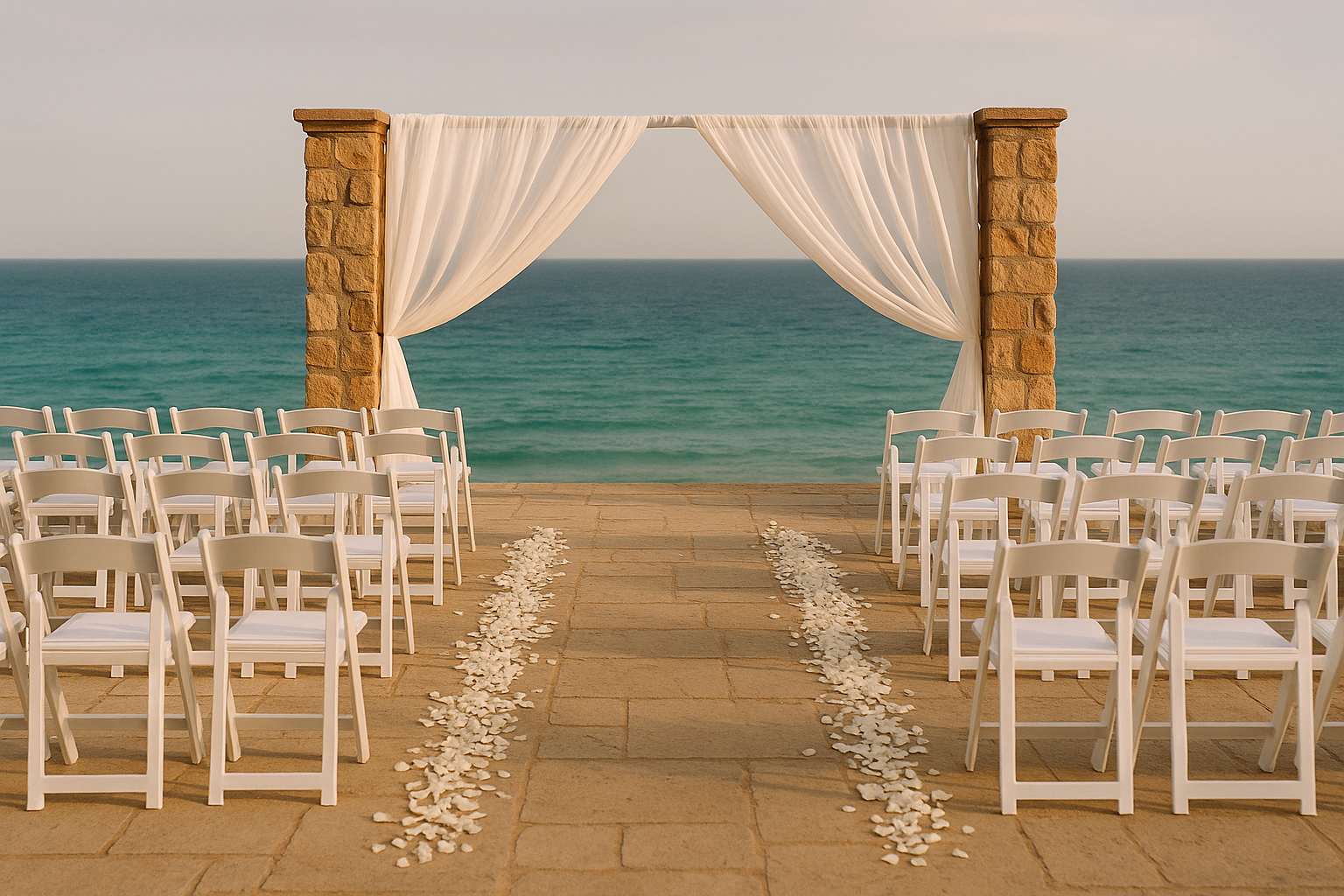
Destination weddings average $39,000–$41,000 overall, per The Knot's 2026 data — but all-inclusive resort packages in Mexico can cost the couple as little as $5,000–$15,000. The format (resort package vs. custom venue) is the single largest cost variable, dwarfing differences between destinations.
A destination wedding is one of the most personal choices you can make — and one of the most financially misunderstood. The range from a barefoot Riviera Maya ceremony at a complimentary resort package to a bespoke Amalfi cliff-top dinner is roughly $5,000 to $70,000. The question is not simply what a destination wedding costs; it is what your version of a destination wedding costs. This guide gives you the framework to answer that honestly.
What does a destination wedding actually cost — and how does format change everything?
The Knot's 2026 Real Weddings Study reports that destination weddings average $39,000 domestically and $41,000 internationally, compared to $34,200 for a hometown wedding. Those averages, however, include both $8,000 all-inclusive packages and $120,000 Italian estate weddings, which is a range so wide that the average obscures more than it reveals.
The more useful lens is format. There are fundamentally two models:
- All-inclusive resort package: The resort bundles venue, ceremony, catering, florals, cake, and often a suite upgrade into a single package, frequently complimentary when a minimum number of room nights is booked. These packages genuinely compete with — and often beat — hometown wedding economics.
- Custom venue event: You rent a private villa, vineyard, historic estate, or cliff-side terrace and build the event from scratch, contracting each vendor independently. This model offers maximum creative latitude and maximum cost exposure.
| Destination | All-Inclusive Package | Custom Venue | Legal Complexity |
|---|---|---|---|
| Mexico (Riviera Maya / Cancun) | $5,000–$12,000 | $15,000–$35,000 | Moderate (varies by state) |
| Caribbean (Jamaica, Dominican Republic) | $8,000–$20,000 | $20,000–$40,000 | Low–moderate |
| Puerto Rico | $15,000–$30,000 | $25,000–$45,000 | None (U.S. jurisdiction) |
| Italy (Tuscany, Amalfi, Lake Como) | N/A — custom only | $35,000–$65,000+ | High (residency / apostille) |
| Greece (Santorini, Mykonos) | N/A — custom only | $30,000–$60,000+ | Moderate |
| Portugal (Algarve, Alentejo) | N/A — custom only | $25,000–$50,000 | Moderate (more accessible than France/Italy) |
| Domestic U.S. (Napa, Charleston, Sedona) | N/A | $25,000–$45,000 | None |
Portugal and Croatia have emerged as compelling value alternatives to Italy and France in 2025–2026 — similar European romance and historic architecture at notably lower venue fees and with more straightforward legal processes. For couples drawn to Europe but price-sensitive, these markets deserve serious consideration.
What does a destination wedding cost, broken down line by line?
For a custom destination wedding of approximately 50–60 guests — the typical destination wedding size, well below the 117-guest national average for hometown weddings — the following ranges represent realistic 2025–2026 costs:
| Line Item | Estimated Range | Notes |
|---|---|---|
| Venue / site fee | $3,500–$15,000 | Wide range by destination and exclusivity |
| Catering & beverages | $75–$250 per person | Varies enormously by market; European significantly higher |
| Photography | $4,500–$10,000 | In-demand international photographers book 12–18 months out |
| Videography | $3,500–$7,500 | — |
| Florals & décor | $2,500–$12,000 | Local sourcing reduces cost and supports destination vendors |
| Music / entertainment | $2,000–$8,000 | — |
| Local wedding planner | $2,500–$10,000+ | Essential; do not skip this line item |
| Legal fees (international) | $800–$2,000 | Only if pursuing a legal ceremony at the destination |
| Welcome event | $2,000–$8,000 | Welcome dinner or cocktails for arriving guests |
| Transportation & shuttles | $1,500–$5,000 | Airport transfers, ceremony-to-reception movement |
| Travel & wedding insurance | $400–$1,200 (couple) | Non-negotiable for any international event |
What are the hidden costs of a destination wedding?
The financial surprises in destination weddings are distinct from those in hometown weddings. Several deserve specific attention before any contract is signed.
Outside-booking penalties: The room block at your resort is not simply a courtesy — it is often the mechanism by which your wedding package is priced or even offered at all. Guests who book outside the block can cost you your complimentary package upgrade or minimum-spend credit. Communicate the booking link clearly, warmly, and repeatedly in your save-the-date, invitation, and wedding website.
Vendor import costs: Bringing your hometown photographer, florist, or band to a foreign destination adds their travel, accommodation, and per diem on top of their fee — often $2,000–$5,000 more per imported vendor. Trusted local vendors vetted by your planner are almost always the more cost-effective choice and will have relationships with the venue and local suppliers that imported vendors cannot replicate.
Document apostilles and translations: For international legal ceremonies, certified translations and apostille authentication of U.S. documents (birth certificates, divorce decrees) cost $150–$500 per document set and take 4–8 weeks. Budget time as well as money.
Legal ceremony vs. symbolic: Many couples elect to legally marry at a local courthouse or registry office at home — a quiet civil ceremony — and hold their destination event as a symbolic celebration. This approach is more common than many couples realize, eliminates all foreign legal complexity, and results in exactly the same marriage under U.S. law. It is a practical, beautiful choice, not a compromise.
For more detail on the legal landscape by country, including Jamaica's streamlined requirements and Italy's residency and apostille process, see our destination wedding legal requirements guide. For guest travel logistics and communication strategy, see our complete destination wedding guest guide.
What planning timeline does a destination wedding require?
Lead time is the most underestimated variable in destination wedding planning. The 2026 industry standard is a minimum of 12 months, with 14–18 months strongly recommended for European destinations or multi-day events. Popular resort venues in peak season book 18–24 months in advance, and in-demand destination photographers fill their calendars at the same cadence.
The essential early milestones, in sequence:
- 14–18 months out: Set the destination shortlist (2–3 locations), research local planners, and schedule a site-visit trip. Do not commit to a venue before seeing it.
- 12–14 months out: Confirm the venue and local planner; sign contracts; negotiate and confirm the room block; send save-the-dates with booking instructions and wedding website link. Begin passport renewals and advise guests to do the same.
- 8–12 months out: Book photographer and videographer. Confirm officiant and establish whether the ceremony will be legally recognized or symbolic. Begin gathering documents for apostille authentication if pursuing an international legal ceremony.
- 4–8 months out: Send formal invitations with full travel details. Confirm all vendor contracts in writing. Purchase travel and wedding event insurance — at this stage, not as an afterthought.
- 2–4 months out: Confirm final guest headcount and finalize the room block. Complete all legal documentation and submit to relevant authorities. Finalize catering, florals, and timeline details.
One final note on the mindset that serves destination couples best: the smaller, more committed guest list that a destination wedding naturally produces is not a limitation — it is the point. The people who travel for you are your people. The intimacy, the multi-day immersion, the way the setting does the work your décor budget would otherwise do — these are genuine gifts that the destination format provides in exchange for the added planning complexity it requires.
Frequently asked
Is a destination wedding cheaper than a traditional wedding?
It depends entirely on the format you choose. An all-inclusive resort wedding in Mexico for 40–50 guests can cost the couple $5,000–$15,000 — considerably less than the $34,200 national average for a traditional U.S. wedding. That price point is possible because the resort bundles venue, catering, florals, cake, and sometimes photography into a single package. A fully custom destination wedding at an Italian villa or private Greek island estate for the same guest count easily reaches $40,000–$65,000, which is considerably more. The rule of thumb: the all-inclusive resort route is genuinely cost-competitive with a hometown wedding; a bespoke custom destination event almost always costs more. Know which route you are on before you begin planning.
What is the average cost of a destination wedding in Mexico?
Mexico is the world's most popular destination wedding location, accounting for roughly 34% of all international destination weddings. For couples choosing an all-inclusive resort package in the Riviera Maya, Cancun, or Playa del Carmen, the typical cost for the couple runs $8,000–$12,000 for a ceremony, private cocktail hour, and dinner reception for 20–40 guests. Entry-level complimentary packages are available when a qualifying room block is booked. Tulum venues and more boutique properties average $5,000–$10,000. Peak season (December through April) carries premium pricing; shoulder months like May, September, and November offer the best availability and 20–30% savings on most resort packages. Per-guest airfare from U.S. cities typically runs $600–$700 round-trip; resort accommodation runs approximately $300–$350 per person per night.
How much does a destination wedding in Italy cost?
Italy sits at the aspirational and expensive end of the destination wedding market. A custom ceremony and reception at a villa on the Amalfi Coast, in Tuscany, or at Lake Como for 50–60 guests typically ranges from $35,000–$65,000 in 2025–2026, with luxury properties and high-season dates (May through September) pushing costs higher. European flight costs add $1,000–$1,500 per person from the United States, meaning a 50-guest Italian wedding carries $50,000–$75,000 in guest travel costs alone. Italy also carries significant legal complexity: couples who want a legally recognized ceremony must navigate apostille-authenticated documents, certified translations, and coordination with local civil authorities — a process requiring 6–12 months of lead time. Many couples choose to legally marry at home and hold a symbolic ceremony in Italy, which eliminates all paperwork complexity.
How much should guests budget for a destination wedding?
Guests should budget entirely separately from any wedding gift. For a Mexico or Caribbean resort destination wedding, the typical per-person guest cost is $1,000–$1,800, covering round-trip airfare ($600–$700) and three to four nights of accommodations ($300–$350 per night). European destinations increase this substantially: flights alone run $1,000–$1,500 per person, and hotel rates push the per-guest total to $3,000–$5,000 or more for the full trip. As a couple, recognizing the financial ask you are making of your guests shapes decisions about save-the-date timing (send 10–12 months out), room block range (offer multiple price tiers), plus-one generosity (err on the side of including partners), and gift registry approach (many destination couples opt for a honeymoon fund rather than traditional gifts).
What percentage of couples choose destination weddings?
Approximately 25–31% of all U.S. weddings are now destination weddings, representing roughly 350,000 celebrations annually, according to 2025 industry data. Mexico leads among international locations, capturing 34% of international destination weddings; Europe accounts for approximately 20–26%; the Caribbean represents about 18–21%. Domestically, popular destination-style markets include Hawaii, Las Vegas, Charleston (South Carolina), Napa Valley, and Sedona (Arizona). The average destination wedding guest count is meaningfully smaller than a traditional hometown wedding — approximately 50–80 guests compared to the national average of 117 — both because travel self-selects a committed guest list and because smaller intimate celebrations are a deliberate draw for many destination couples.
When should we start planning a destination wedding?
The 2026 industry standard is a minimum of 12 months of lead time, with 14–18 months strongly recommended for European destinations or complex multi-day events. Popular resort venues in peak season book 18–24 months in advance. Start-the-clock priorities are: finalizing the destination and venue (which triggers the room block negotiation), hiring a local planner at the destination, and sending save-the-dates with room block information. For international legal ceremonies — as opposed to symbolic ceremonies with a prior civil marriage at home — begin the legal documentation process (passport validation, apostille authentication, certified translations) at the 12-month mark at the very latest, as delays in apostille processing alone can take 4–8 weeks.
Do we need a local wedding planner for a destination wedding?
Yes — a local planner at your destination is one of the wisest investments you can make in the entire process, and the one professional role that should not be approached as optional. A skilled local planner at a destination brings: established relationships with vetted vendors who they have worked with and can personally vouch for; direct knowledge of permit requirements, seasonal conditions, and venue quirks that no amount of remote research will reveal; real-time problem-solving capability on the ground when something goes sideways; fluency in local legal processes and, if relevant, the local language; and often proprietary access to venues unavailable to the public. Budget $2,500–$10,000+ for a quality local planner, and book them before you commit to any venue. Their first meeting will almost certainly tell you something you did not know.